

Self-propelled mowers are worth it if your lawn is large, sloped, or you want to reduce physical effort. They are harder to justify on small, flat lawns, where a manual push mower costs less, weighs less, and has fewer parts to maintain. Value depends on lawn size, terrain, physical situation, and budget—not a universal rule.
Quick Answer: Are Self-Propelled Mowers Worth It?
A self-propelled lawn mower is worth the extra cost when the drive system will actually change how hard mowing feels. That usually happens on a larger lawn, on sloped terrain, or when pushing a walk-behind machine for a full session leaves you tired. In those situations, the mower supplies most of the forward force and you mainly guide, steer, and control speed.

Pros
- Powerful 80V brushless motor delivers 32HP gas-equivalent performance with quiet fume-free operation and no engine maintenance.
- Complete kit includes four 6.0Ah batteries and 600W charger for substantial runtime up to 1.5 acres.
- SmartCut technology and 42-inch heavy-duty steel deck ensure consistent cuts without bogging in tough conditions.
- Versatile towing up to 350 lbs and optional cargo hauling plus comfort features like high-back seat and LED lights.
- Strong 4-year limited warranty and full compatibility with the Greenworks 80V tool ecosystem.
Cons
- Rear utility cargo bed for 200 lb hauling is sold separately and not included in the kit.
- Runtime of up to 1.5 acres varies with conditions and may require recharging or battery swaps on larger properties.
- As a fully cordless model continuous operation depends on battery levels unlike gas engines with unlimited runtime.
The Greenworks 80V 42" CrossoverT Cordless Riding Lawn Tractor is a ready-to-mow zero-emission tractor designed for homeowners managing medium to large lawns. It features a reinforced 42-inch stamped steel deck of 12-gauge construction along with premium comfort elements such as a high-back padded seat with foldable armrests. The overall build emphasizes durability and user convenience right out of the box with the included battery and charger set.
Performance centers on the 80V TruBrushless motor that provides 32HP gas-equivalent power with instant torque and quiet fume-free operation. SmartCut technology senses grass conditions and automatically adjusts power to maintain a consistent cut even in tall thick or wet areas. The four 6.0Ah batteries support runtime for up to 1.5 acres depending on conditions while dual LED headlights and a 7-position deck height range from 1.5" to 4.5" add practicality. Front and rear attachments further allow towing up to 350 lbs for added yard utility.
Key considerations include that the rear utility storage bin capable of hauling 200 lbs is sold separately so full cargo functionality requires an extra purchase. Runtime remains condition-dependent and may fall short for properties significantly larger than 1.5 acres without using the 600W charger or swapping batteries. The cordless design prioritizes ease and low maintenance but trades off the continuous runtime of traditional gas models.
This tractor delivers strong value for eco-conscious owners of residential properties who want gas-like power without the emissions noise or upkeep. It suits those who already use or plan to expand into the Greenworks 80V family of tools and who appreciate the 4-year limited warranty. Users with exceptionally large or commercial-scale lawns should evaluate battery logistics carefully before purchase.

Pros
- Delivers strong 21 horsepower equivalent power comparable to gas riding mowers.
- Provides up to 1.5 acres of runtime on a full charge with the six included batteries.
- Features low-maintenance dual brushless motors without belts for greater durability.
- Offers versatile 12-position cutting height adjustment from 1.5 to 4.5 inches.
- Includes digital controls for blade settings, drive speeds, and cruise control.
Cons
- Limited to 1.5 acres of cutting per charge without purchasing additional batteries for bigger lawns.
- Requires recharging time for the six 56V batteries after each use session.
- Relies solely on battery power with no hybrid or gas backup option for extended operation.
The EGO Power+ TR4204 is a cordless electric riding lawn mower built as a modern tractor alternative for residential use. It features a robust 42-inch stamped steel deck and arrives ready to go with six 56V 6.0Ah batteries plus a charger, creating an immediate impression of convenience and solid construction free from gas engine complexity.
Performance shines through its equivalent 21 horsepower output and top speed of 6 MPH, allowing efficient coverage of up to 1.5 acres on a single charge. Dual brushless cutting motors operate without belts for added durability and less upkeep, while the digital display lets users select three blade settings, three drive speeds, and cruise control. The 12 adjustable heights ranging from 1.5 to 4.5 inches combined with anti-scalp wheels deliver precise results across varied terrain.
Drawbacks center on battery dependency, as larger properties beyond 1.5 acres require extra batteries and recharging intervals can interrupt workflow. The fully electric design eliminates fuel storage needs but demands access to power sources between sessions.
This mower suits homeowners with medium to large yards who value quiet, emission-free operation and reduced maintenance. Those seeking expandable battery capacity for bigger areas will find the EGO Power+ TR4204 a strong long-term investment in cordless lawn care.
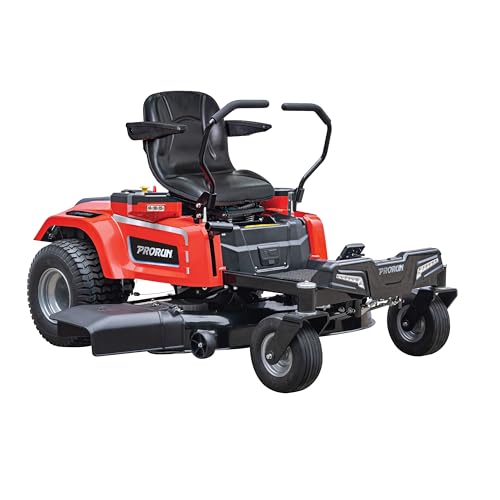
Pros
- High-efficiency brushless motors maximize power output and durability over traditional motors
- Up to 2 acres runtime with three included 10.0 Ah batteries supports substantial mowing sessions
- Zero-emission operation with gas-equivalent 20 HP power for quieter environmentally friendly use
- Six-port auto-switchover battery system provides flexible extended runtime options
- Durable 42-inch steel deck plus included mulch and towing kits add immediate functionality
Cons
- Runtime is limited to approximately 70 minutes or 2 acres which may require recharging for larger properties
- Fully battery-dependent design means performance relies on charge levels and spare battery availability
- 42-inch deck size may require more passes on expansive lawns compared to wider commercial models
The PRORUN PZT60V42 is a fully electric 60V zero-turn riding lawn mower built for residential and light commercial use. Its primary design centers on a robust 42-inch 14-gauge stamped steel twin blade deck powered by direct-drive brushless motors, giving an immediate impression of solid construction and modern battery-focused engineering. The mower arrives complete with three 10.0 Ah batteries, a charger, mulch kit, and towing kit for ready-to-work versatility.
In performance terms, four high-efficiency brushless motors deliver power equivalent to a 20 HP gas engine while producing zero emissions. The system supports up to 2.0 acres or 70 minutes of runtime, and six battery ports with auto switchover intelligently manage all PRORUN 60V battery sizes for continuous operation. A washout port on the steel deck further simplifies post-mow maintenance during real-world sessions.
Potential drawbacks include the finite 70-minute runtime window which can limit coverage on larger properties without spare batteries or recharge breaks. As a fully electric model, it also depends entirely on battery charge levels rather than continuous fuel refills, and the 42-inch deck width may demand extra passes compared with wider traditional options.
Overall the PRORUN PZT60V42 offers strong value for homeowners and small-property managers who want gas-like cutting power without emissions or noise. Those with medium-sized lawns seeking quiet efficient zero-turn performance and included accessories will benefit most from this electric mower.

Pros
- Strong 24HP FR730 engine power for demanding cutting conditions
- Wide 54-inch FAB deck reduces total mowing time
- Zero turn design delivers excellent maneuverability
- Fabricated deck supports durable everyday operation
Cons
- Sparse details beyond engine and deck leave other features unspecified
- Gas-powered FR730 engine needs regular fuel and maintenance
- Large 54-inch deck size may feel oversized on compact properties
The Husqvarna Z254F is a zero turn mower from the established Husqvarna brand in the riding lawn mowers category. It centers on a solid build that pairs a 24HP 726cc FR730 engine with a 54-inch FAB deck for straightforward residential grass care.
Performance stems directly from the listed specifications. The FR730 engine delivers the horsepower needed for steady operation across typical lawns while the wide FAB deck completes passes efficiently. Zero turn handling improves control in real yard layouts based on the model design.
Considerations arise from the limited data available. Secondary elements such as comfort features fuel capacity or extras receive no mention and the gas engine format involves routine upkeep. The large deck suits open areas better than confined spaces.
The Husqvarna Z254F provides the most value for owners of medium or large properties who want reliable engine power and a broad cutting width. Users with smaller lots or those seeking extensive accessory options should weigh the core specs carefully before purchase.
The same machine is often unnecessary on a compact, level yard. A manual push mower already does the cutting work. You still have to walk the lawn, but the extra money, extra weight, and extra parts of a drive system buy very little if every pass is short and flat.
Four conditions decide the purchase more than any slogan: Before finalizing equipment decisions, refer to our comprehensive jbl partybox club 120 vs sony srs xv500 comparison.
- Lawn size. The longer you walk behind the deck, the more the drive system matters.
- Slope. Hills add resistance that a powered wheel system can absorb better than your arms and legs.
- Physical effort. If you want mowing to be less of a workout, self-propelled designs exist for that reason.
- Budget and upkeep. You pay more up front and accept more moving parts than a comparable push mower.
There is no single right answer for every yard. The rest of this guide explains how the machine works, what you gain and give up, and how to test the decision against your own lawn before you spend more. Before finalizing equipment decisions, refer to our comprehensive jbl partybox club 120 vs sony srs xv500 comparison.
What Is a Self-Propelled Mower?
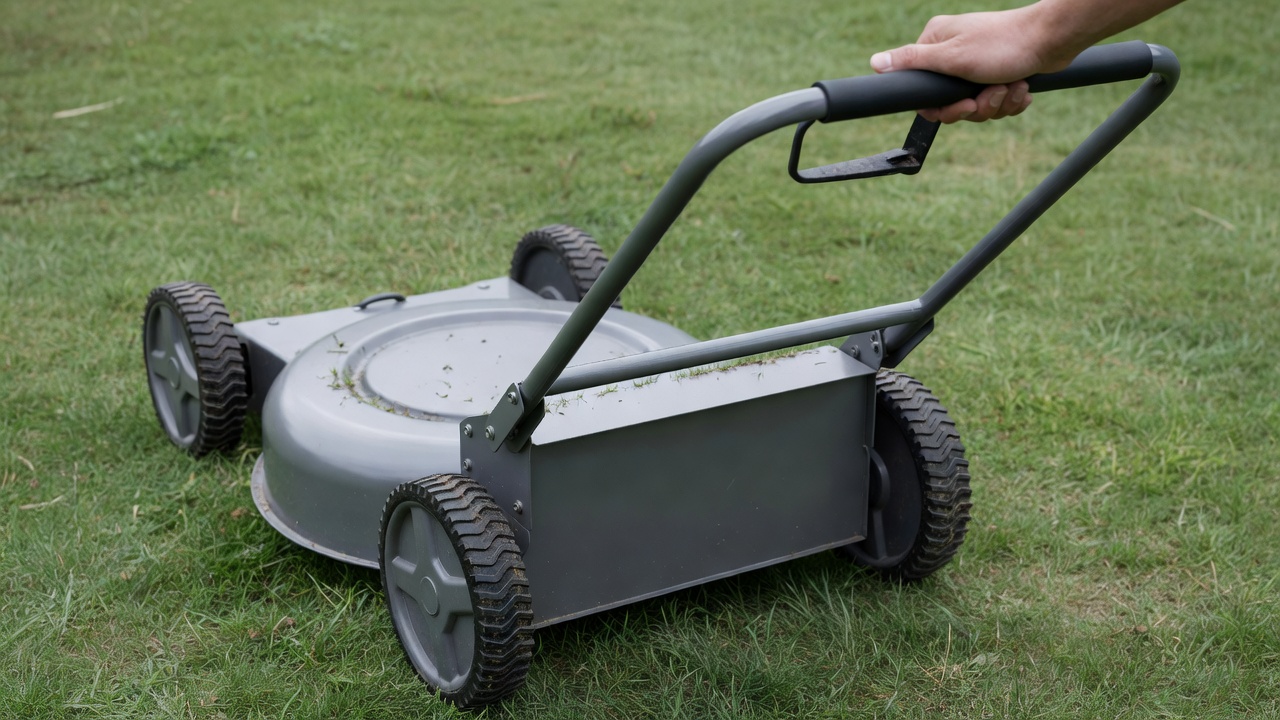
A self-propelled mower is a walk-behind lawn mower with a drive system that powers one or more wheels. The cutting blade still does the mowing. The difference is locomotion: instead of you supplying all of the forward force, the machine moves itself while you walk behind it, steer, and adjust speed.
A manual push mower has no wheel drive. The engine or motor spins the blade, but every inch of travel comes from you pushing the handle. On flat, short grass that can feel light. On thick turf, wet grass, or an uphill stretch, the same deck can feel heavy because you are both walking and shoving the machine. For broader ecosystem context, read through our operational guide on z890 vs x870e motherboard.
Self-propelled models sit between a simple push mower and a riding mower. You still walk the property. You still control turns, edges, and obstacles. You do not sit and drive. You also do not get a free ride: you stay engaged with the handle, and you still manage the machine around trees, beds, and gates.
How the drive system works
In general terms, power from the engine or electric motor is split. Some of it turns the blade. Some of it goes through a transmission, belt, or gear train to the wheels. Many models use a bail, lever, or similar control on the handle. Engage it and the wheels pull (or push) the mower forward. Release it and the drive disengages so you can stop, reverse by pulling back, or maneuver by hand.
Variable speed control is common. Instead of one fixed walking pace, you can usually slow down in thick grass or around obstacles and speed up on open, even ground. That control is part of the value: a drive system that only has one hurried pace can feel awkward, while a range of speeds lets you match the machine to the lawn and to your own stride. For troubleshooting and reliability insights, consult our in-depth marshall stanmore iii vs harman kardon onyx studio 8 report.
The operator still has real work to do. You start the machine, set cutting height, choose a path, steer around obstacles, empty a bag if you use one, and turn at the end of each pass. On turns, the drive may help less or feel different than it does in a straight line. You are a guide and a supervisor, not a passenger.
Front-wheel, rear-wheel, and all-wheel drive
Walk-behind self-propelled mowers typically drive the front wheels, the rear wheels, or all four. The labels describe which wheels receive power, not a promise of off-road performance. Readers comparing setup options can review our technical analysis on dyson v8 cyclone vs bissell featherweight stick.
- Front-wheel drive generally makes the front of the mower pull itself. These setups are often a bit easier to pivot and turn because you can lift or lighten the front slightly and swing the machine. On downhill stretches or when the front wheels lose contact over a bump, traction can feel less consistent.
- Rear-wheel drive generally puts power where more of the machine’s weight sits. That often means better traction on slopes and in taller or damper grass, because the driven wheels stay planted. Turning can take a little more intention, since the rear wants to keep driving.
- All-wheel drive powers both ends. In general terms it aims for traction on uneven or sloped ground. It also adds mechanical complexity and, typically, weight compared with a simpler two-wheel drive layout.
None of these layouts removes the need for careful mowing on hills. Drive type is a traction and handling choice, not a substitute for safe technique or for the instructions that come with your specific mower.
Benefits of a Self-Propelled Mower
The headline benefit is reduced pushing effort. That benefit is real, and it is also subjective. People with different strength, different lawns, and different expectations will feel it differently. The machine does not eliminate work. It changes which muscles do the work and how hard they work on each pass. For complementary field maintenance guidelines, examine our breakdown of bissell crosswave hydrosteam vs shark stainforce.
Less shoving, not zero effort
On a self-propelled mower you still walk the entire lawn. You still hold the handle, steer, and stay alert. What you largely stop doing is leaning into the handle to keep the deck moving through resistance. In thick growth, that resistance is noticeable on a push mower. With the drive engaged, the wheels take most of that load.
You still manage weight in other ways. Lifting the front to turn, pulling the mower backward, rolling it over a curb, or holding it steady on a side slope still uses your body. If the mower is heavier than a comparable push model—and self-propelled machines usually are—some of those side tasks can feel harder even while straight-line mowing feels easier.
Larger lawns make the difference more obvious
On a small rectangle, you may finish before fatigue becomes the story. On a larger property, you repeat the same pushing motion for a long time. Reduced forward effort compounds with every pass. The drive system does not automatically cut the job shorter, because you still have to cover the same ground at a walking pace. It can make the session less draining, which is the point for many buyers.
Large lawns also tend to include more variety: long open runs, tighter corners, maybe a grade change. Variable speed helps you slow down where the grass is thick or the path is tight, then walk more comfortably across open turf.
Slopes and uneven ground
Sloped terrain is where many people first notice they want help. Walking uphill while pushing a deck through grass asks a lot of your legs and grip. A driven rear wheel, in particular, can keep the mower climbing while you focus on balance and a straight line. Downhill, the drive can still matter because you are managing a rolling machine, not only fighting gravity on the way up.
Uneven ground, soft soil, and heavier clippings add drag. A push mower transmits that drag straight to you. A self-propelled mower absorbs more of it in the transmission and wheels. You still need good footing, and you still should treat wet or slick slopes as a hazard rather than a reason to muscle through.
What you still do yourself
It helps to be precise about the remaining work:
- You choose the route and keep the mower on it.
- You control speed within whatever range the model offers.
- You turn at borders, beds, and the ends of rows.
- You handle bagging, mulching, or side-discharge as the job requires.
- You move the mower in and out of storage, through gates, and over steps or lips if your property has them.
If those remaining tasks are the hard part of your routine—tight storage, stairs, a very heavy machine—the drive system will not solve them. It mainly solves forward travel across the lawn.
Drawbacks and Trade-Offs
Self-propelled mowers cost more than comparable manual push mowers. They also weigh more and include extra parts that can wear. Those three trade-offs are the honest other side of the “less effort” pitch.
Higher upfront cost
You are buying a cutting deck plus a propulsion system. That second system is why the price is higher. How much higher depends on power type, drive layout, and features, and those figures change by market and season. The useful way to think about cost is not a number from an article. It is whether the extra spend buys a change you will feel every time you mow.
On a small, flat lawn, that extra spend is harder to recover in comfort. On a large or hilly lawn, the same spend can feel reasonable because you use the feature for most of the job, not just a few feet of driveway.
Extra weight
Drive components add mass: gears or a belt, a transmission, sometimes extra linkages at the handle. That weight helps traction when the wheels are powered. It works against you when you lift the mower into a shed, hoist it into a vehicle, tilt it to clean the underside, or roll it over a high threshold.
If storage is up a step, in a tight closet, or on a hook, compare the whole ownership experience, not only the feeling of walking down a fairway-like stretch of turf. A lighter push mower can be the more practical tool even if it is more work in a straight line.
More parts to maintain
A push mower’s main moving story is the blade and the engine or motor. A self-propelled mower adds a drive path. That path may include a drive belt, cables, a transmission, and driven wheels or gears. Those parts can wear. They can also go out of adjustment. They are not automatically unreliable, but they are complexity a push mower simply does not have.
When something in the drive feels weak—wheels that slip, a bail that no longer engages cleanly, a belt that squeals—you are looking at service the simpler machine never requires. Budget a little time and, over the life of the mower, some parts attention. Treat the owner’s manual as the source for what to inspect and when, because intervals and procedures are model-specific.
A different feel in tight spaces
Powered wheels are at their best in longer runs. In a cramped courtyard, around many trees, or on a lawn broken into small panels, you spend more time turning, reversing, and feathering the drive. Some people find that less relaxing than just pushing a lighter deck by hand. Front-wheel drive can ease pivoting. Rear-wheel drive can feel stubborn in a tight spin. Try before you buy if you can, because this is a feel issue more than a specification issue.
Who Should Choose Which: Self-Propelled vs. Push Mower
Map the machine to the yard and to the person who will mow it. The “better” mower is the one that matches those two facts, not the one with more features.
A self-propelled mower is usually the stronger fit when
- The lawn is large enough that a full mow is a long walk, not a quick chore.
- The property has meaningful slopes or long uphill stretches.
- Grass often grows thick, or you sometimes let it get taller between cuts, so drag is high.
- You want to reduce the shoving part of mowing because it leaves you sore or worn out.
- You are comfortable storing and moving a heavier walk-behind machine.
People who mow for others, or who share a larger family lawn, often like the drive system because different users feel the same reduction in forward effort. That is still not a medical recommendation. It is a practical observation: less pushing is the feature, and some bodies appreciate it more than others.
A manual push mower is usually the stronger fit when
- The lawn is small and mostly flat.
- You already finish quickly and do not mind the workout.
- You want the lightest machine you can lift, hang, or tuck into a tight space.
- You prefer fewer parts and a simpler service routine.
- Budget is tight and the extra cost would not change how the job feels.
A push mower also keeps you in closer tactile contact with the deck. Some people like that control around flower beds and along fences. If your entire property is edges and obstacles, propulsion may be a feature you rarely leave engaged.
How size and slope change the recommendation
Think in gradients, not in a single cutoff. As lawn size grows, the case for self-propelled grows with it, because effort repeats. As slope increases, the case grows again, because gravity and traction enter the job. A medium lawn that is pancake-flat may still be fine with a push mower. A smaller lawn that sits on a bank may not.
If you are comparing a walk-behind self-propelled mower with a riding mower, that is a different question. Riders cover ground faster and spare you the walk, but they need more storage space, cost more, and can be clumsy in tight yards. This article stays on the walk-behind choice: powered wheels versus your own push.
Gas vs. Electric Self-Propelled Mowers
Self-propelled designs exist in gas-powered and battery-electric forms. The drive-system logic is similar. The power plant changes noise, maintenance, run time, and how you prepare for a session.
Gas-powered self-propelled mowers
Gas models typically offer strong power and the ability to keep running as long as you have fuel. That combination suits larger lawns, thicker grass, and people who do not want to think about a battery gauge in the middle of the yard.
The trade-offs are familiar. You store and handle fuel. You perform periodic engine care: oil, air filter, and spark plug service as the manufacturer specifies. The machine is louder than a typical battery mower. Starting is a process, whether you use a cord or an electric start button. In cold weather or after storage, that process can be fussier than clicking a battery into place.
If you already own gas tools and are comfortable with basic engine upkeep, a gas self-propelled mower extends a routine you know. If you hoped to escape fuel and oil entirely, it will not deliver that lifestyle change.
Battery and electric self-propelled mowers
Battery mowers are quieter and start with little drama. They have no oil to change, no air filter to service, and no spark plug. Routine care shifts toward keeping the deck clean, the blade sharp, and the battery charged and stored as the maker recommends.
The limits are energy and aging. You must charge before you mow. A single charge covers a finite amount of work, and that amount shrinks in thick grass, at low cutting heights, or as the battery ages. Batteries lose capacity over time. Replacement is a future cost you should expect, even if you cannot pin a calendar date on it.
Corded electric walk-behind mowers exist, but self-propelled designs are more commonly battery-powered because a cord and a driven deck are an awkward pair on a large or obstacle-filled lawn. If you do consider a cord, treat cord awareness as a safety task of its own.
Choosing a power type without drowning in specs
Match power type to session length and to how you like to maintain tools:
- Choose gas if you want long, uninterrupted run time and accept fuel plus engine service.
- Choose battery if you want quieter operation and simpler weekly care, and your lawn fits a charge-and-mow rhythm.
- In either case, the self-propelled question is separate: you can have a push or a driven model in both power families.
Do not assume an electric self-propelled mower is automatically lighter than gas, or the reverse, without checking the actual machine. Batteries are heavy. Engines are heavy. Drive systems are heavy. Lift or roll the specific mower if weight is a deciding factor.
Cost and Maintenance Considerations
Purchase price is only the first line. Ownership includes energy, wear parts, and the occasional repair. Exact amounts vary too much by model and region to list here. The categories are stable.
Beyond the sticker price
For gas machines, plan on fuel, oil, and periodic engine parts. For battery machines, plan on electricity and, eventually, a replacement battery pack. For any self-propelled mower, plan on possible drive-system attention: belts, cables, or transmission service over a long life.
Also count your time. A simpler push mower is faster to pull out, use, and put away if you never think about a drive bail or a battery charge. A self-propelled mower can save physical energy while adding a couple of checks—charge level, drive engagement, tire or wheel condition—before you start.
Routine care in general terms
Every walk-behind mower needs a clean deck and a sharp, balanced blade. Clogged decks waste power and tear grass. Dull blades shred rather than cut. Those basics matter as much as the drive system.
Gas-powered mowers add engine care. Change oil, keep the air filter usable, and replace the spark plug on the schedule in your manual. Stale fuel causes many “it will not start” mornings, so storage habits matter if the mower sits for weeks.
Battery mowers add charge and storage habits. Avoid treating the pack as indestructible. Charge it as the manufacturer directs, store it in a reasonable temperature range, and keep contacts clean. When a pack no longer holds a useful charge, recycle it through an appropriate local program rather than throwing it in household trash.
Drive belts, transmissions, and cables
The drive system is the extra maintenance story. Belts can glaze, stretch, or crack. Cables can stretch or bind. Transmissions can leak or wear if they are neglected or damaged. Wheels and gears pick up string, wire, and packed mud that fight the drive.
A practical habit is to look and listen. If forward motion feels weaker than it used to, if you smell hot rubber, or if the control lever no longer takes up the same way, stop and inspect rather than forcing the handle. Follow the service steps in the manual, or take the mower to a qualified technician if the repair is beyond a visual check and a simple part swap. Guessing at transmission work is a good way to turn a modest issue into a larger one.
Maintenance intervals are manufacturer-specific. Do not borrow a neighbor’s hour-based schedule and assume it fits your model.
How to Decide Before You Buy
A good decision is a short study of your lawn, your body, and your storage, not a search for a universal verdict. Walk the property with the purchase in mind and answer the questions below honestly.
Evaluate the lawn, not a generic “average yard”
Estimate how long a typical mow already takes you, and notice where you work hardest. Is the tiring part the open middle, the hill by the driveway, the thick strip along a fence, or the act of getting the mower out of the garage? Only some of those problems are drive-system problems.
Note slope with your feet, not with a marketing photo. A gentle tilt that you barely notice in dry weather can feel different after rain. A short, steep bank may matter more than a long, mild grade. If you would not want to carry a heavy object up that slope, you will care about traction and about whether you can still control a powered deck there.
Look at obstacles. Trees, beds, play equipment, and narrow side yards increase turning. If most of your time is turning, prioritize a machine you can pivot and a drive type that does not fight you. If most of your time is long, straight passes, propulsion will get more use.
Be honest about weight, storage, and physical comfort
Where will the mower live? A ground-level shed with a wide door is a different world from a basement stair or a high deck. Practice the path in your head: start, mow, clean, store. If any step requires lifting the whole machine, extra weight is a daily tax.
Think about who else might mow. A household with several users may want the drive system so the job does not depend on the strongest person. A household with one user and a tiny lawn may want the lightest, simplest tool.
Physical comfort is personal. Some people enjoy the exercise of a push mower and prefer not to spend more. Others find the shoving unpleasant and will use a self-propelled model more consistently, which also means the lawn stays at a healthier height. Consistency is a quiet benefit: the “worth it” question includes whether you will actually mow when the grass needs it.
Questions to ask yourself before spending more
- After a normal mow today, am I tired from walking, from pushing, or from both?
- Is my lawn mostly open, or mostly edges and obstacles?
- Do I have slopes that make me brace against the handle?
- Can I store and move a heavier machine without creating a new problem?
- Do I want gas runtime and accept engine care, or do I want quieter battery operation and accept charging limits?
- If the drive system needed service in a few years, would that still feel acceptable compared with a simpler push mower?
- Have I actually put my hands on a self-propelled handle, or am I buying a feature I have never felt?
If you can, try a self-propelled mower in person. Engage the drive, change speeds, and make a few turns. Notice the weight when the drive is off, because you will still pull the mower backward and manhandle it in corners. Notice noise, starting, and how the controls fall to your hands. Five minutes of that testing answers more than a specification sheet.
Set a budget range that includes the power type you prefer and leaves room for a blade, a battery or basic engine supplies, and safe storage. Then buy the simplest machine that solves the actual problem you identified. Extra drive modes and extra features only help if you will use them on your ground.
Safety and Care Notes
A self-propelled mower does not make mowing hands-free, and it does not make slopes safe. Powered wheels can surprise you if you expect the machine to stay put when you let go of a control, or if you pull the deck toward your feet.
Slope and footing
Wet grass, loose soil, and side hills reduce traction for you and for the mower. Wear shoes with a decent grip. Walk, do not run. Keep both hands on the handle when the blade is turning. If a slope feels unstable, stop and rethink the job rather than leaning harder into the machine.
Manufacturers give direction guidance for walking a slope—across, up and down, or avoiding certain grades entirely. Those instructions depend on the mower’s design. Follow the manual that belongs to your machine instead of a one-size-fits-all rule from an article. If the slope is steep enough that a walk-behind mower feels like the wrong tool, it may be the wrong tool. Do not treat all-wheel drive as permission to mow a bank that makes you uneasy.
Never pull the mower toward your body
Walk-behind mowers, self-propelled or not, are built to be operated from behind the handle. Do not pull the running machine toward your feet to catch a strip of grass. If you need to back up, disengage the drive, and use the procedure in your manual. Keep people and pets well away from the discharge area and from the path of the mower.
Stop the engine or motor before you unclog the chute, pull out a stuck stick, or reach toward the blade area. Wait for the blade to stop fully. Disconnect the spark plug lead on a gas mower, or remove the battery / key on an electric mower, before any hands-on clearing or blade work. A drive system that can roll the mower makes this discipline more important, not less.
Caring for the drive system
Keep wheels free of packed clippings, twine, and mud. Debris wrapped around an axle can mimic a failing transmission. After mowing, glance at belts or drive components if they are visible and the manual allows inspection. Do not spray water into openings the manufacturer tells you to keep dry, especially around electric parts and transmissions.
Store the mower so the drive controls are not bent or pinched. A handle folded carelessly can throw off cable tension. If you change cutting height often, make sure the adjustment does not leave the driven wheels in an odd stance that causes hop or slip.
Battery safety and disposal
Use the charger that belongs to the pack. Charge on a hard, dry surface where the pack can stay cool, and do not ignore a pack that smells odd, swells, or gets unusually hot. Those are stop-and-replace conditions, not a time to keep cycling the battery.
When a pack is spent, follow the manufacturer’s guidance and your local recycling rules. Lithium-ion and similar packs do not belong in ordinary household garbage. Many communities have drop-off points for rechargeable tools. If you are unsure, ask a local waste or recycling service rather than improvising.
None of this is a substitute for the warnings printed on the mower and in its manual. Read those documents when you buy, and again at the start of each season. If a repair involves fuel systems, sealed transmissions, or damaged battery packs, a qualified technician is the safer choice.
Frequently Asked Questions About Are Self-propelled Mowers Worth It
Do I still have to push a self-propelled mower?
Yes, in the sense that you still walk with it, steer it, and handle turns. The drive system supplies most of the forward force when it is engaged. You are not sitting down, and you still move the mower by hand when the drive is off.
Is a self-propelled mower worth it on a small flat lawn?
Usually not, if the only goal is saving effort. On a small, level yard the extra cost, weight, and parts rarely pay off. Exceptions exist if you strongly prefer not to push, or if a short lawn still includes a steep bank.
Which drive type is better on hills?
Rear-wheel drive generally offers better traction on slopes because more weight sits on the driven wheels. All-wheel drive aims at the same problem with more complexity. Front-wheel drive is often easier to turn on flatter ground. Hill safety still depends on your footing and on the mower’s own instructions.
Will the drive system make mowing much faster?
Not by itself. You still cover the lawn at a walking pace. Variable speed can help you keep a steady stride, but the main benefit is less pushing, not a shortcut across the same area.
Gas or battery: which self-propelled mower should I buy?
Pick gas if you want long run time and already accept fuel and engine maintenance. Pick battery if you want quieter starts and less routine engine care, and your lawn fits a charging routine. Either can be self-propelled or push; decide propulsion and power source as two separate choices.
For more hands-on benchmarks and buying recommendations, consult our guides on heavy-duty chainsaw buyer guide.
Mechanical safety standards, operational tolerances, and protective gear guidelines align with benchmark specifications established by the American National Standards Institute (ANSI).
For practical maintenance advice and setup requirements, check our guide on what do cultivators do.









