

What’s the Best Push Mower? Direct Answer
The best push mower isn’t one-size-fits-all—it depends on your priorities. For most homeowners with typical residential lawns, a battery-powered electric mower (such as those with 40V+ lithium-ion systems) offers the best balance of power, convenience, and low maintenance, with runtime sufficient for yards up to ½ acre. Gas mowers excel when you have dense, thick grass or larger properties (1+ acres) and don’t mind regular maintenance. Corded electric mowers work well for small, flat yards with nearby outlet access. Manual reel mowers suit eco-conscious buyers with well-maintained, compact lawns. Your choice should match your lawn size, grass condition, terrain, noise tolerance, and willingness to perform maintenance.
Understanding Push Mower Types: How They Compare
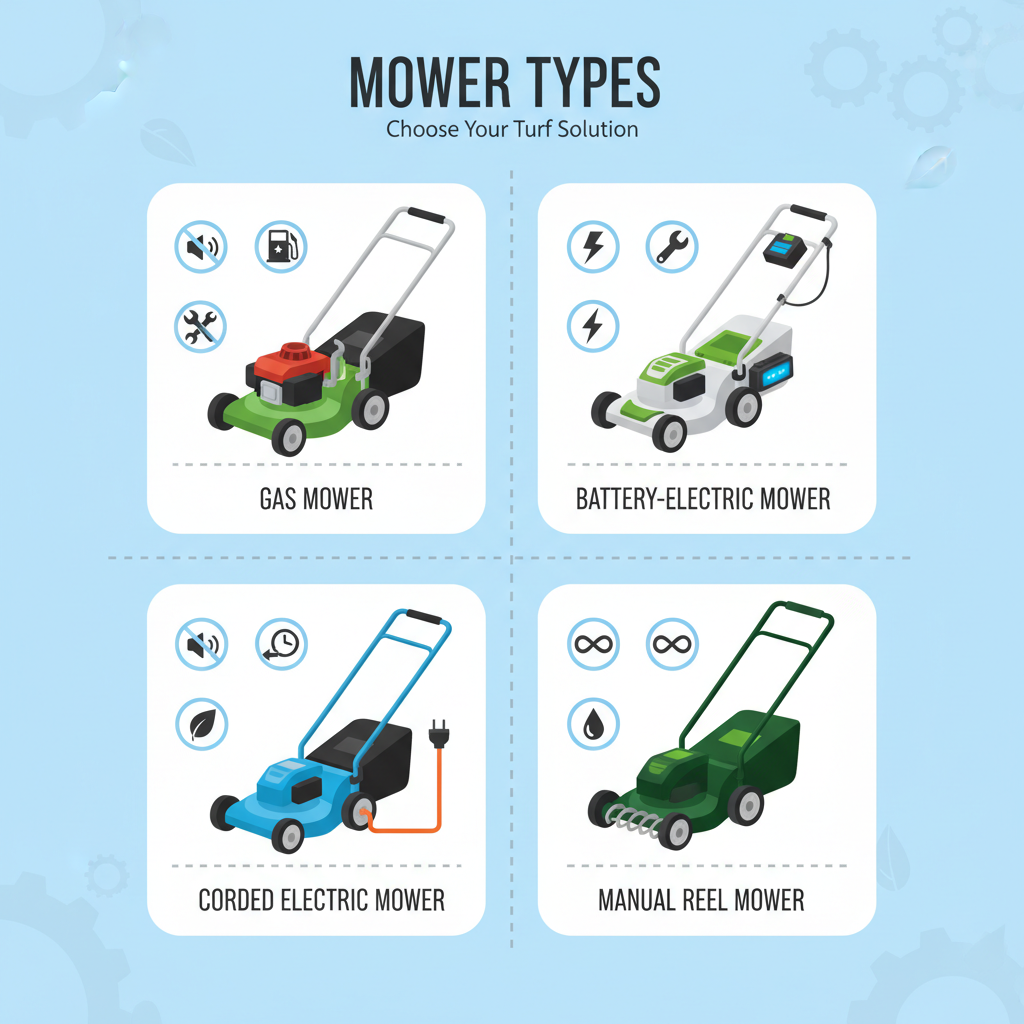
Before evaluating specific features or models, it’s essential to understand how the four main mower categories differ in performance, maintenance, and suitability for different situations.
Gas Push Mowers
Gas mowers are powered by small internal combustion engines (typically 140–200cc displacement) and deliver consistent power regardless of runtime. They’re the workhorse for challenging conditions: thick, wet, or overgrown grass; tall weeds; and large properties. A gas mower can run for hours on a single tank of fuel—typically consuming fuel at a rate of 1–2 hours per gallon depending on engine size and cutting load. Users looking for related component recommendations can explore our jbl partybox club 120 vs sony srs xv500 breakdown.
Trade-offs: Gas mowers are louder (85–95 decibels), produce emissions, require seasonal maintenance (oil changes, spark plug replacement, fuel stabilizer for storage), and demand more physical effort on push-only models. Initial cost ranges from $300–$600 for basic models. Users looking for related component recommendations can explore our jbl partybox club 120 vs sony srs xv500 breakdown.
Battery-Powered Electric Mowers
Lithium-ion battery systems (typically 40V or 80V) power quiet, low-maintenance mowers ideal for residential use. Runtime typically ranges from 30–60 minutes per charge on a single battery, sufficient for most small to medium yards (¼–½ acre). Many mowers accept multiple batteries or fast-charging systems, extending effective cutting time.
Trade-offs: Battery runtime limits session length; you may need a second battery for larger yards. Battery replacement (typically $100–$300 per battery after 3–5 years) adds long-term cost. Upfront investment is $400–$800. In cold weather, battery runtime drops by 20–30%. Before finalizing equipment decisions, refer to our comprehensive z890 vs x870e motherboard comparison.
Corded Electric Mowers
Plugged into a household outlet, these mowers offer unlimited runtime and the lowest maintenance burden. They’re quiet (75–80 decibels), lightweight, and cost $250–$450. Ideal for flat, small yards within 100 feet of a power source.
Trade-offs: The extension cord limits mobility and can pose a tripping hazard. Power delivery weakens with longer cord runs. Not suitable for yards without convenient outlet access or uneven, obstacle-heavy terrain. For broader ecosystem context, read through our operational guide on marshall stanmore iii vs harman kardon onyx studio 8.
Manual Reel Mowers
Pushed by human power alone, these mowers use spinning blades to cut grass—similar to scissors—and produce zero emissions or noise. They weigh 25–40 pounds and cost $150–$400.
Trade-offs: Require significant physical effort; ineffective on thick, tall, or wet grass; best suited to well-maintained, compact lawns. Blade sharpening is essential for clean cuts. Not practical for steep terrain or properties over ¼ acre.
Key Specifications to Compare
Cutting Width
Measured in inches, cutting width determines how much grass you cut with each pass—larger widths reduce the number of passes required. Standard sizes range from 18–30 inches: For troubleshooting and reliability insights, consult our in-depth dyson v8 cyclone vs bissell featherweight stick report.
- 18–20 inches: Best for small yards (under ¼ acre), tight spaces, and easier maneuverability.
- 21–22 inches: Standard for residential lawns (¼–½ acre); balances cutting speed with control.
- 25–30+ inches: Large properties (1+ acres); requires sufficient power and fitness to push.
Deck Material
Steel decks are durable and resist impact but are heavier and prone to rust without protective coatings. Aluminum decks are lighter, rust-resistant, and easier to clean but slightly less durable. Composite decks are rust-proof and lightweight but the newest option with less long-term durability data.
Mulching, Bagging, and Side Discharge
Mulching chops clippings into fine pieces that decompose on the lawn, returning nutrients to soil and reducing yard waste. Bagging collects clippings for removal or composting. Side discharge expels clippings to the side—fastest but messy on sidewalks. Most residential mowers offer mulching and bagging; gas mowers often add side discharge for flexibility. Readers comparing setup options can review our technical analysis on bissell crosswave hydrosteam vs shark stainforce.
Self-Propelled vs. Push-Only
Self-propelled mowers (front-wheel or rear-wheel drive) reduce physical effort and are essential for steep terrain or users with limited strength. Push-only models are lighter, quieter, cheaper, and sufficient for flat to gently sloped lawns. Self-propelled systems add $100–$200 to cost and reduce battery runtime by 15–25% on electric mowers.
Height Adjustment Range
Grass height adjustment (typically 1–4 inches) should match your lawn’s needs. Fine-tuning range matters: look for minimum 0.5–1 inch (for spring scalping or thin grass) and maximum 3–4 inches (for summer stress management).
Gas Push Mowers: Best for Demanding Conditions
Gas mowers are your best choice if you face any of these conditions:
- Thick, dense, or wet grass that electric mowers struggle to cut cleanly.
- Properties larger than ½ acre where battery runtime becomes limiting.
- Overgrown grass, tall weeds, or uneven terrain requiring sustained cutting power.
- Infrequent mowing where you can tolerate noise and maintenance.
Maintenance Reality: Gas mowers demand seasonal care. At the end of mowing season (fall), drain fuel or add stabilizer to prevent carburetor gum buildup over winter. Check and replace oil annually (typically every 50 hours), inspect spark plugs yearly, and clean or replace air filters every 2–3 seasons. These tasks take 30 minutes to 1 hour annually but are non-negotiable for reliability.
Runtime and Fuel Efficiency: A typical gas mower burns 1–2 gallons per season for residential use, translating to 20–40 hours of cutting time per tank. Cost per use is low, but fuel storage and seasonal prep add friction.
Battery-Powered Electric Mowers: Best for Convenience and Modern Lawns
Battery mowers are the default choice for most homeowners because they solve the gas mower’s maintenance burden while delivering sufficient power for typical residential grass.
Runtime Reality: A 40V battery provides 30–50 minutes of cutting time on a single charge for a 21-inch deck in normal grass conditions. For ½-acre yards or denser grass, this covers a single cutting session. Most battery systems charge in 30–60 minutes, allowing a second battery to extend your effective cutting time. For yards larger than ½ acre, you’ll need either multiple batteries or staggered cutting across two days.
Power and Cutting Performance: Modern 40V+ lithium-ion systems generate enough torque (measured in foot-pounds) to cut 2–4 inch tall grass cleanly. They struggle with overgrown, very wet, or exceptionally thick grass where gas engines excel. In ideal conditions (regular weekly mowing, average grass density), they perform identically to gas mowers.
Long-Term Cost of Ownership: Initial investment ($400–$800) is higher than gas, but operating costs are lower. Replacement batteries cost $100–$300 and last 3–5 years (300–1,000 charge cycles). Electric mowers have no oil changes, spark plugs, or seasonal fuel prep—just annual filter cleaning. Over 10 years, total ownership cost is often comparable to gas, with significantly less hassle.
Cold Weather Performance: Battery capacity drops 20–30% in temperatures below 50°F, reducing runtime. In warm climates, this is irrelevant; in cold regions, keep batteries indoors until mowing time.
Corded Electric and Manual Reel Mowers: Specialized Solutions
When to Choose Corded Electric
Corded mowers shine in specific scenarios: small yards (under ¼ acre) within 100 feet of a dedicated outlet, flat terrain, and frequent mowing. They’re cheaper upfront ($250–$450), require zero maintenance beyond rinsing the deck, and eliminate battery degradation concerns. The trade-off is cable management and limited mobility. For urban properties or apartment dwellers with small yards, corded is often the practical choice.
When to Choose Manual Reel Mowers
Manual reel mowers appeal to eco-conscious homeowners with small, well-maintained lawns (under ¼ acre) who enjoy the physical activity. They produce no emissions, last 20+ years with basic maintenance, and cost $150–$400. However, they’re impractical for thick grass, tall weeds, or steep terrain. Blades require professional sharpening every 1–2 years ($20–$50). Best suited to northern climates where fine, dense grass and regular weekly mowing are the norm.
Decision Framework: Choosing the Best Mower for Your Situation
Use this step-by-step approach to identify your best option:
1. Assess Your Lawn Size and Terrain
- Small yards (under ¼ acre), flat: Corded electric or manual reel mowers.
- Small to medium yards (¼–½ acre), flat to gently sloped: Battery-powered electric (one or two batteries).
- Medium yards (½–1 acre), varied terrain: Battery-powered with self-propulsion or gas.
- Large properties (1+ acres) or steep terrain: Gas mower, ideally self-propelled.
2. Evaluate Grass Condition and Cutting Frequency
- Well-maintained, mowed weekly: Any mower type will work; prioritize convenience (battery or corded electric).
- Occasional mowing or thick/dense grass: Gas or high-end battery mower with sufficient torque.
- Overgrown or wet grass: Gas mower only.
3. Consider Maintenance Tolerance
- Low tolerance: Battery electric or corded electric (minimal maintenance).
- Moderate tolerance: Battery electric with annual filter cleaning.
- High tolerance or preference for simplicity: Gas (more maintenance but full control) or manual reel.
4. Factor in Budget and Long-Term Costs
- Lowest upfront cost: Manual reel ($150–$400) or corded electric ($250–$450).
- Lowest long-term cost (10 years): Gas or battery electric (roughly equivalent when maintenance and battery replacement are included).
- Highest initial investment: Battery electric ($400–$800), but lowest hassle.
5. Assess Noise and Neighborhood Constraints
- Quiet preferred: Electric (75–80 dB) or manual reel (silent).
- Noise acceptable: Gas (85–95 dB).
Common Trade-Offs: Performance vs. Convenience vs. Cost
No mower excels in all categories. Understanding these trade-offs helps you make an informed decision:
| Factor | Gas Mower | Battery Electric | Corded Electric | Manual Reel |
|---|---|---|---|---|
| Cutting Power | Highest | High | Moderate | Low |
| Runtime | Unlimited (fuel-dependent) | 30–60 min/charge | Unlimited | Unlimited |
| Maintenance | High (oil, spark plugs, seasonal prep) | Minimal (filter cleaning) | Minimal | Moderate (blade sharpening) |
| Noise Level | 85–95 dB | 75–80 dB | 75–80 dB | Silent |
| Upfront Cost | $300–$600 | $400–$800 | $250–$450 | $150–$400 |
| Best For | Large, challenging lawns | Typical residential yards | Small, flat yards | Small, well-maintained yards |
Common Questions on Best Push Mower Answered
Q: Is a battery-powered mower powerful enough for thick grass?
A: Modern 40V+ battery mowers handle typical residential grass well if you mow weekly. They struggle with grass over 4 inches tall, wet conditions, or exceptionally dense growth. If your lawn is overgrown or very thick (common after spring rain or neglect), start with a gas mower pass, then switch to battery for regular maintenance mowing. Alternatively, look for premium battery mowers with higher amp-hour ratings (e.g., 6–8 Ah vs. standard 4–5 Ah) for better sustained cutting power.
Q: How long does a battery last before needing replacement?
A: Lithium-ion batteries in quality mowers last 3–5 years under normal use (roughly 50–100 mowing sessions per year). They retain 70–80% capacity after 3 years. Storing batteries indoors during winter and avoiding complete discharge extends lifespan. Replacement batteries cost $100–$300 depending on amp-hour rating and brand—plan this as a maintenance cost in your budget.
Q: Do I need a self-propelled mower?
A: Self-propulsion is essential if your lawn has slopes steeper than 15 degrees or if you have limited upper-body strength. On flat terrain, push-only mowers are lighter, quieter, and cheaper. Many homeowners prefer the simplicity and extra exercise of push-only models. Test both on a display if possible to gauge your comfort pushing a 30–50 pound mower across your lawn.
Q: What’s the difference between mulching and bagging, and which is better?
A: Mulching chops grass fine and returns clippings to soil, enriching it with nitrogen and reducing yard waste—ideal for healthy lawns mowed weekly. Bagging collects clippings for composting or removal—useful if you want to bag leaves, prevent thatch buildup, or mow tall grass where clippings are visible. Most modern mowers handle both; choose mulching as your default and bag when necessary. For environmental benefit and soil health, mulching is preferred for regular maintenance mowing.
Final Recommendation
For the vast majority of homeowners, a battery-powered electric mower with a 21–22 inch cutting deck and 40V+ lithium-ion battery represents the best overall value. It offers 80% of a gas mower’s cutting power, zero maintenance headaches, quiet operation, and long-term affordability. If your lawn exceeds ½ acre or features thick, overgrown grass, invest in a mid-range gas mower with 160–190cc engine displacement. For compact urban properties or budget-conscious buyers, a corded electric mower is hard to beat. Manual reel mowers remain the eco-friendly choice for niche scenarios. Match the mower to your lawn’s actual demands—not marketing hype—and you’ll find the right tool.
For more hands-on benchmarks and buying recommendations, consult our guides on residential zero-turn lawn mower guide, as well as high-CFM commercial leaf blower guide, as well as automated robotic lawn mower guide.
Mechanical safety standards, operational tolerances, and protective gear guidelines align with benchmark specifications established by the American National Standards Institute (ANSI).

Pros
- Massive 60-inch reinforced 10-gauge steel deck enables wide efficient passes on large lawns
- 41 HP gas-equivalent power maintains full blade speed for superior cut quality
- Unique rear dump bed with hydraulic assist simplifies debris handling
- Extremely quiet operation plus LED headlights and premium padded seat enhance comfort and usability
- High total battery capacity of 5,120 Wh supports extended runtime on big properties
Cons
- Battery-only power requires planned recharging downtime unlike continuous-run gas mowers
- Large 60-inch deck and overall size may prove less maneuverable in tight spaces or heavily obstructed yards
- Slope capability limited to 15 degrees which may restrict use on steeper terrain
The Greenworks 80V 60 Inch Riding Lawn Mower stands as a robust electric alternative in the riding lawn mowers and tractors category. Built around a reinforced 10-gauge steel cutting deck and equipped with a premium high-back padded seat featuring back support and foldable armrests, it presents a durable and comfortable design aimed at serious property owners. High-intensity LED headlights further improve visibility for dawn or dusk sessions, creating an immediate impression of thoughtful engineering for extended outdoor use.
Performance centers on the 41 horsepower gas-equivalent system that maintains a constant 17,000 FPM blade tip speed through Cyclone Cut Technology, ensuring the blades never slow under load. The mower reaches up to 4 MPH while handling slopes up to 15 degrees and offers single-lever 13-position deck height adjustment from 1.5 to 4.5 inches. Included batteries totaling 5,120 Wh enable cutting up to 5.12 acres, and the industry-only rear dump bed supports a 200 lb payload with hydraulic assist for practical debris management. Operation remains 4 times quieter than gas counterparts, adding real-world neighborhood-friendly value.
Considerations include reliance on battery power, which necessitates recharging rather than continuous refueling. The substantial 60-inch deck and overall scale may reduce agility in confined or obstacle-dense areas, and the maximum 15-degree slope rating limits suitability for steeper hills.
This Greenworks 80V model delivers the strongest value for owners of expansive properties seeking gas-like power without noise, emissions, or fuel hassles. Those with multi-acre lawns who already use or plan to expand a Greenworks 80V ecosystem will appreciate the runtime, dump-bed convenience, and consistent cutting performance most.

Pros
- Commercial-grade electric performance with instant torque and no gas engine maintenance.
- Large included battery package and fast charger improve runtime and turnaround time.
- Heavy-duty 54-inch fabricated deck is built for durability and wider coverage per pass.
- Comfort-focused operator features are better than many basic riding mowers in this class.
- Backed by a 4-year limited warranty for added purchase confidence.
Cons
- At 848.78 pounds, it is very heavy and will be difficult to move manually or transport without proper equipment.
- The large footprint, with dimensions of 76.77 x 73.23 x 56.3 inches, requires substantial storage space.
- The premium feature set and battery system may be more than many small-yard owners need.
Overview & Design: The Greenworks 80V 54" MaximusZ Zero Turn Riding Lawn Mower is a commercial-style electric mower built for large residential properties. Its 54-inch 10-gauge fabricated steel deck, zero-turn layout, and premium operator seat give it a serious, heavy-duty feel right away.
Performance & Key Features: This model is positioned as a 41HP gas-equivalent machine with instant torque, a constant 17,900 FPM blade speed, and SmartCut technology that adapts to changing grass conditions. The included battery kit with (2) 16.0Ah and (4) 6.0Ah batteries is designed to support up to 4+ acres per charge, while the 1.5kW fast charger helps reduce downtime.
Drawbacks & Considerations: The mower is extremely heavy at 848.78 pounds, so it is not easy to move or store in tight spaces. It is also a major investment and may be excessive for smaller yards or users who do not need the runtime and power of a large battery-electric zero-turn.
Verdict: This is a strong fit for homeowners with large lawns who want powerful, low-maintenance mowing performance and premium comfort features. Buyers who need a wide cutting deck, long runtime, and electric operation will likely get the most value from it.
Pros
- Zero-emission brushless system delivers gas-equivalent power with far less maintenance and quieter operation
- Included high-capacity battery set enables substantial runtime of up to 3.5 acres depending on conditions
- Constant high blade speed and SmartCut Technology ensure consistent cutting performance in challenging grass
- Heavy-duty 54-inch steel deck with multi-function discharge options and 300 lb towing capacity
- Premium adjustable suspension seat, LED lights, LCD, and 4-year warranty enhance comfort and reliability
Cons
- Full runtime requires managing and swapping multiple batteries from the included kit
- Best suited to expansive properties and may feel oversized or impractical for smaller residential lawns
- Actual cutting area can vary based on grass conditions, thickness, and terrain as noted in the specifications
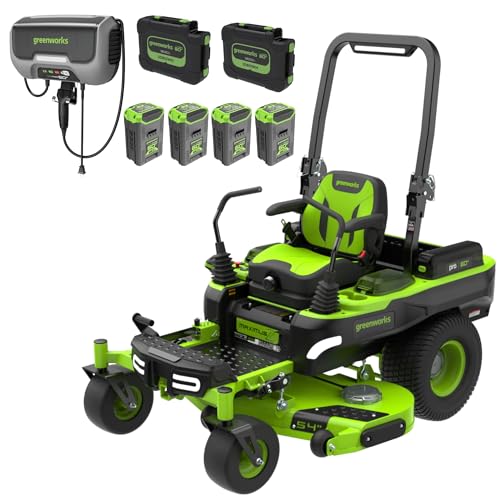
The Greenworks 60V MaximusZ Zero Turn Riding Lawn Mower is a commercial-grade electric rider built to handle large lawns with modern efficiency. It features a sturdy 10-gauge fabricated steel 54-inch deck and an intelligent brushless motor system that creates an immediate sense of durable, low-maintenance design aimed at serious yard work.
Performance centers on power equivalent to a 31HP gas engine delivered through zero-emission brushless motors that provide instant torque and quiet running. Three high-torque hub motors hold a constant 17900 FPM blade tip speed while SmartCut Technology adapts to grass density so the mower does not bog down in thick or wet conditions. The supplied battery pack of two 20.0Ah and four 8.0Ah units supports mowing up to 3.5 acres, and the deck offers 4-in-1 mulching, bagging, and discharge modes along with 300 lb towing capacity and hitch points for added utility.
Considerations include the need to manage several batteries to achieve maximum runtime, with recharging handled by the 1.5kW wall charger. As a full-size zero-turn model optimized for multi-acre properties, it may be less ideal for compact lots, and real-world coverage will depend on grass conditions and terrain as indicated in the product details.
Overall the Greenworks MaximusZ delivers strong value for homeowners or professionals who need emission-free power, consistent cutting performance, and comfort features on large properties while benefiting from a solid 4-year warranty and reduced ongoing maintenance.
Pros
- True modular system supports mowing plus optional leaf and snow blowing for multi-season versatility on one platform.
- Handles extensive areas up to 6 acres and steep 70 percent slopes thanks to dual motors and tracked design.
- AI Vision and RTK deliver accurate navigation and obstacle avoidance for efficient autonomous operation.
- Wide 0.8 to 4.0 inch cutting height range suits varied lawn care needs and grass conditions.
Cons
- Blower and snow blower modules are sold separately, adding extra cost for full all-season functionality.
- Snow blower module deliveries do not begin until July, postponing winter use for early buyers.
- Limited included accessories mean owners must invest further for complete modular utility beyond basic mowing.
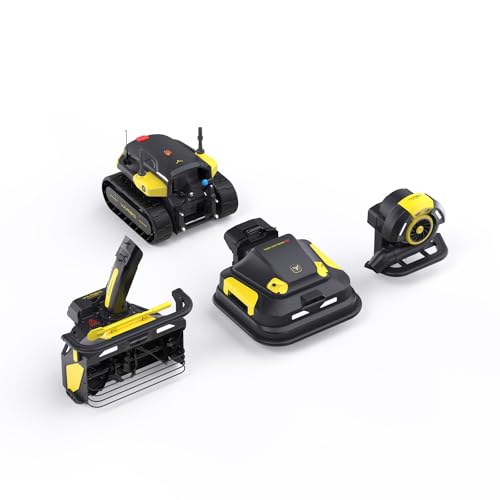
The YARBO Robot Lawn Mower Pro is a modular robotic lawnmower engineered for large-scale yard maintenance. Its core build centers on dual 300W motors, straight blades, and patented all-terrain tracks that convey a solid, purpose-built impression for demanding outdoor use. The modular architecture stands out immediately as the foundation for year-round utility rather than a single-season tool.
In performance, the unit covers yards up to 6.2 acres with AI Vision and RTK navigation for precise mapping and advanced obstacle detection. APP control simplifies operation while the 0.8 to 4.0 inch cutting height range adapts to different grass conditions. Optional modules expand capability: the leaf blower uses a 2000W motor for 190 MPH and 760 CFM airflow, and the snow blower offers a 24 inch cleaning width with 1.5 hour fast charging and up to 36 percent slope handling. These features make real-world mowing efficient on large residential or commercial properties including golf courses.
Drawbacks center on the modular approach itself. The blower and snow blower units are sold separately so the base mower alone does not deliver full all-season value. Snow blower deliveries start only in July which delays complete system readiness. Users should also plan for module swapping and storage of additional components as part of ownership.
Overall the YARBO Robot Lawn Mower Pro delivers strongest value to homeowners with large yards or landscaping professionals seeking one platform that replaces multiple tools. Those prioritizing expansive coverage, steep slope capability, and expandable seasonal modules will benefit most from this high-capacity robotic system.

Pros
- Strong stated cutting capacity for large properties, with up to 4 acres per charge.
- Zero-turn design supports fast, precise mowing around obstacles.
- Uses battery power instead of gas, reducing maintenance-related chores and emissions.
- Includes six high-capacity batteries and a charger, so it is ready for use out of the box.
Cons
- Heavy at 720 pounds, which may make transport, storage, or maneuvering by hand difficult.
- Large dimensions require substantial garage or shed space.
- The high upfront cost may put it out of reach for buyers with smaller lawns or limited budgets.
Overview & Design: The EGO Power+ ZT5207L is a 52-inch electric riding lawn mower with a zero-turn radius, built for users who need efficient coverage on larger properties. Its black finish, substantial frame, and 720-pound weight reflect a serious, full-size riding mower designed for demanding residential mowing.
Performance & Key Features: EGO says Peak Power+ technology combines up to six 56V ARC Lithium batteries, and the mower is rated at a 25 HP-equivalent output. The 52-inch deck and zero-turn steering should help reduce mowing time and improve control around landscaping, while the included six 56V 12.0Ah batteries are stated to support up to 4 acres per charge.
Drawbacks & Considerations: This model is large and heavy, so it will not suit every storage space or every user. Its premium positioning also means buyers should be confident they need this much capacity, since smaller yards may not justify the size, weight, or cost.
Verdict: The ZT5207L is best for homeowners with expansive lawns who want battery-powered convenience and zero-turn efficiency in one machine. It is a compelling option if you value gas-like performance, broad deck coverage, and compatibility with EGO's 56V battery ecosystem.

Pros
- Brushless motor system delivers gas-equivalent power without emissions or excessive noise
- High-capacity battery kit enables cutting coverage of up to 4.4 acres per charge set
- Durable 10-gauge steel deck and constant high blade tip speed handle dense grass effectively
- Premium seating and lighting features support comfortable extended operation
- 4-year warranty provides strong protection for the investment
Cons
- Runtime tops out around 4.4 acres depending on conditions, requiring recharges for bigger properties
- Electric design depends on charging infrastructure and battery management rather than simple refueling
- Height adjustment is noted only basically without extensive position details in available specs
The Greenworks 60V MaximusZ Zero Turn Riding Lawn Mower is a commercial-grade electric machine built for large lawns. Its primary construction centers on a heavy-duty 60-inch 10-gauge fabricated steel deck that prioritizes durability and airflow, paired with premium comfort elements including an adjustable suspension seat with lumbar support and foldable armrests for a solid first impression of quality and user focus.
Performance shines through an intelligent brushless motor system offering power equivalent to a 31HP gas engine with zero emissions. Three high-torque brushless hub motors sustain a constant 17,900 FPM blade speed, while SmartCut Technology auto-adapts to prevent bogging in thick or wet grass. The complete kit supplies (2) 20.0Ah suitcase batteries plus (4) 8.0Ah batteries and a 1.5kW fast charger for up to 4.4 acres of cutting. Additional capabilities include a 4-in-1 deck for mulching, bagging, rear and side discharge, 300 lb towing capacity with front/rear hitch, dual LED headlights, and an LCD display.
Drawbacks and considerations include the practical need to recharge the battery set after maximum runtime, which can interrupt work on properties exceeding 4.4 acres. Being fully electric means reliance on power sources for recharging instead of fuel, and height adjustment is referenced only in basic terms without more granular position data in the specifications.
In verdict, the Greenworks 60V MaximusZ delivers the most value to homeowners and professionals managing medium-to-large properties who want quiet, emission-free commercial power, versatile cutting options, and the security of a 4-year warranty in a comfortable zero-turn package.

Pros
- True 4-in-1 modular versatility for mowing, snow removal, and leaf clearing in one platform
- Strong large-yard capability up to 6.2 acres plus excellent slope performance with tracks
- Advanced AI multi-zone mapping and RTK navigation for accurate autonomous coverage
- High-output leaf blower performance that exceeds average handheld blower airflow
- Convenient auto-recharging and APP control features for reduced manual intervention
Cons
- Modular design requires physical module swaps between seasons or tasks which can interrupt continuous use
- Optimized for large 6.2-acre properties and may be oversized or unnecessary for smaller yards
- Limited detailed battery runtime specifications provided across all modules beyond snow blower charge times
The YARBO 4-in-1 Modular Robot stands out as a versatile all-season yard automation system built around a single core platform. Users swap dedicated modules to transform it into a robotic lawn mower, snow blower, or leaf blower. Its build focuses on durability for outdoor use with patented all-terrain tracks and integrated auto-recharging, creating an immediate impression of a premium multi-task solution aimed at larger properties.
In performance, the lawn mower module handles up to 6.2-acre yards and climbs 70% slopes while relying on advanced obstacle detection. The snow blower offers a 2-stage cordless setup with 24-inch cleaning width, APP control, operation on up to 36% slopes, and a 1.5-hour fast charge from 20% to 80%. The leaf blower module delivers 2000W of power at 190 MPH and 760 CFM to clear 99% of thick or rain-soaked debris. AI multi-zone mapping paired with RTK navigation supports precise, multi-area operation across tasks.
Drawbacks include the need to physically swap modules when changing functions, which adds a manual step between seasons. The system is clearly engineered for expansive 6.2-acre properties and steep terrain, so smaller yards may find it excessive. Detailed battery life figures beyond the snow blower charge data are not extensively listed, requiring owners to plan charging schedules carefully.
Overall, the YARBO 4-in-1 Modular Robot delivers strong value for owners of large, multi-season yards who want one automated platform instead of separate tools. Those with expansive lawns, significant snowfall, and heavy leaf loads will benefit most from its modularity, navigation tech, and all-terrain capability.
Pros
- Robust 26HP Kohler engine provides ample power for demanding mowing tasks and thick vegetation
- Large 60-inch fabricated steel deck enables faster coverage of extensive lawn areas
- Durable 3-blade fabricated construction enhances deck longevity and resistance to wear
- Zero-turn capability offers precise control and reduced mowing time in complex layouts
Cons
- Large 60-inch deck and overall zero-turn size demand significant storage space and may not suit smaller properties
- Base specifications lack details on accessories such as mulching kits or baggers, which may need separate purchase
- High-powered engine setup could increase fuel use during long sessions relative to lower-horsepower models
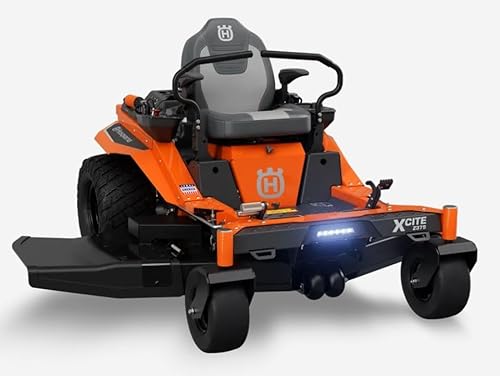
The Husqvarna Xcite Z375 is a zero-turn riding lawn mower engineered for large-scale residential and light commercial mowing. It combines a solid fabricated steel build with a capable Kohler power plant, creating an immediate impression of durability and purposeful design suited to expansive properties.
Performance centers on the 26HP 747cc Kohler V-Twin engine that supplies strong, consistent power for thick grass and varied terrain, paired with the 60-inch 3-blade fabricated steel deck. This setup delivers a wide, clean cut that covers ground efficiently and maintains quality across long sessions.
Considerations include the substantial footprint of the 60-inch deck and zero-turn frame, which requires ample storage and may feel oversized for compact yards. Available data also omits specifics on add-ons or comfort options, so buyers should confirm full feature sets independently.
The Husqvarna Xcite Z375 delivers the most value for owners of large lawns or light commercial operators who prioritize raw cutting power, deck durability, and zero-turn efficiency over compact size or extensive accessory packages.









