Quick Answer: Choosing the Best Difference Between Cultivator And Tiller
A tiller is the heavier, more aggressive machine for breaking new or compacted ground and opening a planting bed. A cultivator is the lighter, shallower tool for loosening soil that is already workable, mixing in amendments, and weeding near the surface. Tillers usually work deeper and take more effort to control; cultivators are smaller and more precise. Names overlap in…

Pros
- Manufacturer-stated 15 Amp corded power
- 18-inch size listed in the title
- Six steel tines per the listing
- Adjustable wheels included in the listing
Cons
- Corded design limits range to nearby outlets
- Power and tilling claims are unverified

Pros
- 13.5 Amp corded electric power stated
- 16-inch size listed in the title
- Steel tines per the listing
- Model SUJ-TJ604E identified
Cons
- Corded design limits range to nearby outlets
- Power and performance claims are unverified
Pros
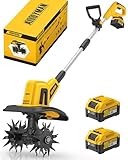
- Two 4.0Ah batteries and charger listed
- 360 RPM speed per the manufacturer
- 9-inch tilling width stated
- 6.6-inch tilling depth stated
Cons
- RPM, width and depth figures are unverified claims

Pros
- Battery-powered for cord-free tilling
- Designed for gardening and garden rototilling
Cons
- Battery, dimensions and power details not supplied
What a cultivator is designed to do versus a tiller
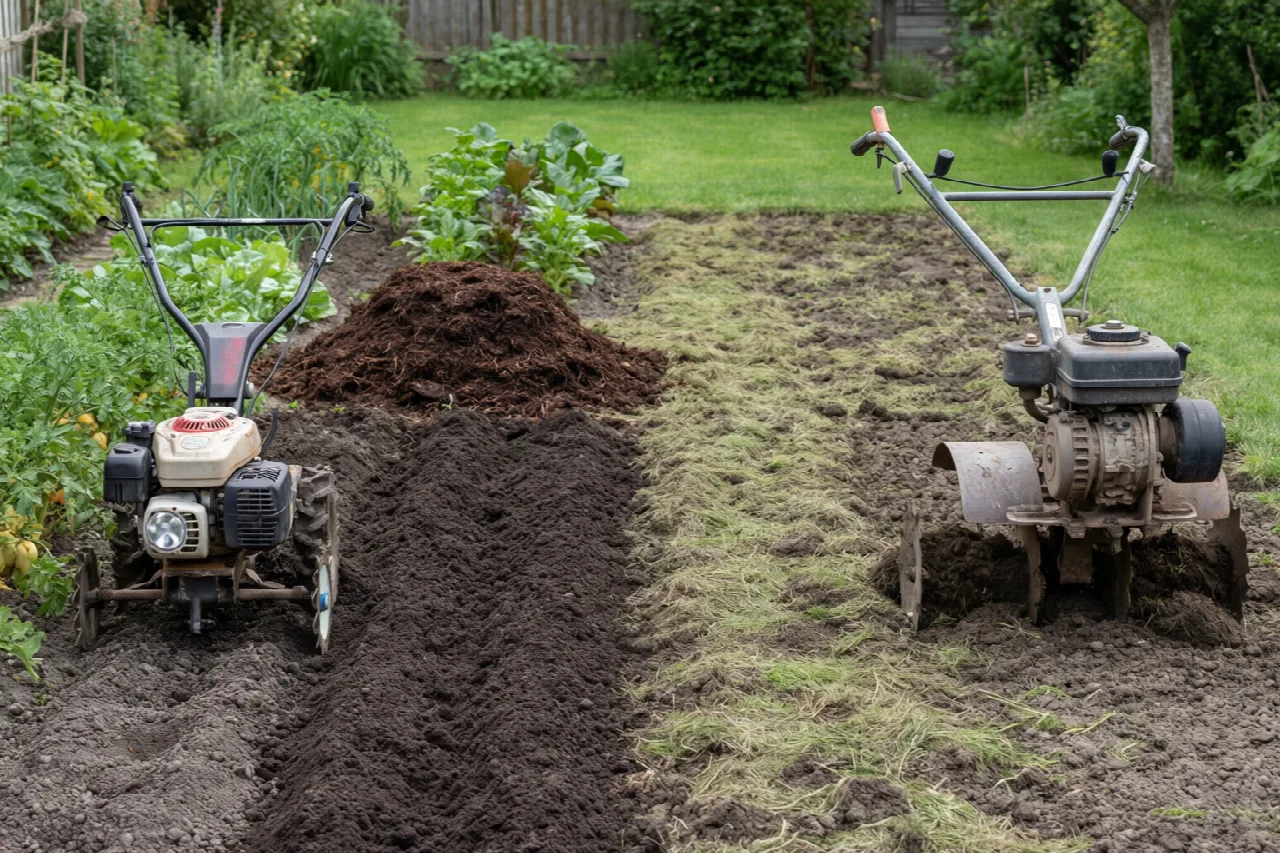
Both tools move soil, which is why the names blur together. They are not built for the same stage of a bed. A cultivator is meant to stir soil that is already in working condition. Its typical jobs are aeration near the surface, light weeding, fluffing a crusted seedbed, and blending compost or other amendments into the top layer. It is a finishing and maintenance tool more than a ground-breaking one.
A tiller, including the machines people call a rotary tiller or garden tiller, is meant to break soil that is not yet a planting bed. Its job is to cut into sod, invert clods, loosen compacted ground, and open a deeper working layer so you can form rows or a seedbed. That work is more disruptive. The machine is designed to chew through resistance, not to tiptoe between established plants.
In a simple sequence, the tiller comes first on raw or neglected ground. The cultivator comes later, once the soil is already loose enough to plant, weed, or refresh. Many gardeners never need a tiller after the first season if they keep the bed covered and do not let it compact again. Others use a tiller only when a plot has been walked on, driven over, or left in sod.
Retail language does not follow that sequence cleanly. A store may label a compact powered machine a cultivator, a mini-tiller, or a garden tiller depending on the catalog, not on a strict technical test. When the name on the box is vague, assume nothing from the word alone. Look at the job the maker describes, how deep the tool is said to work, how large the machine is, and whether the tines sit in front of the wheels, behind them, or on a handheld shaft.
Soil depth and how aggressively each tool works
The most useful contrast is depth and force, not brand language. A cultivator typically works shallower and with less disruption. It loosens a surface crust, mixes a thin layer of amendments, and uproots small weeds before they set seed. That is enough when the soil is already crumbly, when you are refreshing an established vegetable bed, or when you only need a fine layer for seed-to-soil contact. Users looking for related component recommendations can explore our z890 vs x870e motherboard breakdown.
A tiller typically works deeper and more aggressively. It is the tool people reach for when they must turn sod, break a hardpan-like crust, or convert a compacted plot into something that can be raked into a seedbed. Deeper tillage can help in those first-pass situations. It can also be unnecessary once the bed is already loose. Repeated deep tillage can smear wet soil, slice earthworm channels, and leave a fluffy layer that later settles into a denser one. Tillage is a tradeoff, not an automatic improvement in soil health or yield.
Soil condition should change the choice as much as the calendar. Wet soil is a poor candidate for either machine, especially a tiller. Rotating tines can polish wet clay into slabs and leave ruts that harden later. Rocky ground favors caution with any powered tines, because a hidden stone can stall the machine or make it lurch. Already-loose soil rarely needs a tiller; a cultivator, a hoe, or a mulch layer may do the job with less damage. Very compacted ground may overwhelm a light cultivator and stall a small front-tine machine, which is a sign you need a heavier tiller, a different method, or more than one careful pass rather than forcing the wrong tool. Before finalizing equipment decisions, refer to our comprehensive marshall stanmore iii vs harman kardon onyx studio 8 comparison.
Marketing pages sometimes print inch or centimeter ranges as if they were industry definitions. Those figures are typical claims at best, and they vary by machine, soil, and how the operator sets the depth stake or wheels. Treat any printed depth as a hint about intended use, not as a rule that separates every cultivator from every tiller.
Size, power, and tine style in everyday use
In a shed or a store aisle, the difference is often obvious before you read a label. Tillers are usually larger, heavier, and harder to turn. Cultivators are usually compact enough to walk between rows or around a raised bed. That size gap is why a first-time user often finds a tiller tiring even in a small plot: more mass, more vibration, and more tendency for the machine to pull itself forward as the tines bite. For broader ecosystem context, read through our operational guide on dyson v8 cyclone vs bissell featherweight stick.
Tines are the working claws. On a hand cultivator they are fixed. You supply the motion by pulling, twisting, or chopping. On a powered cultivator or tiller they rotate, driven by an engine or electric motor. Larger, more widely spaced, or more hooked tines generally tear and invert soil more violently. Smaller, closer tines generally stir and fluff. Arrangement matters as much as size. Tines mounted ahead of the wheels tend to pull the machine; tines mounted behind a set of drive wheels tend to be held to a more even depth by the wheels themselves. Counter-rotating rear tines are a real design family on some heavier tillers: they turn against the direction of travel so they dig rather than walk the machine away from the operator as quickly.
A first-time user should expect effort even from a “small” machine. Powered tines do not float through every soil. They grab roots, bounce on stones, and transmit vibration through the handles. A cultivator is usually easier to place precisely and to stop at the edge of a plant’s root zone. A tiller is usually harder to keep in a straight, shallow line and easier to overwork a bed. Neither layout is automatically easy for every body type or every soil. If you cannot comfortably hold the handles down and keep the machine from running ahead of you, the tool is too aggressive for that plot or that operator, regardless of the name on the housing. For troubleshooting and reliability insights, consult our in-depth bissell crosswave hydrosteam vs shark stainforce report.
Hand cultivators versus powered cultivators and garden tillers
A hand cultivator is not the same tool as a powered cultivator. The hand version is a manual fork, claw, or wheeled hoe with fixed tines. You stand or kneel and work a small patch: weeding a row, breaking a crust after rain, or mixing a bucket of compost into a planting hole. It is slow on a large plot and excellent close to stems, drip lines, and bed edges where a spinning machine would be clumsy.
A powered cultivator uses driven rotating tines on a compact frame or on a long shaft. In scale it sits between a hand tool and a full garden tiller. On already-worked soil it behaves like a cultivator: shallow, reasonably precise, useful for weeding and mixing amendments. On sod or hard ground the same compact machine can start to behave like a weak tiller. It will bounce, stall, or leave uncut strips. That is the point at which people either make several light passes, switch to a heavier tiller, or abandon tillage for sheet mulch, a sod cutter, or hand digging.
Compact machines are sold under every label: cultivator, mini-tiller, garden tiller, even rotary tiller. The retail category is not a technical standard. Treat a compact powered unit as a cultivator when the listing emphasizes weeding, established beds, and shallow mixing. Treat it as a small tiller when it emphasizes breaking new ground. If the copy promises both jobs, believe the physical limits of the machine more than the headline. A hand tool is enough when the bed is small, the weeds are young, and you only need to mix amendments in place. A small powered machine starts to earn its keep when the same surface work covers more area than you want to do on your knees, but the soil is already loose enough that you are not asking it to invert sod.
Front-tine and rear-tine tillers
Front-tine and rear-tine machines are types of tillers, not a third category of tool. The names describe where the rotating tines sit relative to the wheels and the operator.
A front-tine tiller puts the tines ahead of the wheels. The spinning tines both dig and pull the machine forward. That layout is commonly lighter and more compact. It is usually easier to turn at the end of a short garden row and easier to store. It is also more sensitive to the operator’s downward pressure on the handles. Lift the handles and the tines bite deeper; press down and they rise. In loose soil that can feel nimble. In tough or unbroken ground it can feel like the machine is walking away from you or hopping over the hard spots.
A rear-tine tiller puts the tines behind a set of drive wheels. The wheels feed the machine into the work while the tines dig. That layout is commonly heavier and more stable in resistant soil. It is generally the better match for sod, compacted plots, and first-time beds, provided you have space to turn and the strength to manage the mass. Some rear-tine designs use counter-rotating tines so the digging action fights the forward pull. That can help the machine stay in the cut instead of skating across the surface. It does not make any layout universally safer. A heavy rear-tine tiller can still lurch if a tine hooks a root or rock.
Product listings sometimes call a front-tine machine a cultivator because it is smaller and often used for lighter follow-up work. Functionally it is still a tiller layout: powered rotating tines that can break soil well below a hand tool’s reach. If you are comparing machines, ask where the tines sit, whether the wheels are driven, and whether the intended job is new ground or an established bed. Those answers matter more than whether the title says cultivator or tiller.
When to choose a cultivator and when to choose a tiller
Match the tool to the job, then to the space you have to maneuver.
- Choose a tiller, usually a more substantial front-tine or a rear-tine machine, for new ground, sod, a compacted plot, or a bed that has been unused long enough to set hard. The goal is to open a planting layer, not to polish soil that is already loose.
- Choose a cultivator, hand or powered, for an established vegetable bed, mixing compost or other amendments into the surface, weeding between rows, and refreshing a seedbed before sowing. The goal is shallow loosening and blending.
- If you have only one machine and a very small space, a compact powered cultivator or mini-tiller plus a hand cultivator will cover more real garden tasks than a large tiller you cannot turn at the end of the bed. A large tiller sitting unused is not more useful than a claw you will actually pick up.
- If the plot is tiny, already mulched, or planted closely, a hand cultivator, hoe, or broadfork-style loosening may be enough. Powered tines need room to run and a reason to spin.
There are times when the better choice is not to till at all. Established beds often stay more stable if you add organic matter on top, keep a mulch cover, and only cultivate the surface to cut weeds or incorporate a thin dressing. Leaving soil undisturbed can protect structure that deep tillage would mix and then leave exposed to rain. That is not a rule against ever using a tiller. It is a reminder that a tiller’s strength, breaking ground, is a cost when the ground is already a functioning bed.
Mixed-use machines exist. A modest front-tine unit may break a small new bed in several careful passes and later serve as a cultivator in the same space. That flexibility does not erase the depth and aggressiveness difference. Use the shallowest setting and the fewest passes that finish the job. Stop when the soil is workable, not when it looks like powder.
Why the names get mixed up, and how to read a listing
Consumer English is loose. Stores call some mini-tillers cultivators because shoppers search both words and because compact machines do both light tilling and cultivation depending on the soil. Regional habit plays a part as well. One person “tills the garden” with a claw; another “cultivates” with a rear-tine machine. Search results inherit that mix.
In ordinary consumer language, rotary tiller and garden tiller usually point to the same family of powered tilling machines: rotating tines that prepare a bed. Rotary tiller simply emphasizes the spinning action. Garden tiller emphasizes the setting. Neither phrase, by itself, tells you whether the tines are in front or rear, how heavy the frame is, or how deep the tool is meant to work. There is no single official consumer definition that every retailer follows, so do not treat a title as a classification from a standards body.
Read the listing for features instead of trusting the headline:
- Intended job: breaking new ground versus weeding and mixing in an existing bed.
- Working-depth language: shallow surface work versus opening a planting bed. Treat numbers as marketing-typical, not as a standard.
- Machine scale: something you can lift into a car versus something that needs a ramp or two people.
- Tine location: front, rear, or on a handheld shaft.
- Whether the soil is assumed to be already loose.
- Whether the wheels are driven, which usually signals a more tiller-like machine.
If you are renting or borrowing, ask the same questions out loud. What was the machine last used for? Does it have a depth control that actually holds? Are the tines intact, or bent from rocks? Can you walk it in the space you have, including the turn at each end? A borrowed rear-tine tiller is the wrong weekend surprise for a narrow raised-bed path, just as a handheld cultivator is the wrong surprise for a sodded side yard.
Safety and soil caveats before you till or cultivate
Rotating tines are cutting tools. They can entangle clothing, laces, gloves, extension cords, irrigation tubing, roots, and wire. They can throw stones and clods. A powered tiller can kick or lurch when a tine hooks something solid or when one side bites harder than the other. That motion is strongest on heavier machines and on uneven ground, but a compact cultivator can still jerk the handles. People who cannot reliably hold the machine, keep bystanders and pets away, and shut it down in a hurry should not operate one casually. Children should not be near the tines. Follow the specific machine’s manual for starting, stopping, shielding, and service. This article is not a substitute for that manual and does not describe how to bypass interlocks or other guards.
Check what is underground before you dig or till. Buried pipes, wires, irrigation lines, and pet fencing are easy to hit once tines are below the surface. Utility-locate rules and phone numbers vary by place, so use the local process for marking public lines before you work, and treat private lines, such as landscape lighting and drip mainlines, as your own responsibility to map. If you do not know what is in the ground, do not run a tiller there.
Eye and hearing protection are common practice with powered equipment, along with sturdy closed-toe shoes and clothes that cannot dangle into the tines. Clear the plot of sticks, wire, toys, and rocks you can see. Stop if the machine starts to hop, bind, or make a new noise. Do not reach toward the tines while they can still move.
Soil has limits as well. Tilling wet ground can create smeared layers and later compaction. Repeatedly pulverizing the same bed can destroy crumbs that help water and air move, and it can bring weed seeds to the surface. Deep tillage is a tool for opening ground, not a weekly habit. If the bed is already a seedbed, cultivate shallowly or leave it undisturbed and mulch. If you are unsure whether a large rear-tine machine is appropriate for a slope, a crowded yard, or ground that may hide utilities, get help from someone experienced with that class of equipment rather than learning on a machine that can pull you off balance.
How to tell the tools apart in one pass
A cultivator loosens, aerates, weeds, and mixes soil that is already workable. A tiller breaks new, sod-covered, or compacted ground and prepares a planting bed more deeply. Tillers are typically larger, heavier, and more aggressive. Cultivators are typically smaller and easier to place in established beds and tight rows. Hand cultivators have fixed claws; powered cultivators and tillers have driven rotating tines. Front-tine tillers are commonly more compact and turning-friendly; rear-tine tillers are commonly better on tougher, unbroken ground. Rotary tiller and garden tiller usually mean the same broad family of powered machines. Mini-tiller and cultivator on a compact listing often mean the same shelf of small powered units.
The label on the box is less reliable than the intended job, the scale of the machine, where the tines sit, and how deep the tool is meant to work. Choose the shallower, more precise tool when the soil is already a bed. Choose the deeper, more aggressive tool when you still have to make a bed. When the names disagree, believe the soil in front of you.
Technical Standards and Compliance
For further specifications and verified tests, explore our breakdown of how much is a weed wacker.
Mechanical safety standards, operational tolerances, and protective gear guidelines align with benchmark specifications established by the American National Standards Institute (ANSI).