

Quick Answer: Do New Lawn Mower Blades Need To Be Sharpened?
No, new lawn mower blades do not need to be sharpened before their first use. Manufacturers ship these blades factory-sharpened and ready for immediate installation. While it is a good practice to inspect the cutting edge for any minor burrs or nicks that may have occurred during shipping, you generally do not need to perform any grinding or sharpening work…

Pros
- Large-size design named in product title
- Sharpening and balancing functions listed
- Listed as a new upgraded version

Pros
- Adjustable 15-to-45-degree range in title
- Sharpening and balancing functions listed

Pros
- Sharpener and balancer functions in title
- 15-to-45-degree adjustable setting listed
- Built for lawn mower blade maintenance
Pros
- Includes replacement gaskets and a 98079-55846 spark plug
- Matches Honda HRR216 and HRS216 lawn mower models
- Designed around the 16100-Z8B-901 carburetor specification
Cons
- Restricted to select Honda GCV160 mower applications
- Installation requires basic mechanical tools and skills
Understanding the Question: Are New Blades Ready to Use?
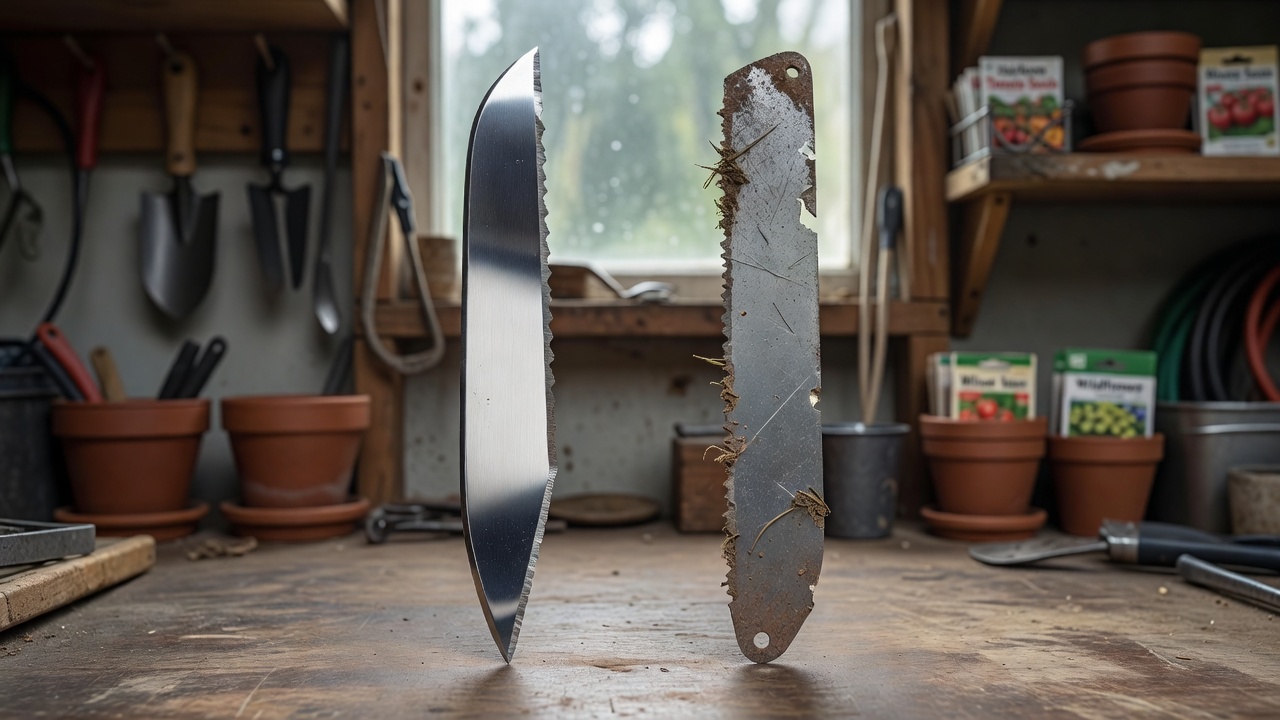
Many lawn care enthusiasts question whether a new blade is truly “sharp enough” because they are accustomed to the maintenance required for older equipment. In reality, lawn mower blades are sharpened at the factory during the manufacturing process. This ensures that the blade geometry—the specific angle of the cutting edge—is consistent with the manufacturer’s design specifications.
Some users may feel compelled to sharpen a new blade because they assume “factory-sharp” means a refined, razor-like edge. However, a lawn mower blade does not need to be as sharp as a kitchen knife. A blade that is too thin or sharp can become brittle and prone to chipping when it strikes debris. Understanding that the factory edge is intentional helps clarify why further sharpening is unnecessary and potentially counterproductive.
Key Factors to Consider Before Installing a New Blade
While new blades are ready to use, it is wise to perform a brief inspection before mounting them to your mower deck. Shipping processes can sometimes result in small burrs or cosmetic nicks along the metal edge. A minor burr is usually harmless, but if you notice significant damage, it is better to contact the manufacturer or retailer rather than attempting to grind away large sections of metal, which could throw the blade out of balance. Before finalizing equipment decisions, refer to our comprehensive jbl partybox club 120 vs sony srs xv500 comparison. For complementary hardware performance, examine our breakdown on our comprehensive riding lawn mower guide.
The material of the blade also plays a role. Most standard replacement blades are made of tempered steel designed to hold an edge for a reasonable amount of time. Regardless of the material, the primary goal of the factory edge is to provide a clean cut that promotes grass health. Unless you have purchased a specialized blade that explicitly states it requires a final finish, you should trust the factory-provided edge. Before finalizing equipment decisions, refer to our comprehensive jbl partybox club 120 vs sony srs xv500 comparison.
Step-by-Step: How to Check a New Blade Before Installation
To ensure your new blade is in top condition, follow these steps: For broader ecosystem context, read through our operational guide on z890 vs x870e motherboard. For complementary hardware performance, examine our breakdown on weed eater.
- Visual Inspection: Hold the blade under good lighting. Look for any signs of cracks or significant deformation along the cutting edge.
- Safe Handling: Even a “dull” mower blade can cause injury. Always wear heavy-duty work gloves when handling the blade to protect your hands from the edge.
- Check for Burrs: Run a gloved finger or a soft cloth along the edge. If you feel a small, raised piece of metal (a burr), it is usually acceptable to leave it, as it will often wear away during the first few minutes of mowing.
- Installation: Always consult your mower’s owner manual for the correct installation procedure. Ensure the blade is oriented correctly—the “grass side” should face the ground.
If you encounter a blade that arrived with significant damage, it is safer to return it for a replacement rather than attempting to repair the edge yourself.
Direct Answer and When Sharpening Actually Matters
New blades are ready to go, but they will eventually lose their edge through regular use. Mowing with a dull blade is detrimental to your lawn; instead of slicing through grass, a dull blade tears the blades of grass. This creates frayed ends that turn brown and become more susceptible to disease and pests. For broader ecosystem context, read through our operational guide on z890 vs x870e motherboard.
While new blades don’t need sharpening, you should establish a maintenance schedule for your equipment. Generally, lawn mower blades should be inspected and potentially sharpened once or twice per season, or roughly every 20 to 25 hours of operation, depending on your mowing conditions. If you frequently mow over dry, sandy soil or debris-heavy areas, your blades may dull much faster. When you eventually decide to sharpen your blades, ensure you maintain the original blade angle and, crucially, check the blade for balance before reinstalling it to prevent vibration that can damage your mower’s spindle and engine bearings.
For more hands-on benchmarks and buying recommendations, consult our guides on heavy-duty chainsaw buyer guide, as well as high-CFM commercial leaf blower guide.
Mechanical safety standards, operational tolerances, and protective gear guidelines align with benchmark specifications established by the American National Standards Institute (ANSI).









