

Quick Answer: Fix Stuck Lawn Mower Pull Cord Diagnostic & Solution
A stuck pull cord is frustrating, but the solution depends on the underlying cause. Three main issues are responsible: engine seizure (internal parts lock up), rope tangling or knotting inside the recoil housing, or a broken recoil spring that prevents retraction. Never force the cord, this can cause further damage or injury. Start by determining whether resistance comes from the engine…

Pros
- Listed fit for B&S 163cc engines and Craftsman M230
- Seller names Toro 20333 and Recycler 22 as compatible
- Seller offers a 30-day return or refund policy
- Listed 6-month warranty with free replacements for quality issues
Cons
- Listing says compatibility is limited to 163cc engines
- Buyers must compare the starter with listing images before ordering

Pros
- Three 10 ft starter ropes with handles in one pack
- Listed 16-strand braided polyester construction
- Listed as longer than standard 6 ft mower pull cords
- Handle described by the manufacturer as palm-safe
- 12-month warranty stated by the seller
Cons
- Compatibility list is manufacturer-stated; confirm fit before buying
- No customer reviews yet to verify performance
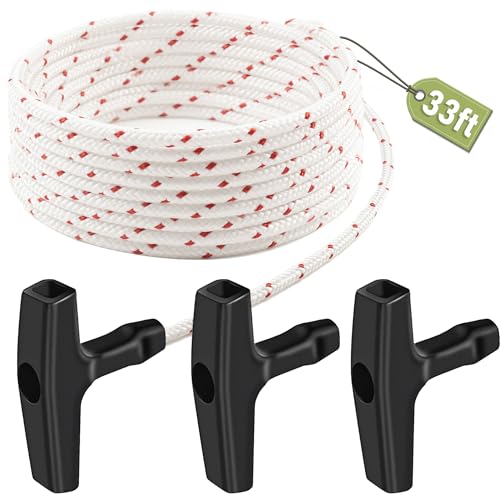
Pros
- 33-foot length listed for custom cutting
- 16-strand braided polyester construction, per listing
- 3.5mm (9/64-inch) diameter listed
- Ergonomic starter handle described in the listing
Cons
- Broad compatibility claims lack specific model numbers
- Handle contents are not clearly itemized
Why Pull Cords Get Stuck
Understanding the mechanics helps you choose the right fix. Engine seizure occurs when the piston or crankshaft cannot move due to lack of lubrication, excessive heat, or internal debris. Overheating from running with low oil, or water ingress from moisture, can cause rust and seize the piston. Old fuel can also leave varnish that gums up the cylinder. Rope tangling happens inside the recoil housing when the cord loops over itself or forms knots during retraction. This often results from improper winding or a frayed rope that catches. Recoil springs can break over time due to metal fatigue; when they snap, the spring loses tension and the cord either won’t retract or stays fully extended. Moisture and humidity can accelerate spring corrosion and cause rust on the starter pulley, adding friction. Recognizing these potential failures guides your diagnostic process.
Safety Precautions Before Attempting Repairs
Before you touch anything, prioritize safety. Disconnect the spark plug wire to prevent any accidental engine start. If the engine is seized, forcing the cord could break the starter assembly or your hand. Wear heavy gloves to protect from sharp metal edges and recoil spring tension if it suddenly releases. Work in a well-ventilated area and have a fire extinguisher nearby in case of fuel spills. Never yank the cord with sudden, jerking motions; instead, pull gently to gauge resistance. If you suspect a broken spring, be aware that it can unwind with force, keep your face clear of the recoil housing. Remove the spark plug to relieve compression, which can make it easier to turn the engine manually. These precautions prevent injury and further damage to the mower.
Diagnosing the Source of the Jam

Begin by testing the cord with minimal force. Pull the cord slowly; if it moves slightly but then stops abruptly, the rope may be tangled. If it doesn’t move at all and feels rock solid, the engine is likely seized. If the cord pulls out but won’t retract, suspect a broken or dislodged recoil spring. Next, remove the spark plug and try pulling the cord again, this releases compression and may allow a mildly seized engine to turn. If it still won’t move, remove the recoil housing (usually held by a few bolts). Once removed, inspect the rope for tangles or knots. Check the spring condition: it should be intact and connected to the pulley. Also examine the starter pulley for cracks or wear. If the pulley turns freely but the engine doesn’t, the problem is internal. If the pulley is stuck, the issue is in the recoil assembly. This systematic approach saves time and avoids unnecessary disassembly.
Freeing a Stuck Pull Cord
Based on your diagnosis, apply the appropriate fix. For tangled rope: remove the recoil housing, carefully unwind the rope, and rewind it evenly around the pulley, maintaining tension. If the rope is frayed or damaged, replace it with a new cord of the same diameter and length. For a broken spring: you’ll need to replace the entire recoil assembly or, if available, install a new spring. This can be tricky; consider buying a pre-wound starter assembly to avoid the hassle of winding a spring. For mild engine seizure: remove the spark plug and pour a few teaspoons of penetrating oil (like WD-40 or PB Blaster) into the cylinder. Let it sit for several hours, then gently try to turn the engine by hand using a socket on the flywheel nut. Work it back and forth to free it. If it moves, change the oil and clean the carburetor before starting. For severe seizure where the piston is locked, professional repair or engine replacement is necessary. Never use a cheater bar on the flywheel, you risk breaking the crankshaft.
Preventing Future Cord Sticking
Prevention is the best strategy. Use your mower regularly, monthly operation keeps the engine lubricated and prevents rings from sticking. At the end of the season, drain the fuel or add a stabilizer to prevent gum formation. Store the mower in a dry place to avoid rust and corrosion. Before storage, remove the spark plug and add a teaspoon of oil into the cylinder, then pull the cord gently to coat the walls. Clean the recoil housing annually and inspect the rope for wear. Also, keep the air filter clean and change the oil as recommended to reduce internal wear. These practices significantly reduce the chance of a stuck cord. Users looking for related component recommendations can explore our z890 vs x870e motherboard breakdown.
Related Maintenance and Operating Guides
To keep your equipment running at peak operating efficiency, explore our related technical walkthroughs and maintenance tutorials:
- Consult our detailed breakdown on residential zero-turn lawn mower guide.
- Consult our detailed breakdown on heavy-duty chainsaw buyer guide.
- Consult our detailed breakdown on durable ride-on lawn tractor guide.
Technical Standards and Compliance
For further specifications and verified tests, explore our breakdown of battery weed wacker.
Mechanical safety standards, operational tolerances, and protective gear guidelines align with benchmark specifications established by the American National Standards Institute (ANSI).









