

Quick Answer: How Long Do Electric Lawn Mower Batteries Last?
Electric lawn mower battery duration covers both runtime on a single charge and overall lifespan until replacement. Both vary with battery chemistry, mower size, and usage rather than a single fixed figure. People searching for how long electric lawn mower batteries last often have one of these two questions in mind, and addressing both provides a clearer picture of what…

Pros
- Powerful 80V brushless motor delivers 32HP gas-equivalent performance with quiet fume-free operation and no engine maintenance.
- Complete kit includes four 6.0Ah batteries and 600W charger for substantial runtime up to 1.5 acres.
- SmartCut technology and 42-inch heavy-duty steel deck ensure consistent cuts without bogging in tough conditions.
- Versatile towing up to 350 lbs and optional cargo hauling plus comfort features like high-back seat and LED lights.
- Strong 4-year limited warranty and full compatibility with the Greenworks 80V tool ecosystem.
Cons
- Rear utility cargo bed for 200 lb hauling is sold separately and not included in the kit.
- Runtime of up to 1.5 acres varies with conditions and may require recharging or battery swaps on larger properties.
- As a fully cordless model continuous operation depends on battery levels unlike gas engines with unlimited runtime.
The Greenworks 80V 42" CrossoverT Cordless Riding Lawn Tractor is a ready-to-mow zero-emission tractor designed for homeowners managing medium to large lawns. It features a reinforced 42-inch stamped steel deck of 12-gauge construction along with premium comfort elements such as a high-back padded seat with foldable armrests. The overall build emphasizes durability and user convenience right out of the box with the included battery and charger set.
Performance centers on the 80V TruBrushless motor that provides 32HP gas-equivalent power with instant torque and quiet fume-free operation. SmartCut technology senses grass conditions and automatically adjusts power to maintain a consistent cut even in tall thick or wet areas. The four 6.0Ah batteries support runtime for up to 1.5 acres depending on conditions while dual LED headlights and a 7-position deck height range from 1.5" to 4.5" add practicality. Front and rear attachments further allow towing up to 350 lbs for added yard utility.
Key considerations include that the rear utility storage bin capable of hauling 200 lbs is sold separately so full cargo functionality requires an extra purchase. Runtime remains condition-dependent and may fall short for properties significantly larger than 1.5 acres without using the 600W charger or swapping batteries. The cordless design prioritizes ease and low maintenance but trades off the continuous runtime of traditional gas models.
This tractor delivers strong value for eco-conscious owners of residential properties who want gas-like power without the emissions noise or upkeep. It suits those who already use or plan to expand into the Greenworks 80V family of tools and who appreciate the 4-year limited warranty. Users with exceptionally large or commercial-scale lawns should evaluate battery logistics carefully before purchase.

Pros
- Delivers strong 21 horsepower equivalent power comparable to gas riding mowers.
- Provides up to 1.5 acres of runtime on a full charge with the six included batteries.
- Features low-maintenance dual brushless motors without belts for greater durability.
- Offers versatile 12-position cutting height adjustment from 1.5 to 4.5 inches.
- Includes digital controls for blade settings, drive speeds, and cruise control.
Cons
- Limited to 1.5 acres of cutting per charge without purchasing additional batteries for bigger lawns.
- Requires recharging time for the six 56V batteries after each use session.
- Relies solely on battery power with no hybrid or gas backup option for extended operation.
The EGO Power+ TR4204 is a cordless electric riding lawn mower built as a modern tractor alternative for residential use. It features a robust 42-inch stamped steel deck and arrives ready to go with six 56V 6.0Ah batteries plus a charger, creating an immediate impression of convenience and solid construction free from gas engine complexity.
Performance shines through its equivalent 21 horsepower output and top speed of 6 MPH, allowing efficient coverage of up to 1.5 acres on a single charge. Dual brushless cutting motors operate without belts for added durability and less upkeep, while the digital display lets users select three blade settings, three drive speeds, and cruise control. The 12 adjustable heights ranging from 1.5 to 4.5 inches combined with anti-scalp wheels deliver precise results across varied terrain.
Drawbacks center on battery dependency, as larger properties beyond 1.5 acres require extra batteries and recharging intervals can interrupt workflow. The fully electric design eliminates fuel storage needs but demands access to power sources between sessions.
This mower suits homeowners with medium to large yards who value quiet, emission-free operation and reduced maintenance. Those seeking expandable battery capacity for bigger areas will find the EGO Power+ TR4204 a strong long-term investment in cordless lawn care.
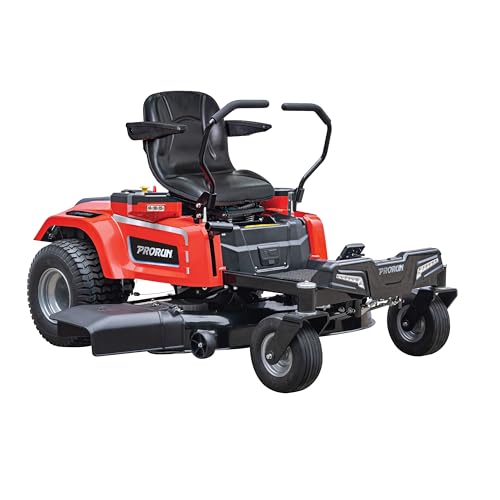
Pros
- High-efficiency brushless motors maximize power output and durability over traditional motors
- Up to 2 acres runtime with three included 10.0 Ah batteries supports substantial mowing sessions
- Zero-emission operation with gas-equivalent 20 HP power for quieter environmentally friendly use
- Six-port auto-switchover battery system provides flexible extended runtime options
- Durable 42-inch steel deck plus included mulch and towing kits add immediate functionality
Cons
- Runtime is limited to approximately 70 minutes or 2 acres which may require recharging for larger properties
- Fully battery-dependent design means performance relies on charge levels and spare battery availability
- 42-inch deck size may require more passes on expansive lawns compared to wider commercial models
The PRORUN PZT60V42 is a fully electric 60V zero-turn riding lawn mower built for residential and light commercial use. Its primary design centers on a robust 42-inch 14-gauge stamped steel twin blade deck powered by direct-drive brushless motors, giving an immediate impression of solid construction and modern battery-focused engineering. The mower arrives complete with three 10.0 Ah batteries, a charger, mulch kit, and towing kit for ready-to-work versatility.
In performance terms, four high-efficiency brushless motors deliver power equivalent to a 20 HP gas engine while producing zero emissions. The system supports up to 2.0 acres or 70 minutes of runtime, and six battery ports with auto switchover intelligently manage all PRORUN 60V battery sizes for continuous operation. A washout port on the steel deck further simplifies post-mow maintenance during real-world sessions.
Potential drawbacks include the finite 70-minute runtime window which can limit coverage on larger properties without spare batteries or recharge breaks. As a fully electric model, it also depends entirely on battery charge levels rather than continuous fuel refills, and the 42-inch deck width may demand extra passes compared with wider traditional options.
Overall the PRORUN PZT60V42 offers strong value for homeowners and small-property managers who want gas-like cutting power without emissions or noise. Those with medium-sized lawns seeking quiet efficient zero-turn performance and included accessories will benefit most from this electric mower.

Pros
- Strong 24HP FR730 engine power for demanding cutting conditions
- Wide 54-inch FAB deck reduces total mowing time
- Zero turn design delivers excellent maneuverability
- Fabricated deck supports durable everyday operation
Cons
- Sparse details beyond engine and deck leave other features unspecified
- Gas-powered FR730 engine needs regular fuel and maintenance
- Large 54-inch deck size may feel oversized on compact properties
The Husqvarna Z254F is a zero turn mower from the established Husqvarna brand in the riding lawn mowers category. It centers on a solid build that pairs a 24HP 726cc FR730 engine with a 54-inch FAB deck for straightforward residential grass care.
Performance stems directly from the listed specifications. The FR730 engine delivers the horsepower needed for steady operation across typical lawns while the wide FAB deck completes passes efficiently. Zero turn handling improves control in real yard layouts based on the model design.
Considerations arise from the limited data available. Secondary elements such as comfort features fuel capacity or extras receive no mention and the gas engine format involves routine upkeep. The large deck suits open areas better than confined spaces.
The Husqvarna Z254F provides the most value for owners of medium or large properties who want reliable engine power and a broad cutting width. Users with smaller lots or those seeking extensive accessory options should weigh the core specs carefully before purchase.
Runtime Per Charge Versus Total Lifespan
The phrase how long do electric lawn mower batteries last can point to two related but separate ideas. One is the length of time the mower will run during a single mowing session after the battery has been fully charged. The other is how many years or how many full charge cycles the battery can deliver before its capacity has declined to the point that replacement becomes the practical choice. Clarifying these meanings prevents confusion when comparing models or planning lawn care.
What does runtime per charge mean for an electric lawn mower?
Runtime per charge describes the period of continuous or intermittent operation an electric lawn mower can provide from a battery that starts at full capacity until the voltage drops to a level where the mower stops or a low-battery indicator appears. This duration is the practical answer to whether the mower can finish a given lawn without pausing to recharge. It is influenced in the moment by how much power the motor draws. Taller or denser grass, wet conditions, slopes, and faster walking speeds all increase the load on the motor and therefore shorten the time the battery can sustain that load. A smaller battery pack on a compact mower will generally support less total energy delivery than a larger pack, though the actual minutes of mowing still depend on the conditions that day. Runtime is not a fixed specification that remains the same every time the mower is used; it fluctuates with the work being asked of the machine. Users can get a sense of typical runtime for their own setup by noting how long a full charge lasts under their usual mowing conditions and adjusting expectations accordingly. Because electric lawn mowers are often used for residential yards of varying sizes, the relevant runtime is the one that matches the area that needs cutting in one session.
Measuring runtime involves simply using the mower after a complete charge and recording the elapsed time until performance drops. Some mowers include displays that estimate remaining time based on current draw, but these estimates themselves vary with conditions. The battery chemistry and its state of health also play a role even in a single session, because an older battery that has lost some capacity will deliver less runtime than it did when new, even if charged fully. This overlap between the two meanings of battery life is why they must be discussed together. For someone with a modest lawn, a shorter runtime may still be entirely adequate if the mower can complete the job. For larger properties, users may need to plan for a second battery or a mid-session charge, depending on the available runtime.
What does overall battery lifespan mean in years or charge cycles?
Overall battery lifespan refers to the total service life of the battery pack before it no longer holds enough charge to be useful for mowing or before it becomes unreliable. This can be thought of in calendar time—how many seasons the battery remains serviceable—or in terms of charge cycles, where one cycle is a full discharge followed by a full recharge, or an equivalent amount of partial cycling. Batteries degrade gradually. Each cycle and the passage of time even when unused contribute to a slow reduction in the amount of energy the battery can store. Eventually the reduced capacity means that even a “full” charge provides too little runtime for practical use, or the battery may fail to accept a charge properly. Lifespan is therefore a longer-term property than runtime per charge. A battery might still provide acceptable runtime for many uses after it has already begun to age, until the cumulative loss crosses a threshold that makes continued use inconvenient. Before finalizing equipment decisions, refer to our comprehensive jbl partybox club 120 vs sony srs xv500 comparison.
The two concepts are linked because the way the battery is used affects how quickly it ages. Frequent deep discharges, high temperatures during charging or storage, and leaving the battery in a fully depleted state for long periods can accelerate the loss of capacity. Conversely, moderate use, timely recharging, and storage at recommended temperatures can help the battery retain more of its original capability for a longer period. Because electric lawn mower batteries are typically designed as replaceable packs, the overall lifespan question often becomes when it makes sense to purchase a new battery rather than continue with diminished performance. Manufacturers may provide general guidance on expected service, but actual results depend on the specific chemistry, construction, and how the owner treats the pack. Tracking both current runtime and how that runtime has changed over months or years gives a practical indication of remaining useful life. Before finalizing equipment decisions, refer to our comprehensive jbl partybox club 120 vs sony srs xv500 comparison.
Distinguishing runtime from lifespan also helps when evaluating whether an electric lawn mower meets a household’s needs. A mower whose battery offers sufficient runtime for the lawn today may still require a replacement battery after several seasons, at which point the owner can decide whether to replace just the battery or consider a newer mower. Understanding that battery life has these two dimensions allows more realistic expectations and better maintenance habits from the start.
How Battery Chemistry, Mower Size, and Usage Change Duration
No single factor determines how long electric lawn mower batteries last in either sense. Battery chemistry, the physical size and power of the mower, and the patterns of use all interact to shape both the minutes of runtime available on a given charge and the number of seasons or cycles the battery remains viable. Examining each variable shows why published or advertised figures, when they exist, serve only as starting points rather than guarantees. For broader ecosystem context, read through our operational guide on z890 vs x870e motherboard.
How does battery chemistry affect how long the battery lasts?
Different battery chemistries store and deliver energy in different ways, which influences both immediate runtime and long-term durability. Lithium-ion chemistries have become common in cordless electric lawn mowers because they typically offer a favorable combination of energy density, relatively low weight, and the ability to be recharged many times. Higher energy density means more watt-hours can be packed into a given physical size and weight, which can translate into longer potential runtime for a mower of a certain power level, or a lighter mower for the same runtime. Lithium-ion packs also tend to have lower self-discharge rates than some older chemistries, so they hold their charge better when the mower sits unused between mowings. However, lithium-ion batteries are sensitive to temperature extremes and to being stored at very high or very low states of charge for extended periods; these conditions can hasten capacity loss. Other chemistries such as nickel-metal hydride or sealed lead-acid appear in some older or specialized equipment. They generally have lower energy density, which can mean shorter runtime or heavier packs for equivalent energy, and they may have different cycle-life characteristics and charging requirements. Lead-acid batteries, for example, are more tolerant of certain abuses in some contexts but are heavier and may require different maintenance. The specific formulation, cell quality, battery management system, and thermal design chosen by the mower manufacturer further modify how a given chemistry performs in real mowing. Because chemistry sets the fundamental limits on energy storage and degradation mechanisms, it is one of the primary reasons two mowers of similar appearance can deliver different battery life.
The battery management electronics that accompany modern packs also matter. They protect against overcharge, over-discharge, and excessive current, all of which can damage cells and shorten both runtime consistency and overall lifespan. A well-designed system helps the chemistry achieve more of its potential. Owners cannot change the chemistry of an existing battery, but they can choose mowers whose packs use chemistries suited to their climate and usage, and they can follow charging and storage practices that respect the chemistry’s sensitivities. For troubleshooting and reliability insights, consult our in-depth marshall stanmore iii vs harman kardon onyx studio 8 report.
How do mower size and usage patterns change runtime and lifespan?
Mower size affects duration because larger cutting decks, more powerful motors, and additional features such as self-propulsion or bagging increase the electrical load. A bigger mower may be equipped with a correspondingly larger battery or multiple batteries to compensate, but the energy required per minute of mowing is still higher. Consequently, runtime per charge can be shorter on a large mower than on a compact one even when both use similar chemistry, unless the battery capacity has been scaled up enough to offset the extra draw. Walk-behind mowers of different deck widths illustrate this: a wider deck covers more ground but the motor works harder to spin a longer blade or multiple blades through grass. Riding or robotic mowers introduce still different power profiles. Size therefore interacts with battery capacity to determine whether a single charge will finish a typical job.
Usage patterns influence both the energy consumed in each session and the wear accumulated over time. Mowing infrequently but letting grass grow very tall creates a heavy load that drains the battery faster during that session and may generate more heat in the motor and battery, which can contribute to faster aging. Mowing often at a moderate height keeps the load lighter, potentially extending both the runtime of each charge and the battery’s calendar life by reducing stress. Terrain matters as well: frequent hills or thick thatch increase current draw. Ambient temperature during use and during charging or storage also plays a role; very hot conditions can accelerate chemical degradation inside the cells, while very cold conditions can temporarily reduce available capacity and make the battery appear weaker until it warms. Charging habits form another part of usage. Repeatedly charging after only a small discharge, or conversely running the battery to empty every time, produces different cycle counts and different stress. Many lithium-ion systems prefer partial cycles and avoiding prolonged storage at 100 percent or 0 percent charge. Leaving a battery on the charger indefinitely after it is full, or storing it in a hot garage, can shorten useful life even if each individual runtime seems normal at first. Frequency of use itself is a factor: a battery that sits unused for months may experience calendar aging, while one used regularly but gently may stay healthier. All of these usage elements therefore change both how long the mower runs today and how many seasons the battery will remain a practical power source.
Because the variables interact, two owners with identical mowers can see different battery life. One who mows a small, flat, regularly maintained lawn in a mild climate and stores the battery indoors at moderate charge will likely enjoy both longer per-charge runtime consistency and a longer overall lifespan than someone who uses the same model on a large, hilly, overgrown property in extreme temperatures and leaves the battery outdoors. Paying attention to these factors allows owners to influence duration even after the mower and its chemistry have been chosen. Readers comparing setup options can review our technical analysis on dyson v8 cyclone vs bissell featherweight stick.
Signs a Battery Is Nearing Replacement
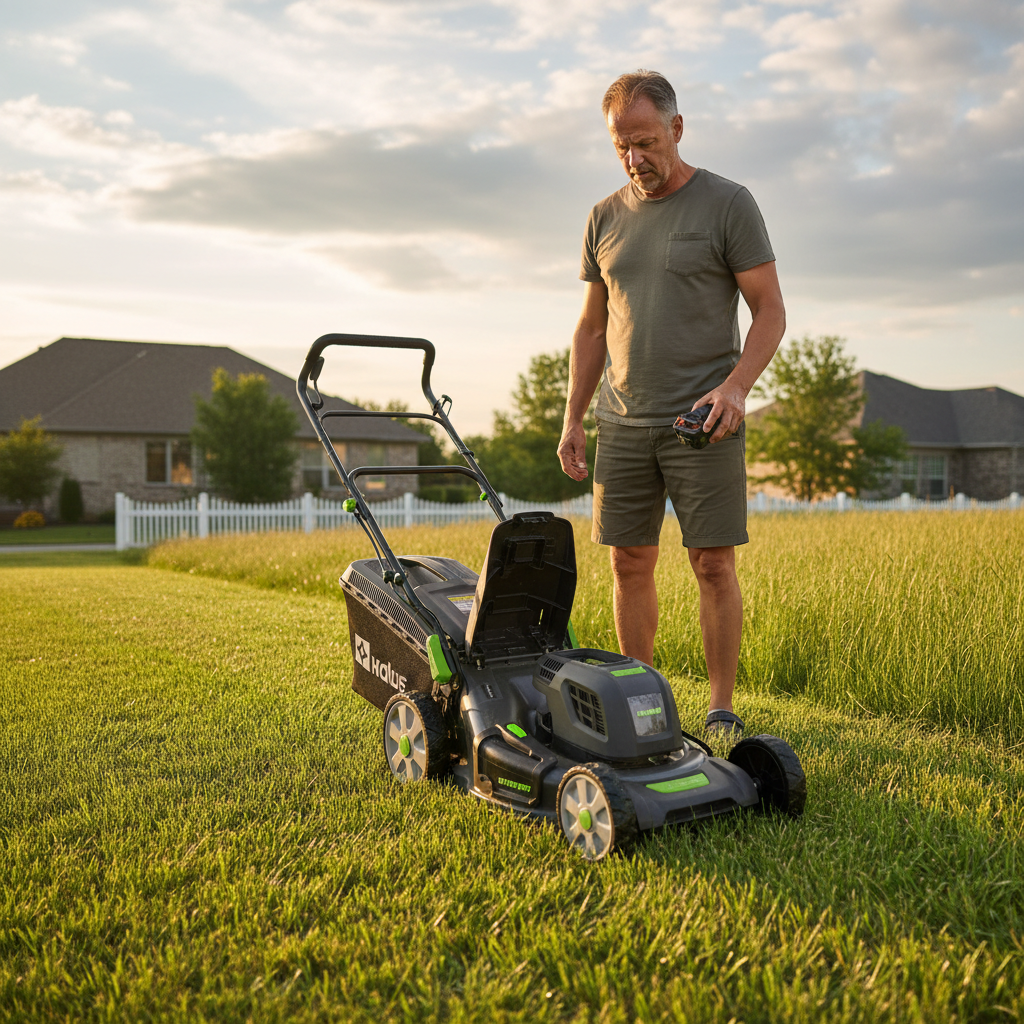
Even with favorable chemistry, appropriate mower size, and careful usage, batteries eventually lose capacity. Recognizing the signs that runtime or total life has declined enough to consider replacement helps owners avoid being caught with a mower that will not finish the lawn. The changes are usually gradual, so comparing current performance with earlier experience is useful.
What performance changes indicate reduced battery life?
The most noticeable sign is a reduction in runtime per charge compared with the mower’s earlier behavior under similar conditions. If a full charge once allowed a complete mowing of the yard and now the mower stops well before the job is finished, capacity has likely dropped. The mower may also feel less powerful toward the end of a session, with the blade slowing more noticeably as the battery voltage sags. Some models display battery percentage or estimated minutes remaining; if those readings fall faster than they used to, or if the mower shuts off while the display still shows remaining charge, the pack is struggling. Charging behavior can change as well. A battery that once reached full charge in a familiar time may now take longer, or it may stop accepting charge sooner, indicating that some cells are weaker. Inconsistent performance from one use to the next, or a battery that seems fully charged yet delivers very little runtime, also points to degradation. Physical signs such as unusual heat during charging or use, or any swelling of the pack, are more serious indicators that the battery should be taken out of service. Because runtime naturally varies with grass conditions, it is important to compare similar mowing days rather than judging from a single unusually heavy session. For complementary field maintenance guidelines, examine our breakdown of bissell crosswave hydrosteam vs shark stainforce.
Over many charge cycles the internal resistance of the cells can rise, which both reduces the energy that can be extracted and causes more voltage drop under load. This manifests as the performance fade described above. Calendar aging produces similar capacity loss even with light use. Owners who keep notes or simply remember how the mower behaved in previous seasons are in a better position to notice when the change has become significant. A battery that still works but requires an inconvenient extra charge or a spare pack to finish the lawn has reached the point where replacement starts to look attractive.
Mechanical safety standards, operational tolerances, and protective gear guidelines align with benchmark specifications established by the American National Standards Institute (ANSI).
For practical maintenance advice and setup requirements, check our guide on don's repairs inc.
When is replacement typically needed versus further charging?
Replacement is typically considered when a fully charged battery no longer provides enough runtime to complete a normal mowing session, even after allowing for variations in grass height or weather, and when that shortfall has become consistent rather than occasional. If the battery will not charge to its former level, or if it discharges itself unusually quickly while stored, further charging will not restore the lost capacity. At that stage the chemistry has aged and the cells can no longer store or deliver the original energy. Continuing to use a severely degraded battery may also put extra strain on the mower’s electronics or produce unreliable cut quality. In contrast, a battery that simply needs a charge after sitting unused, or that shows reduced runtime only because the grass is extra tall that week, does not yet require replacement. Distinguishing a temporary condition from permanent capacity loss involves charging the battery fully according to the manufacturer’s instructions, then testing it on a typical lawn. If performance remains inadequate, replacement is the next step.
Compatible replacement batteries are usually available from the mower maker or aftermarket suppliers that match the voltage, capacity, and connector of the original pack. Installing a new battery restores the original runtime potential, assuming the mower itself is in good condition. Before replacing, it is worth confirming that the charger is functioning and that connections are clean, because a faulty charger can mimic battery failure. Consulting the owner’s manual for any specific diagnostic steps or error codes can also prevent unnecessary replacement. Once a battery has reached the end of its useful life, proper disposal or recycling according to local regulations is important, as these packs contain materials that should not go into ordinary trash. By watching for the performance changes and understanding when charging will no longer help, owners can time a replacement so that mowing remains convenient rather than frustrating.
Maintaining awareness of both runtime per charge and overall battery lifespan, together with the factors of chemistry, mower size, and usage, gives electric lawn mower owners a realistic view of how long their batteries last. Regular observation of performance and adherence to recommended charging and storage practices help extract the most service from each pack. When signs of decline appear, timely replacement keeps the mower ready for the next season of lawn care.
For more hands-on benchmarks and buying recommendations, consult our guides on heavy-duty chainsaw buyer guide.









