Direct Answer: Understanding Lawn Mower Battery Amperage
Lawn mower batteries are rated in amp-hours (Ah), not instantaneous amps. Most cordless lawn mowers use batteries ranging from 1.3 to 5 Ah, with 2–4 Ah being the most common. Voltage typically ranges from 18V to 80V depending on mower type and brand. The amp-hour rating tells you how long the battery can deliver power—not the instantaneous current the motor draws.
Amps vs. Amp-Hours: Clearing Up the Confusion
One of the most common questions about lawn mower batteries involves terminology. Users often ask “how many amps” when they’re actually asking about capacity. Understanding the difference is essential for making informed decisions about battery performance and compatibility.
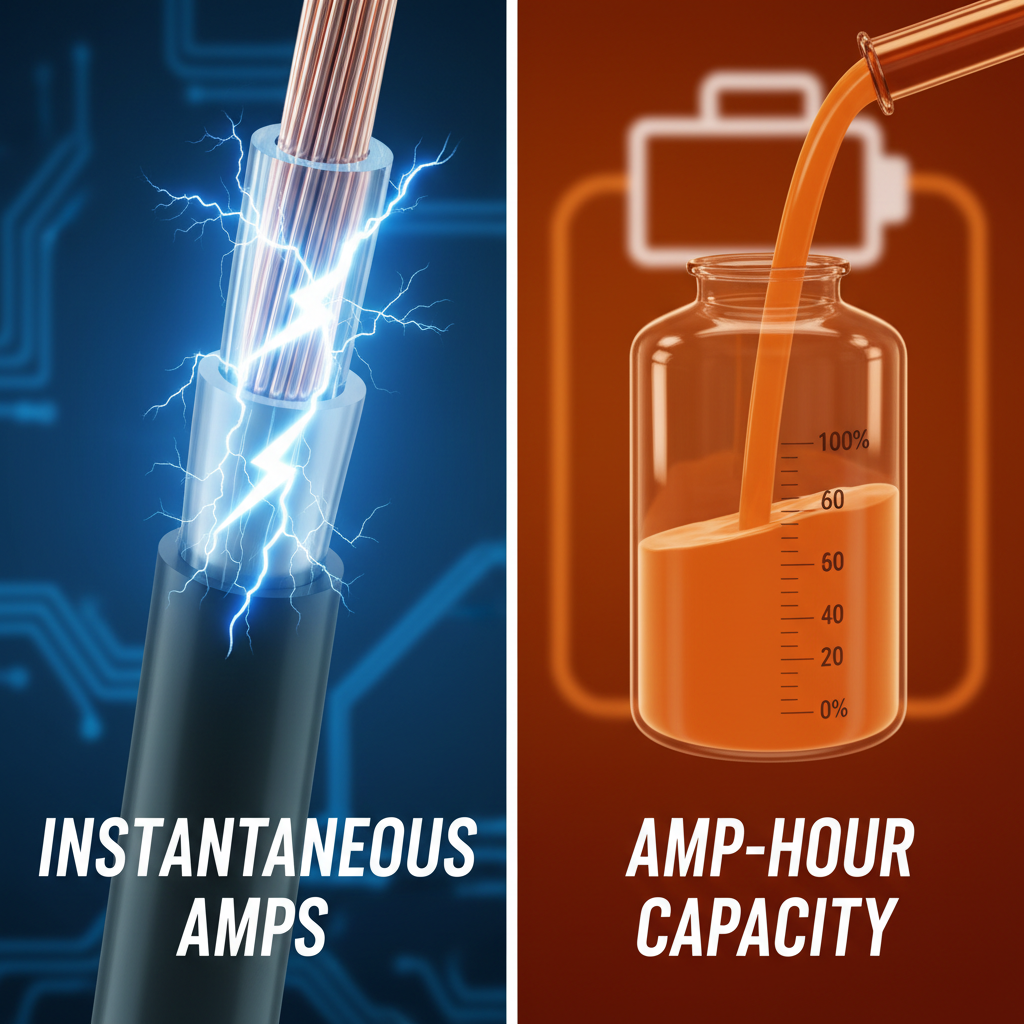
Amperes (Amps) measure the instantaneous flow of electrical current at any given moment. When your lawn mower motor is running, it draws a certain number of amps—typically 10–50 amps depending on the motor size and cutting conditions. This is the current draw, not the battery’s total capacity.
Amp-hours (Ah) measure total electrical capacity over time. A 4 Ah battery can theoretically deliver 4 amps for one hour, or 2 amps for two hours, or 1 amp for four hours. This is why amp-hours directly correlate with runtime: higher Ah ratings mean longer mowing time on a single charge.
Think of it like a fuel tank: “amps” is like the fuel pump flow rate, while “amp-hours” is like the total gallons in the tank. For lawn mowers, the tank size (amp-hours) is what determines how long you can mow.
Typical Lawn Mower Battery Capacities and Voltage Systems
Cordless lawn mower batteries come in several standard configurations, and understanding these ranges helps you match a battery to your yard size and mowing frequency.
18V and 20V Systems
Entry-level cordless mowers typically use 18V or 20V batteries with capacities of 1.3 to 2.0 Ah. These lightweight systems are ideal for small yards (under 5,000 square feet) with light grass and minimal obstacles. A 2.0 Ah battery at 20V provides roughly 30–45 minutes of mowing time depending on grass conditions and blade engagement.
40V Systems
Mid-range cordless mowers use 40V batteries rated between 2.0 and 4.0 Ah. This is the most popular voltage for residential mowers because it balances power, runtime, and weight. A 4.0 Ah 40V battery typically delivers 45–60 minutes of runtime on moderately dense grass, making it suitable for yards up to 10,000 square feet.
60V and 80V Systems
Premium cordless mowers use 60V or 80V batteries ranging from 2.0 to 5.0+ Ah. These high-voltage systems deliver greater cutting power for dense, thick grass and larger properties. An 80V 4.0 Ah battery can provide 45–90 minutes of runtime depending on load, and some professional-grade systems offer 6.0 Ah batteries for extended use on commercial properties.
How Voltage Impacts Power and Performance
While amp-hours determine runtime, voltage determines cutting power. A higher-voltage system delivers more torque to the blade motor, which means better performance on dense, tall, or wet grass.
At the same amp-hour capacity, a 40V battery and an 80V battery will deliver different performance:
- The 40V system provides adequate power for light to moderate residential mowing
- The 80V system delivers stronger blade torque, faster cutting, and better mulching capability
- Higher voltage systems maintain cutting performance as grass thickens or moisture increases
However, higher voltage doesn’t extend runtime proportionally. An 80V 4.0 Ah battery doesn’t mow twice as long as a 40V 4.0 Ah battery—both provide similar total time, but the 80V system can handle tougher conditions without bogging down.
How Battery Capacity Affects Real-World Runtime
Amp-hour ratings provide a baseline for runtime, but several factors influence actual mowing time in your yard:
Grass Conditions
Dense, wet, or tall grass increases motor load and current draw, reducing effective runtime by 20–40% compared to short, dry grass. A 4.0 Ah battery rated for 60 minutes might deliver only 40–45 minutes on overgrown lawn.
Deck Size
Wider decks (21 inches vs. 19 inches) cover more area per pass but require more motor power. Smaller decks preserve battery runtime by reducing workload.
Blade Sharpness
Dull blades force the motor to work harder and draw more current, shortening effective runtime. Sharp blades reduce motor strain and extend battery life per charge.
User Technique
Mowing speed, overlap patterns, and engagement habits affect battery drain. Pushing too fast through thick grass increases motor load; letting the blade idle between passes wastes battery capacity.
Reading and Finding Your Battery’s Amp-Hour Rating
Battery amp-hour ratings are printed directly on the battery casing, typically on a label near the connection terminals. Look for specifications listed as:
- Capacity: 4.0 Ah (amp-hours)
- Voltage: 40V
- Watt-hours: 160 Wh (voltage × amp-hours)
If your battery label is worn or unclear, check your mower’s manual or the manufacturer’s website using your battery model number. Battery model numbers typically include voltage and capacity codes (e.g., “40V-4AH” in the product name).
Matching Replacement Batteries
When purchasing a replacement battery, ensure it matches your mower’s voltage system. A 40V mower requires 40V batteries; mixing voltages will either prevent charging or damage the charger and mower. Amp-hour capacity is more flexible—a higher Ah battery (e.g., 5.0 Ah instead of 4.0 Ah) will work with your existing charger and provide extended runtime, though it will be heavier and more expensive.
Brand compatibility varies significantly. Most manufacturers produce proprietary battery systems that work only with their mowers and chargers. DeWalt, Makita, Milwaukee, and Ego each maintain separate 40V or 80V platforms. Cross-brand batteries generally are not compatible, though some third-party manufacturers produce universal adapters for specific voltage systems.
Choosing the Right Battery Capacity for Your Needs
Selecting the appropriate amp-hour rating depends on your yard size, grass type, and mowing frequency.
Small Yards (Under 5,000 sq ft)
A 2.0–2.5 Ah battery at 40V provides 30–45 minutes of runtime, sufficient for weekly mowing of light residential grass. This is the most economical option for occasional users.
Medium Yards (5,000–10,000 sq ft)
A 4.0 Ah battery at 40V offers 45–60 minutes of runtime, ideal for most suburban properties. This capacity balances runtime, weight, and cost for regular weekly use.
Large Yards (10,000+ sq ft)
A 5.0–6.0 Ah battery at 60V or 80V provides 60–90+ minutes of runtime with superior cutting power for dense grass. Professional-grade systems may include dual-battery systems allowing continuous mowing while one battery charges.
Weight and Portability Considerations
Higher-capacity batteries are heavier. A 2.0 Ah battery weighs around 3–4 pounds, while a 5.0 Ah battery can weigh 8–10 pounds. For users with physical limitations or those who frequently adjust battery position during mowing, a slightly lower capacity with lighter weight may be preferable to extended runtime.
Frequently Asked Questions
What’s the difference between amp-hours and watt-hours on a battery label?
Watt-hours (Wh) represent total energy capacity calculated by multiplying voltage by amp-hours. A 40V 4.0 Ah battery equals 160 Wh. Watt-hours provide a more universal comparison across different voltage systems, while amp-hours are system-specific.
Can I use a higher amp-hour battery in my lawn mower charger?
Yes. If your mower charges a 4.0 Ah battery, it can charge a 5.0 Ah or 6.0 Ah battery of the same voltage. The charger will simply take longer to fully charge the larger battery. However, never use a battery with higher voltage than your mower is rated for—this can damage the mower and charger.
How often should I replace my lawn mower battery?
Most lithium-ion mower batteries last 300–500 charge cycles, roughly 3–5 years with regular weekly use. Battery capacity gradually declines over time; when a battery can no longer provide adequate runtime, it’s time for replacement. Some manufacturers offer 5–7 year warranties on batteries.
Does a higher amp-hour battery always mean longer mowing time?
Yes, assuming the same voltage and mower. A 5.0 Ah battery will deliver approximately 25% longer runtime than a 4.0 Ah battery in the same mower. However, real-world runtime also depends on grass conditions, blade sharpness, and mowing technique, which can vary by 20–40%.
Key Takeaways
Lawn mower batteries are rated in amp-hours (Ah), not instantaneous amps. Most cordless mowers use 2–4 Ah batteries at 40V, with premium models reaching 5–6 Ah at 60V or 80V. Amp-hour capacity directly determines runtime, while voltage determines cutting power. Understanding these specifications helps you select the right battery for your yard size and maintain optimal performance throughout the mowing season.