

Direct Answer: Riding Mower Weight
Riding mowers generally weigh between 300 to 600 pounds (136 to 272 kg) for standard consumer models. Commercial-grade and larger zero-turn mowers can exceed 700 pounds (318 kg). The exact weight depends on the mower type, engine size, deck width, and construction materials.
Understanding Riding Mower Weights
A riding mower is a sit-on lawn care machine designed to cut grass across larger residential or commercial properties. Unlike push mowers, riding mowers distribute their weight across multiple wheels and feature powered cutting decks, making their weight a significant factor in lawn care planning.
Weight estimates vary considerably among different models because riding mowers come in several distinct categories, each built for different purposes and lawn sizes. Understanding these variations helps you choose the right machine for your needs and anticipate transportation, storage, and lawn impact considerations.
What Is Considered a Riding Mower?
Riding mowers encompass several machine types, including lawn tractors, garden tractors, and zero-turn mowers. Each category serves different cutting widths and property sizes, which directly influences their weight specifications. For troubleshooting and reliability insights, consult our in-depth jbl partybox club 120 vs sony srs xv500 report. For complementary hardware performance, examine our breakdown on riding lawn mower.
Why Do Weight Estimates Vary Among Different Models?
Weight variations stem from differences in engine power, deck width, frame construction, and additional features. A compact lawn tractor with a 42-inch deck and smaller engine will weigh considerably less than a commercial zero-turn mower with a 60-inch deck and heavy-duty hydraulics.
Factors That Influence a Riding Mower’s Weight
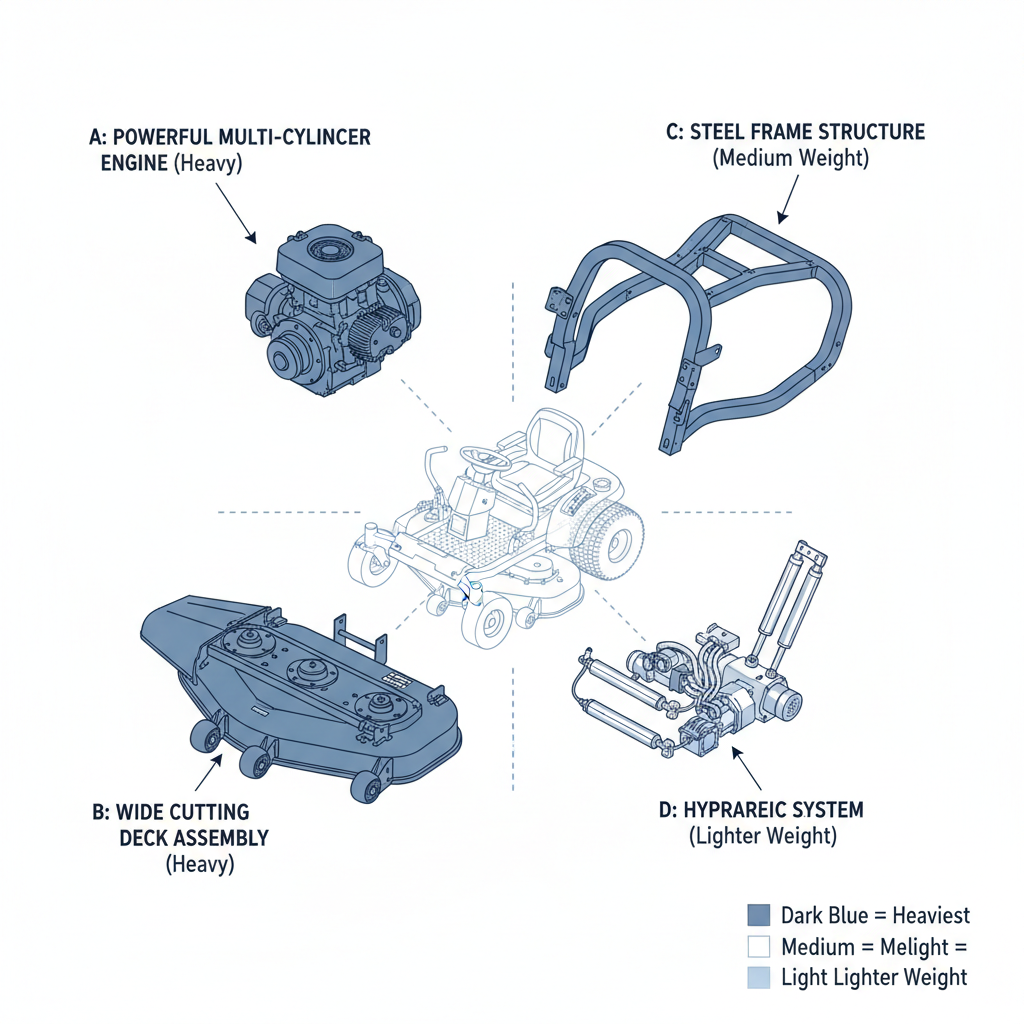
Several key variables determine how much a riding mower weighs. Understanding these factors helps you predict weight ranges for different models and understand why prices and capabilities vary.
Engine Size and Power
Engine displacement, measured in cubic centimeters (cc) or horsepower (HP), significantly impacts weight. A small 400cc engine weighs considerably less than a robust 600cc or larger engine. More powerful engines require heavier components, including reinforced crankshafts, larger fuel tanks, and more substantial cooling systems. Consumer-grade mowers typically feature engines ranging from 15to 25 HP, while commercial models may exceed 30 HP.
Deck Width
The cutting deck width, the span of the mower blade, directly correlates with weight. Standard residential mowers feature 42to 48-inch decks, while larger models reach 54 to 60 inches or more. A wider deck requires a stronger frame, additional structural supports, and more robust blade assemblies, all of which ad weight. The relationship is generally linear: every additional6 inches of deck width adds 30 to 50 pounds.
Build Materials and Construction
Frame construction significantly affects weight. Steel frames provide durability but weigh more than aluminum alternatives. Heavy-duty commercial mowers use reinforced steel throughout, while consumer models often mix steel and lighter materials. Cast iron components in transmission systems and engine blocks add substantial weight compared to aluminum alternatives.
Additional Features and Hydraulics
Advanced features increase weight. Mulching systems, bagging attachments, power steering, and automatic transmissions all ad pounds. Zero-turn mowers include complex hydraulic systems for independent wheel control, which adds50 to 100+ pounds compared to traditional steering mechanisms.
Weight Breakdown by Riding Mower Type
Different riding mower categories serve distinct purposes and lawn sizes, reflected in their weight specifications.
Lawn Tractors (Standard Residential)
Lawn tractors represent the most common consumer riding mower type. These machines typically weigh 300 to 450 pounds (136 to 204 kg). They feature 42 to 48-inch cutting decks and engines ranging from 15 to 22 HP. Lawn tractors use traditional steering wheels and are designed for properties up to one acre. Their moderate weight makes them suitable for most residential driveways and easier to transport than larger alternatives.
Garden Tractors (Intermediate)
Garden tractors occupy the middle ground between lawn tractors and commercial equipment, weighing 450 to 600 pounds (204 to 272 kg). These machines feature 48 to 54-inch decks and engines between 20 and 28 HP. Garden tractors include enhanced transmission systems, power steering, and reinforced frames designed for more demanding terrain and longer operating periods. They suit properties ranging from one to three acres. To evaluate matched hardware tolerances, consult our detailed overview of dyson v8 cyclone vs bissell featherweight stick.
Zero-Turn Mowers (High Maneuverability)
Zero-turn mowers enable 360-degree turns in place through independent hydraulic control of each rear wheel. These machines typically weigh 500 to 700+ pounds (227 to 318+ kg), despite having similar cutting widths to some garden tractors. The additional weight comes from their sophisticated dual-hydraulic systems, which require heavier components throughout. Commercial zero-turn mowers with 60-inch decks and powerful engines can exceed 800 pounds. Their superior maneuverability and efficiency justify the added weight for professionals and serious enthusiasts.
Commercial and Professional Mowers
Heavy-duty commercial mowers designed for landscaping businesses and large properties weigh 700 to 1,000+ pounds (318 to 454+ kg). These machines feature commercial-grade engines exceding 28 HP, reinforced hydraulic systems, advanced transmission technology, and durability enhancements throughout. Their substantial weight reflects their capacity for extended daily operation across challenging terrain. When planning workspace deployment, consider the engineering criteria outlined in our bissell crosswave hydrosteam vs shark stainforce guide.
Practical Implications of Mower Weight
Mower weight affects several important aspects of lawn care and property management beyond simple machine operation.
Why Weight Matters When Choosing a Riding Mower
Weight directly influences your mower’s performance and suitability for your specific situation. Heavier mowers provide better traction in wet conditions and maintain consistent cutting quality on uneven terrain. However, excessive weight can compact soil, damage delicate turf, and create ruts on wet lawns. Understanding your property’s soil conditions, seasonal moisture levels, and terrain helps determine the ideal weight range for your needs.
Transportation and Storage Implications
Mower weight significantly affects how you transport and store the machine. A300-pound mower fits easily into a standard trailer with appropriate tie-downs, while a 700-pound zero-turn mower requires a heavier-duty trailer and potentially professional transportation. Storage facilities must support the load, and garage or shed reinforcement may be necessary for heavier models. Standard truck beds can accommodate most residential mowers under 600 pounds with proper securing, but commercial equipment may exceed safe carrying capacity.
Lawn Impact and Soil Compaction
Heavier mowers increase soil compaction, which affects long-term lawn health. Compact soil restricts root growth, reduces water infiltration, and increases surface runoff. On clay-heavy or already compacted soils, lighter mowers minimize damage. Conversely, well-drained sandy or loamy soils tolerate heavier equipment more effectively. Consider your soil type and existing compaction levels when weighing equipment options.
Fuel Efficiency and Operating Costs
Weight indirectly affects fuel consumption through increased engine load and resistance. Heavier mowers require more engine power to move across given area, particularly on slopes or rough terrain. This increased demand raises fuel consumption and operating costs over time. For budget-conscious homeowners, lighter mowers offer lower fuel expenses, while commercial operations prioritize capability over fuel economy.
How to Find Your Mower’s Exact Weight
Manufacturer specifications always provide the most accurate weight information. Check your mower’s manual or visit the manufacturer’s website for precise specifications. Specifications typically list dry weight (without fuel or attachments) and wet weight (with all fluids and accessories).
For used mowers, request specifications from the seller or contact the manufacturer with model number and year. Weighing your mower at a local waste management facility or agricultural cooperative can verify actual weight if you need confirmation.
Frequently Asked Questions About How Much Does A Riding Mower Weigh
What is the typical weight of a 42-inch lawn mower?
Most 42-inch lawn tractors weigh between 300 and 400 pounds (136 to 181 kg). These compact residential mowers are designed for accessibility and storage in standard garages or sheds, making their moderate weight an important feature for homeowners.
How much heavier are zero-turn mowers compared to traditional riding mowers?
Zero-turn mowers typically weigh 100 to 200 pounds more than traditional lawn tractors of similar cutting widths. The hydraulic systems required for independent wheel control account for most of this weight difference. A 48-inch traditional mower might weigh 350 pounds, while a 48-inch zero-turn mower weighs 450 to 550 pounds.
Does mower weight affect cutting quality?
Weight influences cutting consistency primarily through traction and ground contact. Adequate weight ensures consistent blade depth and prevents scalping on uneven terrain. However, excessive weight on wet or soft soil can damage the lawn. The ideal weight provides enough traction without causing soil compaction issues.
Can I transport a 600-pound mower in a standard pickup truck?
Most full-size pickup trucks can safely transport mowers under 600 pounds with proper tie-downs and distribution. However, always verify your truck’s payload capacity and consider weight distribution across the bed. Empty fuel tanks, remove attachments when possible, and secure the mower centrally to maintain safe handling. When in doubt, use a dedicated trailer designed for equipment transport.

Pros
- Powerful 80V brushless motor delivers 32HP gas-equivalent performance with quiet fume-free operation and no engine maintenance.
- Complete kit includes four 6.0Ah batteries and 600W charger for substantial runtime up to 1.5 acres.
- SmartCut technology and 42-inch heavy-duty steel deck ensure consistent cuts without bogging in tough conditions.
- Versatile towing up to 350 lbs and optional cargo hauling plus comfort features like high-back seat and LED lights.
- Strong 4-year limited warranty and full compatibility with the Greenworks 80V tool ecosystem.
Cons
- Rear utility cargo bed for 200 lb hauling is sold separately and not included in the kit.
- Runtime of up to 1.5 acres varies with conditions and may require recharging or battery swaps on larger properties.
- As a fully cordless model continuous operation depends on battery levels unlike gas engines with unlimited runtime.
The Greenworks 80V 42" CrossoverT Cordless Riding Lawn Tractor is a ready-to-mow zero-emission tractor designed for homeowners managing medium to large lawns. It features a reinforced 42-inch stamped steel deck of 12-gauge construction along with premium comfort elements such as a high-back padded seat with foldable armrests. The overall build emphasizes durability and user convenience right out of the box with the included battery and charger set.
Performance centers on the 80V TruBrushless motor that provides 32HP gas-equivalent power with instant torque and quiet fume-free operation. SmartCut technology senses grass conditions and automatically adjusts power to maintain a consistent cut even in tall thick or wet areas. The four 6.0Ah batteries support runtime for up to 1.5 acres depending on conditions while dual LED headlights and a 7-position deck height range from 1.5" to 4.5" add practicality. Front and rear attachments further allow towing up to 350 lbs for added yard utility.
Key considerations include that the rear utility storage bin capable of hauling 200 lbs is sold separately so full cargo functionality requires an extra purchase. Runtime remains condition-dependent and may fall short for properties significantly larger than 1.5 acres without using the 600W charger or swapping batteries. The cordless design prioritizes ease and low maintenance but trades off the continuous runtime of traditional gas models.
This tractor delivers strong value for eco-conscious owners of residential properties who want gas-like power without the emissions noise or upkeep. It suits those who already use or plan to expand into the Greenworks 80V family of tools and who appreciate the 4-year limited warranty. Users with exceptionally large or commercial-scale lawns should evaluate battery logistics carefully before purchase.
Pros
- High-efficiency brushless motors maximize power output and durability over traditional motors
- Up to 2 acres runtime with three included 10.0 Ah batteries supports substantial mowing sessions
- Zero-emission operation with gas-equivalent 20 HP power for quieter environmentally friendly use
- Six-port auto-switchover battery system provides flexible extended runtime options
- Durable 42-inch steel deck plus included mulch and towing kits add immediate functionality
Cons
- Runtime is limited to approximately 70 minutes or 2 acres which may require recharging for larger properties
- Fully battery-dependent design means performance relies on charge levels and spare battery availability
- 42-inch deck size may require more passes on expansive lawns compared to wider commercial models
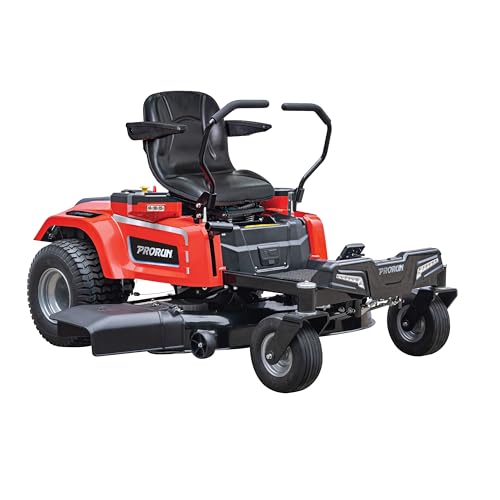
The PRORUN PZT60V42 is a fully electric 60V zero-turn riding lawn mower built for residential and light commercial use. Its primary design centers on a robust 42-inch 14-gauge stamped steel twin blade deck powered by direct-drive brushless motors, giving an immediate impression of solid construction and modern battery-focused engineering. The mower arrives complete with three 10.0 Ah batteries, a charger, mulch kit, and towing kit for ready-to-work versatility.
In performance terms, four high-efficiency brushless motors deliver power equivalent to a 20 HP gas engine while producing zero emissions. The system supports up to 2.0 acres or 70 minutes of runtime, and six battery ports with auto switchover intelligently manage all PRORUN 60V battery sizes for continuous operation. A washout port on the steel deck further simplifies post-mow maintenance during real-world sessions.
Potential drawbacks include the finite 70-minute runtime window which can limit coverage on larger properties without spare batteries or recharge breaks. As a fully electric model, it also depends entirely on battery charge levels rather than continuous fuel refills, and the 42-inch deck width may demand extra passes compared with wider traditional options.
Overall the PRORUN PZT60V42 offers strong value for homeowners and small-property managers who want gas-like cutting power without emissions or noise. Those with medium-sized lawns seeking quiet efficient zero-turn performance and included accessories will benefit most from this electric mower.

Pros
- Strong 24HP FR730 engine power for demanding cutting conditions
- Wide 54-inch FAB deck reduces total mowing time
- Zero turn design delivers excellent maneuverability
- Fabricated deck supports durable everyday operation
Cons
- Sparse details beyond engine and deck leave other features unspecified
- Gas-powered FR730 engine needs regular fuel and maintenance
- Large 54-inch deck size may feel oversized on compact properties
The Husqvarna Z254F is a zero turn mower from the established Husqvarna brand in the riding lawn mowers category. It centers on a solid build that pairs a 24HP 726cc FR730 engine with a 54-inch FAB deck for straightforward residential grass care.
Performance stems directly from the listed specifications. The FR730 engine delivers the horsepower needed for steady operation across typical lawns while the wide FAB deck completes passes efficiently. Zero turn handling improves control in real yard layouts based on the model design.
Considerations arise from the limited data available. Secondary elements such as comfort features fuel capacity or extras receive no mention and the gas engine format involves routine upkeep. The large deck suits open areas better than confined spaces.
The Husqvarna Z254F provides the most value for owners of medium or large properties who want reliable engine power and a broad cutting width. Users with smaller lots or those seeking extensive accessory options should weigh the core specs carefully before purchase.
Related Maintenance and Operating Guides
To keep your equipment running at peak operating efficiency, explore our related technical walkthroughs and maintenance tutorials:
- Consult our detailed breakdown on heavy-duty chainsaw buyer guide.
Technical Standards and Compliance
Mechanical safety standards, operational tolerances, and protective gear guidelines align with benchmark specifications established by the American National Standards Institute (ANSI).









