Direct Answer: Zero-Turn Mower Weight Range
Most residential zero-turn mowers weigh between 600–1,200 lbs, depending on deck size and features. Compact models start around 500 lbs, while commercial-grade zero-turns can exceed 1,500 lbs. The weight difference matters for transportation, storage, and trailer capacity requirements.
Typical Weight Ranges by Mower Size
Compact Zero-Turn Mowers (42–48 inch deck)
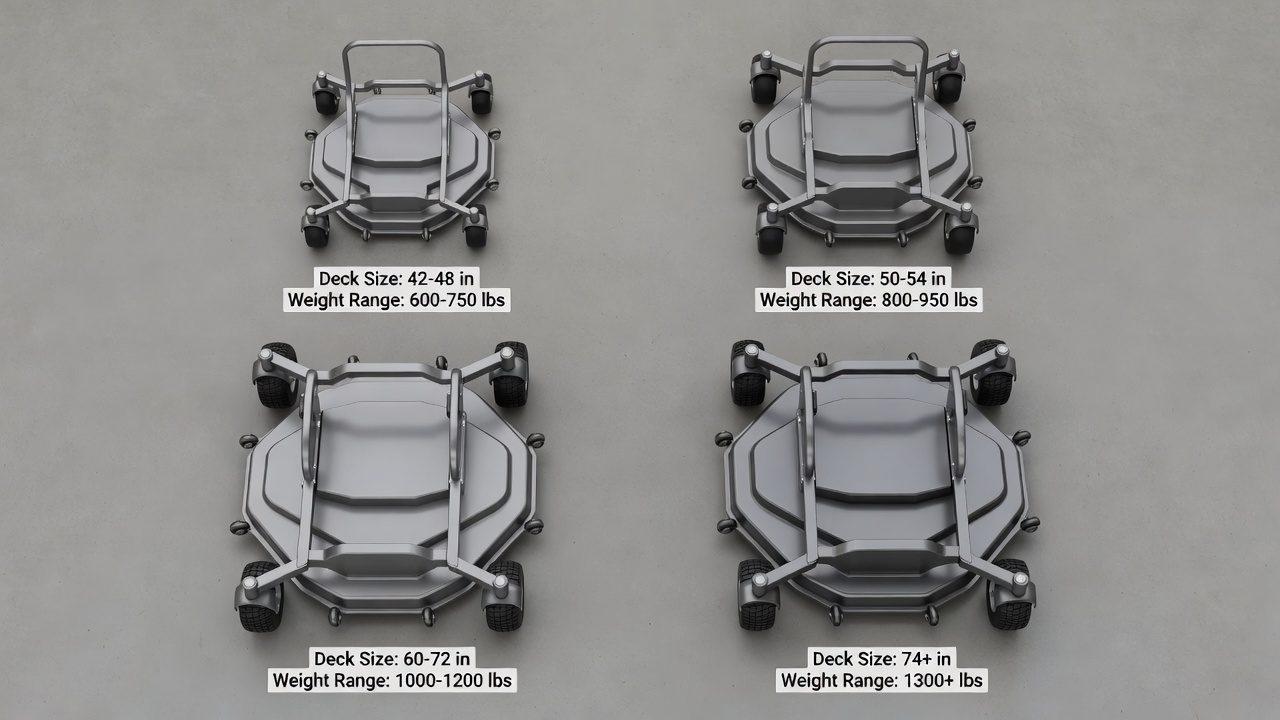
Compact zero-turn mowers designed for smaller residential properties typically weigh 500–750 lbs. These models feature smaller engines (usually 17–23 hp) and lighter frames, making them easier to transport and store. The reduced weight doesn’t sacrifice cutting performance but limits fuel capacity and comfort features found on larger models.
Mid-Size Residential Models (50–54 inch deck)
The most common residential zero-turn mowers fall into this category, weighing 800–1,000 lbs. With 23–28 hp engines and mid-sized cutting decks, these mowers balance performance, comfort, and transportability. This size handles 1–2 acre properties efficiently and fits standard utility trailers.
Large Residential Models (60–72 inch deck)
Premium residential and entry-level commercial zero-turns with 60–72 inch decks weigh 1,100–1,500 lbs. These powerful machines (28–35+ hp) tackle larger properties quickly but require heavy-duty trailers and significantly more fuel capacity. The added weight comes from reinforced frames, larger fuel tanks, and hydraulic systems.
Commercial-Grade Zero-Turn Mowers (72+ inch deck)
Professional landscaping equipment designed for daily use weighs 1,500–2,000+ lbs. Commercial models feature heavy-duty construction, high-displacement engines (35+ hp), commercial-grade transmissions, and enhanced comfort features. These mowers are built for productivity rather than portability.
Factors That Affect Zero-Turn Mower Weight
Deck Size Impact
Deck size is the primary weight driver. A 42-inch deck requires less structural support and smaller cutting components than a 72-inch deck. Generally, each 6-inch increase in deck width adds 100–150 lbs to the mower’s weight. Larger decks need heavier-gauge steel, reinforced frame supports, and more powerful hydraulic systems to handle cutting forces.
Engine Displacement and Horsepower
More powerful engines weigh more. A 17 hp single-cylinder engine weighs significantly less than a 28 hp V-twin engine. Higher horsepower correlates with larger displacement, heavier components, and reinforced engine blocks. Engine size directly influences overall mower weight: compact 17–20 hp models run 500–700 lbs, while 30+ hp commercial units exceed 1,500 lbs.
Fuel Tank Capacity
Residential zero-turns typically carry 5–7 gallon fuel tanks (30–50 lbs empty), while commercial models may hold 10–15+ gallons (60–100 lbs empty). A full fuel tank adds 30–100 lbs depending on capacity. Always account for operating weight (with fuel) when calculating trailer capacity requirements.
Transmission Type
Hydrostatic transmissions (standard on most zero-turns) are heavier than mechanical options. Commercial-grade transmissions with integrated cooling systems add significant weight. High-quality hydrostatic systems ensure smooth operation and durability but contribute 50–100 lbs to total weight.
Comfort and Feature Additions
Premium seating with suspension, cup holders, USB charging ports, and integrated storage add 20–50 lbs. Commercial models with reinforced operator platforms, cruise control systems, and advanced safety features weigh more than basic residential versions. Canopy or roll-over protection structures (ROPS) add 30–75 lbs.
Dry Weight vs. Operating Weight
Manufacturers list dry weight (empty fuel tank, no oil) in specifications. Operating weight includes full fuel tank, engine oil, and hydraulic fluid—typically 50–100 lbs more than dry weight. When planning transportation or storage, use operating weight for accurate capacity calculations. Most manufacturers provide both figures in owner’s manuals.
Why Zero-Turn Mower Weight Matters
Transportation and Trailer Requirements
A 1,000 lb mower requires a trailer rated for at least 1,500 lbs capacity to account for ramps, tie-downs, and safety margin. Standard enclosed trailers (5×8 ft) handle most residential models. Larger commercial zero-turns (1,500+ lbs) need commercial-grade trailers with reinforced axles and brake systems. Underestimating weight can damage trailers or create safety hazards during transport.
Storage Space Needs
Heavier mowers need stable, level storage areas. A 1,200 lb zero-turn requires flooring rated for concentrated weight loads. Residential garages or sheds must have adequate floor joists (typically 16–24 inch spacing rated for live loads). Commercial buildings with concrete foundations handle any mower weight without concern.
Operational Performance and Fuel Efficiency
Mower weight affects acceleration, fuel consumption, and turf care. Heavier mowers require more powerful engines, consuming more fuel. A 1,500 lb commercial zero-turn burns more fuel per acre than a 700 lb compact model. However, heavier mowers provide better stability on slopes and maintain more consistent cutting depth in thick grass.
Maintenance and Repair Accessibility
Weight influences service difficulty. Lighter mowers are easier to maneuver onto lifts or into service bays. Heavier commercial models need hydraulic lifts or dedicated service equipment. When choosing a mower size, consider your maintenance capabilities and whether a local dealer has appropriate service equipment.
How to Find Weight Specifications for Specific Models
Check Manufacturer Specifications
Owner’s manuals and product spec sheets always list both dry and operating weight. Download PDFs from manufacturer websites (John Deere, Hustler, Toro, Kubota, Bad Boy, etc.) or contact dealer customer service. Specifications typically appear on the first or last page of documentation.
Review Product Specification Tables
Manufacturer websites often display comparison tables showing weight alongside deck size, engine horsepower, fuel capacity, and cutting height range. These resources help determine which model suits your needs and trailer capacity.
Contact Local Dealers
Authorized dealers can provide accurate weight information and confirm whether your existing trailer or storage area accommodates specific models. They often have floor models you can inspect and may provide additional real-world weight considerations based on local conditions.
Consult Owner’s Manuals Online
If you’re evaluating a used mower, search for the model number on manufacturer websites to access archived manuals. These documents contain exact weight specifications and identify what fluids or components affect operating weight.
Zero-Turn Weight Comparison Table
| Mower Type | Deck Size | Engine HP | Typical Dry Weight | Typical Operating Weight |
|---|---|---|---|---|
| Compact Residential | 42–48 in | 17–20 hp | 500–700 lbs | 550–750 lbs |
| Mid-Size Residential | 50–54 in | 23–28 hp | 800–1,000 lbs | 850–1,050 lbs |
| Large Residential | 60–72 in | 28–35+ hp | 1,100–1,500 lbs | 1,150–1,600 lbs |
| Commercial-Grade | 72+ in | 35+ hp | 1,500–2,000+ lbs | 1,600–2,100+ lbs |
Key Takeaways on Zero-Turn Mower Weight
- Residential mowers range 600–1,200 lbs: Most homeowners fall into this category with 50–60 inch decks weighing 900–1,100 lbs operating weight.
- Weight increases with deck size: Larger cutting decks require heavier structural components, engines, and hydraulic systems.
- Always use operating weight for planning: Full fuel tanks add 50–100 lbs—critical for trailer and storage calculations.
- Trailer capacity must exceed mower weight: A 1,000 lb mower needs a 1,500+ lb rated trailer for safety margin.
- Check manufacturer specs, not estimates: Each model varies; download owner’s manuals or contact dealers for exact weight figures.
Frequently Asked Questions
Can a standard pickup truck tow a zero-turn mower?
Most full-size pickup trucks (F-150, Silverado, Ram 1500) safely tow residential zero-turns (600–1,200 lbs operating weight) with a utility trailer. Check your truck’s towing capacity in the owner’s manual; most modern trucks rate 5,000–12,000 lbs. For commercial mowers exceeding 1,500 lbs, use a commercial-grade trailer and heavy-duty towing vehicle. Never exceed manufacturer towing limits.
Does a heavier zero-turn mower cut better than a lighter one?
Weight doesn’t directly determine cutting quality. Engine horsepower, blade sharpness, deck design, and blade speed matter more. However, heavier mowers (typically commercial-grade) provide better stability on slopes and maintain consistent cutting depth in thick or wet grass. A well-maintained 800 lb residential mower cuts as effectively as a 1,500 lb commercial model on residential lawns.
What’s the difference between zero-turn weight and push mower weight?
Push mowers weigh 50–150 lbs; zero-turn mowers weigh 600–2,000+ lbs. The massive weight difference reflects zero-turns’ powerful engines, hydrostatic transmissions, reinforced frames, and operator comfort features. Zero-turns are designed for 1+ acre properties requiring hours of mowing; push mowers suit small residential yards under 0.5 acres.
How do I know if my storage area can support a zero-turn mower?
Standard residential garage flooring (2×10 joists, 16 inches on center) typically supports 1,000 lb concentrated loads. For mowers over 1,200 lbs, inspect flooring or use storage in a concrete-foundation building. Never store mowers on upper floors of residential structures. When in doubt, consult a structural engineer or store the mower in a ground-level shed with concrete flooring.