

Direct Answer: Zero Turn Mower Cost
Zero turn mowers command premium prices for good reason. Unlike traditional riding mowers that require three-point turns, zero turns use independent rear-wheel motors, allowing 360-degree rotation in place. This engineering complexity, dual hydraulic systems, precision steering controls, and reinforced frames, adds significant manufacturing costs.
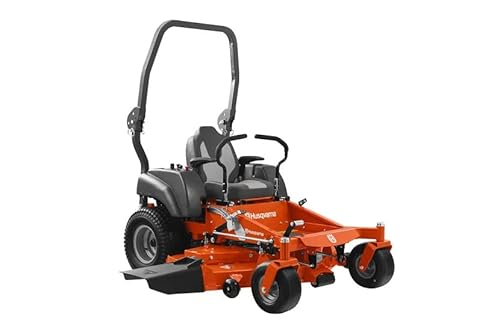
Pros
- Powerful 24HP/726cc Kawasaki V-Twin engine for reliable high-output performance
- Wide 61-inch fabricated 3-blade deck for efficient coverage of large areas
- Commercial-grade Hydro Gear ZT-3100 transmission for durable zero-turn handling
- Generous 5-gallon fuel tank and included ROPS for practical all-day use and safety
- 4-year consumer warranty coverage on the complete machine
Cons
- Large 61-inch deck and zero-turn frame require substantial storage space and may feel oversized for small residential yards
- Commercial-oriented components can demand more maintenance knowledge than basic consumer mowers
- No bagging, mulching kit, or additional attachments listed as standard equipment
The Husqvarna MZ61 is a robust zero-turn riding lawn mower from the brand's commercial-leaning lineup, pairing a heavy-duty fabricated deck with a ROPS safety structure. Its overall build emphasizes durability and operator protection for demanding outdoor work rather than lightweight residential convenience.
Performance centers on the 24HP/726cc Kawasaki FR730V Series V-Twin engine that supplies ample torque for thick or wet grass, while the 61-inch 3-blade fabricated deck cuts wide swaths efficiently. The Hydro Gear ZT-3100 commercial hydrostatic transmission enables smooth, precise zero-turn steering that reduces time spent trimming edges and navigating landscaping. A 5-gallon fuel tank further supports longer continuous runs on expansive properties.
Potential drawbacks include the mower's substantial size, which can make storage and transport more challenging for users with limited space. The commercial-grade components also mean the machine may require more frequent or specialized maintenance compared to simpler residential models, and no bagging or mulching systems are noted as included.
Overall, the Husqvarna MZ61 delivers the strongest value for owners of large lawns, estates, or light commercial grounds who prioritize cutting speed, engine reliability, and safety features. Smaller-yard users will likely find it oversized for their needs.

Pros
- Powerful and proven Kawasaki V-Twin engine for consistent cutting power
- Fabricated welded deck construction for greater strength and longevity
- Smooth Hydro-Gear EZT hydrostatic transmission for precise zero-turn control
- Adequate 3.5 gallon fuel capacity for typical residential mowing sessions
- Solid 3-year consumer warranty coverage
Cons
- 42-inch cutting width requires more passes on larger properties over 1 acre
- 2-blade deck design may produce less fine mulching than multi-blade systems
- Entry-level Hydro-Gear EZT transmission is not intended for heavy commercial daily use
The Husqvarna Special Edition Z242F is a residential zero turn mower built around a robust 21.5HP Kawasaki V-Twin engine and a 42-inch fabricated welded 2-blade deck. Its design emphasizes durability and straightforward operation, giving an immediate impression of a capable machine ready for regular homeowner use.
In real-world performance the Kawasaki engine pairs with the Hydro-Gear EZT transmission to deliver responsive zero-radius turns and steady cutting power across medium lawns. The welded deck maintains blade tip speed for clean results while the 3.5 gallon fuel capacity supports extended sessions without constant refueling.
Potential drawbacks include the 42-inch deck that may need extra passes on bigger yards and the entry-level Hydro-Gear EZT unit which is reliable for residential duty but not engineered for commercial workloads. The 2-blade configuration also prioritizes simple cutting over advanced mulching options.
Overall the Husqvarna Special Edition Z242F offers strong value for homeowners with average to moderately sized properties who want efficient zero-turn convenience, Kawasaki reliability, and a 3-year warranty without unnecessary complexity.
The performance benefits justify the investment: zero turns cut mowing time in half compared to standard riders on the same lawn, improve maneuverability around obstacles, and reduce turf damage from wide turning radiuses. For homeowners with properties over one acre or landscapers billing hourly, the time savings quickly offset higher upfront costs.
Additionally, zero turn mowers hold resale value better than basic riding mowers, and their durability, typically 1,500, 2,000+ engine hours, extends their useful life significantly. To evaluate matched hardware tolerances, consult our detailed overview of jbl partybox club 120 vs sony srs xv500. For complementary hardware performance, examine our breakdown on riding lawn mower specifications.
Price Tiers: Residential vs. Commercial-Grade Equipment
Residential Zero Turn Mowers: $2,500-$10,000
Most homeowners fall into this category. Residential models prioritize affordability and ease of use while delivering reliable performance on 1 to 5 acre properties.
- Budget Entry-Level ($2,500-$4,000): 42″-48″ deck, 15 to 18 hp engines, basic controls, minimal features. Suitable for smaller lawns under 2 acres. Limited warranty (1 to 2 years).
- Mid-Range Residential ($4,000-$7,000): 48″-52″ deck, 18 to 24 hp, mulching capability, cruise control, cup holders, 3 to 5 year warranties. Best value for most homeowners.
- Premium Residential ($7,000-$10,000): 52″-60″ deck, 24 to 28 hp, advanced comfort features (suspension seats, heated grips), GPS controls, smart diagnostics, extended warranties.
Commercial-Grade Zero Turn Mowers: $10,000-$25,000+
Built for landscaping businesses, golf courses, and municipal grounds. Commercial models prioritize durability, uptime, and operator comfort over price.
- Entry Commercial ($8,000-$12,000): 52″-60″ deck, 25 to 30 hp, heavy-duty frames, commercial-grade hydrostatics, 1,000+ hour service intervals.
- Mid-Commercial ($12,000-$18,000): 60″-72″ deck, 28 to 35 hp, reinforced blade systems, commercial warranty (3 years), dealer support networks prioritized.
- Premium Commercial ($18,000-$25,000+): 72″+ deck, 35+ hp, fully sealed cabins (for dusty conditions), advanced emission controls, telematics for fleet management, rapid blade-change systems.
Key difference: Commercial zero turns cost 2 to 3× more than comparable residential models due to heavier components, rigorous testing standards, faster wear tolerance, and dedicated support infrastructure.
Used Zero Turn Mowers: 30 to 50% Savings
The used market offers significant savings. A 5-year-old residential zero turn originally priced at $6,000 typically sells for $3,000-$4,000. However, inspect carefully for hydraulic leaks, blade wear, and engine hours (anything over 1,200 hours warrants detailed evaluation). Buying from authorized dealers offers reconditioned models with limited warranties; private sales are cheaper but carry more risk.
Key Factors That Affect Zero Turn Mower Cost
1. Deck Size (Width)
Deck width directly impacts price and mowing efficiency:
| Deck Width | Typical Price Range | Best For | Mowing Speed (per hour) |
|---|---|---|---|
| 42″-48″ | $2,500-$4,500 | Under 1 acre, tight spaces | 1 to 1.5 acres |
| 48″-54″ | $4,000-$7,000 | 1 to 3 acres (most common) | 1.5 to 2.5 acres |
| 54″-60″ | $6,000-$9,000 | 3 to 5 acres | 2.5 to 3.5 acres |
| 60″-72″ | $8,000-$15,000+ | 5+ acres, commercial | 3.5 to 5+ acres |
Each additional 6 inches of deck width adds $500-$1,500 to the base price. A 60″ deck costs approximately 40% more than a 48″ deck from the same manufacturer, but cuts mowing time by 25% on large properties.
2. Engine Horsepower
More powerful engines command higher prices but provide better performance on hills and thick grass:
- 15 to 18 hp: $2,500-$4,000. Entry-level, flat lawns only.
- 18 to 24 hp: $4,000-$6,500. Standard residential, handles slopes up to 10 degrees.
- 24 to 30 hp: $6,500-$9,000. Premium residential, steep terrain capable.
- 30+ hp: $9,000+. Commercial, professional-grade performance.
3. Brand and Reputation
Established brands command price premiums due to dealer networks, warranty support, and resale value:
- Premium Brands (Toro, John Deere, Hustler): 10 to 20% price premium. Strong dealer support, excellent resale value, proven reliability.
- Mid-Tier Brands (Kubota, Bad Boy, Spartan): Competitive pricing. Good warranty, growing dealer networks.
- Budget Brands (Craftsman, MTD): 15 to 30% lower than premium. Limited dealer support, lower resale value.
A 52″ Toro zero turn might cost $6,500, while an equivalent Craftsman is $5,200, but the Toro maintains 70% of its value after 5 years versus 45% for Craftsman. To compare alternative configurations, check our hands-on review of dyson v8 cyclone vs bissell featherweight stick.
4. Advanced Features
Technology and comfort add significant cost:
- Mulching Kit: +$300-$600. Recycles clippings for healthier lawn.
- Bagging System: +$400-$800. Collects clippings for neat finish.
- Cruise Control: +$200-$400. Maintains consistent speed, reduces operator fatigue.
- Suspension Seat: +$300-$600. Reduces vibration on rough terrain.
- GPS/Smart Controls: +$1,000-$2,500. Fleet tracking, precision mowing, diagnostics.
- Heated Grips / Cabin: +$500-$2,000. Cold-weather operation.
Budget Breakdown by Spending Level
Under $4,000: What You Get
Entry-level residential with basic functionality. Best for small lawns under 1.5 acres, occasional use, or first-time buyers testing the zero turn concept. Users looking for related component recommendations can explore our bissell crosswave hydrosteam vs shark stainforce breakdown.
Typical specs: 42 to 48″ deck, 15 to 18 hp, no mulching option, manual choke, basic controls, 1 to 2 year warranty.
Trade-offs: Slower cutting speed, less comfort, shorter engine lifespan (800 to 1,000 hours typical), limited availability of aftermarket parts.
$4,000-$7,000: Best Value
The “sweet spot” for most homeowners. Excellent durability, feature set, and resale value.
Typical specs: 48 to 54″ deck, 18 to 24 hp, mulching capable, cruise control, comfortable seating, 3 to 5 year warranty, strong dealer support.
Real-world use: 1 to 4 acre properties, weekly mowing, professional-grade durability for residential use.
$7,000-$12,000: Premium Residential / Entry Commercial
For serious enthusiasts or small commercial operators. Superior comfort and performance on challenging terrain.
Typical specs: 52 to 60″ deck, 24 to 30 hp, full-featured controls, suspension seating, GPS-ready, 5+ year warranty, extended service intervals (100+ hours between oil changes).
Best for: 3 to 6 acre properties, rolling terrain, or side-business landscaping.
$12,000+: Commercial / Premium Equipment
Built for professional landscapers, golf courses, or municipalities. Maximum durability and uptime.
Typical specs: 60 to 72″+ deck, 28 to 40+ hp, commercial hydraulics, sealed cabs, GPS fleet tracking, rapid-change systems, 3-year commercial warranty.
Return on investment: Professionals bill $75-$150 per hour. A zero turn cutting time by 40 to 50% vs. standard riders quickly justifies the premium cost.
Total Cost of Ownership: Beyond the Purchase Price
Annual Operating Costs
Factor these ongoing expenses when budgeting:
- Fuel: $200-$400/year (0.5 to 1 gallon per hour of mowing).
- Oil Changes: $50-$150 every 50 hours (typically 2 to 4× per season for homeowners).
- Blade Sharpening/Replacement: $100-$200/year.
- Seasonal Maintenance: $150-$300 (spark plugs, filters, belt checks).
- Repairs: $100-$500/year (varies by age and use). Budget models typically see higher repair rates.
Total estimate: $600-$1,200/year for residential use.
Financing Options
Most dealers offer financing, making zero turns more accessible:
- 0% APR for 12 to 24 months: Common promotional rate. Borrower pays principal only.
- 2.9%-6.9% APR for 24 to 60 months: Standard retail financing. $6,000 mower at 4.9% over 48 months ≈ $138/month.
- Lease-to-own: Landscaping businesses often lease commercial units, applying payments toward purchase.
Calculate monthly payments using the dealer’s financing calculator. Over a 5-year ownership period with proper maintenance, a $6,000 zero turn ($138/month financed) plus $750/year maintenance costs approximately $10,800 total, still less than replacing a traditional mower twice.
How to Choose the Right Zero Turn for Your Budget
Step 1: Determine Your Lawn Size
- Under 1 acre → 42 to 48″ deck, $2,500-$4,000
- 1 to 3 acres → 48 to 54″ deck, $4,000-$7,000
- 3 to 5 acres → 54 to 60″ deck, $6,000-$9,000
- 5+ acres → 60 to 72″+, $8,000-$15,000+
Step 2: Assess Terrain
Flat lawns: Mid-range horsepower sufficient. Slopes over 10 degrees: invest in 24+ hp and suspension seating to prevent operator fatigue and hydraulic strain.
Step 3: Consider Usage Pattern
Occasional homeowner: Budget model acceptable. Frequent use or commercial: mid-to-premium range justified. The payoff period shortens significantly with heavy use.
Step 4: Factor in Dealer Support
Choose brands with local dealers for parts availability and warranty service. Buying a no-name brand 100 miles from the nearest service center creates expensive headaches.
Common Questions on How Much Is A Zero Turn Mower Answered
Q: Can I find a quality zero turn mower for under $3,000?
A: Occasionally, particularly in the used market or during end-of-season sales. New models under $3,000 exist (mainly 42″ budget brands) but typically have weaker engines (15 hp) and minimal warranties. For under-1-acre properties mowed infrequently, they work, but expect higher maintenance costs and shorter lifespan. Used commercial models from 8 to 10 years ago also fall in this range if well-maintained.
Q: Is a zero turn mower worth the extra cost compared to a standard riding mower?
A: Yes, if your lawn exceeds 1.5 acres or has obstacles (trees, flower beds). Time savings are substantial: a 3-acre lawn takes roughly 1.5 hours with a zero turn versus 3 hours with a standard rider. For homeowners mowing weekly, that’s 78 hours saved annually. If you value leisure time, the premium quickly justifies itself. For small flat properties under 1 acre, standard riders remain cost-effective.
Q: What’s the difference between a residential and commercial zero turn mower, really?
A: Commercial models use heavier-duty hydraulics, reinforced frames rated for 2,000+ engine hours, and industrial-grade components designed for daily professional use. Residential models typically last 1,000 to 1,500 hours. Comfort features (suspension, heated seats) differ too. For occasional homeowner use, residential suffices, commercial machines are overbuilt for that application and waste money on features you won’t use.
Q: Should I buy new or used?
A: New equipment offers full warranty protection and peace of mind. Used models (3 to 5 years old) save 30 to 50% and often have decades of life remaining. Inspect engine hours closely; anything over 1,200 hours warrants detailed mechanical review. Buy used from authorized dealers when possible for reconditioned units with limited warranties. Private sales are riskier unless you can have a dealer evaluate the unit pre-purchase.
Technical Standards and Compliance
Mechanical safety standards, operational tolerances, and protective gear guidelines align with benchmark specifications established by the American National Standards Institute (ANSI).









