Quick Answer
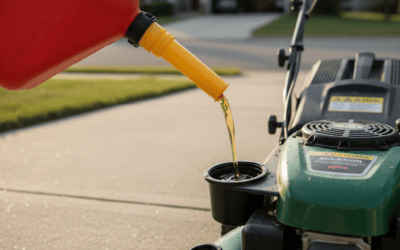
To change oil in a Craftsman lawn mower: Warm the engine briefly, shut it off, locate and remove the oil drain plug, let oil drain completely into a pan, replace the drain plug, add the correct oil type and amount (typically SAE 30 or 10W-30, capacity 15–48 oz depending on model), check the level with the dipstick, and dispose of used oil at a recycling center. Always consult your owner’s manual for your specific model’s requirements.
Identify Your Mower Type and Engine
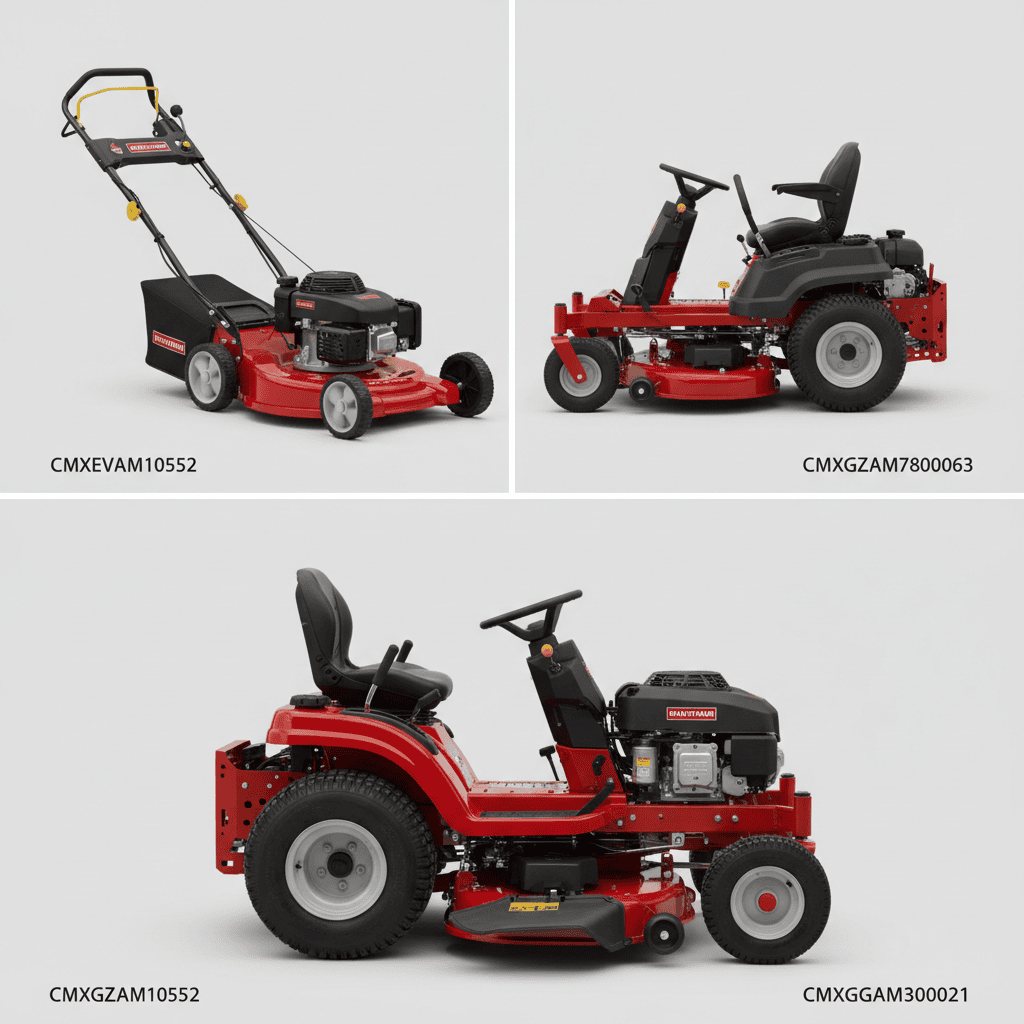
Before you start, it’s critical to confirm what type of Craftsman mower you own and whether it has a 4-stroke or 2-stroke engine. This determines whether a traditional oil change applies to your machine.
- Push Mowers (4-stroke): Most modern Craftsman push mowers have 4-stroke engines with standard oil changes. Typical oil capacity is 15–20 oz.
- Riding Mowers (4-stroke): Larger capacity engines, typically requiring 48–60 oz of oil. These may also have oil filters.
- Zero-Turn Mowers (4-stroke): Similar to riding mowers but with different drain plug locations. Oil capacity varies by model.
- 2-Stroke Engines: Some older or smaller Craftsman models use 2-stroke engines, which mix oil directly into fuel. These do not have traditional oil drains and require a different maintenance approach.
Check your Craftsman mower’s model number (usually found on the frame near the engine) and locate your owner’s manual online or in your documentation. The manual specifies your engine type, oil capacity, and recommended oil viscosity.
Gather Tools and Materials
Prepare everything before you begin to make the job efficient and safe.
| Item | Purpose | Notes |
|---|---|---|
| Socket wrench or combination wrench | Remove the drain plug | Size depends on your mower model, typically 1/2″ or 5/8″ |
| Oil drain pan | Catch old oil | Capacity should be at least as large as your mower’s oil capacity |
| Funnel | Pour new oil without spills | Use a large funnel to prevent overfilling |
| New oil (correct type and amount) | Refill the engine | See chart below for typical recommendations |
| Oil filter (if applicable) | Replace dirty filter | Check your manual; not all push mowers have filters |
| Oil filter wrench (if needed) | Remove old filter | Only required if your model has a filter |
| Jack or blocks (riding mowers) | Safely raise mower for drain plug access | Use proper support; never rely solely on a jack |
| Shop rags or paper towels | Wipe spills and check dipstick | Keep several on hand |
Recommended Oil Types for Craftsman Mowers
| Mower Type | Recommended Oil Type | Typical Capacity | Change Interval |
|---|---|---|---|
| Push Mower (4-stroke) | SAE 30 (conventional or synthetic) | 15–20 oz | Every 50 hours or annually |
| Riding Mower (4-stroke) | SAE 30 or 10W-30 (conventional or synthetic) | 48–60 oz | Every 50–100 hours or annually |
| Zero-Turn Mower (4-stroke) | 10W-30 or SAE 30 (conventional or synthetic) | 48–64 oz | Every 50–100 hours or annually |
Note: Check your owner’s manual for the exact specifications. Using the wrong oil type can reduce engine efficiency, void warranties, and cause premature wear.
Prepare Your Mower for Oil Change
Warm the Engine
Before draining, run the mower for 2–3 minutes to warm the oil. Warm oil flows more freely and drains more completely, carrying away more contaminants. Allow the engine to cool for 5–10 minutes afterward so it’s warm but not dangerously hot—you should still be able to touch the engine block without burning yourself.
Safety Precautions
- Disconnect the spark plug wire: This prevents accidental starting while you work.
- Engage the parking brake: For riding and zero-turn mowers, set the brake and engage the parking lock.
- Work on level ground: Use a flat surface to ensure accurate oil level readings.
- Allow adequate cooling time: Don’t drain immediately after shut-off; oil can be extremely hot.
- Use proper ventilation: Work outdoors or in a well-ventilated space to avoid fume inhalation.
- Wear gloves: Protect your hands from hot oil and sharp edges.
Locate the Oil Drain Plug
The drain plug is typically located at the lowest point of the engine’s oil pan. On push mowers, it’s often accessible from the side or bottom. On riding mowers, you may need to tilt the mower or raise it slightly with a jack (always use proper support). Consult your manual for the exact location on your model.
Drain Old Oil
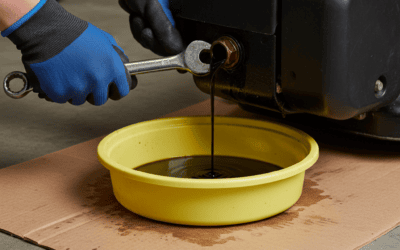
Remove the Drain Plug
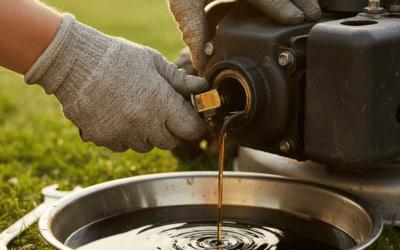
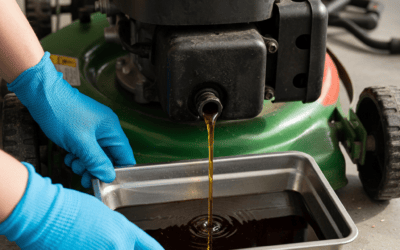
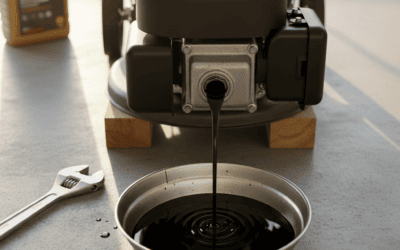
- Position your oil drain pan directly under the drain plug.
- Using the appropriate wrench, slowly loosen the drain plug by turning it counterclockwise. Hand-tighten it the rest of the way to avoid cross-threading.
- Carefully unscrew the plug by hand and allow it to drop into the drain pan (watch for hot oil).
- Let the old oil drain completely—this may take 10–15 minutes. Tip the engine slightly if needed to ensure complete drainage.
Inspect and Replace the Drain Plug
While oil drains, examine the drain plug for damage. If the threads are stripped or the plug is cracked, replace it (Craftsman sells replacement plugs inexpensively). Wipe the drain plug and the threaded hole clean with a shop rag. Before reinstalling, apply a small amount of fresh oil to the threads to ease future removal.
Reinstall the Drain Plug
- Screw the drain plug back in by hand until snug.
- Tighten with a wrench, but do not over-tighten—this can strip threads or crack the oil pan. Aim for firm contact, typically 15–20 foot-pounds of torque (hand-tight plus 1/4 turn with a wrench is often sufficient).
- Check that the plug is secure and not leaking.
Replace the Oil Filter (If Applicable)
Not all Craftsman push mowers have oil filters, but most riding mowers and zero-turn mowers do. Check your manual to determine if yours has one.
Locate and Remove the Old Filter
- The filter is typically mounted on the side of the engine block.
- Place the drain pan underneath to catch remaining oil.
- Use an oil filter wrench to loosen the filter by turning counterclockwise. Once loose enough, unscrew it by hand.
- Allow any remaining oil to drain into the pan.
Install the New Filter
- Clean the filter mounting surface with a clean rag to remove any debris or old rubber seal.
- Apply a thin layer of fresh oil to the rubber gasket of the new filter. This ensures a proper seal and makes future removal easier.
- Screw the new filter on by hand until the gasket contacts the mounting surface, then turn an additional 3/4 to 1 turn to tighten.
- Do not use a wrench to tighten the filter; hand-tightening is correct.
Refill with New Oil
Add Oil Carefully
- Place a funnel in the oil filler cap opening (typically on top of the engine).
- Slowly pour the recommended amount of new oil. For push mowers, start with 3/4 of the recommended capacity; for riding mowers, pour about 2/3 and check frequently.
- Replace the filler cap and let the oil settle for 1–2 minutes.
- Do not overfill—excess oil can cause poor engine performance, seal damage, and smoking.
Check the Oil Level
- Remove the dipstick and wipe it clean with a shop rag.
- Reinsert the dipstick fully, then remove it again to read the level.
- The oil should be between the minimum and maximum marks. Add small amounts (1/4 oz at a time) until the level is correct.
- Replace the filler cap securely.
Run a Test and Verify
Reconnect the spark plug wire and start the mower. Let it run for 2–3 minutes to circulate the new oil through the engine. Check for leaks around the drain plug and filter. Shut off the engine, wait 5 minutes, then check the oil level again—add a small amount if needed. The level may drop slightly as oil settles into the filter.
If you notice oil leaking from the drain plug or excessive smoking, shut off the mower immediately, disconnect the spark plug, and diagnose the issue before running again.
Dispose of Used Oil Properly
Never pour used oil down a drain or into the ground. Used motor oil is a hazardous waste that contaminates soil and water. Instead:
- Take it to an auto parts store: Most retailers (AutoZone, Advance Auto Parts, O’Reilly) accept used oil and filters for free.
- Check local hazardous waste programs: Your city or county often has collection days for household hazardous materials, including used oil.
- Contact your local waste management authority: They can direct you to the nearest disposal facility.
- Store safely: Keep used oil in a sealed, labeled container away from children and pets until you can dispose of it.
Common Mistakes to Avoid
- Overfilling oil: This causes engine knocking, foam in the oil, and potential seal damage. Always verify the level with a dipstick.
- Using the wrong oil type: Incorrect viscosity reduces engine efficiency and can void your warranty. Always follow your manual’s specification.
- Not replacing the drain plug: A missing or loose drain plug causes complete oil loss and catastrophic engine damage within minutes.
- Over-tightening the drain plug: Stripped threads are expensive to repair. Tighten firmly, not forcefully.
- Over-tightening the oil filter: A wrench can crack the filter or damage the mounting boss. Hand-tighten only.
- Skipping the warm-up: Cold oil drains slowly and incompletely, leaving old contaminants in the engine.
- Forgetting to reconnect the spark plug: Always reconnect before starting to avoid accidental starting during maintenance.
- Mixing synthetic and conventional oil: While safe in emergencies, mixing two types dilutes the synthetic oil’s benefits. Use one type consistently.
Maintenance Schedule
Follow these guidelines to keep your Craftsman mower running smoothly:
- Push mowers: Change oil every 50 hours of operation or once per season (typically spring).
- Riding mowers: Change oil every 50–100 hours or annually, whichever comes first.
- Synthetic oil: If using synthetic or synthetic-blend oil, you may extend intervals to 100 hours, but check your manual for manufacturer recommendations.
- Monthly checks: Check oil level before each mowing session, especially during the growing season.
Frequently Asked Questions
Can I use 10W-30 in my Craftsman push mower if the manual says SAE 30?
10W-30 is a multi-grade oil that performs similarly to SAE 30 in warm conditions. Many manufacturers now recommend 10W-30 because it flows better in cold weather, making spring start-ups easier. However, always follow your owner’s manual first. If your manual specifies SAE 30 only, use SAE 30 to maintain warranty coverage. If the manual lists both as acceptable, 10W-30 is fine.
What happens if I accidentally overfill the oil?
Overfilled oil can cause the engine to smoke, run rough, and create excess pressure in the crankcase, potentially blowing out seals. Immediately shut off the mower, let it cool, and siphon out excess oil until the dipstick reading is correct. Do not start the engine again until the level is right.
Do I need to replace the oil filter every time I change the oil?
Most manufacturers recommend replacing the oil filter every other oil change or annually, whichever comes first. If your manual specifies annual replacement and you change oil twice per year, replace the filter once per year. However, if you notice a clogged or damaged filter during an oil change, replace it immediately regardless of schedule.
My Craftsman mower has a 2-stroke engine. How do I change the oil?
2-stroke engines do not have traditional oil sumps or drains. Instead, oil is pre-mixed with fuel at a specific ratio (commonly 50:1). Consult your manual for the exact ratio, and mix the oil directly into the fuel tank before each use. There is no separate oil drain or change procedure.
Final Thoughts
Changing oil in your Craftsman lawn mower is a straightforward task that extends engine life, improves performance, and saves money on repairs. By following these steps, checking your manual for model-specific details, and disposing of used oil responsibly, you’ll keep your mower running smoothly for years to come. If you’re unsure about any step, consult your owner’s manual or contact Craftsman customer support.