Direct Answer: How to Mow Your Lawn
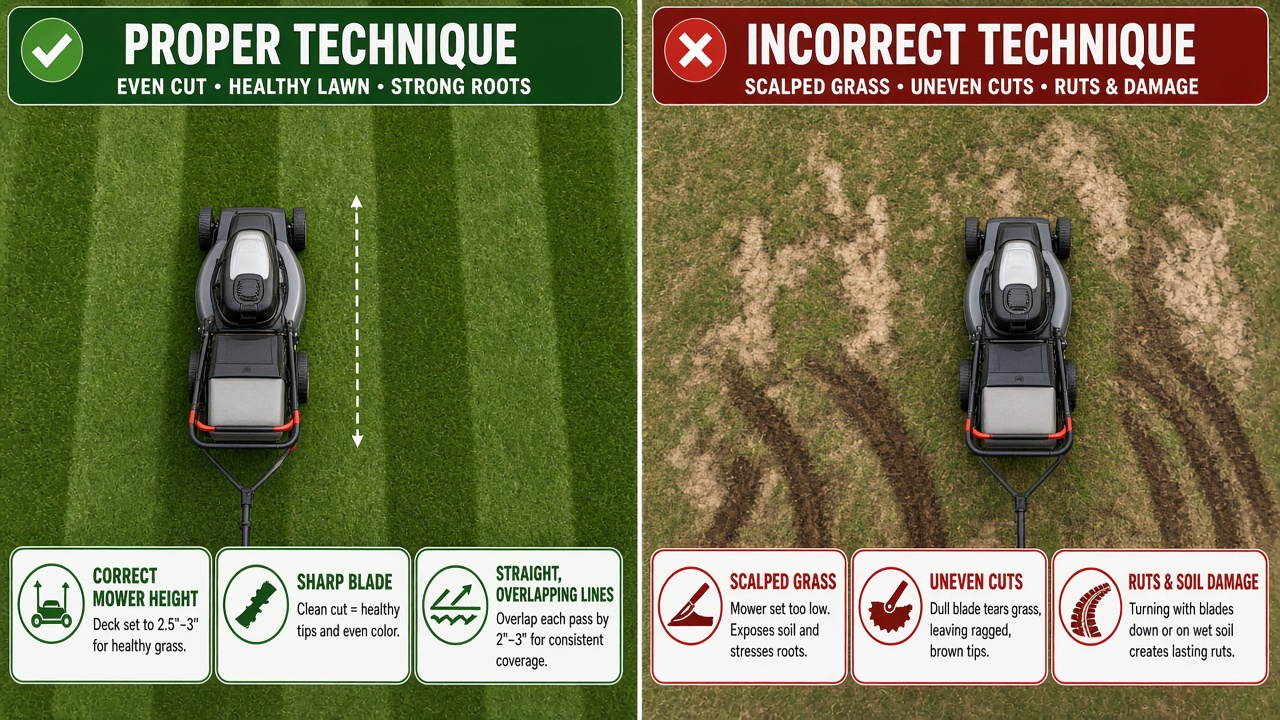
Mow your lawn by first clearing debris and ensuring your blade is sharp. Set your mower to cut no more than one-third of the grass height at a time, typically mowing when grass reaches 3 to 4 inches and cutting it to 2.5 to 3 inches. Push the mower in straight, overlapping lines, alternating direction each time to prevent ruts and encourage upright growth. Avoid mowing wet grass, keep a moderate pace, and leave clippings on the lawn to return nutrients to the soil. After mowing, trim edges and clean the mower deck.
Why Proper Mowing Matters for Lawn Health
How you mow directly affects the health and appearance of your lawn. Cutting grass at the right height and frequency encourages deep root development, thicker turf, and better disease resistance. When you follow proper technique, you reduce stress on the grass plant, minimize browning and disease risk, and create conditions that naturally suppress weeds. Conversely, cutting too short, mowing with a dull blade, or mowing too frequently weakens the grass and invites problems like thin patches, fungal disease, and increased weed germination.
The grass plant needs adequate leaf surface to photosynthesize and store energy in its roots. Removing too much at once forces the plant to redirect energy from root development to leaf regrowth, leaving it vulnerable during stress periods like heat or drought.
Before You Mow: Preparation and Safety Checklist
Taking time to prepare prevents damage to your lawn, your mower, and yourself.
- Check the mower blade: A dull blade tears grass rather than cutting it cleanly, causing brown, ragged tips and increased disease susceptibility. Inspect the blade for nicks and dullness. If it’s dull, sharpen it or have it professionally sharpened every 6 to 8 weeks of regular use.
- Check oil and fuel: Confirm your mower has adequate oil and fuel. For gas mowers, use fresh fuel (not more than 30 days old) to avoid starting issues.
- Clear the yard: Walk the lawn and remove sticks, stones, toys, pet waste, and other debris. These can damage the mower blade or become dangerous projectiles.
- Wear safety gear: Use closed-toe shoes, long pants, and hearing protection. Avoid loose clothing that could get caught in the mower.
- Mow dry grass: Wait until the grass is completely dry. Wet grass clumps, causes uneven cuts, clogs the mower deck, and can spread fungal disease. It’s also more likely to slip on slopes, creating a safety hazard.
- Choose the right time of day: Mow in early morning or late afternoon to avoid the hottest part of the day, which reduces stress on both the grass and you.
Understanding the One-Third Rule and Grass Height
The most important rule in lawn mowing is the one-third rule: never remove more than one-third of the grass blade height in a single mowing. This prevents severe stress to the plant and encourages healthy regrowth.
Here’s how it works: If your target height is 2.5 inches, you should mow when the grass reaches approximately 3.75 inches (2.5 ÷ 0.67 ≈ 3.75). This means you’re removing only about 1.25 inches, which is one-third of the starting height. For complementary field maintenance guidelines, examine our breakdown of z890 vs x870e motherboard.
Recommended heights by grass type:
- Cool-season grasses (fescue, bluegrass, ryegrass): 2.5 to 4 inches. These grasses thrive in northern climates and prefer taller heights, especially during hot summers.
- Warm-season grasses (bermuda, zoysia, St. Augustine): 1 to 3 inches. These southern grasses tolerate and often benefit from shorter cutting heights.
If you’re unsure which type you have, check with your local cooperative extension office or observe your lawn‘s growth patterns, cool-season grasses green up in spring and fall, while warm-season grasses thrive in summer.
Step-by-Step: How to Mow Your Lawn
Step 1: Start at the Perimeter
Begin by mowing around the edges of the lawn in a single pass. This creates a clean border and defines the mowing area. Push the mower at a steady, moderate pace, not too fast, which causes an uneven cut, and not too slow, which strains the engine. To evaluate matched hardware tolerances, consult our detailed overview of marshall stanmore iii vs harman kardon onyx studio 8.
Step 2: Mow in Straight Lines
After completing the perimeter, mow the open lawn in straight, parallel lines. Overlap each pass slightly (about 2 inches) to ensure you don’t miss strips of grass. Push the mower in a straight line by picking a focal point (like a tree or fence post) on the opposite side of the lawn and aiming toward it.
Step 3: Alternate Your Direction
Each time you mow, change your mowing direction, if you mowed north-south last week, mow east-west this week. Alternating prevents soil compaction, ruts, and encourages grass to grow upright rather than bending in one direction. It also creates a more uniform appearance. When planning workspace deployment, consider the engineering criteria outlined in our dyson v8 cyclone vs bissell featherweight stick guide.
Step 4: Handle Thick Clippings
If clippings are long and clumpy, stop and remove them. However, in normal conditions, leave short grass clippings on the lawn. They break down quickly and return nitrogen and other nutrients to the soil, reducing your fertilizer needs by up to 25 percent. This practice is called mulching.
Step 5: Edge and Trim
After mowing, use a string trimmer to clean up edges along driveways, sidewalks, and garden beds where the mower can’t reach. This creates a polished, finished appearance.
Step 6: Clean and Store
Disconnect the spark plug wire or turn off the mower. Let the deck cool, then use a brush or hose to remove grass buildup from the undercarriage. Dried grass restricts airflow and can reduce mower efficiency. Empty the bag if you’re using one, and store the mower in a dry place.
Mowing Techniques for a Better-Looking Lawn
Mulching vs. Bagging
Mulching (leaving clippings on the lawn) is the best choice for most homeowners. It returns nutrients to the soil, reduces waste, and saves time. Bag clippings only if they’re long and clumpy (which happens if you’ve skipped a mowing or the grass is extremely tall) or if you prefer the appearance of a striped, formal lawn.
Creating Lawn Stripes
The distinctive stripes you see on professional sports fields are created by bending grass in different directions, not by cutting different heights. To create stripes at home, use a reel mower or attach a roller to your push mower. Mow in one direction to bend the grass away from you (creating a dark stripe), then mow in the opposite direction the next time, bending the grass toward you (creating a light stripe). The contrast makes the lawn look manicured and healthy.
Avoiding Scalping
Scalping occurs when you cut grass too short, exposing bare soil and creating brown patches. This most often happens on uneven lawns or when the mower deck isn’t level. To avoid it, check that your mower deck is level (all wheels should be at the same height), follow the one-third rule, and raise your cutting height slightly if your lawn has bumps or dips. Scalped areas take weeks to recover.
Mowing Frequency and Seasonal Adjustments
During the active growing season, mow once a week in cool-season climates and every 5 to 7 days in warm-season climates. Frequency depends on rainfall, fertilizer use, and grass type, well-fertilized lawns grow faster and need more frequent mowing.
In spring, as grass wakes from dormancy, set your mower slightly higher to protect emerging shoots and encourage deep rooting.
In summer, raise the cutting height by 0.5 inches if temperatures exceed 85°F. Taller grass provides shade to the soil, reducing evaporation and heat stress.
In fall, gradually lower the cutting height as the growing season winds down. This helps the grass harden off for winter and reduces disease risk.
In winter, stop mowing once the grass stops growing. Mowing dormant grass can damage crowns and invite disease.
Common Mowing Mistakes and How to Avoid Them
| Mistake | Why It’s a Problem | How to Avoid It |
|---|---|---|
| Cutting too short | Weakens the plant, reduces root depth, and increases weed germination | Follow the one-third rule; never cut below recommended heights |
| Mowing with a dull blade | Tears grass instead of cutting it cleanly, causing brown tips and disease susceptibility | Sharpen the blade every 6 to 8 weeks |
| Mowing wet grass | Causes clumping, uneven cuts, clogs the deck, spreads disease, and is unsafe on slopes | Wait until grass is completely dry before mowing |
| Mowing too frequently | Stresses the plant and can lead to thin, weak turf | Follow the one-third rule; mow only when needed |
| Mowing in the same direction every time | Causes soil compaction, ruts, and grass grows bent rather than upright | Alternate mowing direction each week |
| Using an uneven mower deck | Creates scalped patches and uneven cuts | Check that all mower wheels are at the same height before mowing |
Buyer FAQs: How To Mow A Lawn Solved
Should I mow in the morning or afternoon?
Mow in early morning (after dew dries) or late afternoon. Avoid midday heat, which stresses both the grass and you. Avoid mowing in the evening, when moisture lingers on the grass overnight, increasing disease risk.
Can I mow a lawn that has gone to seed?
Yes, but do it carefully. If the lawn has already flowered and gone to seed, you can mow, but the seeds will scatter before you can catch them. For best results, mow before the grass flowers, or if it’s already seeded, mow and collect the clippings to prevent unwanted seeding in other areas of your yard.
How do I fix a lawn that has been scalped?
Scalped lawns recover slowly but do recover. Raise your mower height immediately to avoid further damage. Water the lawn regularly to encourage new growth, and avoid walking on scalped areas until the grass has regrown. The lawn will typically recover in 2 to 3 weeks. In the future, check that your mower deck is level and follow the one-third rule.
How often should I sharpen my mower blade?
Sharpen the blade every 6 to 8 weeks during the mowing season, or after every 8 to 10 hours of use. A sharp blade cuts cleanly and reduces energy use. You can sharpen it yourself with a file or take it to a professional sharpening service. Never attempt to sharpen a blade while it’s attached to the mower.
Final Tips for Lawn Mowing Success
Mowing is as much about consistency as technique. A regular mowing schedule, combined with sharp blades, proper cutting height, and alternating direction, keeps your lawn thick, healthy, and attractive. Pay attention to your lawn’s growth rate and adjust your mowing schedule accordingly. If you notice brown tips, thin patches, or excessive thatch buildup, reassess your approach, it’s likely time to sharpen the blade, raise the cutting height, or reduce mowing frequency. With these practices in place, you’ll maintain a lawn that looks and feels healthier season after season.
Good Habits for Better Mowing
Cutting no more than about a third of the grass height at one time keeps the lawn healthy. Sharp blades make a clear difference as well. Those doing their own engine work will want to see spark plug socket size lawn mower for the right tool. General safety reading for rotating blades is also available from American National Standards Institute (ANSI).