

How to Sharpen Rotary Mower Blades: The Quick Answer
To sharpen rotary mower blades, you must first disconnect the spark plug to prevent accidental startup, tip the mower safely, and secure the blade. Remove the blade using the correct socket size and direction, clamp it in a vise, and sharpen it at a 30 to 45° angle using a mill bastard file or angle grinder, following the original bevel. After sharpening, check the balance on a blade balancer or a nail, and reinstall the blade to the manufacturer’s torque specification. Ideally, you should repeat this process once or twice per season, or after every 25 hours of use.

Pros
- Diamond-honed tungsten carbide construction ensures exceptional hardness and rapid sharpening results
- Reversible blades significantly extend overall lifespan of the sharpener
- Full finger guard and ambidextrous ergonomic handle prioritize user safety and comfort
- Broad compatibility covers the most common outdoor and garden cutting tools
- Dishwasher-safe and easy-clean design supports hassle-free long-term ownership
Cons
- Manual hand-operated design requires some physical effort unlike powered electric sharpeners
- Optimized mainly for single-edged blades and may not suit every double-edged or specialty knife
- Carbide inserts will eventually wear and need separate replacement after many years of heavy use
The AccuSharp Garden Tool Sharpener is a compact handheld unit built around diamond-honed tungsten carbide blades. Its sturdy yet lightweight construction and full-length protective guard create an immediate sense of reliability and safety. The ergonomic handle fits securely in either hand, giving both right and left-handed users confident control from the first stroke.
Performance focuses on real-world garden maintenance. A few firm passes restore lawnmower blades, pruners, limb loppers, hoes, shovels and scythes to razor-sharp condition. The double-beveled carbide edges cut metal efficiently, and because the blades reverse, most users enjoy 5 to 10 years of service before replacement. Cleaning is simple with soap and water or a dishwasher cycle, keeping the tool ready for frequent outdoor use.
Drawbacks remain modest yet worth noting. The sharpener works best on single-edged tools and may require practice on unusually thick or shaped blades. Being fully manual, it demands a bit more effort than electric alternatives, and the carbide inserts, while long-lasting, are consumable over time.
For homeowners and gardeners who want an affordable, safe and effective way to keep cutting tools sharp without professional services, the AccuSharp Garden Tool Sharpener delivers clear value. Its combination of durability, versatility and protective design makes it a practical addition to any tool shed.

Pros
- Accurate balancing reduces blade wobble and engine wear effectively
- Works with nearly all standard lawnmower blade shapes for true universality
- Durable zinc die-cast construction ensures long-term rust resistance
- Intuitive design makes it easy for beginners and DIY users to operate
- Supports better cutting efficiency after blade sharpening sessions
Cons
- Lacks advanced precision indicators so users must rely on visual leveling judgment
- May not fit highly specialized or non-standard irregular blade designs perfectly
- Basic single-tool package includes no carrying case or extra accessories
The SporGain Lawn Mower Blade Balancer is a compact universal tool built from premium zinc die-cast metal for balancing lawnmower blades after sharpening. Its solid rust-resistant construction gives an immediate impression of durability suited for garage storage or occasional outdoor exposure, making it a practical accessory for standard lawn care routines.
In performance, the tool excels at simple balance checks by letting users place nearly any round, square, or common blade shape on it to detect imbalances. This process helps reduce wobble, vibration, and engine strain while verifying bent blades, leading to smoother cuts and longer mower life based on its core design features. The intuitive layout supports quick adjustments without specialized skills.
Drawbacks include the absence of built-in precision markers, which means results depend on careful visual assessment, and potential fit issues with highly custom blades outside standard shapes. It also comes as a basic 1pk unit without extras like storage options.
Overall, this SporGain balancer delivers strong value for DIY homeowners and lawn maintenance enthusiasts who regularly sharpen blades and want an affordable, reliable way to maintain cutting performance. It is ideal for those seeking universal compatibility and lasting metal quality without needing professional-grade equipment.

Pros
- Heavy-duty zinc alloy build for long-term use.
- Universal fit for many common blade shapes.
- Simple design is easy to use after sharpening.
- Compact size is convenient for storage and transport.
Cons
- It is a single-purpose tool and does not sharpen blades.
- Compatibility is broad, but the product data does not list exact mower model support.
- No instructions or extra accessories are mentioned in the manufacturer listing.
Overview and design. The Silcpall Lawn Mower Blade Balancer is a compact universal tool made from zinc alloy. Its round, simple shape is designed to hold mower blades at the center for quick balance checks after sharpening.
Performance and key features. In use, the balancer is meant to help you spot uneven blades before they cause vibration, poor cut quality, or extra wear on the mower. The universal design is intended to work with most common blade shapes, including round and square styles.
Drawbacks and considerations. This is a single-purpose accessory, so it will not sharpen blades or provide model-specific mounting guidance. Compatibility is broad, but users should still confirm their blade sits securely on the center slot before relying on it.
Verdict. For homeowners, DIY users, and anyone who sharpens mower blades at home, this is a practical maintenance tool that can make blade balancing faster and more consistent. It is best suited to buyers who want a simple, durable balancer rather than a multi-function kit.
Why Rotary Mower Blades Dull Faster Than Other Blade Types
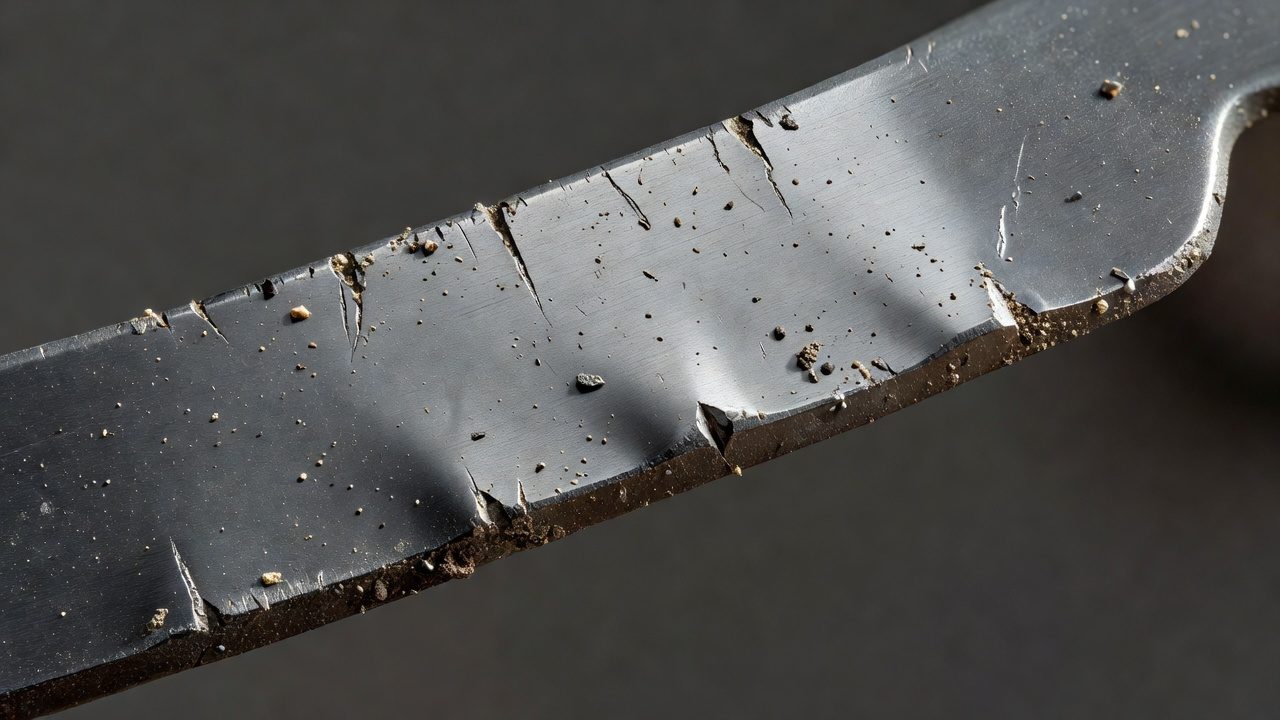
Understanding why rotary blades dull is crucial before you begin sharpening. Unlike reel mowers, which use a scissor-like action between a bed knife and a reel blade, rotary blades rely on blade tip speed and a lift angle to sever grass. As the blade spins, centrifugal force keeps it flat against the deck, and the sharp edge slices through the grass.
Rotary blades dull faster because they constantly contact rocks, twigs, and debris embedded in the turf. This impact causes microscopic chips in the steel and rounds off the sharp bevel. Furthermore, the high tip speed of a rotary mower (often exceeding 20,000 feet per minute) means that even a small loss of sharpness results in a significantly larger tearing surface compared to a slower reel blade.
A dull rotary blade doesn’t just cut poorly; it damages grass health. When the edge is dull, the grass is torn rather than severed cleanly. This jagged wound leaves the grass susceptible to disease and stress, turning your lawn brown and weak. To maintain a healthy lawn, regular sharpening is non-negotiable.
Safety Preparation Before You Touch the Blade
Safety is the foundation of any maintenance task. Before you even think about touching the blade, you must prepare your workspace and your body.
- Disconnect the Spark Plug: This is the most critical step. It prevents the engine from starting and the blade from spinning while you are working on it.
- Wear Personal Protective Equipment (PPE): Always wear heavy work gloves to protect your hands from sharp metal edges and cuts. Safety goggles are mandatory to protect your eyes from flying metal chips or debris.
- Manage Fuel: It is highly recommended to drain the fuel tank or stabilize the fuel if you plan to tip the mower. If you must tip it, turn the carburetor side up to prevent flooding the engine with gasoline.
- Secure the Mower: Never work on a mower that is on the ground. Always use blocks or sawhorses to prop up the mower deck securely.
How to Remove a Rotary Mower Blade
Removing the blade is the most dangerous part of the process if done incorrectly. Follow these steps to ensure it goes smoothly.
1. Block the Blade
Before removing the nut, place a block of wood between the mower blade and the deck housing. This prevents the blade from rotating when you loosen the bolt. For additional operational safety benchmarks, see our published testing notes on z890 vs x870e motherboard.
2. Identify the Bolt Direction
Walk-behind mowers usually spin their blades clockwise. Therefore, the blade bolt is typically threaded counter-clockwise (lefty-loosey) to loosen it. However, always check the rotation direction by looking at the arrow on the blade or the pulley before applying force.
3. Loosen the Bolt
Use a socket wrench or a crescent wrench to loosen the nut. If the bolt is rusted, apply penetrating oil and let it sit for a few minutes. To compare alternative configurations, check our hands-on review of marshall stanmore iii vs harman kardon onyx studio 8.
4. Remove and Inspect
Slide the blade off the spindle shaft. Inspect the blade for cracks, bends, and the condition of the spindle bearings. If the spindle feels rough or wobbly, the blade may not be the only issue.
Sharpening Methods Compared: File, Angle Grinder, and Bench Grinder
There are three primary methods to sharpen a rotary mower blade: using a file, an angle grinder, or a bench grinder. Each has its pros and cons. Users looking for related component recommendations can explore our dyson v8 cyclone vs bissell featherweight stick breakdown.
Method 1: Using a Mill Bastard File
This is the traditional method and is excellent for precision and safety. It requires more physical effort but allows you to control the angle perfectly.
How to Use a File:
- Clamp the blade in a vise with the cutting edge facing up.
- Hold the mill bastard file at a 30 to 45° angle relative to the flat side of the blade.
- Apply even pressure, pushing the file away from you in long, smooth strokes. Do not rock the file.
- Work the entire bevel evenly; do not sharpen one side more than the other.
- Flip the blade and repeat on the other side if the bevel is worn unevenly.
Method 2: Using an Angle Grinder
An angle grinder is the fastest method. It is aggressive and efficient, but it requires skill to avoid overheating the blade or removing too much metal. Before finalizing equipment decisions, refer to our comprehensive bissell crosswave hydrosteam vs shark stainforce comparison.
How to Use an Angle Grinder:
- Clamp the blade securely.
- Keep the grinder flat against the bevel of the blade. Do not tilt it up or down.
- Move the grinder in a sweeping motion along the edge.
- Work quickly to avoid heat buildup, which can soften the steel.
- Check your progress frequently to ensure you are following the original bevel.
Method 3: Using a Bench Grinder
A bench grinder offers the most control but carries a high risk of burning the blade if you aren’t careful.
How to Use a Bench Grinder:
- Use a light touch and keep the blade cool by frequently dipping it in water.
- Match the grinder’s wheel angle to the blade’s bevel (30 to 45°).
- Be mindful of the sparks; they can fly quite far.
Drill-Powered Sharpening Attachment
A drill sharpening attachment is a convenient tool for small repairs. While easier than a file, it may not provide the razor-sharp edge of a hand-sharpened blade or the consistency of a bench grinder.
How to Check and Restore Blade Balance After Sharpening
Sharpening removes metal from the cutting edge but does not remove it from the center. This changes the blade’s weight distribution. An unbalanced blade causes severe vibration, which can damage the spindle bearings and the mower deck.
Using a Blade Balancer
A blade balancer is a cone-shaped tool with a center point. Slide the balancer onto a nail or a stud, then hang the blade on the cone.
- If the heavy end of the blade hangs lower than the light end, it is unbalanced.
- To fix this, remove a small amount of metal from the heavy side. You can use the grinder or file to grind a tiny amount off the top flat surface of the heavy side.
- Recheck the balance until the blade sits perfectly level.
Using a Nail or Cone Balancer
If you don’t have a dedicated tool, drive a nail into a stud or a piece of wood. Hang the blade on the nail. The side that hangs lower is the heavy side. Grind a small amount of metal off the top flat side of that heavy section to restore balance.
How to Reinstall the Blade Correctly
Reinstalling the blade is just as important as removing it. A loose blade can become a projectile; an upside-down blade will not cut grass.
Orientation
For walk-behind mowers, the blade usually has a flat side and a beveled side. The flat side typically faces the engine to protect the engine block from the sharp edge. The beveled side should face the grass. Ensure the blade is oriented correctly before tightening.
Torque Specifications
Do not guess the tightness. Use a torque wrench if possible, as different manufacturers have different specifications. If a torque wrench is unavailable, tighten the bolt firmly with a wrench, but do not overtighten, which can strip the threads or warp the spindle.
Final Safety Check
Before reconnecting the spark plug, spin the blade by hand to ensure it clears the deck housing and spins freely without wobbling. Once satisfied, reconnect the spark plug.
Sharpening Ride-On Rotary Mower Blades: Key Differences
Sharpening blades on a lawn tractor or zero-turn mower requires additional safety precautions due to the size and power of the equipment.
- Deck Lift: You must engage the deck lift lever or use a hydraulic jack to raise the deck fully to access the blades safely.
- PTO Clutch: Ensure the Power Take-Off (PTO) clutch is disengaged before working on the blades.
- Multiple Blades: Ride-on mowers often have multiple blades stacked on a single spindle shaft. You must sharpen all blades on that shaft to the same angle and balance them together as a set.
- Torque Specs: The torque requirements for ride-on mower blade bolts are significantly higher than for walk-behind mowers. Always consult the specific manufacturer’s service manual for your model.
When to Replace Rather Than Sharpen: A Decision Guide
Not all blades can be saved. If you encounter the following issues, it is time to replace the blade rather than sharpening it.
- Cracks: Even a hairline crack can propagate and cause the blade to shatter at high speeds, posing a severe safety hazard.
- Bends: If the blade is bent, it cannot be balanced. Attempting to straighten a blade often weakens the steel, leading to failure.
- Thickness Wear: Blades have a specific thickness. If you have sharpened the blade multiple times and it has become too thin, it will vibrate excessively and can snap.
- Deep Nicks: If the edge has deep gouges that a file cannot smooth out, the blade may need replacement.
Frequently Asked Questions About How To Sharpen Rotary Mower Blades
What is the correct sharpening angle for a rotary mower blade?
The recommended sharpening angle is typically between 30 and 45 degrees. This angle creates a sharp enough edge to cut grass while maintaining enough strength to withstand the impact of debris. Always refer to your mower’s manufacturer manual for the specific angle recommended for your model.
How often should I sharpen my rotary mower blades?
You should sharpen your rotary mower blades once or twice per season, or after every 25 hours of use. If you mow on a regular weekly schedule, a spring and fall sharpening is usually sufficient.
Can I sharpen a bent mower blade?
No, you should not sharpen a bent blade. A bent blade cannot be balanced, and the vibration caused by the bend will damage the mower’s spindle bearings and deck. The blade should be replaced if it is bent.
Why does my mower vibrate after sharpening the blades?
If your mower vibrates after sharpening, it is likely due to an unbalanced blade. Ensure you have checked the balance using a balancer or nail method and removed material from the heavy side. If the vibration persists, the blade may be damaged or the spindle may be worn.
Technical Standards and Compliance
Mechanical safety standards, operational tolerances, and protective gear guidelines align with benchmark specifications established by the American National Standards Institute (ANSI).









