

Quick Answer: How to Start a Cub Cadet Lawn Mower
Engage the parking brake, set the throttle to Fast or Choke, then turn the ignition key (riding and zero-turn models) or press the primer bulb 3–5 times and pull the recoil cord firmly (walk-behind models). Once the engine runs, move the choke gradually to Run after 30–60 seconds of warm-up. The exact sequence varies by mower type — riding, zero-turn, and walk-behind each have safety interlocks that must be satisfied before the engine will crank.

Pros
- Large-size design named in product title
- Sharpening and balancing functions listed
- Listed as a new upgraded version

Pros
- Adjustable 15-to-45-degree range in title
- Sharpening and balancing functions listed

Pros
- Sharpener and balancer functions in title
- 15-to-45-degree adjustable setting listed
- Built for lawn mower blade maintenance
Pros
- Includes replacement gaskets and a 98079-55846 spark plug
- Matches Honda HRR216 and HRS216 lawn mower models
- Designed around the 16100-Z8B-901 carburetor specification
Cons
- Restricted to select Honda GCV160 mower applications
- Installation requires basic mechanical tools and skills
Cub Cadet Mower Types and Their Start Mechanisms: Quick Reference
Identify your model series before following any start procedure. The table below maps common Cub Cadet series to mower category and start mechanism.
| Model Series | Mower Type | Start Mechanism | Choke Type |
|---|---|---|---|
| XT1, XT2 | Riding (lawn tractor) | Electric key start | Manual choke lever (carbureted) |
| Ultima ZT1, ZT2 | Zero-turn | Electric key start | Manual choke lever (carbureted) |
| Ultima ZTX (EFI models) | Zero-turn | Electric key start | Automatic (no manual choke adjustment) |
| SC series (e.g., SC300, SC500) | Walk-behind push/self-propelled | Recoil pull-start (some: electric start) | Manual primer bulb + choke |
| CC series | Walk-behind | Recoil pull-start | Manual primer bulb + choke |
| ST series (snow/multi-season) | Walk-behind | Recoil pull-start or electric start | Manual choke |
Your model number is printed on a label under the seat (riding/zero-turn) or on the mower deck near the handle (walk-behind). Cross-reference it with the table above before proceeding. To evaluate matched hardware tolerances, consult our detailed overview of jbl partybox club 120 vs sony srs xv500. For complementary hardware performance, examine our breakdown on riding lawn mower specifications.
Before You Start: Safety Checks and Pre-Start Preparation
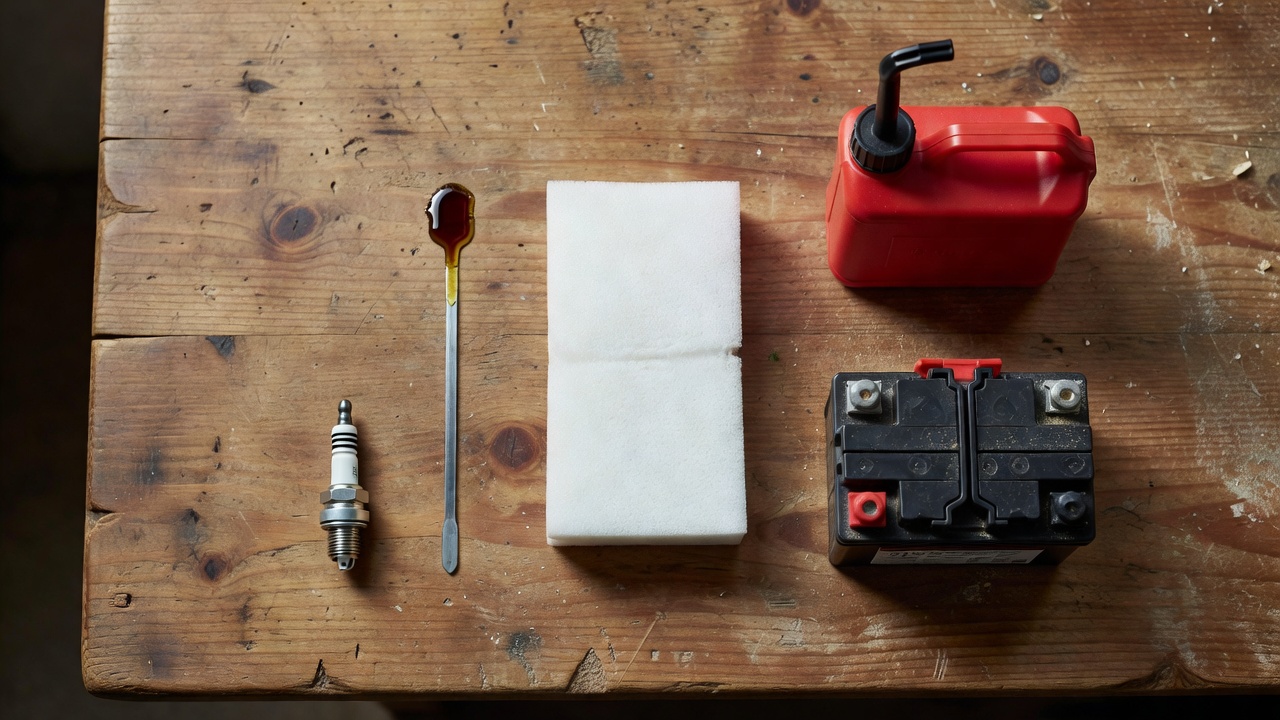
Skipping pre-start checks is the leading cause of hard-starting and safety incidents. Run through the following before every session. To evaluate matched hardware tolerances, consult our detailed overview of jbl partybox club 120 vs sony srs xv500.
- Fuel level: Fill with fresh gasoline. Cub Cadet and its engine suppliers (Kohler, Kawasaki) recommend fuel with no more than 10% ethanol (E10 maximum); ethanol-free fuel is preferred for easiest starting and carburetor health.
- Oil level: Check the dipstick with the mower on level ground. Do not start with oil below the minimum mark — most Cub Cadet engines have a low-oil shutoff that will prevent starting.
- Air filter: A clogged air filter causes rich running and hard starts. Inspect and tap clean or replace if visibly dirty.
- Blade engagement / PTO: The blade engagement lever or PTO switch must be in the OFF / Disengaged position. An engaged PTO will trigger the safety interlock and prevent cranking.
- Fuel shutoff valve: On riding and zero-turn models with an accessible fuel shutoff, confirm the valve is in the Open position. This valve is often closed during seasonal storage.
- Battery (electric-start models): A weak battery is the single most common cause of a no-crank condition. If the engine turns over slowly or not at all, charge or test the battery before diagnosing further.
- Work area: Mow only on stable ground. Keep bystanders and children clear of the cutting area before starting.
How to Start a Cub Cadet Riding Mower (XT1, XT2 Series)
The XT1 and XT2 are lawn tractors with electric key start and a carbureted engine. Five safety interlocks must be satisfied simultaneously: seat switch engaged, parking brake set, PTO disengaged, and (on some models) reverse caution system acknowledged. When planning workspace deployment, consider the engineering criteria outlined in our z890 vs x870e motherboard guide.
- Sit fully in the operator seat. The seat safety switch cuts ignition power when the seat is unoccupied. The engine will not crank if you are standing beside the mower.
- Set the parking brake. Push the brake pedal down and engage the parking brake latch. The brake interlock must be active before cranking.
- Disengage the blade (PTO). Move the PTO lever or switch to the Off position.
- Set the throttle. Move the throttle control to the Fast position (rabbit icon). For a cold start — engine not run in the past 30 minutes — move the choke lever fully to Choke.
- Turn the ignition key to Start. Hold for no more than 10 seconds. Release as soon as the engine fires. Cranking longer than 10 seconds overheats the starter motor.
- Release the choke gradually. After 30–60 seconds of running, move the choke lever incrementally toward Run. Move too fast and the engine will stumble; move fully to Run once idle is smooth.
- Allow a brief warm-up (1–2 minutes) before engaging the blades or driving under load, especially in cold weather below 50 °F (10 °C).
Warm restart (engine run within the last 30 minutes): Skip the choke entirely. Set throttle to Fast and turn the key. The engine should fire within 1–2 seconds.
How to Start a Cub Cadet Zero-Turn Mower (Ultima ZT, ZT1, ZT2 Series)
Zero-turn models share the electric key start of the XT series but replace the parking brake interlock with a lap bar interlock. Both lap bars must be pushed fully outward (disengaged position) before the ignition circuit will allow cranking. This is the most commonly missed step on zero-turn mowers. For additional operational safety benchmarks, see our published testing notes on marshall stanmore iii vs harman kardon onyx studio 8.
- Sit fully in the operator seat. Seat safety switch applies — same as riding mowers.
- Push both lap bars outward to the fully disengaged position. The lap bar safety interlock is active only when both bars are out. One bar left inward will prevent the starter from engaging.
- Disengage the blade (PTO). Confirm the PTO switch is in the Off position.
- Set the throttle to Fast and, for a cold start, move the choke lever to the Choke position.
- Turn the ignition key to Start. Hold no longer than 10 seconds. Release when the engine fires.
- Gradually open the choke to Run over 30–60 seconds as the engine warms and idles smoothly.
- Once the engine is warm, move the lap bars inward to the operating position before driving.
EFI zero-turn models (Ultima ZTX with EFI engines): These models use electronic fuel injection with an automatic choke system. There is no manual choke lever to operate — set the throttle to Fast and turn the key. The engine management system handles fuel delivery for cold and warm starts automatically. When planning workspace deployment, consider the engineering criteria outlined in our z890 vs x870e motherboard guide.
How to Start a Cub Cadet Walk-Behind Mower (SC, CC Series)
Walk-behind mowers in the SC and CC series use either a recoil (pull-start) cord or, on select models, a push-button or key electric start. The cold-start procedure relies on the primer bulb and choke — two steps that differ significantly from riding mower procedure.
A. Pull-Start (Recoil) — Cold Start
- Place the mower on level ground. Confirm the area is clear of debris that could contact the blade.
- Open the fuel shutoff valve if your model has one (check near the base of the fuel tank).
- Move the throttle / engine speed lever to Fast (or to the marked start position).
- Set the choke to Choke (closed position). On most SC/CC models this is a separate lever near the air filter housing.
- Press the primer bulb 3 times for a cold engine. Press it slowly and fully — each press should feel firm and spring back. Some Briggs & Stratton engines on Cub Cadet walk-behinds specify up to 5 presses in cold temperatures below 50 °F; consult your operator manual for your specific engine displacement.
- Grip the operator presence control (OPC) bail bar against the handle and hold it. The blade will not engage and the engine cannot run without the bail held.
- Pull the recoil cord firmly and smoothly in one continuous motion. Do not let the cord snap back against the housing — guide it back. Most cold engines start within 2–3 pulls.
- Move the choke to Run after 30–60 seconds once the engine warms and sustains a smooth idle.
B. Electric Start Walk-Behind — Cold Start
- Complete steps 1–5 above (fuel valve, throttle, choke, primer bulb).
- Grip the OPC bail bar.
- Turn the ignition key to Start or press the electric start button. Hold no longer than 5 seconds.
- Move the choke to Run after 30–60 seconds of warm-up.
C. Warm Restart (Engine Run Within Past 30 Minutes)
Do not use the choke and do not press the primer bulb. Set throttle to Fast, grip the OPC bail, and pull the cord once or twice (pull-start) or press the key (electric start). A warm engine requires no additional fuel enrichment — priming a warm engine floods it. For additional operational safety benchmarks, see our published testing notes on marshall stanmore iii vs harman kardon onyx studio 8.
Cold Start vs. Warm Restart: Choke and Throttle Differences
Incorrect choke use floods more Cub Cadet engines than any other single user error. The table below clarifies what to do in each scenario.
| Scenario | Choke Position | Primer Bulb (Walk-Behind) | Throttle |
|---|---|---|---|
| Cold start (engine cold, not run today) | Full Choke (closed) | 3–5 presses | Fast |
| Cool start (engine run earlier today, now fully cooled) | Half Choke | 1–2 presses | Fast |
| Warm restart (engine ran within 30 minutes) | No Choke (Run position) | None | Fast |
| EFI model (any condition) | No manual choke — automatic | N/A | Fast |
Carbureted models require manual choke management. EFI models (found on select Ultima ZTX series) use electronic fuel injection to automatically adjust the fuel-air mixture for ambient temperature — no manual choke lever is present on these machines. To compare alternative configurations, check our hands-on review of dyson v8 cyclone vs bissell featherweight stick.
Cub Cadet Won’t Start: Quick Troubleshooting FAQ
Engine cranks but won’t fire
Check fuel first — confirm the tank is not empty and the fuel shutoff valve is open. Old or stale fuel (stored more than 30 days without stabilizer) is a primary cause; drain and refill with fresh gasoline. If fuel is fresh, remove and inspect the spark plug: a fouled, wet, or corroded plug prevents ignition. Replace spark plugs annually per Cub Cadet maintenance schedules. If the plug is dry and the engine still won’t fire, the carburetor jet may be clogged from ethanol-damaged fuel — this requires carburetor cleaning or replacement.
Engine is flooded (too much primer / choke)
A flooded engine smells strongly of gasoline and will not start despite cranking. To clear a flood: move the choke to the Run (open) position, set the throttle to Fast, do not press the primer bulb, and pull the recoil cord (or crank with the key) continuously for 5–10 seconds with the spark plug removed or with throttle wide open. This purges excess fuel from the cylinder. Reinstall the plug and attempt a normal warm-restart procedure. Users looking for related component recommendations can explore our bissell crosswave hydrosteam vs shark stainforce breakdown.
No crank at all — starter motor does not turn
On electric-start models, the most common cause is a discharged or failed battery. Test battery voltage: a fully charged 12V mower battery reads 12.6V or higher at rest. Below 12V requires charging; below 10V after charging indicates a failed battery. Beyond the battery, check the following safety interlocks in order: seat switch (riding/zero-turn), parking brake switch, PTO/blade engagement switch, lap bar switches (zero-turn). Any single failed switch in the interlock chain prevents cranking. A blown main fuse (typically 20A, located near the battery) also causes a complete no-crank condition.
Pull cord is hard to pull or won’t move
A seized or extremely stiff recoil cord on a walk-behind mower indicates one of two conditions: (1) hydraulic lock — fuel or oil has entered the cylinder and the liquid cannot compress. Remove the spark plug and pull the cord slowly to expel the liquid, then reinstall the plug and attempt to start. (2) engine seizure — caused by running with critically low oil. If the cord will not move at all with the plug removed, the engine may be seized internally and require professional service.
Maintaining Easy Starts: Seasonal Tips for Your Cub Cadet
A mower that starts reliably every season is the result of consistent off-season maintenance — not luck.
- Use fresh, ethanol-free fuel. Kohler and Kawasaki (the primary engine suppliers on Cub Cadet mowers) recommend ethanol-free or maximum E10 fuel. Ethanol above 10% degrades rubber fuel-system components and promotes carburetor deposits.
- Add fuel stabilizer before storage. Mix a quality fuel stabilizer (such as STA-BIL) into a full tank before the final mow of the season. Run the engine for 5–10 minutes to distribute the treated fuel throughout the carburetor. This prevents varnish buildup that clogs jets over winter.
- Replace the spark plug annually. Cub Cadet maintenance schedules and engine OEM service documentation recommend spark plug replacement every season or every 100 hours of operation, whichever comes first. A new plug costs under $5 and eliminates an entire category of hard-start problems.
- Clean or replace the air filter each season. A paper element filter can be tapped clean and reused once; foam pre-filters should be washed with soap and water, dried completely, and lightly oiled. Replace both annually for reliable starts.
- Use a battery tender / trickle charger over winter. Leaving a lead-acid mower battery discharged over winter sulfates the plates and permanently reduces capacity. A trickle charger (1–3A output) maintains charge through storage and ensures the battery cranks the engine confidently in spring.
- Change the oil at season’s end. Running old, contaminated oil through winter accelerates wear. Drain and refill with the oil grade specified in your operator manual (commonly 10W-30 for air-cooled engines) before storage.
Buyer FAQs: How To Start Cub Cadet Lawn Mower Solved
Why does my Cub Cadet riding mower shut off when I stand up?
The seat safety switch cuts engine power when the operator leaves the seat while the PTO is engaged. This is an ANSI-required safety interlock, not a malfunction. If the engine dies immediately every time you shift your weight — even with the PTO off — the seat switch may be faulty or misaligned and needs replacement or adjustment by a service technician.
How long should I let a Cub Cadet warm up before mowing?
Allow 1–2 minutes at fast idle before engaging the blades or driving under load. In temperatures below 40 °F (4 °C), extend warm-up to 3–5 minutes. Running the engine hard before oil reaches operating temperature accelerates wear on cylinder walls and bearings.
Can I start a Cub Cadet zero-turn with the lap bars inward?
No. The lap bar safety interlock on Cub Cadet Ultima zero-turn mowers requires both lap bars to be in the fully outward (disengaged) position before the ignition circuit permits cranking. This is a deliberate safety design — the mower will not move accidentally when the operator is mounting or dismounting. Push both bars fully outward, start the engine, then pull the bars inward to begin driving.
What fuel is best for a Cub Cadet lawn mower?
Ethanol-free 87-octane (regular) gasoline is the preferred fuel for Cub Cadet mowers equipped with Kohler or Kawasaki engines, per those manufacturers’ fuel recommendations. E10 (up to 10% ethanol) is acceptable. E15 and E85 are not approved for small engine use and can void the warranty, damage fuel system components, and cause persistent hard-starting and running issues.
For more hands-on benchmarks and buying recommendations, consult our guides on heavy-duty chainsaw buyer guide, as well as high-CFM commercial leaf blower guide.
Mechanical safety standards, operational tolerances, and protective gear guidelines align with benchmark specifications established by the American National Standards Institute (ANSI).









