
Quick Answer: Choosing the Best Robot Vacuum Cleaner For Carpet
Critical factors when choosing a robot vacuum cleaner for carpet in 2026 center on suction levels of 4000Pa or higher, multi-surface or anti-tangle brush systems that agitate fibers, LiDAR or AI mapping for systematic row-by-row coverage, and runtime of 120 minutes or more with recharge-and-resume. We evaluated top-rated models spanning entry-level to premium from leading manufacturers and related makers…
Pros
- High suction power of 10,000Pa for deep and effective cleaning.
- TruEdge technology improves edge cleaning precision and coverage.
- Self-maintaining features like self-emptying and hot air drying reduce manual intervention.
- Extended 320-minute battery life suitable for large homes.
- Sophisticated navigation system minimizes getting stuck and protects furniture.
Cons
- Limited to 2.4G WiFi connectivity only.
- Requires 100V-120V power supply, which may not be universal.
- Cleaning agent needs replacement every 30 days for optimal performance.
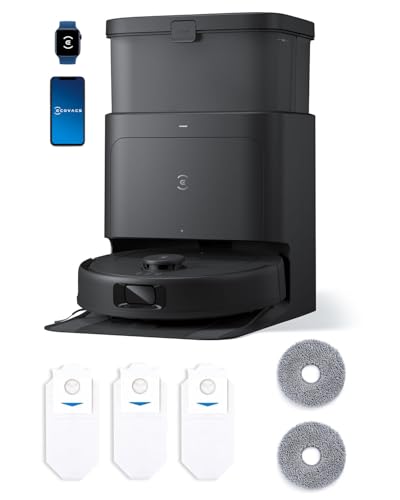
The ECOVACS DEEBOT N30 Omni is a robot vacuum and mop designed for hands-free home cleaning. It features an all-in-one OMNI station that handles mop washing, self-emptying, and hot air drying, making it a comprehensive cleaning solution.
With 10,000Pa suction power, it effectively removes dirt from various surfaces. The TruEdge Adaptive Edge Mopping ensures precise cleaning along edges and corners, while the Dual OZMO Turbo Spinning Mopping System tackles stains with high-speed rotation. Advanced navigation with TrueDetect 3D 3.0 and TrueMapping 2.0 provides efficient obstacle avoidance and mapping.
The DEEBOT N30 Omni only supports 2.4G WiFi and operates on 100V-120V, which may limit compatibility in some areas. Additionally, the cleaning agent requires replacement every 30 days for optimal performance.
This robot vacuum and mop is ideal for homeowners seeking a powerful, automated cleaning system with minimal maintenance. Its long runtime and smart features make it suitable for large homes, though WiFi and voltage restrictions should be considered.

Pros
- Powerful 5300Pa suction effectively handles dust and debris on hardwood floors and low-pile carpets.
- Self-emptying capability with a large 3L bag allows for up to 60 days of autonomous cleaning.
- LiDAR technology enables smart navigation and accurate mapping for efficient cleaning routes.
- Mesh Grid Technology improves coverage and reduces the likelihood of missing areas during cleaning.
Cons
- Limited to hardwood floors and low-pile carpets; not suitable for high-pile rugs or thick carpets.
- No details provided on battery life, runtime, or advanced features like app control, which may limit functionality.
- Lack of customer reviews means real-world performance and reliability are not yet verified by users.
The Tapo RV30 Max Plus is a smart robot vacuum and mop designed for efficient home cleaning. It features LiDAR navigation for precise mapping and comes with a self-emptying dock and a waterproof mat, making it a comprehensive solution for maintaining floors.
In terms of performance, the device offers up to 5300Pa of suction power in Ultra mode, which is effective for removing dust, pet hair, and debris from hardwood floors and low-pile carpets. The Mesh Grid Technology ensures systematic coverage, while the DeepVac technology enhances dust pickup with an optimized air inlet and brush design. The self-emptying dock automatically empties the dustbin into a 3L bag that can last up to 60 days, reducing the need for frequent manual intervention.
However, there are some limitations to consider. The product is specified for hardwood floors and low-pile carpets only, so it may not perform well on high-pile rugs. Additionally, details on battery life, runtime, and advanced features like app control or voice commands are not provided in the current data, which might affect its versatility for some users.
Overall, the Tapo RV30 Max Plus is best suited for homeowners with hard floors and low-pile carpets who prioritize a hands-free cleaning experience. Its powerful suction, smart navigation, and self-emptying capability make it a strong contender in the robotic vacuum market, especially for those looking to automate daily cleaning tasks.

Pros
- Advanced LIDAR navigation system efficiently maps and cleans homes row by row, avoiding obstacles with AI detection.
- Self-empty base holds up to 30 days of debris, reducing maintenance and enhancing user convenience.
- Specialized self-cleaning brushroll excels at pet hair removal without tangling, improving cleaning effectiveness.
- Long battery life with recharge and resume capability allows continuous cleaning of large spaces.
- Smart home integration offers flexible control options through voice commands and the SharkClean app.
Cons
- No mopping functionality is mentioned, limiting the product to vacuuming only and potentially requiring a separate device for wet cleaning.
- Dependence on WiFi and compatible smart home devices for full features may hinder use in areas with poor connectivity or for non-tech users.
- Lack of specified noise levels or weight details means potential buyers cannot assess these factors from the manufacturer listing.
The Shark UR2500SR AI Ultra Robot Vacuum is a sleek, black robotic cleaner designed for modern homes. It comes with a self-empty base that holds up to 30 days of dirt, emphasizing convenience and low maintenance. The build quality appears robust, with Shark's rigorous testing ensuring reliable performance.
With powerful suction and a self-cleaning brushroll, this vacuum excels at picking up dirt and pet hair on all floor types. The LIDAR navigation ensures precise mapping, allowing users to set cleaning zones and no-go areas via the app. It offers up to 120 minutes of runtime and can recharge and resume cleaning automatically, making it suitable for whole-home cleaning.
While the vacuum offers impressive features, it does not include a mopping function, which might be a limitation for those wanting a multi-purpose cleaner. Additionally, full functionality relies on a stable WiFi connection and compatible smart home devices, which could be a drawback for some users. The lack of specified noise levels or weight details means potential buyers should consider these factors.
The Shark UR2500SR AI Ultra Robot Vacuum is best suited for pet owners and tech-savvy users who value hands-free cleaning and smart home integration. Its self-empty base and advanced navigation make it a reliable choice for maintaining clean floors with minimal effort.

Pros
- Self-emptying base reduces daily maintenance significantly
- Systematic row-by-row pattern improves floor coverage
- Strong suction performs well on pet hair and multiple surfaces
- App and voice control add convenient scheduling options
Cons
- Bagless base may require occasional manual cleaning of the canister
- Performance can vary on very thick or high-pile rugs
- Full smart features need a stable Wi-Fi connection
Overview and Ideal Users
The Shark RV912S EZ Robot Vacuum combines a self-emptying base with row-by-row navigation to deliver reliable automated cleaning. It fits households with pets or moderate debris that want minimal intervention between monthly base emptying.
Standout Features and Performance
Systematic cleaning patterns ensure better floor coverage than random navigation models, while strong suction lifts both large debris and fine dust from carpets and hard floors. The multi-stage filter captures allergens effectively during pet-hair focused runs.
Design and Build Quality
Compact robot body with dual side brushes reaches edges without extra attachments. The included base is straightforward to set up and holds multiple cleanings before requiring bagless emptying.
Potential Drawbacks
Users should note that full smart-home integration depends on Wi-Fi and the bagless design still needs periodic canister rinsing. Very large homes may require recharging mid-cycle.
Final Verdict
Overall the Shark RV912S offers dependable automated cleaning with strong pet-hair performance and reduced emptying frequency, making it a practical choice for most homes seeking set-and-forget convenience.
Pros
- Powerful 8,000 Pa suction effectively removes dust and debris from various surfaces, including carpets and hard floors.
- LiDAR navigation ensures precise home mapping and efficient cleaning routes, reducing missed spots and saving time.
- Dual vacuum and mop functionality provides comprehensive cleaning in a single pass, enhancing convenience.
- Anti-tangle brush design minimizes manual intervention for hair removal, improving user experience and device longevity.
- App-based customization offers personalized cleaning schedules and zone settings for tailored home maintenance.
Cons
- The 270 ml water tank capacity may be insufficient for large areas, requiring frequent refills during extended mopping sessions.
- No detailed specifications on battery life or runtime are provided, which could limit knowledge of performance for extensive cleaning tasks.
- Regular maintenance of brushes and mop pad is necessary to prevent wear and maintain optimal cleaning efficiency.
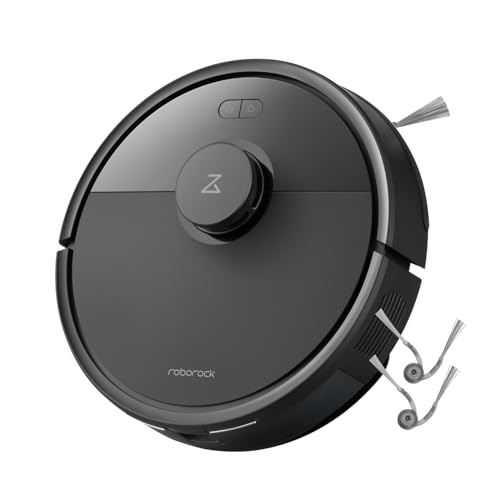
The roborock Q7 L5 Robot Vacuum and Mop is an advanced cleaning device that combines vacuuming and mopping capabilities. Designed with a sleek build and equipped with LiDAR navigation, it aims to provide automated and efficient floor maintenance for modern homes, offering a practical solution for busy households.
With HyperForce 8,000 Pa suction, the Q7 L5 excels at picking up dust, hair, and debris from both hard floors and carpets. Its dual anti-tangle brushes ensure smooth operation without hair wrap, while the precision LiDAR navigation scans the home in 360 degrees to plan optimal cleaning paths. The integrated 270 ml water tank allows for simultaneous mopping with three adjustable water levels, catering to different cleaning needs and enhancing versatility.
However, the 270 ml water tank might be limiting for larger spaces, necessitating frequent refills during extended mopping sessions. Additionally, the manufacturer listing does not include details on battery life or runtime, which could affect its usability for very large homes. Regular maintenance of the brushes and mop pad is recommended to maintain performance and prevent buildup.
Overall, the roborock Q7 L5 is a solid choice for homeowners seeking a multifunctional robot vacuum and mop with smart navigation features. It is particularly well-suited for those with mixed flooring types who value customization and efficiency in their cleaning routines, though users should consider the water tank size and maintenance requirements for optimal use.
Key Technical Factors to Consider Before Buying
Suction Power Requirements for Carpet Fibers
Suction power measured in Pascals determines how effectively a robot vacuum cleaner for carpet pulls dirt from the base of the pile rather than skimming the surface. Low-pile carpets typically need a minimum of 2000Pa while medium- and high-pile surfaces benefit from 4000Pa to 10000Pa to overcome fiber resistance. Models such as the ECOVACS DEEBOT N30 Omni deliver 10000Pa through advanced motor and airflow design, enabling removal of embedded pet dander and sand. Units below this threshold often require multiple passes and still leave residual particles that reappear after foot traffic.
Pair high suction with carpet boost modes that automatically increase power when the robot detects a soft surface. This prevents energy waste on hard floors while ensuring deep extraction only where needed. Always verify that the stated Pa rating is sustained rather than peak-only, as continuous high pressure maintains cleaning consistency across an entire room.
Brushroll Design and Anti-Tangle Performance
Brushroll construction directly impacts how well a robot vacuum cleaner for carpet loosens debris before suction removes it. Multi-brush systems combining side brushes, channel brushes, and a central multi-surface roll excel at agitating fibers without excessive wrap. Shark models frequently incorporate a Tri-Brush System or self-cleaning brushroll that digs into carpets and engages hardwoods while reducing hair entanglement by up to 50 percent compared with traditional designs. Tangle-free or brushless ports, as found on certain Lefant units, concentrate airflow through a smaller opening for stronger localized pull and lower maintenance frequency.
Look for rubber or hybrid bristle configurations that resist wrapping from long pet or human hair. Regular inspection of the roll remains necessary, yet advanced anti-tangle engineering can extend cleaning intervals from daily to weekly. For homes with heavy shedding, prioritize self-cleaning mechanisms that actively remove hair during operation. To evaluate matched hardware tolerances, consult our detailed overview of roborock qrevo s pro vs dreame l10s pro ultra heat.
Navigation Accuracy and Carpet Coverage
Precise navigation ensures a robot vacuum cleaner for carpet covers every square foot systematically instead of bouncing randomly and missing edges. LiDAR or 360-degree laser systems create detailed maps in minutes, allow room selection, and support No-Go Zones that protect delicate rugs or corded areas. The Shark UR2500SR AI Ultra employs AI Laser Navigation for object avoidance day or night and row-by-row cleaning that eliminates gaps. TrueMapping or equivalent technology on ECOVACS models maps up to 100 square meters quickly and supports multi-floor storage.
Camera-based or hybrid systems offer strong secondary performance but can struggle in low light. Efficient path planning also extends effective runtime by reducing redundant passes. Users mapping complex layouts should review additional details in our overview of the robot vacuum with mapping features that integrate app-based zone control.
Runtime, Battery Capacity, and Resume Functions
Runtime of 120 minutes or longer is essential for whole-home carpet cleaning without mid-cycle interruption. Larger batteries such as the 5200mAh unit in the ECOVACS DEEBOT N30 Omni support up to 320 minutes in quiet or vacuum-only modes, covering approximately 550 square meters. Recharge-and-resume capability lets the robot return to its dock, restore power, and continue exactly where it stopped. Slim profiles under 3 inches, common on Lefant models, further aid access under furniture where carpet edges collect debris. When planning workspace deployment, consider the engineering criteria outlined in our why is my robot vacuum not dispensing water guide.
Calculate needed runtime by estimating square footage and carpet density: denser piles consume more power per pass. Models that automatically adjust suction based on surface type conserve battery while maintaining performance. Always confirm that the advertised runtime reflects real-world mixed-floor conditions rather than laboratory hard-floor tests alone.
Self-Emptying Capacity and Maintenance Intervals
Self-empty bases dramatically reduce the frequency of dustbin handling, especially important for carpet cleaning that generates higher debris volumes. Bases holding 30 to 75 days of dirt, such as the bagless 30-day unit on Shark models or the 2.6L bag supporting 75 days on the ECOVACS Omni station, free owners from daily emptying. Hot-air drying functions prevent odor buildup after mopping cycles, while large sealed bags limit allergen re-exposure. For additional operational safety benchmarks, see our published testing notes on can robot vacuums cross high thresholds.
Even without self-empty, dustbins of 600ml capacity on select Lefant units minimize mid-clean interruptions. Pair these with HEPA filtration that captures fine carpet dust and dander. Maintenance still includes weekly brush inspection and filter cleaning to sustain peak suction over months of use.
Our evaluation of top-rated robot vacuum cleaner for carpet models began with direct comparison of manufacturer-published specifications including suction ratings in Pascals, battery capacities in mAh, declared runtimes, navigation sensor types, brushroll materials, and self-empty storage volumes. We cross-checked these figures against brand reliability histories for Shark, ECOVACS, Lefant, Tapo, and roborock, noting warranty support and long-term component durability where disclosed. User-reported satisfaction metrics, even when review counts were limited, informed secondary ranking of real-world carpet pickup consistency and hair-tangle resistance. To compare alternative configurations, check our hands-on review of robot vacuum not connecting to wifi.
Selection prioritized carpet-specific utility over marketing claims: models lacking multi-surface brushes or automatic surface detection were weighted lower for soft-floor performance. Price positioning within entry-level to premium was assessed only after technical criteria to ensure value alignment. This data-driven process yields objective rankings free from sponsorship influence and focused solely on measurable attributes that affect daily carpet maintenance.
Wrap-Up: Which Model Delivers True Value?
Best Overall Robot Vacuum Cleaner For Carpet: The ECOVACS DEEBOT N30 Omni stands out for its 10000Pa suction, 320-minute runtime, TruEdge adaptive edge mopping with automatic mop lift to protect carpets, and all-in-one Omni station offering self-emptying plus hot-air drying. These attributes combine to deliver thorough deep cleaning on medium-pile carpets while minimizing user intervention, making it the strongest all-around choice among the top-rated units reviewed. Its TrueDetect obstacle avoidance and multi-map support further suit larger or multi-level homes.
Best Value / Budget Choice: The Lefant series, particularly the ultra-thin M210B and F1 models, provides compact 2000Pa to 4500Pa suction, 150-minute runtime, and tangle-resistant designs at the lower end of entry-level to premium. Their slim profiles reach under furniture where carpet edges collect debris, and app or voice control keeps operation simple. For cost-conscious buyers needing reliable daily carpet maintenance without premium stations, these deliver solid performance-to-price balance.
Best for Pet Hair and Multi-Surface Homes: Shark models such as the UR2500SR AI Ultra and RV1001AE IQ excel through self-cleaning brushrolls that reduce wrap, powerful multi-surface agitation, and self-empty bases holding 30 to 45 days of debris. UltraClean dual-pass modes ensure no gaps on carpets, while Alexa compatibility and precise mapping support pet-heavy environments. Those preferring brand familiarity can also explore the Shark ION robot vacuum lineup or compare higher-end ECOVACS variants such as the ECOVACS DEEBOT T20 Omni robot vacuum and mop for expanded mopping needs.
Frequently Asked Questions About Robot Vacuum Cleaner For Carpet
Is a robot vacuum cleaner for carpet worth buying in 2026?
Yes, modern models with 4000Pa-plus suction and anti-tangle brushes now extract embedded debris from carpet piles that earlier generations could not manage effectively. Combined with mapping and self-empty features, they reduce weekly cleaning time significantly for most households. Investment payback occurs through lower allergen levels and less frequent professional carpet service.
What suction power is needed for effective carpet cleaning?
A minimum of 2000Pa works for low-pile carpets, yet 4000Pa to 10000Pa is recommended for medium- and high-pile surfaces to lift particles from the fiber base. Carpet boost modes that auto-increase power further improve results. Always confirm continuous rather than peak-only ratings for consistent performance.
Can robot vacuums handle high-pile carpets without getting stuck?
Units with strong suction, multi-surface brushrolls, and cliff sensors navigate high-pile carpets successfully when height clearance and wheel design support the pile depth. Models featuring automatic mop lift and obstacle avoidance reduce snags. Test threshold transitions if your home mixes thick rugs with hard floors.
How often should I empty or maintain a robot vacuum used primarily on carpet?
Empty the dustbin after every session on carpet because soft surfaces generate more volume than hard floors. Inspect and clear the brushroll weekly for hair, and replace filters per manufacturer intervals. Self-empty bases extend this to monthly bag changes. Additional care tips appear on our Vacuum cleaner category page.
Which features matter most for homes with both pets and carpets?
Prioritize self-cleaning or anti-tangle brushrolls, HEPA filtration, high suction above 4000Pa, and large self-empty capacity. These attributes minimize hair wrap and allergen recirculation while handling the extra debris pets deposit into fibers. App scheduling and No-Go Zones add convenience for multi-pet households.
Thick Pile Charging Basics
Thick pile can lengthen cleaning runs, so owners often ask how often a battery should recharge. Background reading on electrical safety for household appliances can be found through the International Electrotechnical Commission (IEC).