

Starter fluid goes into the air intake or carburetor throat, which you reach by removing the air filter cover and the air filter itself. Give it a short burst, then pull the starter cord or turn the key right away. Never spray the air filter, the spark plug hole, or hot parts such as the muffler. If the engine still will not fire after a few attempts, stop using starter fluid — a no-start mower usually has a fuel, spark, or compression problem that needs a real repair, not more spray.
The Short Answer: Where the Spray Goes
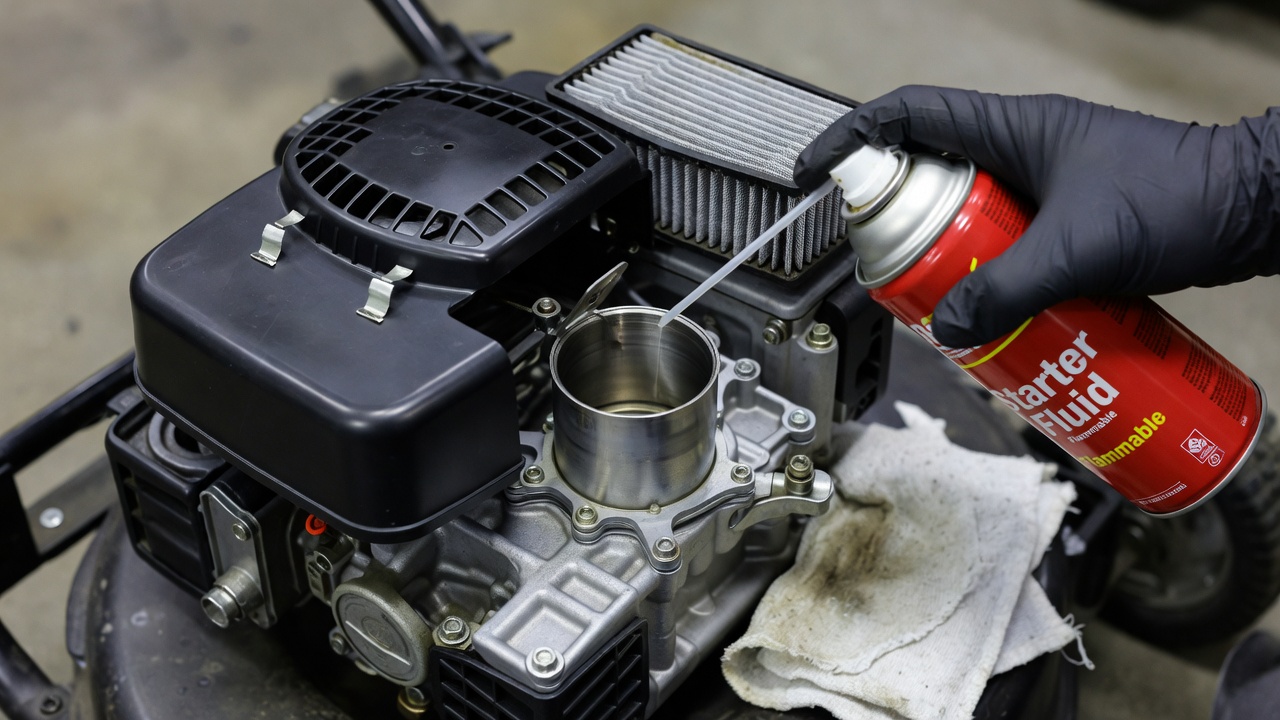
On the vast majority of small lawn mower engines, the correct spray point is the air intake or carburetor throat — the opening that draws air into the engine before it reaches the combustion chamber. On most mowers, this opening sits directly behind the air filter, so reaching it means taking off the air filter cover and lifting out the filter element.
You do not need to dismantle the carburetor, remove any hoses, or take the engine apart. The job usually takes less than a minute: open the cover, remove the filter, spray, and start. The key is understanding that starter fluid must travel through the same path air normally travels to reach the cylinder. For troubleshooting and reliability insights, consult our in-depth jbl partybox club 120 vs sony srs xv500 report.
How much should you spray?
Use a short burst rather than a long, continuous spray. Different brands and cans deliver different amounts, so there is no universal number of seconds that applies everywhere. A brief squirt that lightly coats the inside of the intake opening is enough. You are not trying to flood the intake; you are simply putting a small amount of highly flammable vapor into the path to the cylinder so the engine has something to ignite. For troubleshooting and reliability insights, consult our in-depth jbl partybox club 120 vs sony srs xv500 report.
What about the spark plug hole?
The spark plug hole is not the recommended spray point for routine starting. It is easy to understand why someone might reach for it — it leads straight into the cylinder — but spraying fluid through the plug hole is awkward, risks getting liquid where it does not belong, and can create an unnecessary fire risk around the ignition system. Removing the spark plug also adds work and introduces the chance of dropping debris into the open cylinder. Save the plug for checking spark and compression, not for launching starter fluid.
Why the Air Intake and Carburetor Throat Are the Right Spot
Starter fluid works because it is a highly flammable aerosol that ignites far more easily than ordinary gasoline vapor, especially when an engine is cold, the fuel is stale, or the fuel system has to draw liquid uphill to the carburetor. When you spray it into the intake, the engine’s suction pulls the vapor through the carburetor and intake manifold and straight into the combustion chamber, where the spark plug can ignite it. Readers comparing setup options can review our technical analysis on z890 vs x870e motherboard.

Pros
- Large-size design named in product title
- Sharpening and balancing functions listed
- Listed as a new upgraded version

Pros
- Adjustable 15-to-45-degree range in title
- Sharpening and balancing functions listed

Pros
- Sharpener and balancer functions in title
- 15-to-45-degree adjustable setting listed
- Built for lawn mower blade maintenance
Pros
- Includes replacement gaskets and a 98079-55846 spark plug
- Matches Honda HRR216 and HRS216 lawn mower models
- Designed around the 16100-Z8B-901 carburetor specification
Cons
- Restricted to select Honda GCV160 mower applications
- Installation requires basic mechanical tools and skills
That is the whole trick: the fluid only helps if it actually reaches the cylinder. The intake path is the only convenient, safe route that delivers it there. Spraying onto the outside of the carburetor body does nothing useful. Spraying into the air filter soaks the element and prevents the fluid from reaching the engine in vapor form — and it creates a fire hazard to boot.
Why the air filter must come out
The air filter is designed to trap dirt, dust, and grass clippings — and it will trap your starter fluid just as effectively. If you spray onto or through the filter, much of the fluid is absorbed by the paper or foam instead of reaching the cylinder. The engine may get only a weak sniff of it, which often is not enough to fire. Worse, a soaked air filter can be damaged and may even ignite if the engine backfires or if the spray drifts toward hot engine parts. For complementary field maintenance guidelines, examine our breakdown of marshall stanmore iii vs harman kardon onyx studio 8.
Removing the filter is quick and reversible. Keep the element clean and set it aside somewhere safe while you work, then reinstall it before you run the mower — never run the engine without the filter in place once the mower is running normally, since unfiltered air will pull dirt into the engine.
Does the engine type change anything?
For most small engines, whether 2-stroke or 4-stroke, the intake location is similar: it sits at the carburetor, behind the air filter. However, starter fluid is a temporary aid, not a substitute for the fuel the engine was designed to burn, and there is one important difference between the two engine types. To evaluate matched hardware tolerances, consult our detailed overview of dyson v8 cyclone vs bissell featherweight stick.
In a 2-stroke engine, the oil is mixed into the fuel, which means the fuel itself provides lubrication for moving parts. Some manufacturers specifically advise against using starter fluid on 2-stroke engines because it can add combustion without that lubricating oil film. Check the label on the starter fluid can and the mower’s owner’s manual before using it on a 2-stroke engine, and when in doubt, pursue normal fuel-system troubleshooting first.
Step-by-Step: Applying Starter Fluid Safely
Follow this order to apply starter fluid correctly and with the least risk. The exact layout of the air filter housing varies by model, but the general steps are the same for nearly every walk-behind and riding mower. When planning workspace deployment, consider the engineering criteria outlined in our bissell crosswave hydrosteam vs shark stainforce guide.
Step 1: Prepare the mower and the workspace
- Cool the engine. If the mower was running recently, wait for the engine to cool before opening the air filter area. Hot surfaces such as the muffler and exhaust can ignite starter fluid vapor.
- Work in a well-ventilated area. Starter fluid vapors are flammable and can be irritating to breathe. Working outdoors or in an open garage with the door up is best.
- Move the mower away from flames and sparks. No pilot lights, heaters, cigarettes, or running vehicles nearby.
- Disconnect the spark plug wire if your mower’s manual recommends it for service work, and reconnect it before attempting to start. On many mowers this is an extra safety step while you have covers open.
- Consider shutting off the fuel if your mower has a fuel shutoff valve. This keeps fuel from flowing while you have the intake open.
Step 2: Find and open the air filter housing
On most push and self-propelled mowers, the air filter is under a small rectangular or round cover on the side of the engine, close to the carburetor. On many riding mowers, it may sit under a side panel, behind a small engine cover, or under the hood. Look for a cover held by one or two clips, a wing nut, a thumbscrew, or a single bolt. If the arrangement is not obvious, the owner’s manual will show exactly where the air filter lives on your model.
Open the cover, remove the air filter element, and set it aside. You should now be looking at the carburetor throat — the opening that leads into the engine. You may also see the choke plate or throttle plate just inside it.
Step 3: Aim and spray
Hold the can upright and direct the nozzle into the open intake or carburetor throat. Give a short burst — just enough to coat the inside of the opening. If your can has a straw or extension nozzle, it can help you aim precisely, but it is not required. The goal is vapor and a light mist inside the intake path, not a puddle of liquid.
Step 4: Start the engine immediately
Starter fluid evaporates quickly, so do not let it sit. Reinstall the air filter or at least keep the opening clear of obstructions, then follow the mower’s normal starting procedure: set the choke as you would for a cold start, pull the starter cord firmly or turn the key, and apply the brake or safety interlock as required on riding mowers.
If the engine fires and then dies after a moment, that is a strong clue that the fuel system is not delivering gasoline — a topic covered later in this article. If the engine does not fire at all on the first attempt, you may repeat the short burst once or twice. If it still will not start, stop. Continuing to spray will not help and increases the risk of a fire or engine damage.
Does the procedure differ on a riding mower?
The spray location is the same — the air intake or carburetor throat behind the air filter — but access can differ. On a riding mower you may need to open a side panel, lift the hood, or remove an engine cover to reach the filter housing, and you will need to follow the machine’s starting procedure, including sitting in the seat, engaging the brake, or disengaging the blades as required by the safety switches. The same rule applies: short burst, start right away, and stop after a few failed attempts.
Safety Warnings: Flammability, Backfire, and Engine Damage
Starter fluid deserves respect. The most important thing to understand is that it is extremely flammable, and its vapors can ignite violently.
The fire and explosion hazard
Most starter fluids are ether-based, and ether vapor is aggressive stuff. It can ignite from a spark, a flame, or even a hot surface such as a muffler or exhaust pipe. Always keep the can itself and the spray stream away from the muffler, exhaust outlet, and any open flame. Work outside or in a very well-ventilated space, and never smoke or use tools that throw sparks near the engine while you are applying the spray.
Do not spray starter fluid while the engine is hot. Even a warm exhaust can be enough to flash the vapor if it drifts. Let the engine cool completely before you open the air filter area.
Parts you must never spray
- The air filter. Soaking the filter creates a serious fire hazard and can ruin the element.
- The spark plug hole. Not the routine starting point, as discussed above.
- The muffler and exhaust. Hot surfaces can ignite the vapor.
- The carburetor body and other exterior parts. Spray that never enters the intake is wasted and can spread flammable liquid around the engine.
Can starter fluid damage the engine?
Used sparingly and correctly, a short burst is a common and generally accepted starting aid. Used carelessly, it can cause problems. Repeated overuse can wash oil off the cylinder walls in 4-stroke engines, which reduces lubrication and can lead to premature wear. It can also contribute to a flooded condition or put stress on the starter. There is no precise number of sprays that is universally safe, which is exactly why the guidance is: a short burst, a few attempts, and then stop.
What if the engine backfires?
A backfire — a loud pop or bang from the intake or exhaust — can happen when unburned vapor ignites in the wrong place at the wrong time. If the mower backfires while you are working around the intake, stop spraying immediately, step back, and let the engine cool. A backfire near a fluid-soaked air filter or a spilled puddle of starter fluid is a genuine fire risk. If backfiring happens more than once, stop using starter fluid and diagnose the underlying problem.
Is starter fluid safe on a 2-stroke engine?
Because 2-stroke engines rely on oil mixed into the fuel for lubrication, some manufacturers and small-engine sources advise against using starter fluid on them — the fluid provides combustion without that lubrication. Check both the starter fluid label and the mower’s owner’s manual. If the manual says not to use it, do not use it, no matter how tempting an easy start looks.
When Starter Fluid Is the Wrong Fix
Starter fluid is a diagnostic shortcut and a temporary aid, not a repair. It should only be used when you reasonably suspect a fuel-delivery problem and you want to confirm the engine can fire at all. There are several situations where it is the wrong tool entirely.
When not to use it
- When the engine is flooded. If the mower smells strongly of gasoline after repeated starting attempts, it is already getting plenty of fuel. Adding starter fluid only makes the flood worse.
- When the problem is obviously not fuel. If the spark plug is fouled, the spark plug wire is damaged, or you know the engine has no compression, starter fluid cannot help.
- When the mower is running. Never spray starter fluid into a running engine or one that starts on its own.
- When the manual forbids it. Some manufacturers, especially for 2-stroke engines, advise against starter fluid. Follow the manual.
- When you are not comfortable working with a highly flammable aerosol near fuel and ignition systems. There is no shame in skipping the spray can and doing proper fuel-system checks instead.
Reading what the engine tells you
The response to starter fluid is genuinely useful information — if you know how to read it.
The engine starts briefly, then dies. This is the classic sign of a fuel-delivery problem. The engine fired on the starter fluid, which means spark and compression are probably fine. What it is missing is a steady supply of gasoline. The usual suspects include stale fuel, a clogged carburetor, a blocked fuel line, or a dirty fuel filter.
The engine does not fire at all. If the engine will not even pop on starter fluid, the problem is likely not fuel delivery. Look at spark, air, or compression: a fouled or worn spark plug, a broken spark plug wire, a clogged air intake, or low compression from a worn engine. Starter fluid cannot fix any of these.
The engine sputters and kicks but will not stay running. This points back to a fuel-supply issue, or possibly a choke or throttle problem. Work through the fuel system step by step rather than reaching for more spray.
Common real causes of a no-start mower
By far the most common cause of a mower that will not start is stale fuel. Gasoline that has sat in the tank and carburetor for months can break down and leave varnish behind, clogging tiny fuel passages. That is why the advice to drain or treat fuel at the end of the season is so widespread. After stale fuel, the most frequent problems are a clogged carburetor, a dirty or wet air filter, a fouled spark plug, and a damaged spark plug wire. These are all ordinary maintenance items, not catastrophes.
Identifying which one you have does not require guessing. Work through them in order: fresh fuel first, then spark, then air, and then decide whether compression is worth checking. Each step eliminates a whole category of possible causes.
What to Check Next Before Calling a Repair Shop
If starter fluid was used correctly and the mower still will not start, put the spray can down and check a short list of basic items. Most no-start problems trace back to one of these, and all of them are safe for a careful owner to inspect.
- Fuel freshness. If the gasoline is more than a few weeks old or smells sour, drain the old fuel and refill with fresh gasoline. This single step fixes a surprising number of mowers.
- Spark plug condition. Remove the spark plug and look at it. A black, oily, or badly worn plug can prevent starting. A new plug of the correct type often solves the problem, but check the owner’s manual or the old plug’s markings for the right replacement.
- Spark plug wire and connection. Make sure the wire is firmly pressed onto the plug and is not cracked or corroded.
- Air filter. A filter clogged with grass and dirt starves the engine of air. Clean or replace it according to the manual’s guidance.
- Oil level. On a 4-stroke engine, low oil can trigger a low-oil sensor that prevents starting on some models. Check the dipstick and top up if needed.
When to stop DIY troubleshooting
There is a sensible line between safe owner checks and work that is better left to a professional. If the basics above do not solve the problem, the next steps — cleaning the carburetor, checking the fuel pump, testing compression — involve disassembling fuel and ignition systems. That is entirely reasonable work for a small-engine shop, and equally reasonable not to attempt at home if you are unsure. If the mower is under warranty, take it to an authorized dealer instead of doing work that could void coverage.
The same advice applies if a repair feels beyond your comfort level. Fuel and ignition systems carry real hazards, and a professional with the right tools and experience can diagnose in minutes what might take an amateur hours of guessing. There is no failure in taking a stubborn mower to a shop — especially compared with the alternative of repeatedly spraying flammable fluid at an engine that is telling you it needs something else.
Preventing no-start problems in the future
Most of the scenarios in this article are preventable with simple habits. Use fresh fuel and add a fuel stabilizer if the mower will sit for weeks. Run the carburetor dry at the end of the season or drain the fuel system according to the manual. Replace the air filter and spark plug on a normal maintenance schedule. Keep the mower clean and stored out of the weather. These steps do not guarantee the mower will never refuse to start, but they eliminate the most common reasons it does.
In the end, starter fluid is a tool with a very precise job: a short, safe burst into the air intake or carburetor throat to help a fuel-starved engine fire once. Use it that way, respect what it is, and listen to what the engine does in response. That discipline is what separates a safe, successful start from a frustrating or genuinely dangerous one.
For more detailed testing breakdowns and top recommendations, check our in-depth guide to residential zero-turn lawn mower guide.
For more hands-on benchmarks and buying recommendations, consult our guides on heavy-duty chainsaw buyer guide, as well as high-CFM commercial leaf blower guide, as well as durable ride-on lawn tractor guide, as well as automated robotic lawn mower guide.
Mechanical safety standards, operational tolerances, and protective gear guidelines align with benchmark specifications established by the American National Standards Institute (ANSI).









