Quick Answer: What Fuel Does Your Lawn Mower Need?
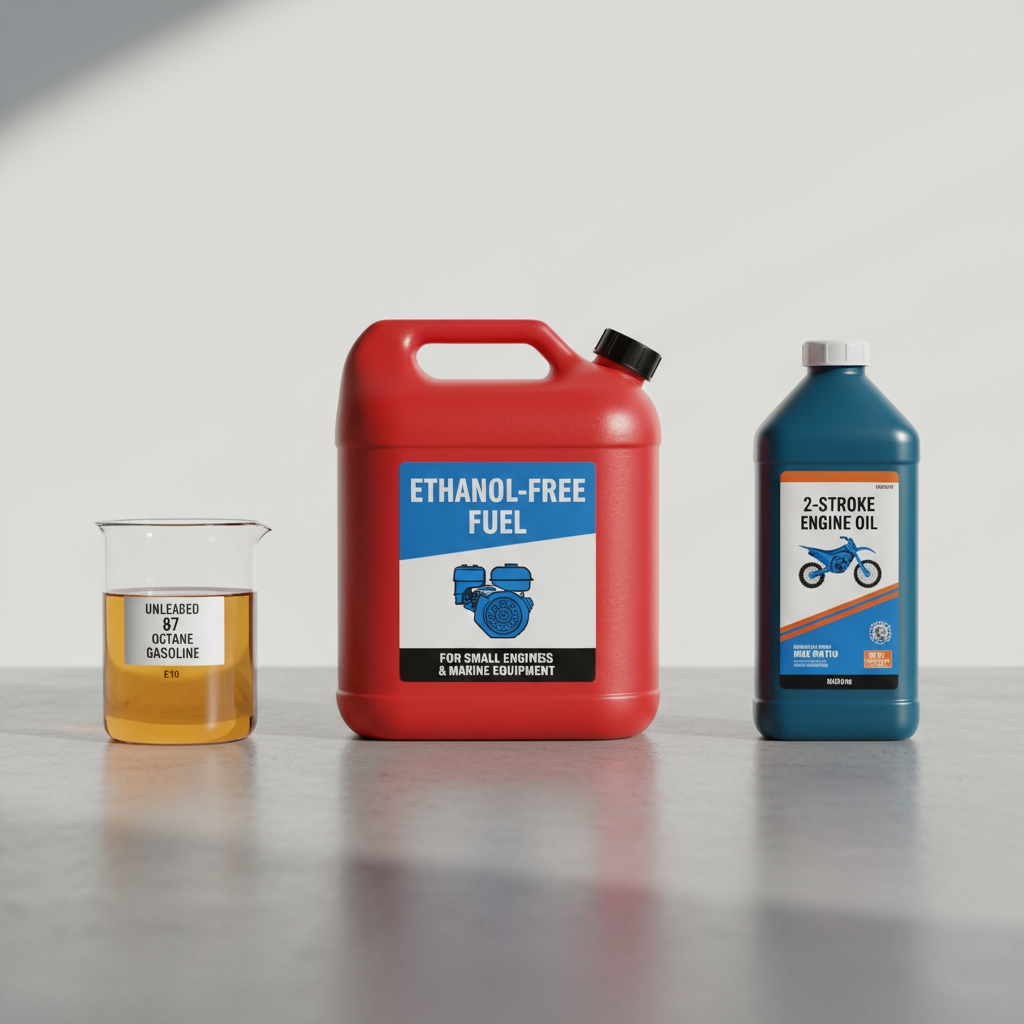
Most gas-powered lawn mowers use unleaded gasoline with a minimum octane rating of 87. For best performance, ethanol-free fuel is recommended when available, though fuel containing up to 10% ethanol (E10) is acceptable for most modern mowers. If your mower has a 2-stroke engine, fuel must be mixed with oil at the manufacturer’s specified ratio—typically 50:1. Four-stroke engines use gasoline straight from the pump without oil additives.
Types of Fuel for Lawn Mowers
Unleaded Gasoline (87 Octane)
Standard unleaded gasoline at 87 octane is the most common fuel for residential lawn mowers. This octane rating provides adequate performance for the small engines used in typical residential equipment. Premium gasoline (91-93 octane) offers no performance benefit for lawn mowers and is unnecessary.
Ethanol-Free vs. Ethanol-Blended Fuel
Ethanol-free gasoline is the preferred choice for lawn mower engines when available at local fuel stations. Ethanol-blended fuel (commonly E10, containing 10% ethanol) is acceptable but can cause several issues over time:
- Ethanol absorbs water, which can corrode fuel system components
- Ethanol can degrade rubber fuel lines and seals in older equipment
- Ethanol fuel degrades faster in storage, reducing shelf life
- Phase separation may occur if fuel sits unused for extended periods
If ethanol-free fuel is unavailable, E10 fuel is safe for most modern mowers but requires more frequent fuel changes if stored long-term.
2-Stroke Engine Fuel Requirements
Two-stroke engines (commonly found in string trimmers, leaf blowers, and some older mowers) require a fuel-oil mixture rather than straight gasoline. The typical ratio is 50:1 (50 parts gasoline to 1 part 2-stroke oil), though some manufacturers specify 40:1 or other ratios. Always refer to your equipment’s manual for the exact ratio. Using straight gasoline in a 2-stroke engine will cause engine seizure and permanent damage.
Understanding Your Mower’s Engine Type
How to Identify a 2-Stroke vs. 4-Stroke Engine
Check your mower’s manual first—this is the most reliable method. If unavailable, look for these indicators:
- 2-stroke engines: Have an oil fill cap on the fuel tank itself; produce visible smoke from the exhaust; are louder and lighter; commonly used in compact, handheld equipment
- 4-stroke engines: Have a separate oil fill cap (not on the fuel tank); produce minimal exhaust smoke; are heavier and quieter; standard for most riding and push mowers
Why 2-Stroke Engines Need Oil-Mixed Fuel
Two-stroke engines require oil in the fuel because the engine design doesn’t have a separate lubrication system like 4-stroke engines. The fuel-oil mixture lubricates the piston, cylinder walls, and crankshaft during operation. Without this oil, the engine experiences metal-on-metal friction and seizes within minutes.
What Happens if You Use the Wrong Fuel
Using straight gasoline in a 2-stroke engine: engine seizure and permanent damage within minutes of operation. Using fuel oil in a 4-stroke engine: excessive smoking, fouled spark plugs, carbon buildup, and potential engine damage. Always verify your fuel type before refueling.
Fuel Selection and Storage Best Practices
Is Premium Gasoline Better for Lawn Mowers?
No. Lawn mower engines are designed for regular unleaded (87 octane) fuel. Premium fuel provides no performance, efficiency, or longevity benefits and costs significantly more. The mower engine cannot produce the compression needed to benefit from premium fuel’s higher octane rating.
Proper Fuel Storage Guidelines
Fuel degradation is a common cause of mower starting problems. Follow these storage practices:
- Use fresh fuel: Never store fuel longer than 30 days without stabilizer; with stabilizer, fuel can last 3–6 months
- Store in cool conditions: Heat accelerates fuel oxidation; keep fuel in a cool, shaded area below 80°F when possible
- Use proper containers: Store fuel in approved gasoline cans, never in plastic bottles or open containers
- Keep containers sealed: Minimize air exposure to prevent water absorption and fuel evaporation
- Add fuel stabilizer for off-season storage: Mix stabilizer into fuel before storing the mower for winter or extended periods
When to Replace Old Fuel
Fuel begins degrading after 30 days of storage, particularly in warm conditions. Signs of degraded fuel include a sour smell, dark color, or visible sediment. If your mower won’t start after sitting unused, old fuel is often the culprit. Drain the tank, clean the fuel filter, and refill with fresh fuel.
Special Considerations for Fuel Choice
Why Ethanol-Free Fuel is Recommended
Ethanol-free fuel extends equipment lifespan and improves reliability in small engines for several reasons:
- Prevents corrosion of fuel system components (carburetor, fuel injectors, lines)
- Eliminates phase separation issues during storage
- Maintains fuel quality longer during off-season storage
- Reduces spark plug fouling and carbon deposits
Ethanol-free fuel typically costs 10–20 cents more per gallon but is worth the investment for lawn mower longevity.
Does Fuel Grade Matter for Mower Performance?
Octane rating does not affect lawn mower performance. A 4-stroke push mower operating at 3,600 RPM cannot compress fuel enough to require or benefit from premium octane ratings. Using 87-octane unleaded is optimal; premium offers no advantage. 2-stroke engines similarly show no performance difference between octane grades when properly tuned.
Alternative Fuel Options
Electric mowers: Battery-powered mowers eliminate fuel concerns entirely and are increasingly popular for residential lawns. They’re quieter, require no fuel storage, and have lower maintenance.
Propane mowers: Commercial and rental mowers sometimes use propane instead of gasoline. Propane is cleaner-burning but less common for residential use.
Avoid: Diesel, kerosene, and non-gasoline substitutes should never be used in lawn mower engines designed for gasoline.
Frequently Asked Questions
Q: Can I use leftover gas from my car in my lawn mower?
Only if it’s fresh, unleaded gasoline and your mower is a 4-stroke engine. If the gasoline has been sitting for weeks, it may have degraded and cause starting problems. Never use diesel, premium-only fuels, or fuel from uncertain sources.
Q: What octane rating should I use for my lawn mower?
Use 87-octane unleaded gasoline. Premium octane (91–93) provides no benefit, and mowers are not designed to use lower octane ratings. Stick with 87 octane.
Q: Can I store fuel for next season in my lawn mower’s tank?
Not recommended. Drain the fuel tank before long-term storage, or add fuel stabilizer to the tank and run the mower for several minutes to circulate the treated fuel through the engine. Stale fuel left in the carburetor causes varnish buildup and starting problems.
Q: What’s the difference between 2-stroke and 4-stroke fuel mixing?
4-stroke engines use straight gasoline and have a separate oil reservoir for engine lubrication. 2-stroke engines require gasoline mixed with oil at a specific ratio (commonly 50:1) because they have no separate lubrication system. Using the wrong fuel type in either engine causes damage.