

Quick Answer: Recommended Oil Types for Toro Mowers
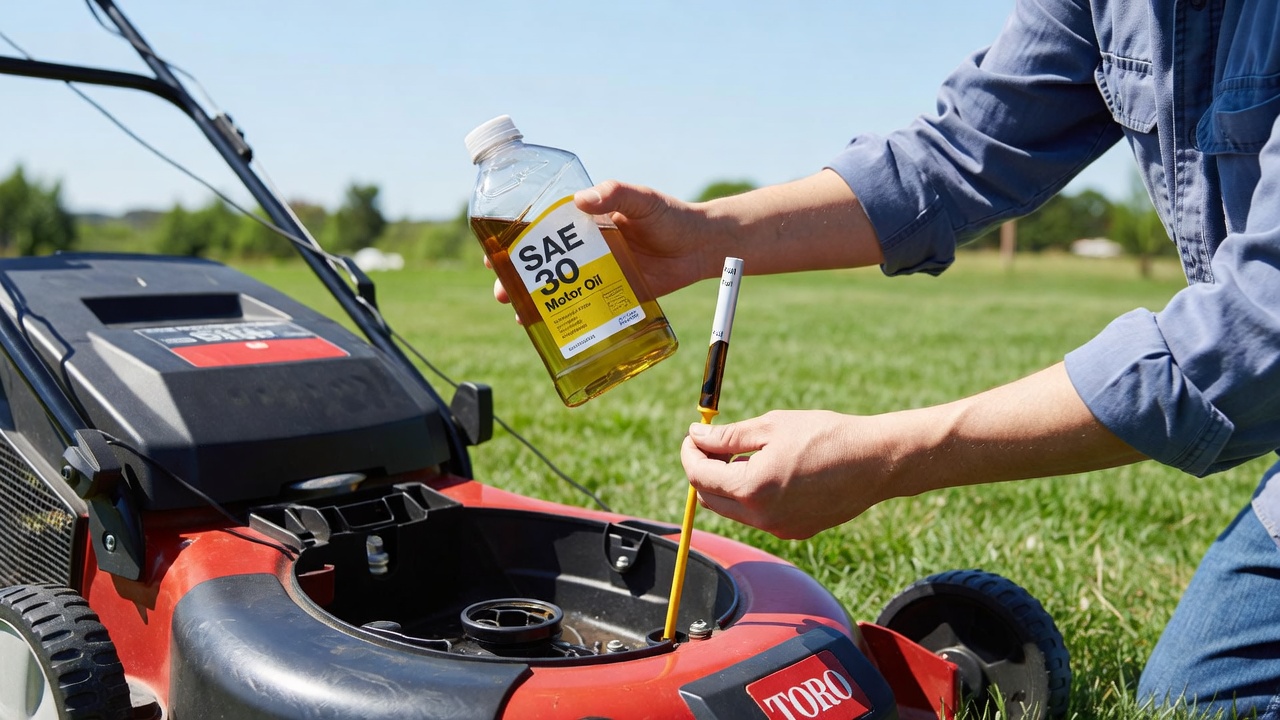
For the majority of modern Toro 4-cycle lawn mowers—whether walk-behind, riding, or zero-turn—the standard recommendation is to use SAE 30 motor oil for consistent warm weather conditions (typically above 40°F or 4°C) or a multi-grade 10W-30 oil for climates with fluctuating temperatures. Both options must meet the API (American Petroleum Institute) service classification of SJ or higher, which ensures the oil provides adequate lubrication and protection for the engine’s moving parts. The exact oil capacity varies by model and engine type, but most walk-behind models hold between 15 and 20 ounces (approximately 0.47 to 0.6 liters), while larger riding mowers may require 48 to 64 ounces (1.5 to 2 quarts) or more. Always refer to your owner’s manual for the precise amount for your specific mower.
Understanding Oil Viscosity and Climate Considerations
Oil viscosity refers to its thickness or resistance to flow. The choice between SAE 30 and 10W-30 depends on ambient temperature and how the engine starts and runs. SAE 30 is a single-grade oil that performs well in stable, warm operating temperatures, as it does not thin or thicken significantly with temperature changes. However, in cold weather, SAE 30 can become too thick, making it harder for the engine to start and increasing wear on components during the initial startup phase.

Pros
- Large-size design named in product title
- Sharpening and balancing functions listed
- Listed as a new upgraded version

Pros
- Adjustable 15-to-45-degree range in title
- Sharpening and balancing functions listed

Pros
- Sharpener and balancer functions in title
- 15-to-45-degree adjustable setting listed
- Built for lawn mower blade maintenance
Pros
- Includes replacement gaskets and a 98079-55846 spark plug
- Matches Honda HRR216 and HRS216 lawn mower models
- Designed around the 16100-Z8B-901 carburetor specification
Cons
- Restricted to select Honda GCV160 mower applications
- Installation requires basic mechanical tools and skills
10W-30 is a multi-grade oil, where the first number (10) indicates its viscosity at cold temperatures (lower numbers mean thinner oil, easier to pump) and the second number (30) indicates its viscosity at operating temperatures (higher numbers mean thicker oil, better protection at heat). This makes 10W-30 a versatile choice for mowers used in regions with both cold starts and warm operating conditions. Using 10W-30 in consistently warm climates is also acceptable and may reduce oil consumption slightly compared to SAE 30, as the oil remains more stable throughout the temperature range. For complementary field maintenance guidelines, examine our breakdown of jbl partybox club 120 vs sony srs xv500.
For extreme cold (below 0°F or -18°C), some manufacturers may recommend a lower viscosity oil (e.g., 5W-30), but this is less common for most Toro models. Always check your manual for specific cold-weather recommendations if you live in a climate with prolonged freezing temperatures. For complementary field maintenance guidelines, examine our breakdown of jbl partybox club 120 vs sony srs xv500.
Oil Specifications by Engine Manufacturer
Toro mowers use engines from several manufacturers, each with its own preferred oil specifications. The engine brand—often visible on the engine cover or deck—determines the exact requirements, even if the mower is branded as a Toro. Here’s a breakdown of common engine types:
- Briggs & Stratton: Most Toro models with Briggs engines recommend SAE 30 for temperatures above 40°F and 10W-30 for all-temperature use. Some newer Briggs models may accept synthetic blends, but conventional detergent oil is the baseline requirement.
- Kawasaki: Kawasaki-powered Toro mowers typically use 10W-40 or 10W-30, depending on the model series. Kawasaki generally prefers higher viscosity oils for better protection in high-load applications, but 10W-30 is acceptable for most residential use.
- Honda GCV: Honda GCV engines in Toro mowers are commonly recommended to use 10W-30 for general operation. Honda specifies that this oil provides optimal lubrication and meets the API SN or higher standard.
- Toro OEM (Original Equipment Manufacturer): Some older Toro models or those with custom engines may have specific recommendations, but most modern OEM engines align with the Briggs or Honda specifications above.
Before purchasing oil, check the engine label on your mower. The engine model number (e.g., Briggs & Stratton 675ex) can be found on a metal plate on the engine or in the owner’s manual, and this number will correspond to the manufacturer’s oil chart. To evaluate matched hardware tolerances, consult our detailed overview of z890 vs x870e motherboard.
How Much Oil Does a Toro Mower Take?
The oil capacity of a Toro mower varies significantly based on the engine size and type of mower. Walk-behind models with smaller engines (e.g., 3.5 to 6.0 horsepower) typically hold 15 to 20 ounces (0.47 to 0.6 liters) of oil. Larger riding mowers or zero-turn mowers with bigger engines (e.g., 7.5 to 24 horsepower) may require 48 to 64 ounces (1.5 to 2 quarts) or more. Overfilling or underfilling can cause serious engine damage, so it’s critical to measure the exact amount.
To check the oil level, follow these steps: When planning workspace deployment, consider the engineering criteria outlined in our marshall stanmore iii vs harman kardon onyx studio 8 guide.
- Turn off the engine and let it cool for at least 10 minutes to allow the oil to settle in the crankcase.
- Locate the oil dipstick, which is usually a yellow or orange handle near the engine.
- Pull out the dipstick, wipe it clean with a lint-free cloth or paper towel.
- Reinsert the dipstick fully, then pull it out again to check the level.
- The oil should be between the upper and lower marks on the dipstick. If it’s low, add oil incrementally (e.g., 1 ounce at a time) and recheck until it reaches the full mark.
Overfilling the oil can lead to engine smoking, fouled spark plugs, and increased pressure in the crankcase, which may damage seals and gaskets. Always add oil carefully and verify the level before starting the engine.
Step-by-Step: How to Change the Oil on a Toro Mower
Changing the oil in a Toro mower is a straightforward maintenance task that should be performed every 50 hours of operation or at least once per mowing season. Here’s a safe and effective process: For additional operational safety benchmarks, see our published testing notes on dyson v8 cyclone vs bissell featherweight stick.
- Warm Up the Engine: Run the mower for 5 to 10 minutes to warm the oil. Warm oil flows more easily and drains more completely from the crankcase.
- Disconnect the Spark Plug: For safety, disconnect the spark plug wire from the spark plug. This prevents accidental engine start-up while you work on the oil drain.
- Drain the Oil: Place a drain pan under the engine and remove the oil drain plug. Allow the oil to drain completely. If your mower does not have a drain plug (some older models use a dipstick tube as the drain), you may need to tilt the mower or use a siphon pump to remove the oil.
- Replace the Drain Plug Washer: If your engine has a drain plug, replace the old washer with a new one to ensure a proper seal and prevent leaks.
- Refill with New Oil: Reinstall the drain plug and tighten it to the manufacturer’s recommended torque (check your manual for the exact specification). Pour the recommended amount of oil into the engine through the fill hole. Use a funnel to avoid spills.
- Check the Oil Level: Reinsert the dipstick, wipe it clean, and check the level again. Add more oil if needed until it reaches the full mark.
- Dispose of Used Oil: Used motor oil is hazardous waste and must be recycled. Take the drain pan to a local auto parts store, service center, or recycling facility that accepts used oil. Never pour oil on the ground or into storm drains.
Always wear protective gloves and safety glasses when handling oil to avoid skin contact or splashes. If you are unsure about any step, consult a qualified technician or the Toro service manual.
Oil Change Intervals and Maintenance Schedule
The frequency of oil changes is critical to maintaining engine longevity and performance. Most Toro owners’ manuals recommend changing the oil every 50 hours of operation or once per mowing season, whichever comes first. This schedule accounts for both the amount of use and the time of year. To compare alternative configurations, check our hands-on review of bissell crosswave hydrosteam vs shark stainforce.
For new engines, some manufacturers may specify an initial break-in oil change after the first 5 hours of operation. This helps seat the piston rings and ensure proper lubrication during the engine’s first period of use. Always check your manual for the exact break-in period, as it may vary by engine type.
Riding mowers and zero-turn mowers with oil filters should replace the filter with every oil change or every other change, depending on usage intensity. A clogged or dirty oil filter can restrict oil flow, leading to increased wear and potential engine damage.
It’s also a good practice to change the oil at the end of the mowing season to prevent acidic buildup in the oil during storage. If you store your mower for an extended period (e.g., winter), drain the oil completely and replace it with a fresh batch before the next season to avoid corrosion and sludge formation.
Troubleshooting: Common Oil-Related Issues
If you experience issues after changing the oil or notice problems with your mower’s performance, here are some common troubleshooting steps:
- Engine Smoking: White or blue smoke after an oil change often indicates overfilling or oil entering the combustion chamber. Check the oil level and ensure the drain plug is properly tightened. If the mower is tipped incorrectly during use, oil may enter the carburetor and be burned, causing smoke. Adjust the mower’s height and ensure it is level when operating.
- Oil Leaks: Leaks from the crankcase or drain plug may be caused by a loose or worn drain plug washer, degraded gaskets, or a clogged breather system that increases pressure in the engine. Tighten the drain plug to the recommended torque, replace the washer if it is damaged, and check the breather tube for blockages.
- Difficulty Starting: If the engine is hard to start after an oil change, the oil may be too thick for cold temperatures. Check the viscosity rating and switch to a lower number (e.g., 5W-30) if you live in a cold climate. Ensure the oil has fully drained and the engine is not overfilled.
- Mixing Oil Brands: Mixing different brands of oil is generally acceptable as long as the viscosity grade and API rating match. However, using a high-quality, consistent oil (e.g., a reputable brand like Mobil 1 or Castrol) is recommended for optimal performance. Mixing different types (e.g., synthetic and conventional) is not recommended unless the manual explicitly allows it.
If you are unable to resolve an oil-related issue, consult a Toro authorized service center or a qualified small engine technician. They can diagnose the problem and perform the necessary repairs or maintenance.
For more detailed testing breakdowns and top recommendations, check our in-depth guide to residential zero-turn lawn mower guide.
For more hands-on benchmarks and buying recommendations, consult our guides on heavy-duty chainsaw buyer guide, as well as high-CFM commercial leaf blower guide, as well as automated robotic lawn mower guide.
Mechanical safety standards, operational tolerances, and protective gear guidelines align with benchmark specifications established by the American National Standards Institute (ANSI).









