
4-Stroke vs. 2-Stroke: Know Your Engine Type
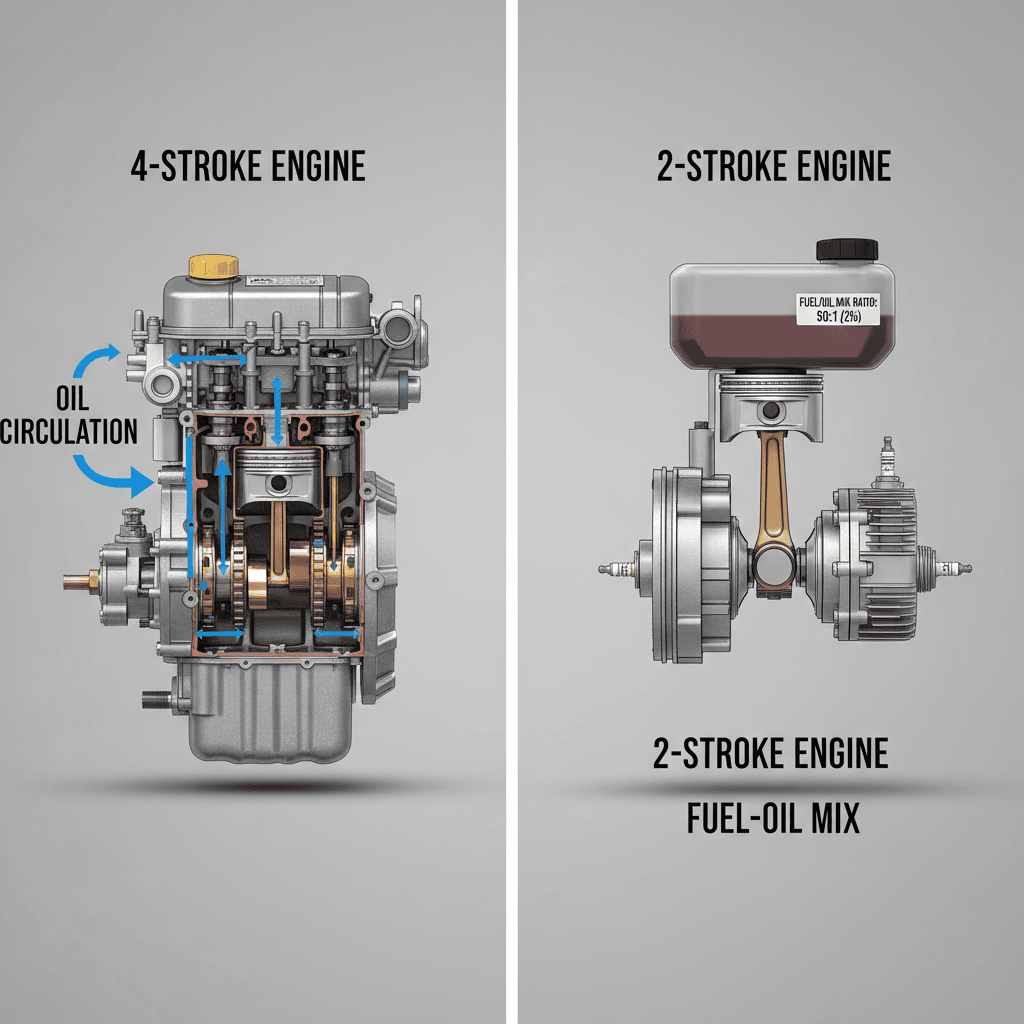
The first step in selecting the right oil is identifying your engine type. This determines everything about how oil functions in your mower.
4-stroke engines are by far the most common in residential lawn mowers. These engines have a separate crankcase that holds oil, similar to a car engine. The oil circulates continuously to lubricate moving parts and cool the engine. You add oil directly to the crankcase and change it periodically—typically every 50-100 hours of operation or once per season.
2-stroke engines are smaller and lighter, often found in commercial-grade mowers, string trimmers, and some push mowers. These engines have no separate oil reservoir. Instead, oil must be pre-mixed directly into the fuel tank at a specific ratio. The oil burns along with the fuel as part of the combustion process, so you never need to “change” the oil—it’s consumed during operation. To compare alternative configurations, check our hands-on review of jbl partybox club 120 vs sony srs xv500.
How to identify your engine type: To compare alternative configurations, check our hands-on review of jbl partybox club 120 vs sony srs xv500.
- Check your owner’s manual (the most reliable source)
- Look for an oil filler cap on top of the engine (4-stroke) or an oil-fuel mixing ratio sticker (2-stroke)
- Examine the fuel cap for labeling like “Mix fuel 50:1” or “Add oil to fuel tank” (2-stroke)
- Contact the manufacturer with your mower’s model number
Standard Oil Types for 4-Stroke Mowers
The vast majority of homeowners use 4-stroke lawn mowers, so understanding oil grades and types is essential.
SAE Viscosity Grades Explained
SAE (Society of Automotive Engineers) viscosity grades describe how thick or thin oil is at specific temperatures. For lawn mowers, you’ll encounter these common grades: Users looking for related component recommendations can explore our z890 vs x870e motherboard breakdown.
| SAE 30 | Single-grade oil for warm climates. Thicker, provides good protection in summer conditions. Standard choice for most residential mowers. |
| 10W-30 | Multi-grade oil. The “10W” means it flows like a 10-weight oil in winter; “30” means it’s as thick as SAE 30 when warm. Better for seasonal use or cold climates. |
| SAE 5W-30 | For very cold climates. Flows better in winter startup but maintains protection in warm weather. |
| 15W-40 | Heavier multi-grade for high-performance or commercial mowers in hot climates. |
What the numbers mean: The first number (or “W” number in multi-grades) represents viscosity at cold temperatures. Lower numbers flow better when cold. The second number represents viscosity at 100°C (212°F). Higher numbers mean thicker oil at operating temperature.
SAE 30 vs. 10W-30: SAE 30 is cheaper and adequate for most mowers operated in moderate to warm climates. If you mow year-round, store your mower outside, or live in a cold region, 10W-30 provides better cold-start protection and easier engine turnover in spring. Before finalizing equipment decisions, refer to our comprehensive marshall stanmore iii vs harman kardon onyx studio 8 comparison.
Conventional vs. Synthetic Oil
Conventional motor oil is mineral-based, refined from crude oil, and is the standard choice for lawn mowers. It’s affordable and adequate for typical seasonal use.
Synthetic or synthetic-blend oils are engineered for superior performance. They offer: For broader ecosystem context, read through our operational guide on dyson v8 cyclone vs bissell featherweight stick.
- Longer change intervals (some synthetic formulations allow 200+ hours between changes)
- Better protection in extreme temperatures
- Reduced engine wear over time
- Higher cost per quart (typically 2-3x more than conventional)
For most homeowners, conventional oil is sufficient. Synthetic makes sense if you operate your mower frequently, use it in extreme climates, or prefer to change oil less often.
API Service Classification
The API (American Petroleum Institute) rating indicates the oil’s quality and performance level. Look for a label with “API” and a letter designation on the oil bottle. Common ratings include SJ, SL, SM, and SN. Lawn mower manuals typically specify a minimum rating (e.g., “API SJ or higher”). Using an oil that meets or exceeds the specified rating ensures adequate protection. Newer ratings (like SN) exceed older requirements, so SN oil will work fine in a mower requiring SL, but the reverse is not true. For troubleshooting and reliability insights, consult our in-depth bissell crosswave hydrosteam vs shark stainforce report.
How Climate and Season Affect Oil Choice
Temperature significantly impacts oil performance and engine behavior.
Warm climates (60°F+): SAE 30 or conventional 10W-30 is standard. The warmer temperatures keep oil at optimal viscosity without thinning excessively.
Cold climates (below 40°F): Single-grade SAE 30 becomes too thick to flow properly during cold starts. Multi-grade oils like 10W-30 or 5W-30 ensure the engine cranks easier and oil circulates quickly. Cold oil takes longer to reach operating temperature, increasing engine wear if oil is too thick.
Seasonal changes: If you store your mower over winter, consider an oil change before storage and again in spring. Winter storage in an unheated garage can thicken conventional SAE 30 oil, making spring startups difficult. Conversely, if you switch to lighter winter oil, return to SAE 30 for summer operation for maximum protection during peak use.
Professional tip: Check your mower’s manual for temperature ranges. Many manuals include a chart showing recommended oil grades for different ambient temperatures.
2-Stroke Engine Oil Requirements
If your mower has a 2-stroke engine, the oil approach is completely different.
Pre-mixed fuel-oil blends: 2-stroke engines require oil mixed directly into the gasoline before fueling. The most common ratios are:
- 50:1 (50 parts gas to 1 part oil) — Standard for most residential 2-stroke mowers
- 32:1 — Some newer or higher-performance engines
- 25:1 — Older engines or commercial equipment
Your manual specifies the exact ratio. Using the wrong ratio causes either insufficient lubrication (too little oil) or excessive smoke and carbon buildup (too much oil).
How to mix: Pour the specified amount of 2-stroke oil into a clean fuel container, then add gasoline. Mix thoroughly by shaking before adding to your mower’s fuel tank. Pre-mixed fuel is stable for about 30 days; discard any unused mixture at season’s end.
Oil type for 2-stroke engines: Use 2-stroke oil specifically formulated for small engines (labeled “2-cycle” or “2-stroke”), not regular motor oil. Reputable brands include Briggs & Stratton, Husqvarna, Echo, and Stihl. The formulation includes detergents and additives to prevent carbon deposits and ensure clean combustion.
Common mistake: Never use straight motor oil in a 2-stroke engine. The engine requires the oil-fuel mixture for lubrication; straight oil in the fuel tank will damage the engine.
How to Find the Correct Oil for Your Mower
Step 1: Locate your owner’s manual. This is the authoritative source. Search online with your mower’s brand and model number. Manufacturers often provide free PDF downloads on their websites.
Step 2: Find the maintenance section. Look for chapters titled “Maintenance,” “Fluid Specifications,” or “Oil Change.” This section lists the exact oil type, viscosity grade, and API rating.
Step 3: Note the capacity. The manual also specifies how much oil your mower needs—typically 0.5 to 2 quarts depending on engine size.
Step 4: Check for seasonal recommendations. Many manuals include a temperature chart suggesting which oil grade to use in your climate.
If you’ve lost your manual:
- Visit the manufacturer’s website and search by model number
- Call the manufacturer’s customer service with your mower’s serial number (usually on a label near the engine)
- Check forums or community sites dedicated to lawn mower maintenance
- Visit an authorized dealer with your mower’s brand and model information
Reading an oil container: Oil bottles display the SAE grade prominently (e.g., “SAE 30” or “10W-30”). The API rating appears as a donut-shaped logo with letters inside. Look for phrases like “Meets API SL” or “Exceeds API SJ.”
Common Oil Selection Mistakes to Avoid
Using the wrong viscosity: Oil that’s too thick strains the starter motor and reduces flow to moving parts during cold starts. Oil that’s too thin provides inadequate protection at operating temperature. Either situation accelerates wear and may void warranty coverage. Always use the exact grade specified in your manual, or the next heavier grade if operating in extreme heat.
Mixing oil brands or types: While blending different conventional oils of the same grade is generally safe in a pinch, it’s not recommended. Mixing conventional and synthetic can compromise synthetic benefits and void the synthetic warranty. Stick with one brand and type throughout your mower’s life when possible.
Overfilling with oil: Too much oil foams, loses lubrication properties, and can damage seals and gaskets. Too little leaves parts unprotected and causes overheating. Check your manual for the correct level; always use the dipstick or fill-to-line indicator provided. Overfilled oil may leak past seals or blow out through the crankcase breather, creating fire hazards or environmental contamination.
Using automotive oil rated for high detergent levels: Some car motor oils contain excessive detergents designed for fuel injectors and emission systems that lawn mower engines don’t have. While not harmful, these oils are overkill and unnecessary expense. Standard automotive motor oil rated for your viscosity grade and API classification is sufficient.
Ignoring seasonal changes: Switching to multi-grade winter oil improves cold-start performance and reduces startup wear. This simple change costs only a few dollars more but extends engine life significantly.
Oil Change Schedule and Maintenance
Most 4-stroke lawn mowers require an oil change every 50-100 operating hours or once per season, whichever comes first. High-performance or commercial mowers may need changes every 40-50 hours. Synthetic oil extends this interval to 150-200+ hours.
Track your usage: Many mowers have hour meters; if yours doesn’t, estimate 1 hour per mowing session for typical residential properties.
Change interval factors:
- Frequent use = more frequent changes (consider every 4-6 weeks during peak season)
- Dusty conditions = change oil more often (dust clogs filters and contaminates oil)
- High heat operation = synthetic oil extends intervals
- New engine = first oil change at 5-20 hours, then normal intervals
Professional tip: Keep a maintenance log. Record the date, oil type, and operating hours. This helps you stay on schedule and demonstrates proper care if warranty issues arise.
Frequently Asked Questions About What Type Of Oil Does My Lawn Mower Take
Can I use car motor oil in my lawn mower?
Yes, if it meets the correct viscosity grade and API specification for your mower. Standard automotive motor oil (10W-30, SAE 30, etc.) works fine in 4-stroke lawn mowers. The main difference is lawn mower engines typically require lower API classifications (SJ, SL, SM) since they lack emission systems in cars. Any car oil meeting or exceeding your mower’s specified rating is suitable. However, some car oils contain extra detergents unnecessary for lawn equipment. Using dedicated small-engine oil formulated by the mower manufacturer ensures optimal performance and may extend engine life, but automotive oil is a functional alternative.
What happens if I use the wrong oil viscosity?
Using oil that’s too thick (high SAE number) in cold weather causes hard starting, slow oil flow to moving parts during startup, and increased wear on the starter motor. Operating damage can occur within a single season. Oil that’s too thin (low SAE number) in hot weather provides inadequate protection—moving parts experience metal-to-metal contact, generating heat and wear. Both scenarios accelerate engine degradation and may void warranty coverage. Stick to the manual’s specification or choose a multi-grade oil suited to your climate.
Is synthetic oil worth the extra cost for my lawn mower?
For casual homeowners mowing once weekly during summer, conventional oil is sufficient and more economical. For frequent users, commercial applications, or extreme climates, synthetic oil’s longer change intervals (potentially every 100-200 hours vs. 50-100 for conventional) justify the higher upfront cost. Synthetic also provides better cold-start performance and engine protection. Calculate whether reduced maintenance hassle and potential longer engine life offset the 2-3x higher per-quart cost. For most residential users, conventional remains the practical choice.
My mower’s manual is missing—how do I determine the correct oil?
First, identify your engine type (4-stroke or 2-stroke) by examining the fuel cap and engine exterior. For 4-stroke engines, SAE 30 or 10W-30 are safe default choices that work in most climates and engines. Note your mower’s brand and model number (typically on a label near the engine or under the seat). Search online for “[Brand] [Model] manual PDF” to access the official specification. Contact the manufacturer’s customer service with your model number—they can confirm the exact oil requirement. As a last resort, visit a dealer or lawn equipment service center; they can recommend the correct oil once they examine your mower. Avoid guessing, as incorrect oil causes engine damage and voids warranties.


Pros
- Includes replacement gaskets and a 98079-55846 spark plug
- Matches Honda HRR216 and HRS216 lawn mower models
- Designed around the 16100-Z8B-901 carburetor specification
Cons
- Restricted to select Honda GCV160 mower applications
- Installation requires basic mechanical tools and skills
For more hands-on benchmarks and buying recommendations, consult our guides on high-CFM commercial leaf blower guide, as well as automated robotic lawn mower guide.
Mechanical safety standards, operational tolerances, and protective gear guidelines align with benchmark specifications established by the American National Standards Institute (ANSI).