

When Can I Start Mowing My Lawn? The Short Answer
You can start mowing your lawn in spring as soon as the grass is actively growing and has reached roughly 3 to 4 inches (8 to 10 cm) in height. For cool-season grasses, that usually means soil temperatures have climbed to about 50 to 55°F (10 to 13°C); warm-season grasses generally green up a little later, once soil warms above roughly 60 to 65°F (16 to 18°C). Don’t mow when the ground is soggy, when frost is still present, or during the hottest part of a summer day. Watch the grass itself rather than relying on the calendar, growth cues matter more than the date.
What Does “When” Really Mean?
When homeowners ask, “When can I start mowing my lawn?” they often expect a single date. The honest answer is that “when” depends on three separate questions:
- What season or month? In most climates, the first mow happens in spring, but a mild winter or an unusually cold April can shift that window by weeks.
- What time of day? Mid-morning (after dew has dried but before the heat peaks) is generally the best time to mow.
- What weather conditions? Dry grass on reasonably firm soil is ideal. Wet, frosty, or drought-stressed conditions change the answer completely.
Because of these variables, the best approach is to learn the biological signals that tell you the lawn is ready, then combine them with a general seasonal timeline for your region.
Key Factors That Determine When to Start Mowing
Several concrete factors signal that your lawn is ready for its first cut. Understanding each one helps you avoid the two most common early-season mistakes: mowing too soon (scalping dormant grass) and waiting too long (letting grass get so tall that the first cut shocks it).
Grass Height: The First Mowing Signal
The single most reliable cue is height. Grass that is still dormant or barely waking up sits low and flat. Once it reaches 3 to 4 inches, it is actively growing and ready for a trim. Use a ruler or even your hand to gauge it, if the grass is roughly the height of a coffee mug, it’s time.
Mowing before the grass is actively growing does more harm than good. Cutting dormant turf can pull up roots, leave bare patches, and encourage weeds to move in. Waiting, by contrast, is forgiving: even if grass reaches 4 to 5 inches, you can simply raise the mower deck for the first pass and lower it gradually over the next few cuts.
Soil Temperature and Active Growth
Soil temperature is the engine behind spring green-up. Cool-season grasses (like fescue, ryegrass, and Kentucky bluegrass) begin active growth when soil temperatures hold around 50, 55°F for several consecutive days. Warm-season grasses (like Bermuda, Zoysia, and St. Augustine) prefer warmer soil, roughly 60, 65°F, so they wake up later in spring. Before finalizing equipment decisions, refer to our comprehensive z890 vs x870e motherboard comparison.
You don’t need a fancy soil thermometer. A simple probe thermometer inserted a few inches into the ground works, or you can watch neighborly cues: when trees begin leafing out and daytime highs are consistently in the 60s, cool-season lawns are usually ready.
Why You Should Avoid Mowing Wet or Frosty Grass
Mowing wet grass is one of the most common early-spring mistakes. Wet blades clump together, clog the mower deck, and tear instead of cutting cleanly. This leaves ragged tips that turn brown and invite fungal disease. Wet soil also means mower wheels sink and rut the lawn, compacting the roots. For broader ecosystem context, read through our operational guide on marshall stanmore iii vs harman kardon onyx studio 8.
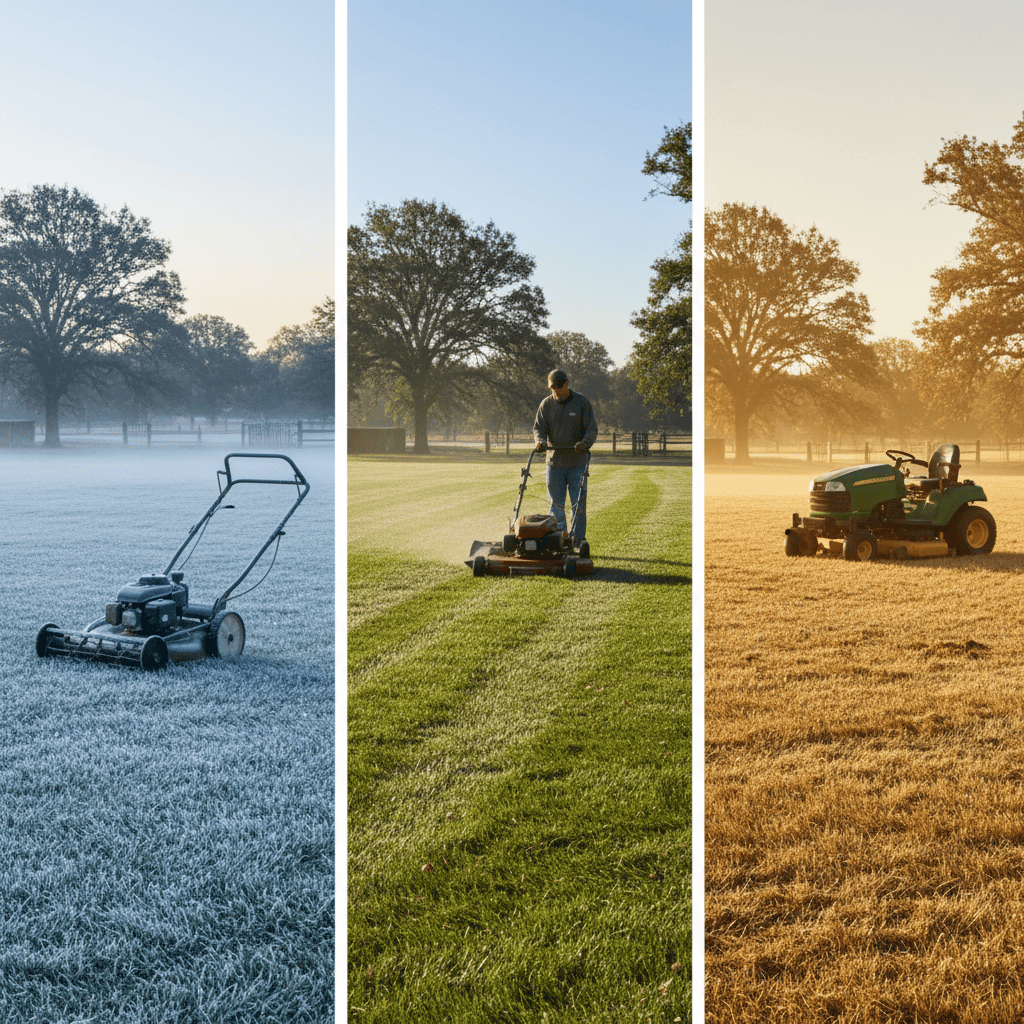
Frost is an even harder stop. Grass blades are brittle when frozen, and mowing them breaks and shreds the tissue. If frost is still present in the morning, wait until it has fully melted and the grass has dried. A few extra hours of patience protects the entire season’s growth.
Cool-Season vs. Warm-Season Grasses
Your grass type changes the entire timeline: For troubleshooting and reliability insights, consult our in-depth dyson v8 cyclone vs bissell featherweight stick report.
- Cool-season grasses (northern lawns): grow vigorously in spring and fall, slow down in summer heat. Expect the first mow in early to mid-spring.
- Warm-season grasses (southern lawns): green up late spring, peak in summer, and go dormant in winter. Their first mow often comes weeks later than cool-season lawns.
- Transition-zone lawns: often contain a mix, so watch whichever species dominates.
If you don’t know your grass type, your local extension office or a neighborhood garden center can identify it from a small sample.
Step-by-Step: How to Check If Your Lawn Is Ready
Before you fire up the mower, run through this quick checklist: Readers comparing setup options can review our technical analysis on bissell crosswave hydrosteam vs shark stainforce.
- Check for frost. If the lawn was white this morning, wait. Frost must be completely gone.
- Check soil moisture. Walk across the lawn. If your footprints leave a visible impression or water puddles, the ground is too wet.
- Measure grass height. It should be at least 3 inches. If it’s shorter, it’s still waking up.
- Confirm active growth. Look for fresh green growth at the tips and consistent color across the lawn, not patchy yellow or brown.
- Check the forecast. Avoid mowing right before a heavy rain, and never mow during a heat advisory.
- Prep the mower. Sharpen the blade, check the oil, and set the deck height so you cut no more than one-third of the blade length.
Seasonal Mowing Calendar: Spring Through Fall
Once the season starts, mowing frequency and height should change as temperatures rise and fall. Here is a general timeline:
| Season | Cool-Season Lawns | Warm-Season Lawns |
|---|---|---|
| Early spring | First mow at 3 to 4 inches; mow every 5 to 7 days | Still dormant; minimal mowing needed |
| Late spring | Mow weekly; keep height around 3 inches | Green-up begins; first mow when grass reaches 3 to 4 inches |
| Summer | Raise blade to 3.5 to 4 inches; mow less often during heat | Mow weekly; keep height around 2 to 3 inches depending on species |
| Early fall | Growth surge; mow weekly and gradually lower height | Growth slows; mow every 10 to 14 days |
| Late fall | Stop when growth halts and frost returns | Stop when grass goes dormant or before first frost |
Two rules apply in every season:
- The one-third rule: Never remove more than one-third of the blade height in a single mow. Cutting more scalps the lawn, stresses roots, and invites weeds.
- Alternate your pattern: Mow in a different direction each time to prevent ruts and encourage upright growth.
Regional and Grass-Type Variations
Where you live can shift the start date by weeks. Use these regional guidelines as a starting point:
- Northern states (cool-season): Lawns typically wake up in March-April. Watch for soil temperatures near 50°F.
- Southern states (warm-season): Bermuda and Zoysia lawns often don’t need their first mow until April-May, when soil hits about 65°F.
- Pacific Northwest: Mild, wet winters mean grass may grow year-round. Start mowing whenever growth resumes and the ground firms up.
- Mountain and high-desert regions: Late frosts can delay the first mow into late spring. Patience is essential.
An unusually cold spring resets the clock, soil takes longer to warm, so grass grows slower. A mild winter can push everything earlier. When in doubt, trust the height test: no active growth, no mow.
The Bottom Line: A Simple Rule for the First Mow
If you remember only one thing, make it this: start mowing when the grass is green, dry, and 3 to 4 inches tall, with no frost and no standing water. The biggest mistake homeowners make is mowing too early out of eagerness, which damages dormant turf and sets the lawn back. Waiting an extra week is always safer than cutting too soon. When in doubt, raise the mower deck one notch for that first cut, then lower it over the next few mowings.
Buyer FAQs: When Can I Start Mowing My Lawn Solved
What is the best time of day to mow the lawn?
Late morning is generally ideal, after dew has evaporated but before afternoon heat peaks. Midday mowing stresses grass and can scorch freshly cut tips, while mowing early morning or evening on wet grass increases the risk of disease and clumping.
How often should I mow in spring?
Cool-season lawns usually need mowing about once a week during peak spring growth; warm-season lawns may be every 5 to 7 days once they green up. Adjust frequency based on growth rate, not a fixed schedule, and always follow the one-third rule.
Can I mow the lawn after it rains?
Only if the grass has dried and the soil has firmed up. Mowing wet grass tears the blades, clogs the mower, and compacts the soil. If footprints leave deep impressions, wait another day.
What happens if I mow grass that is still frozen or frosty?
Frozen grass blades are brittle and shatter instead of cutting cleanly, leaving damaged tips that brown and invite disease. Wait until the frost has completely melted and the grass has dried before the first mow.
Our Final Editorial Take on When Can I Start Mowing My Lawn
Mowing season isn’t decided by a calendar, it’s decided by your lawn. Watch for steady green growth, measure the height, and check soil moisture before the first cut. By respecting the 3 to 4 inch height threshold, the one-third rule, and the conditions of the day, you’ll set your lawn up for a healthy, vigorous season from the very first pass.
Technical Standards and Compliance
Mechanical safety standards, operational tolerances, and protective gear guidelines align with benchmark specifications established by the American National Standards Institute (ANSI).









