

When to Replace Lawn Mower Blades: Quick Answer
Replace your lawn mower blades when they show visible damage (dents, cracks, bent tips), produce uneven or ragged cutting, or have accumulated 20–40 hours of use per season. Most homeowners replace blades annually or every 1–2 seasons. Blades can typically be sharpened 1–2 times before full replacement becomes necessary, depending on damage severity and equipment type.

Pros
- Large-size design named in product title
- Sharpening and balancing functions listed
- Listed as a new upgraded version

Pros
- Adjustable 15-to-45-degree range in title
- Sharpening and balancing functions listed

Pros
- Sharpener and balancer functions in title
- 15-to-45-degree adjustable setting listed
- Built for lawn mower blade maintenance
Pros
- Includes replacement gaskets and a 98079-55846 spark plug
- Matches Honda HRR216 and HRS216 lawn mower models
- Designed around the 16100-Z8B-901 carburetor specification
Cons
- Restricted to select Honda GCV160 mower applications
- Installation requires basic mechanical tools and skills
Visual & Performance Signs Your Blades Need Replacement
Identifying worn or damaged blades early prevents poor cutting results and equipment damage. Watch for these key indicators:
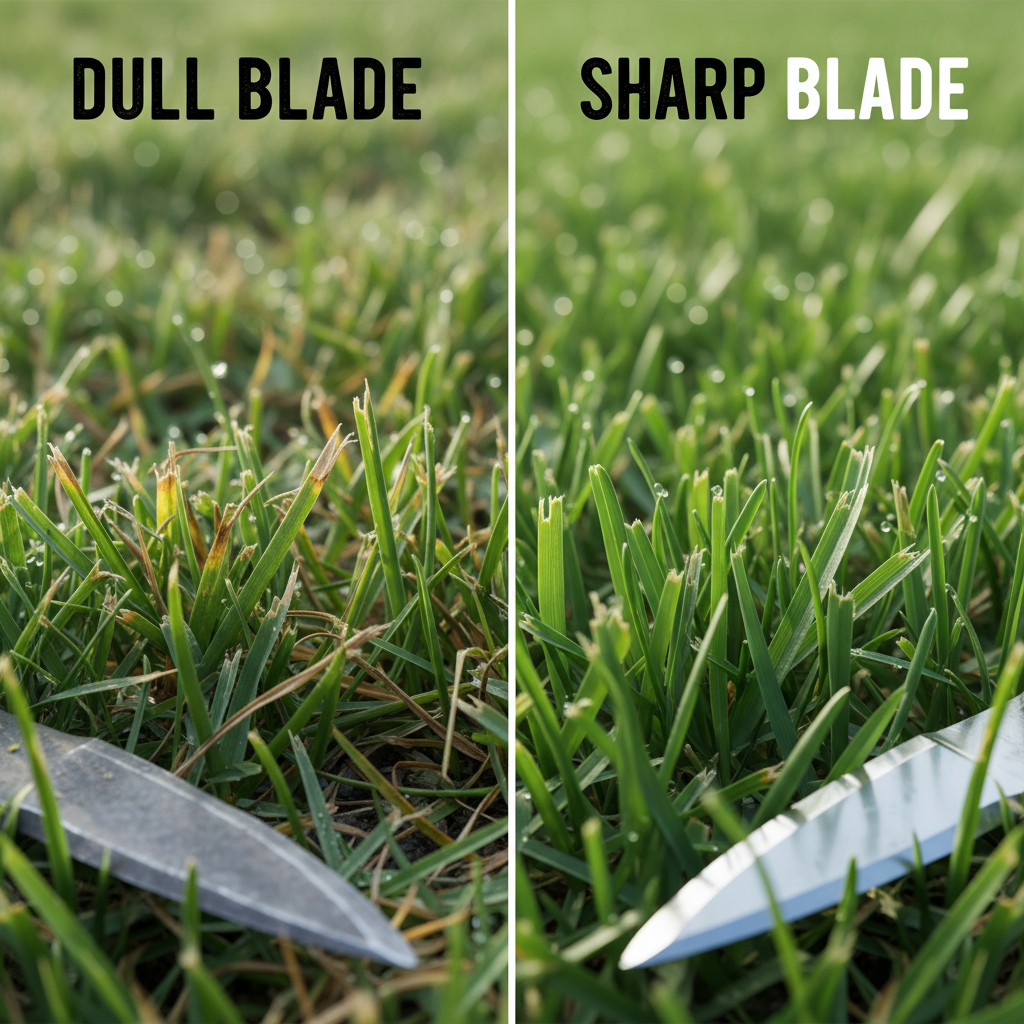
- Ragged or torn grass edges: Dull blades tear grass rather than cut it cleanly, leaving brown, jagged leaf tips. This damage makes grass susceptible to disease and gives your lawn an unhealthy appearance within days of mowing.
- Uneven cutting height: If your mower leaves grass taller in some areas and shorter in others, bent or damaged blade tips are likely causing inconsistent contact with the deck or ground.
- Excessive vibration: Unbalanced or bent blades create vibration during operation, which can damage the mower’s crankshaft and increase wear on the deck. Noticeable shaking is a sign to stop and inspect immediately.
- Visible dents, cracks, or bent blade tips: Close inspection may reveal impact damage from hitting rocks or hard debris. Bent blade tips prevent proper cutting and accelerate wear.
- Loss of cutting power: The mower requires more effort or makes unusual sounds while cutting, indicating blade dullness or misalignment.
- Blade wobbling: Spin the blade by hand (with the spark plug disconnected). A blade that wobbles when spun is bent and unsafe to use.
Replacement Timeline: Hours of Use & Seasonal Factors
Blade lifespan depends on mowing frequency, grass type, lawn condition, and climate. Here’s a practical maintenance schedule: For troubleshooting and reliability insights, consult our in-depth jbl partybox club 120 vs sony srs xv500 report.
Standard Replacement Frequency
- 20–40 hours of use per season: This is the typical threshold for blade replacement. A standard residential lawn mowed weekly (1 hour per week) reaches this threshold in 5–8 months, suggesting annual replacement.
- Seasonal replacement: Most homeowners replace blades once per year, typically at the start of mowing season (spring) or after heavy use ends (fall).
- Multiple-season use: With lighter use (mowing every 2 weeks), blades may last 1–2 seasons before replacement, though annual inspection is still recommended.
Factors That Accelerate Blade Wear
- Grass type: Thick, dense grasses (like zoysia or bermuda) dull blades faster than thinner varieties.
- Soil and debris: Mowing over wet grass, sandy soil, or areas with rocks and sticks dramatically accelerates blade dulling and damage.
- Mowing height: Cutting grass too short requires more blade force and wears blades faster than mowing at recommended heights (typically 2.5–3.5 inches).
- Climate: Wet, humid climates promote faster blade dulling due to moisture and grass density. Dry climates cause faster wear from dust and harder soil.
- Mowing frequency: Frequent mowing (weekly or twice-weekly) depletes blade life faster than bi-weekly or monthly schedules.
Seasonal Timing Strategy
Replace blades at the beginning of your active mowing season to ensure clean cuts from day one. If you notice wear mid-season, sharpen or replace immediately rather than waiting until fall. After the season ends, inspect blades for damage and store the mower with clean, dry equipment. For troubleshooting and reliability insights, consult our in-depth jbl partybox club 120 vs sony srs xv500 report.
Sharpening vs. Full Replacement: Which Path to Take
Understanding when to sharpen versus replace extends blade life cost-effectively:
Sharpening: When It Makes Sense
- 1–2 sharpenings per season: Most blades can be safely sharpened 1–2 times before replacement becomes necessary, depending on initial condition and damage.
- Cost comparison: Sharpening costs $5–$15 per blade if done professionally, or $0 if you sharpen at home with a file or grinder. This is significantly cheaper than replacement ($15–$40 per blade).
- Best for: Dull blades with no visible damage, dents, or cracks. If the blade is bent, cracked, or heavily damaged, sharpening won’t restore performance.
- Sharpening technique: Maintain the original blade angle (typically 30–45 degrees) and remove equal amounts of metal from both sides to keep the blade balanced. Over-sharpening thins the blade and reduces lifespan.
Full Replacement: When Sharpening Won’t Work
- Visible damage: Cracks, deep dents, bent tips, or chunks missing from the blade require replacement, not sharpening.
- After multiple sharpenings: Once a blade has been sharpened 2+ times, the blade profile changes and replacement is more cost-effective than continued maintenance.
- Blade imbalance: If the blade is bent and won’t spin smoothly by hand, replacement is the only safe option.
- Corrosion or rust: Severe rust or pitting weakens the blade structurally and increases failure risk during mowing.
Quick Decision Tree
If the blade is dull but undamaged and hasn’t been sharpened more than once this season, sharpen it. If the blade shows any visible damage, is bent, has been sharpened twice already, or is severely dull, replace it. Readers comparing setup options can review our technical analysis on z890 vs x870e motherboard.
Equipment-Type Variations: Rotary, Reel & Riding Mowers
Blade replacement needs vary by mower type:
Rotary Mowers (Push & Riding)
- Blade count: Push mowers typically have 1 blade; riding mowers have 1–3 blades depending on deck size.
- Replacement frequency: 20–40 hours per season for residential use. Commercial or heavy-use mowers may need replacement every 10–20 hours.
- Wear pattern: Rotary blades wear evenly across the cutting edge but are prone to impact damage from rocks and debris.
Reel Mowers (Cylinder Blades)
- Blade design: Reel mowers use multiple spiral blades (cylinders) that rotate against a stationary bedknife. These require different maintenance than rotary blades.
- Replacement frequency: Reel blade cylinders last longer than rotary blades (often 2–3 seasons) due to lower impact risk, but require annual sharpening or “backlapping” to maintain cutting edge alignment.
- Cost: Reel blade maintenance is more specialized and often requires professional service ($50–$150 annually).
Mulching Mowers
- Higher wear rate: Mulching blades work harder by cutting grass multiple times before ejection, causing faster dulling than standard blades.
- Replacement: Replace mulching blades every 15–25 hours of use, more frequently than standard rotary blades.
Zero-Turn & Commercial Mowers
- Multiple blades: These mowers often have 2–5 blades that must all be replaced simultaneously to maintain balance and performance.
- Frequent replacement: Commercial-grade mowers may need blade replacement every 40–80 hours, depending on use intensity and grass conditions.
Step-by-Step Blade Replacement Guide
Replacing lawn mower blades is a manageable DIY task with basic tools: For complementary field maintenance guidelines, examine our breakdown of marshall stanmore iii vs harman kardon onyx studio 8.
Tools & Safety
- Socket wrench or adjustable wrench (to fit your blade bolt)
- Replacement blade (matched to your mower model)
- Block of wood or blade clamp (to prevent blade rotation while loosening the bolt)
- Safety glasses and gloves
- Spark plug wire (disconnect before working)
- Torque wrench (optional but recommended)
Replacement Steps
- Disconnect the spark plug wire: This prevents accidental engine starting while you’re working on the blade.
- Tip the mower: For push mowers, tip the mower on its side (air filter side up to prevent oil leakage). For riding mowers, use a jack or lift to access the blade.
- Secure the blade: Use a wooden block or blade clamp to prevent the blade from spinning while you loosen the bolt.
- Remove the old blade: Loosen the bolt counterclockwise. Note the blade orientation (usually marked “UP” on top side) before removal.
- Install the new blade: Align the new blade with the bolt hole, matching the original orientation. Hand-tighten first, then use a wrench to secure firmly (typically 35–90 ft-lbs of torque, depending on mower model).
- Check balance: Spin the blade by hand. It should rotate smoothly without wobbling. If it dips to one side, the blade is unbalanced and must be repositioned or replaced.
- Reconnect and test: Reattach the spark plug wire, lower the mower, and test on a small area before mowing your full lawn.
When to Hire a Professional
- You’re uncomfortable working with tools or engine equipment.
- The mower is still under warranty (DIY work may void coverage).
- Multiple blades are damaged or unbalanced (complex to diagnose and fix).
- You have a reel or commercial mower requiring specialized knowledge.
- The blade bolt is seized or stuck and won’t loosen.
Maintenance Tips to Extend Blade Life
Proper care between replacements maximizes blade durability:
- Mow at proper height: Keep grass at manufacturer-recommended heights (typically 2.5–3.5 inches for most species). Cutting too short stresses blades and dulls them faster.
- Remove debris before mowing: Pick up sticks, rocks, and metal objects from your lawn. These cause impact damage and blade dulling.
- Avoid mowing wet grass: Wet grass clogs the deck and requires the blade to work harder, accelerating wear. Mow when grass is dry if possible.
- Inspect blades regularly: Check blades monthly during mowing season for signs of wear, damage, or unbalance. Early detection prevents mid-season failures.
- Keep the deck clean: Remove dried grass clippings and buildup from the mower deck after each use. Debris buildup affects blade performance and rusts the deck.
- Store properly: At the end of the season, clean the mower, sharpen or replace blades, drain fuel, and store in a dry location. This prevents rust and prepares the mower for next season.
- Use blade covers: Consider installing blade covers if the mower will be stored for extended periods. This protects blades from rust and moisture.
Frequently Asked Questions About When To Replace Lawn Mower Blades
How often should I sharpen my lawn mower blade?
Sharpen your lawn mower blade 1–2 times per mowing season, or whenever you notice the blade producing ragged cuts or the mower requiring extra effort. Most blades stay sharp for 20–40 hours of use. If you mow weekly, sharpen in mid-season and again before winter storage if needed. After 2 sharpenings, replace the blade instead of continuing maintenance. To evaluate matched hardware tolerances, consult our detailed overview of dyson v8 cyclone vs bissell featherweight stick.
Can I replace just one blade on a riding mower?
For riding mowers with multiple blades, it’s best to replace all blades at the same time, even if only one is visibly damaged. Mismatched blade ages or conditions cause uneven cutting, vibration, and deck damage. If only one blade is severely damaged, replace that one immediately to prevent further damage, then schedule full blade replacement at the end of season or next year’s start.
Why is my blade still dull after sharpening?
A still-dull blade after sharpening usually indicates: (1) improper sharpening angle (should be 30–45 degrees, matching the original blade design), (2) sharpening only one side of the blade, creating imbalance, (3) blade damage that sharpening alone cannot fix, or (4) inadequate removal of dull metal during sharpening. Use a file or grinder carefully, maintaining the original blade profile, and remove equal amounts from both sides. When planning workspace deployment, consider the engineering criteria outlined in our bissell crosswave hydrosteam vs shark stainforce guide.
What is the cost to replace lawn mower blades?
Replacement blade cost typically ranges from $15–$40 per blade, depending on mower brand and quality. Most residential mowers use 1 blade (push mowers) or 2–3 blades (riding mowers). Professional replacement service adds $50–$100 in labor. DIY replacement costs only the blade price, making it a budget-friendly option for those comfortable with basic tools.
Conclusion
Lawn mower blade maintenance is essential for a healthy, attractive lawn and equipment longevity. Replace blades when they show visible damage, produce uneven cutting, or reach 20–40 hours of use per season. Before replacing, consider whether sharpening is still viable—most blades can be sharpened 1–2 times cost-effectively. With regular inspection, proper mowing technique, and seasonal maintenance, you’ll maximize blade life and keep your mower running efficiently for years.
For more hands-on benchmarks and buying recommendations, consult our guides on heavy-duty chainsaw buyer guide, as well as high-CFM commercial leaf blower guide, as well as automated robotic lawn mower guide.
Mechanical safety standards, operational tolerances, and protective gear guidelines align with benchmark specifications established by the American National Standards Institute (ANSI).









