

Quick Answer: Who Makes the Best Electric Lawn Mower?
The premier electric lawn mower manufacturers are EGO Power+, Greenworks Commercial, Milwaukee Tool, and Toro 60V MAX. EGO Power+ is widely recognized as the market leader in residential cordless mowing, pairing high-capacity 56V Arc Lithium battery packs with dual-blade Select Cut deck technology. For homeowners seeking traditional steel-deck durability and commercial-grade drive dynamics, Toro 60V Super Recycler delivers unmatched mulching performance without gasoline.
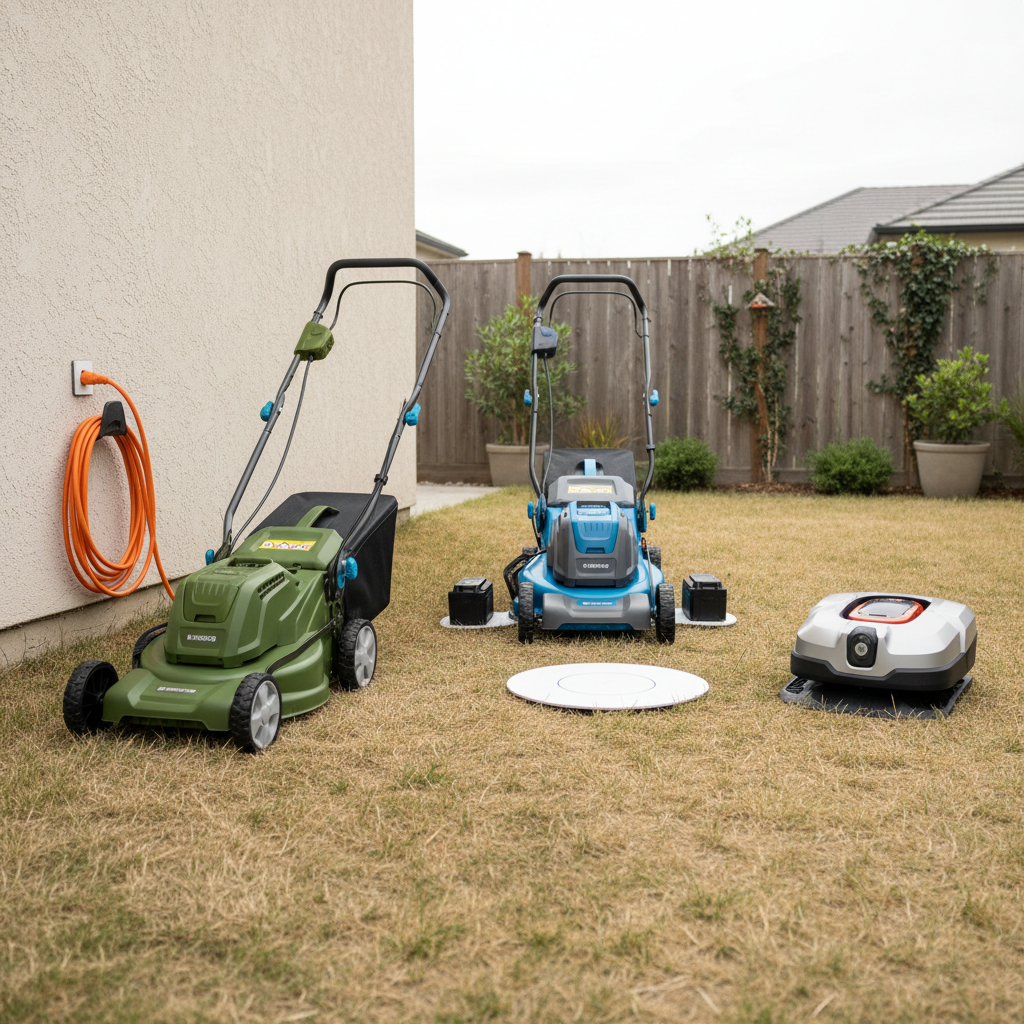
The Rise of High-Voltage Cordless Electric Mowers
Over the past decade, lithium-ion battery technology has transformed residential lawn care, rendering corded electric mowers and noisy, high-maintenance gas engines obsolete for millions of homeowners. Modern 56V, 60V, and 80V cordless platforms generate cutting torque equivalent to premium 160cc to 190cc gasoline engines, delivering immediate push-button starting, whisper-quiet operation, zero exhaust emissions, and compact vertical garage storage.
When evaluating which manufacturer engineers the top electric lawn mower, buyers should focus on four core technical performance areas:
- Battery Architecture and Thermal Management: Premium cells arranged in arc or phase-change cooling configurations dissipate heat rapidly, preventing thermal shutdowns during mid-summer mowing.
- Brushless Motor Torque: High-efficiency digital brushless motors actively monitor blade RPM, automatically surging power when hitting dense crabgrass or wet turf patches.
- Deck Aerodynamics and Dual-Blade Systems: Multi-blade layouts (such as stacked mulching blades) finely chop clippings into fine lawn food without bogging down the drive motor.
- Self-Propelled Drive Systems: Variable-speed rear-wheel-drive systems (like personal pace or touch drive) adapt seamlessly to the operator walking speed.
Homeowners comparing battery performance to traditional equipment can review our breakdown of gas riding lawn mowers to evaluate runtime and acreage capabilities.
Leading Electric Mower Brands Compared
Several major manufacturers dominate the battery mower landscape, each offering unique engineering philosophies suited to different yard requirements:
EGO Power+ (56V Arc Lithium Platform): EGO holds the premier position in residential cordless mowing. Their flagship LM2135SP and LM2156SP models feature the Select Cut multi-blade system, which uses interchangeable lower blades for premium mulching, bagging, or extended runtime. EGO 56V batteries feature a unique curved arc shape with phase-change material that keeps cells cool under heavy load. The Touch Drive self-propelled dial allows effortless speed control with simple palm pressure.
Toro (60V MAX Super Recycler): Toro took its legendary cast-aluminum Super Recycler deck and fitted it with a potent 60-volt brushless powertrain. The Toro 60V Super Recycler features the acclaimed Personal Pace self-propelled system, which senses your walking cadence and adjusts speed automatically. Its patented accelerator kickers and under-deck deflectors chop grass into micro-fine mulch that vanishes into turf canopies, delivering the best cut quality in the electric category.
Greenworks (60V and 80V Pro Series): Greenworks offers expansive commercial and residential platforms featuring heavy-gauge steel decks and dual-battery ports that automatically switch to a fresh pack when the first is depleted. Their Pro 60V 21-inch brushless self-propelled units offer excellent value, high runtimes, and a broad ecosystem of compatible outdoor power tools. Those evaluating established walk-behind models can also reference walk-behind Craftsman lawn mowers for deck comparisons.
Milwaukee Tool (M18 FUEL 21-Inch Mower): Built specifically for commercial landscapers and trade professionals, Milwaukee M18 FUEL mower utilizes dual 18V batteries simultaneously to deliver 36V performance. Featuring a heavy steel deck, high-lift blade speeds, and instantaneous peak torque, it outpowers many gas mowers in thick spring overgrowth, though it carries a premium price point.
Battery Longevity and Yard Size Considerations
A single 5.0Ah to 7.5Ah high-voltage battery generally provides 45 to 60 minutes of continuous mowing runtime under standard residential conditions, easily handling yards up to half an acre. For properties exceeding half an acre, purchasing an additional battery pack or choosing a dual-port mower ensures continuous mowing while the first battery recharges on a rapid charger. Property owners can also review Toro riding lawn mowers for sprawling properties exceeding one acre.
Recommended Gear
Maximize your cordless mowing performance with high-capacity spare batteries, rapid dual-port chargers, and specialized mulching and high-lift replacement blades.

Pros
- Premium Select Cut multi-blade system that provides cutting performance exceeding traditional gas mowers
- Intuitive Touch Drive self-propulsion with adjustable speeds for reduced user effort
- Includes 56V 7.5Ah battery and rapid charger delivering 60-minute runtime and matching charge time
- Versatile 3-in-1 mulching, bagging, and side discharge options plus 7 cutting heights
- High-efficiency brushless motor with convenient push-button start and LED headlights
Cons
- 60-minute runtime may require recharging or a spare battery for very large properties
- Charge time of 60 minutes can interrupt extended mowing sessions without an extra battery
- Relies solely on the included battery system, so users without spare packs face limited continuous use
The EGO Power+ LM2135SP is a self-propelled cordless electric lawn mower that stands out as a modern gas alternative. Its build centers on a high-efficiency brushless motor and robust Select Cut multi-blade setup, creating an immediate impression of quality engineering focused on superior cutting results and user-friendly operation.
In real-world scenarios the Touch Drive self-propelled system allows palm-based speed adjustments between 0.9 and 3.1 MPH while the included 56V 7.5Ah ARC Lithium battery supports 60 minutes of runtime. Seven-position height settings from 1.5 to 4 inches along with 3-in-1 mulching, bagging, and side discharge functions plus push-button start and LED headlights make the mower highly adaptable for everyday lawn maintenance.
Honest considerations include the 60-minute runtime limit which may fall short for oversized yards without a second battery. The matching 60-minute charge time with the rapid charger also means planning ahead is essential for longer jobs, and the cordless design inherently requires ready access to power for recharging.
Overall the EGO Power+ LM2135SP delivers the most value to homeowners with medium-sized yards who prioritize quiet emission-free mowing and cut quality that exceeds gas models. Those managing larger properties will maximize benefits by adding an extra battery for seamless coverage.

Pros
- Includes two 4.0Ah batteries and a rapid charger
- Self-propelled rear-wheel drive assists on slopes
- 4-in-1 system: mulch, bag, side discharge, and leaf pickup
- Comes with an extra mower blade
Cons
- Coverage up to 3/4 acre varies by terrain and technique
- Requires 60V platform compatibility for spare batteries

Pros
- Powerful 60V brushless motor provides efficient gas-comparable cutting force
- Self-propelled rear-wheel drive simplifies work on uneven terrain and dense grass
- Comes complete with two 4.0Ah batteries, rapid charger, and grass bag ready for use
- 4-in-1 cutting modes and LED lights add all-day versatility
- Quiet zero-emission design with IPX4 water resistance for outdoor durability
Cons
- Runtime is limited to about 3/4 acre per charge and varies by terrain and technique
- Requires battery charging cycles unlike unlimited-run gas or corded mowers
- Exact weight and dimensions are not detailed in available specifications
The Greenworks 60V 21" Brushless Self-Propelled Cordless Lawn Mower stands out as a robust battery-powered walk-behind unit built for homeowners managing medium to large lawns. Its design focuses on cordless convenience with a durable frame, rear-wheel drive system, and IPX4 weather resistance, creating an immediate impression of modern reliability without the mess of gas engines.
Performance & Key Features center on the 60V brushless motor paired with two 4.0Ah batteries that deliver gas-like power for up to 3/4 acre per charge. Self-propelled traction handles slopes and thick grass with adjustable speed, while the 4-in-1 system supports mulching, bagging, side discharge, and turbo leaf pickup. Ultra-bright LED lights extend usable hours, and the quiet operation runs 3x quieter than gas mowers with zero emissions and instant starts. The included rapid charger and compatibility with 75+ Greenworks 60V tools further enhance daily efficiency.
Drawbacks & Considerations include the fact that runtime varies based on terrain and technique, so larger or denser areas may require careful battery management. Unlike gas models, it depends on charging cycles, and detailed weight or dimensional data is not provided in the specifications, which could influence handling preferences for some users.
Verdict: This mower delivers excellent value for eco-conscious homeowners seeking powerful, low-maintenance cordless performance on yards up to 3/4 acre. Those already in the Greenworks 60V ecosystem or wanting quiet, emission-free mowing will gain the most, especially with the dual batteries, rapid charger, and strong warranties included.

Pros
- Delivers strong 60V brushless power equivalent to gas with significantly lower noise and zero emissions
- Self-propelled rear-wheel drive with adjustable speeds simplifies mowing on hills and uneven terrain
- Dual 4.0Ah batteries plus dual-port charger provide up to 80 minutes of runtime for medium-to-large yards
- Smartcut Technology improves mulching efficiency by 30% and reduces clogging in dense grass
- Compatible with the broader Greenworks 60V ecosystem and backed by a 4-year tool and battery warranty
Cons
- Runtime is listed for up to three-quarters of an acre per charge, so larger properties near one acre may require battery swaps or recharging mid-job
- Relies entirely on battery power, which can limit continuous use compared to unlimited gas runtime on very extensive lawns
- No detailed weight or deck height adjustment specs provided, which may affect suitability for users needing precise customization
The Greenworks 60V 25" Cordless Lawn Mower is a brushless self-propelled electric walk-behind mower built for homeowners managing large yards. It features a robust 60V platform with dual 4.0Ah batteries, a dual-port charger, and a grass bag included, delivering a solid first impression of convenience and modern cordless design focused on ease of use and reduced maintenance.
In performance, this mower offers gas-like power that is 50% stronger than 40V units while producing 60% less noise and zero fumes. The rear-wheel drive self-propelled system with variable speeds of 3.5 to 4.5 MPH handles hills effectively, and Smartcut Technology ensures 30% better mulching with resistance to bogging in thick or wet grass. The dual batteries support up to 80 minutes of runtime covering approximately three-quarters of an acre, making it practical for substantial properties while integrating into the wider Greenworks 60V tool ecosystem of over 75 compatible products.
Potential drawbacks include the battery-dependent nature of the mower. Although marketed for yards up to one acre, real-world coverage sits around three-quarters of an acre per full charge, so users with bigger spaces may need to plan for recharging. Specific details on overall weight or cutting height ranges are not listed in the available data, which could influence handling preferences for some buyers.
Overall, the Greenworks 60V 25" Cordless Lawn Mower is an excellent choice for homeowners seeking a quiet, powerful, and low-maintenance alternative to gas models. It delivers the most value for those with medium to large lawns who already own or plan to expand a Greenworks 60V toolkit and prioritize emission-free operation with reliable self-propelled assistance.

Pros
- Brushless motor provides more torque and quieter operation than traditional designs
- Self-propelled variable speed drive offers excellent maneuverability and reduced effort
- LED headlights expand usable mowing hours into low-light conditions
- 4-in-1 cutting modes handle mulching, bagging, discharge, and leaf collection efficiently
- Cuts up to half an acre per full charge with the included 4.0Ah battery
Cons
- Runtime limited to approximately 1/2 acre per charge, which may require extra batteries for larger properties
- Performance can vary based on grass conditions and operator technique
- Only a single 4.0Ah battery and charger are specified, limiting extended continuous use without recharging
The Greenworks 80V 21" Self-Propelled Cordless Lawn Mower is a well-built electric walk-behind model featuring a durable steel deck, brushless motor, and included 4.0Ah battery with rapid charger. It presents as a modern, gas-free solution aimed at homeowners wanting reliable cordless performance with LED lighting for added convenience.
Performance centers on the efficient brushless motor that delivers strong torque and quiet operation while the self-propelled rear-wheel drive with variable speed control ensures solid traction and easy handling. The unit is rated to cut up to 1/2 acre per charge and includes a practical 4-in-1 system for mulching, bagging, side discharge, and turbo leaf pickup, making it suitable for varied seasonal tasks based on the manufacturer specifications.
Key considerations include the half-acre runtime limit that depends on grass conditions and technique, potentially necessitating additional batteries for bigger yards. As a single-battery cordless design, continuous large-area use requires planning around recharges, and no further dimensional or weight details are specified.
This Greenworks mower delivers the most value to owners of small to medium lawns who prioritize quiet electric power, system expandability across 75+ tools, and multi-mode cutting versatility. It is a strong choice for users ready to move away from gas equipment while maintaining solid cutting capability and ease of control.

Pros
- Brushless motor delivers quieter performance longer runtime and strong torque compared to typical gas models.
- Self-propelled variable-speed rear-wheel drive reduces physical strain across different yard sizes and slopes.
- 4-in-1 cutting system provides flexible mulching bagging discharge and leaf pickup options in one machine.
- Includes ready-to-use 5.0Ah battery charger and grass bag plus multi-tool ecosystem compatibility.
- LED headlights enable safe mowing during low-light hours without added noise.
Cons
- Only one 5.0Ah battery is included so larger yards may need extra batteries or mid-session recharging.
- Cordless design requires battery charging and offers limited continuous runtime unlike fuel-powered mowers.
- Actual mowing duration depends on grass density height and conditions as no fixed runtime is specified.
The Greenworks 40V 21 inch Self-Propelled Cordless Lawn Mower is a walk-behind model built around a durable 21-inch steel deck and brushless motor. Its overall design focuses on cordless convenience while delivering solid build quality for everyday residential lawn care.
Performance centers on the self-propelled rear-wheel drive with variable speed for controlled mowing on different terrains. The brushless motor supports efficient quiet operation while LED headlights allow flexible timing. The 4-in-1 system covers mulching bagging side discharge and turbo leaf pickup and the included 5.0Ah battery plus charger enables immediate use with broad compatibility across the Greenworks 40V lineup.
Drawbacks to consider include the single included battery which may require recharging or additional packs for larger properties. As a cordless unit it lacks the uninterrupted runtime of gas mowers and actual work time varies with lawn conditions.
This mower delivers the most value to homeowners seeking a quiet low-maintenance alternative who want to expand into the Greenworks 40V ecosystem. It suits medium-sized yards where the included battery and versatile features provide reliable eco-friendly results with solid warranty coverage.
Frequently Asked Questions
How long do electric lawn mower batteries last before needing replacement?
High-quality lithium-ion mower batteries from brands like EGO and Toro typically deliver 3 to 5 years of regular seasonal use, or roughly 500 to 800 full charge cycles, before noticeable capacity degradation occurs.
Can an electric lawn mower cut thick, tall, or wet grass?
Modern high-torque 56V and 60V electric mowers cut thick grass effectively by automatically increasing motor RPM; however, mowing soaking wet grass should be avoided to prevent clump buildup and excessive battery drain.
Are electric mowers really quieter than gas mowers?
Yes, electric lawn mowers operate at roughly 70 to 75 decibels, compared to 90 to 95 decibels for gas mowers. The sound is primarily air movement from the spinning blade rather than loud engine combustion.
Can electric mowers be stored vertically?
Yes, because electric mowers contain no engine oil, gas tank, or carburetor float bowls, their handles fold flat and the unit can be stored upright against a garage wall, saving 70 percent of floor space.
Do electric lawn mowers require blade sharpening?
Yes, electric mower blades require the exact same seasonal sharpening and balancing as gas mower blades. A sharp blade reduces motor workload and significantly extends battery runtime per charge.
Technical Standards and Compliance
Mechanical safety standards, operational tolerances, and protective gear guidelines align with benchmark specifications established by the American National Standards Institute (ANSI).









