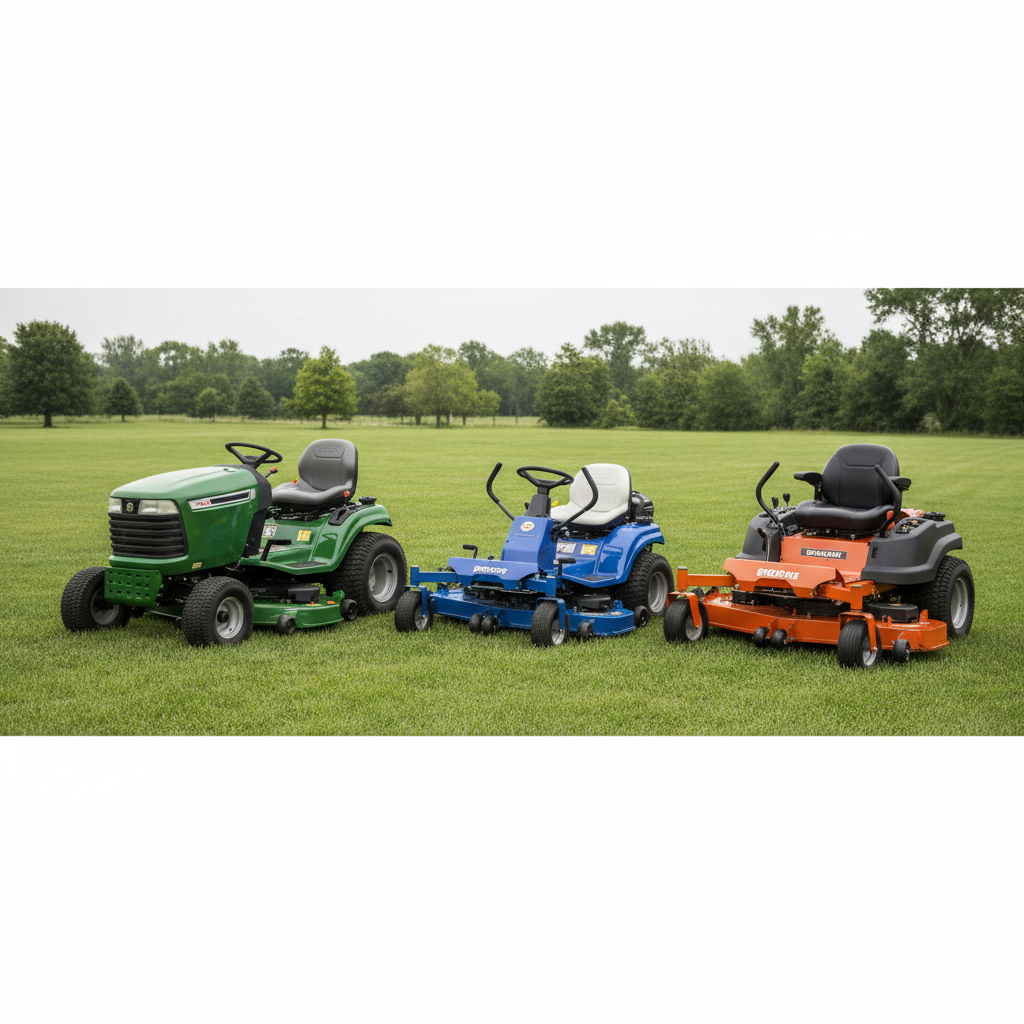
No manufacturer makes the universally best lawn tractor. “Best” depends on yard size, terrain, whether you need attachments beyond mowing, how the machine is built, and how easy it is to get parts and service. Define those needs first, then compare construction, cutting deck, drivetrain, and local support instead of hunting for a single brand winner.
Why no manufacturer is universally “best”
People ask who makes the best lawn tractor because they want a shortcut. The question usually hides several different goals: a machine that lasts, a low purchase price, a nearby dealer, extra features, or something simple to operate. Those goals conflict. A heavily built tractor with a wide attachment list can be overkill on a small, flat lawn. A light, inexpensive rider can frustrate someone who bags clippings, tows a cart, or mows uneven ground every week.
Crowning one maker also misleads because two buyers rarely share the same property. One person may mow a compact, gated yard with trees and flower beds. Another may have open turf plus seasonal jobs such as spreading, hauling, or light snow work. A third may care most about who can service the machine next month. A brand that looks like a “quality leader” in marketing cannot resolve those differences for you.
Use this article as a matching guide, not a ranking. The useful answer is a process: put yourself in the right rider class, write down the jobs and the land, then judge any maker on construction, specs that actually affect mowing, and support you can reach. If two machines look similar on a showroom floor, the better one is the one that fits the yard and can be kept running.
What a lawn tractor is—and how it differs from other riders
A lawn tractor is a residential, tractor-style riding mower. In typical form it has the engine in front, a seat over a mid-mount cutting deck, a steering wheel, and a frame meant for regular mowing plus light towing or seasonal attachments. It sits in the middle of a broader riding-mower category. Mixing up the classes is one reason “who makes the best” questions go nowhere: shoppers compare machines that are built for different jobs.
Lawn tractor versus a basic lawn rider
A basic riding mower is often a simpler, lighter machine aimed mainly at cutting grass. Many of those riders put the engine behind the operator and offer less hitch or implement flexibility. A lawn tractor is usually more tractor-like: a rear hitch is common, and makers more often sell matching baggers, mulch kits, carts, and seasonal tools. That does not make every lawn tractor a heavy-duty workhorse. It means the product class is designed around mowing first, with some extra utility if the specific model supports it.
Lawn tractor versus a garden tractor
A garden tractor is generally a step up in frame strength, implement capacity, and the kinds of ground-engaging or high-load attachments it can handle. Lawn tractors and garden tractors can look similar from a distance. The distinction is not a single official cutoff published for every brand. In practice, garden tractors are aimed at people who need more than lawn care: heavier towing, more robust hitches or lifts, and attachments that put real strain on the drivetrain. If your only regular job is mowing a typical residential lawn, a garden tractor may be more machine than you need. If you plan to use the tractor as a small utility vehicle year-round, you may have already left the lawn-tractor class.
Lawn tractor versus a zero-turn mower
A zero-turn mower is usually a dedicated cutting tool. Dual hydrostatic levers or similar controls let it spin in place and trim around obstacles faster than a steering-wheel tractor on open or moderately complex turf. That speed and maneuverability come with a tradeoff. Zero-turns are typically less tractor-like for towing, snow work, or implements that expect a conventional hitch and seating position. Some zero-turns accept bags or mulch kits; fewer feel like a small farm tractor. If the main job is large, open mowing and you do not need tractor attachments, a zero-turn may fit better than forcing the “lawn tractor” label.
When another rider class is a better fit
Stay in the lawn-tractor category when you want a familiar steering-wheel layout, a mid-mount deck, and the option of light attachments. Look at another class when the land or the task list does not match that design:
- Very tight, obstacle-dense yards often favor a more maneuverable rider or even a walk-behind, because a long tractor nose and turning radius become the limiting factor.
- Steep or highly irregular ground may need a machine designed for that terrain, or a different mowing plan entirely. A residential lawn tractor is not a hillside specialist.
- Heavy implement work points toward a garden tractor or compact tractor, not a mower with a hitch added as an accessory.
- Mowing-only acreage with few attachments and lots of open space is often a better match for a zero-turn than for a tractor-style rider.
Getting the class right matters more than the badge. Comparing the “best” lawn-tractor maker to a zero-turn or garden tractor is comparing different tools.
Start with your property and the jobs you need done
Manufacturer quality only helps if the machine matches the land. Walk the property before you walk into a store. Note what you will actually do in a typical year, not what a brochure suggests you might do someday.
Lot size, layout, and obstacles
Acreage is a rough planning clue, not a hard industry standard. A wide-open half-acre and a half-acre full of trees, beds, fences, and play equipment are different jobs. Deck width should follow gates, paths, shed doors, and turning room as much as raw area. A wider deck can reduce passes on open turf and still be the wrong buy if it will not fit through the gate or store in the garage.
Count obstacles and measure the tightest opening the machine must pass. Also measure storage length and height, including the deck and any bagger. Many “too big” tractors are not too powerful; they are simply too long or too wide for the site.
Terrain, moisture, and ground clearance
Flat, dry turf is the easiest case: almost any well-maintained lawn tractor can cut it if the deck is the right size. Slopes change the picture. Traction, tire type, weight distribution, and stability matter more than paint. Uneven ground and hidden holes punish low clearance and weak deck hangers. Wet or soft soil can leave ruts; wider turf tires and a lighter touch on the throttle help, but no residential tractor is a wetland machine.
If the yard has serious grades, treat slope as a safety limit, not a feature to overcome with more horsepower. The operator’s manual for the specific machine is the authority on where it may be used. If the land is routinely too steep or broken for a lawn tractor, change the tool or the mowing plan rather than shopping for a braver brand.
Mowing only, or attachments too?
Write a task list. Mowing alone points you toward cut quality, deck service, and easy height changes. Adding a bagger or mulch kit points toward deck design, lift capacity, and whether the maker actually sells a kit for that model. A rear hitch and a cart are common light-utility extras. A snow blade, spreader, or other seasonal tool is only useful if hitch geometry, lift, and any PTO or electrical connectors match that machine.
Do not assume “tractor” means every attachment will bolt on. Compatibility is model-specific. Confirm the hitch type, lift method, PTO if required, and the maker’s attachment list before you count on winter or hauling work.
New or used, fuel, and noise
New machines trade a higher purchase price for a current warranty and known history. Used machines can be a rational buy if you inspect rust, deck integrity, and service records carefully. Fuel type is a logistics choice as much as a performance choice. Gasoline remains common and familiar. Battery models shift the constraint to charging space, charge time, and whether runtime covers your lot in one session. Noise, storage, and local rules may matter as much as power claims. None of those preferences names a winning manufacturer; they narrow the field of machines that can live at your house.
Machine qualities that actually decide a good match
Once the job is clear, compare machines on traits that affect daily use. Badges and claimed horsepower are weak standalone scores. The cutting deck, transmission, engine installation, frame, tires, comfort, and attachment interfaces do more to decide whether ownership is pleasant.
Cutting deck: width, style, and clippings
The cutting deck is the working tool. Width should fit gates and storage first, then reduce extra passes on open ground. Side discharge is the simple default for many lawns: clippings exit to the side and you mow so they land on already-cut turf or an area you will rake. A mulch kit keeps more clippings on the lawn when grass is not too tall or wet. A bagger helps if you want a cleaner look, collect leaves, or cannot leave clumps on the surface. Many decks can be set up more than one way, but the conversion hardware has to exist for that model and you have to be willing to install and clean it.
Deck construction is often described as stamped or fabricated. A stamped deck is typically formed from a single sheet and can be perfectly adequate for residential mowing. A fabricated deck is usually welded from thicker panels and may be easier to repair or replace in sections, depending on design. Thicker steel is not automatically “best.” What matters is whether the deck resists bending, whether spindles and belt paths are serviceable, and whether you can reach blades and pulleys without a fight. Look at hanger points, anti-scalp wheels, and how height is adjusted. A deck that is hard to level will not stay a good cutter.
Hydrostatic transmission versus gear drive
A hydrostatic transmission uses fluid drive so you can change ground speed with a pedal or lever, usually without clutching through gears. That is convenient for frequent slowing around trees, beds, and trailers. A gear drive uses stepped gears; it can be mechanically simple, but speed changes are less fluid and daily use can feel more like driving a small farm tractor with a clutch and range lever.
Neither layout always wins. Hydrostatic units are typically easier for stop-and-go residential mowing. Gear drives can appeal if you want simpler mechanical behavior and do not mind shifting. Upkeep differs by design: fluid and filter service on some hydrostats, clutch and linkage care on some gear drives. Read the maintenance schedule for the machine in front of you instead of treating the word “hydrostatic” as a quality award.
Power, cooling, and the cut in real grass
Advertised engine power is only one input. Two engines with similar claimed output can feel different once they are turning a deck in thick, damp grass. Look at how the engine is mounted, how air reaches the cooling fins or radiator, and whether grass will pack around the intake. Inspect the belt path from engine to deck: a strong engine still leaves a poor cut if the deck drive slips, the spindles are worn, or blade overlap is poorly set.
Treat horsepower numbers as a starting comparison, not a ranking. Cut quality in the grass you actually have—density, moisture, and height—matters more. If you can demo machines, mow a representative patch rather than listening to idle sound in a parking lot.
Frame, spindles, tires, and the seat
Frame stiffness shows up when you hit a rut or hang a bagger on the back. You do not need a lab test to notice cracked welds, flimsy stampings, or a deck that rattles on its hangers. Spindles should turn smoothly without play; they are wear items, so ask how they are serviced and whether parts are ordinary stock. Tires should match the ground: turf-friendly tread for lawns, enough width to spread weight, and condition that will not go flat on the first season of debris.
Comfort is not vanity. A seat that bottoms out, steering that fights you, and pedals that are a stretch become real after an hour. Check visibility to the front wheels and deck edge. Check how you get on and off. Those details affect whether you will maintain the lawn or avoid the machine.
Attachment interfaces: hitch, lift, and PTO
If the task list includes more than mowing, verify interfaces before you fall for the word tractor. A rear hitch should match the cart or implement you intend to pull, and the frame should look capable of that load in ordinary use. Some tools need a lift. Some need a PTO—the power take-off that drives an implement. Electrical plugs for lights or spreaders are another compatibility check. Ask for the attachment catalog for that exact model, not a generic brand brochure. If the interface is vague, assume the extra job is not supported until proven otherwise.
How to evaluate a manufacturer’s construction and support
You can compare makers without crowning a winner. Construction quality and dealer support are processes you inspect, not reputations you take on faith. Two companies can sell similar-looking tractors and still differ sharply in how you live with the machine after the sale.
What usable local service looks like
Dealer support is practical, not ceremonial. A useful dealer has trained technicians, stocks common wear parts, and can give a realistic sense of repair turnaround. Belts, blades, spindles, filters, and cables are the parts you will need. If those items are a special-order adventure every time, ownership gets expensive in downtime even when the tractor was well built.
Visit the service desk, not only the sales floor. Ask what they keep on the shelf and how they handle seasonal rush. Parts availability through a nearby shop can matter as much as initial build quality. Distance matters too: a slightly nicer machine that must travel a long way for every repair is not automatically the smarter buy.
How to read a warranty
Warranty language is more important than the headline number of years. Read what is covered, what is excluded, whether hours of use are limited, and who is allowed to perform the work. Some coverage applies only if you follow a maintenance schedule and keep records. Some wear items are excluded by design. A long-sounding warranty that requires shipping a tractor across the region, or that voids easily, is weaker than a shorter one you can actually use at a local shop.
Compare two makers by placing their written terms side by side. Do not treat marketing phrases as coverage. If the document is unclear, ask the dealer to show the exclusions in print.
In-person construction checks
Marketing photos hide the same things on every brand. Walk around the machine and look:
- Welds and stampings: even, complete joints versus thin, sloppy, or cracked metal at stress points.
- Deck hangers and height mechanism: solid mounts, adjustable links, and hardware you can service.
- Belt routing: guarded where it should be, reachable for replacement, not a maze that requires special tools for a standard belt.
- Greasable points: present where spindles, pivots, and steering joints will wear, and reachable with a grease gun.
- Underside and rust traps: places grass and water will sit, especially on used machines.
- Operator presence control and other interlocks: they should function. These systems exist to stop blades or the engine when the operator leaves the seat or the machine is in an unsafe state. Do not buy a unit with bypassed safety switches.
Those checks reveal more than a hood badge. A maker that consistently designs for service—ordinary fasteners, documented belt diagrams, stocked spindles—will be easier to live with than one that only looks rugged.
Comparing support when the tractors look alike
If two makers offer similar decks and horsepower claims, compare the ownership network. Who will order the part? How long do common items take to arrive in your area? Is there more than one place that can work on the machine, or a single distant shop? Big-box and independent-dealer channels are not universally better or worse. The tradeoff is often convenience and price presentation versus specialized service, and that tradeoff varies by town. Judge the actual store you would use, not a national stereotype.
A practical way to shop and compare
Turn the criteria into a short sequence so brand prestige does not become the tie-breaker.
Write the site down before you shop
Measure and note lot layout, the steepest slope you would mow, gate and path widths, storage space, and must-have attachments. Add fuel or charging constraints and whether anyone else in the household will operate the machine. That list keeps a salesperson from defining “best” for a property they have not seen.
What a sit-down or demo should include
Sit on the tractor the way you will use it. Check steering effort at low speed, visibility to the deck edge, and whether you can change deck height without leaving the seat if that matters to you. Drive forward and reverse. Practice getting on and off. Listen for obvious rattles. If a demo on grass is possible, cut a patch that resembles your lawn. Pay attention to tracking, scalping on small bumps, and whether you can hold a line without fighting the wheel.
Side-by-side comparison without prestige
Compare two machines on the same checklist: deck access, transmission feel, tire condition, hitch and PTO if needed, seat and controls, documented maintenance, warranty paper, and the dealer you would actually call. Ignore which name sounds more premium. If one tractor is easier to service and the local shop stocks its wear parts, that is a real advantage even when the hoods look equally shiny.
Extra habits for used equipment
Used shopping is an inspection job. Look for rust-through on the deck and frame, bent blades, spindle play, oil or fuel leaks, smoke that does not clear, and an hour meter that matches wear on pedals, seat, and tires. Ask for service records. A clean wash can hide a sanded deck; tap and look from below. If the seller cannot explain repairs, or safety interlocks have been defeated, walk away. Resale stories and “it ran when parked” claims are not substitutes for those checks.
When to look at a different rider class
Walk away from the lawn-tractor aisle if the yard is too tight for the turning radius, too steep for a residential tractor, or so attachment-heavy that you need a garden or compact tractor. Walk away if the only machines that fit your gates have decks too small for the open areas and you would rather have a zero-turn for mowing-only work. Changing class is not a failure of research. It is the point of research.
Safety limits and common buying mistakes
A lawn tractor is a useful machine and a hazardous one. Blades, tipping, and fuel handling are not edge cases. Commercial advice that ignores those limits oversells the category.
Hazards every buyer should plan for
Read the operator’s manual for the specific machine and keep guards in place. Never carry extra riders; lawn tractors are not passenger vehicles. Disengage the blades and stop the engine before unclogging the deck or approaching the mower housing. Handle fuel outdoors, with the engine cool, and store fuel in approved containers away from living spaces. Treat slopes as a stability hazard: mow in the pattern the manual specifies, avoid sudden turns on grades, and do not assume four wheels make the machine immune to rollover.
Some tractors can be equipped with ROPS—a rollover protective structure—often used with a seat belt when the structure is raised. Whether your machine has ROPS, and how it must be used, is defined by that machine’s manual, not by a general article. Do not invent a maximum slope angle from memory or from a neighbor’s habit. If the ground is questionable, get advice from a qualified dealer and consider not mowing that area with a rider.
Operator presence controls and related interlocks are safety systems. If a used tractor has them bypassed, treat that as a reason to reject the sale or to have a qualified technician restore them before use. Do not look for workarounds.
When a lawn tractor is the wrong tool
Skip this class for very steep ground, for yards that are almost all tight obstacles, or for implement work that belongs on a heavier tractor. Forcing a lawn tractor into those jobs does not become safe because a maker has a strong reputation. It becomes a mismatch with higher risk and more broken parts.
Shopping mistakes that waste money
Buying on looks is the common error: chrome, decals, and a wide seat do not cut grass. Ignoring dealer distance is next: a bargain that cannot be serviced nearby is not a bargain after the first belt or spindle. Assuming attachments will fit is third: hitch, lift, and PTO compatibility are specific. Other frequent mistakes include choosing deck width from acreage alone, treating advertised power as a quality score, skipping a used-machine inspection, and shopping only one channel because it feels familiar.
The manufacturer that “makes the best lawn tractor” is the one whose machine matches your land and tasks, is built so you can service it, and is backed by parts and people you can actually reach. Define those conditions first. Then any honest comparison of makers becomes straightforward—and you no longer need a single branded champion.