Direct Answer: Why Your Lawn Mower Starts and Then Dies
A lawn mower that starts but then dies within seconds is most commonly caused by fuel system problems—particularly a clogged carburetor from stale fuel, a dirty fuel filter, or a blocked fuel line. Other frequent culprits include a dirty air filter restricting airflow, a faulty spark plug, or a stuck choke preventing proper fuel-air mixture. The underlying issue is always that your engine isn’t receiving the correct balance of fuel and air needed for sustained combustion.
Understanding the Problem: Why Engines Stall After Starting
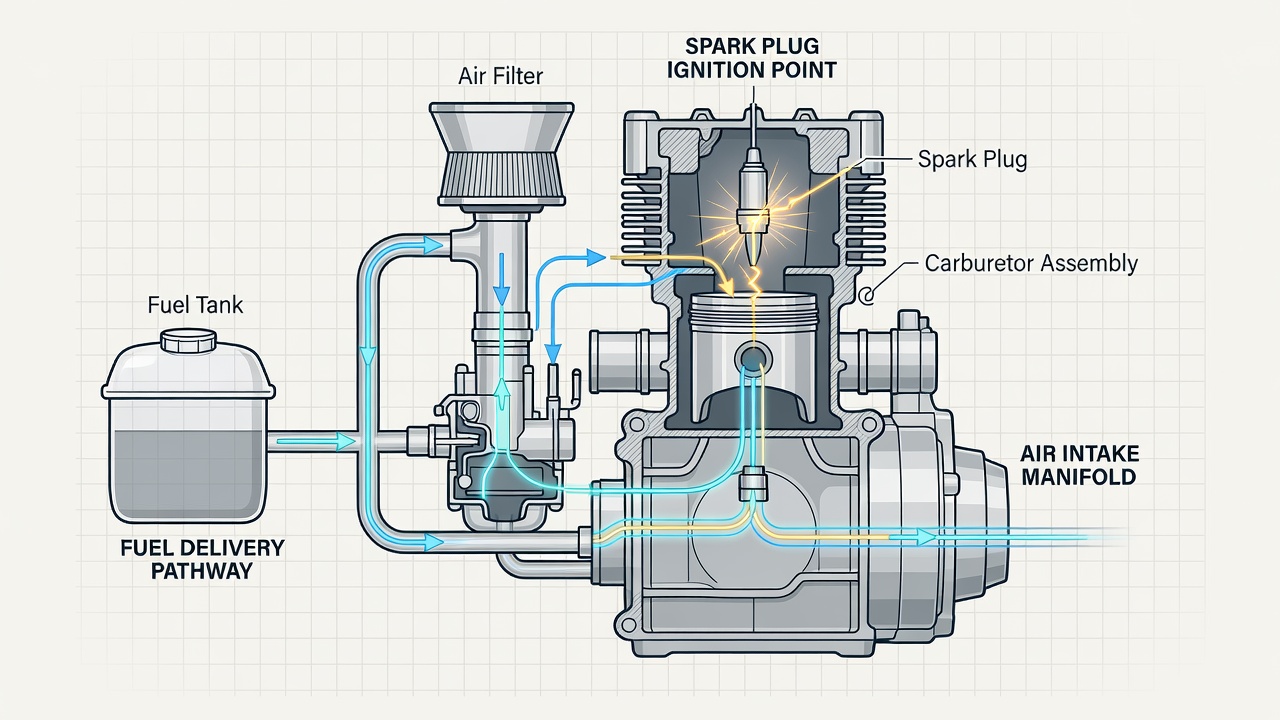
When a small engine like a lawn mower’s starts successfully but dies moments later, it tells us something specific: the engine can produce an initial spark and ignition, but it cannot sustain the chemical reaction needed to keep running. This symptom rules out dead batteries or starter failures—those components got the engine to turn over and fire.
For an engine to run continuously, three core elements must work together:
- Fuel delivery: A steady supply of gasoline reaching the combustion chamber
- Air intake: Sufficient oxygen mixed with that fuel in the proper ratio
- Ignition: A spark plug firing at the right moment to ignite the mixture
When any of these systems is compromised, the engine may start (proving the basic mechanism works) but cannot maintain the combustion cycle. A start-and-die pattern almost always points to fuel or air delivery rather than ignition, since a bad spark plug typically prevents starting altogether.
Most Common Cause: Fuel System Issues
The fuel system is the primary suspect when diagnosing a lawn mower that starts and dies. This is where the majority of problems originate, especially if your mower has been sitting unused for weeks or months.
Stale Fuel and Fuel Degradation
Gasoline degrades over time. Old fuel becomes gummy and forms varnish deposits that clog fuel lines and carburetors. Stale fuel can begin to degrade in as little as 30 days, and the problem accelerates in warm climates or when fuel sits exposed to air. When you pour degraded fuel into your mower, it cannot reach the engine in usable form, causing a start-and-die pattern.
Ethanol-blended gasoline (which is standard in most U.S. fuel) is particularly problematic. Ethanol attracts moisture from the air and can form sticky deposits in the carburetor that choke off fuel flow after an initial start.
Quick fix: Drain old fuel from your mower’s tank and replace it with fresh gasoline. For mowers stored over winter, always drain the fuel completely or use a fuel stabilizer.
Clogged Carburetor
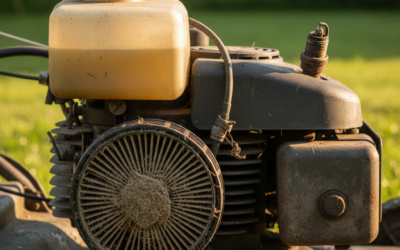
The carburetor mixes fuel and air in the correct proportions before sending the mixture into the engine. When varnish from stale fuel hardens inside the carburetor, fuel passages become blocked. The engine may start on residual fuel in the lines but immediately dies when that small reserve is consumed.
A clogged carburetor is often the culprit after a mower sits idle for a season. The small orifices inside the carb are prone to varnish accumulation.
Signs of a clogged carburetor:
- Engine starts then dies within 3–10 seconds
- Black or excessive smoke from the exhaust
- Difficulty starting even on the first attempt
- Rough idling (if it runs at all)
Cleaning the carburetor: Many lawn mower owners can clean a carburetor themselves using carburetor cleaner spray (widely available at hardware stores). Remove the carburetor, spray the cleaner through all fuel passages, and let it soak for 15–30 minutes. Reassemble and test. If you’re uncomfortable disassembling it, a small engine repair shop can clean it for $50–$100.
Fuel Filter and Fuel Line Blockage
Fuel filters trap debris and water, protecting the engine. Over time, a clogged filter starves the engine of fuel. Similarly, a blocked or pinched fuel line prevents fuel from reaching the carburetor. Both problems produce the start-and-die symptom.
To check the fuel filter: Locate the filter (usually a clear plastic bowl or cartridge near the tank). If it appears dark or discolored, it’s clogged. Filters are inexpensive ($5–$15) and simple to replace on most mowers—usually held in place by clips or a threaded nut.
To check the fuel line: Look for cracks, pinches, or kinks. Fuel lines are typically rubber and degrade over time, especially in sunlight. If a line is damaged, fuel will either leak or be restricted, causing stalling.
Fuel Cap Vent Blockage
The fuel cap on most lawn mowers has a small vent hole that allows air into the tank as fuel is consumed. If this vent is blocked or clogged, a vacuum forms inside the tank, and fuel cannot flow to the carburetor. This creates a start-and-die pattern.
Quick test: With the mower running (or attempting to run), loosen the fuel cap. If the mower immediately runs better, you’ve found the problem. Clean or replace the fuel cap.
Secondary Causes: Air Intake and Ignition
After ruling out fuel system issues, check the air intake and ignition systems. These are less common culprits but still frequent causes of starting problems.
Dirty Air Filter
The air filter prevents dirt and debris from entering the engine. A clogged air filter restricts airflow, creating a fuel-rich mixture that can cause the engine to stall. While a very dirty filter may prevent starting altogether, a moderately dirty filter often allows initial combustion but then causes stalling.
To check the air filter: Locate the filter housing (usually a large plastic dome on top of the engine). Remove it and inspect the filter element. If it appears gray or black and you can’t see light through it, it’s dirty.
Cleaning vs. replacing: Foam and pleated paper filters can be gently cleaned with soap and water, then dried completely before reinstalling. If cleaning doesn’t restore airflow, replace the filter ($10–$30). Never reinstall a wet filter, as moisture will cause stalling.
Faulty Spark Plug
A spark plug that is fouled (carbon-coated), worn, or gapped incorrectly may still produce an initial spark but not a consistent one. This can cause the engine to start and then die as combustion becomes unreliable.
Signs of a bad spark plug:
- Thick carbon buildup (black coating) on the plug electrode
- Wet appearance (fuel fouling)
- Excessive gap between electrodes (wear over time widens this gap)
- Engine start-and-die pattern with occasional rough running
How to check: Remove the spark plug wire and unscrew the plug. Inspect for carbon, moisture, or damage. A new plug costs $5–$15 and takes two minutes to install.
Stuck Choke
The choke restricts air intake when cold-starting the engine, enriching the fuel mixture. Once the engine warms up, the choke should open automatically. A stuck choke—either stuck open or stuck closed—can cause stalling.
- Stuck open: Too much air, too little fuel → engine dies
- Stuck closed: Too much fuel, too little air → black smoke, rough running, stalling
Choke location: It’s typically a lever or dial on the side of the engine or a cable connected to a valve inside the carburetor. Consult your mower’s manual for its exact location. If the choke lever moves freely but the engine still stalls, the internal choke mechanism may be jammed from varnish, pointing back to fuel system cleaning.
Step-by-Step Troubleshooting Guide
Use this systematic approach to diagnose and fix your mower:
Step 1: Check and Replace the Fuel
Empty the fuel tank completely (siphon it out or tip the mower safely). Dispose of old fuel properly at a hazardous waste facility. Fill the tank with fresh gasoline. Try starting. If the mower now runs normally, the problem was stale fuel.
Step 2: Inspect and Clean or Replace the Fuel Filter
Locate the fuel filter. If it’s clogged (dark, discolored), replace it. This is the easiest and most cost-effective troubleshooting step after fuel replacement.
Step 3: Check the Fuel Cap Vent
While the mower is struggling (or running poorly), loosen the fuel cap slightly. If performance improves immediately, the vent is blocked. Clean the cap’s vent hole with a thin wire or compressed air, or replace the cap.
Step 4: Inspect the Air Filter
Remove and examine the air filter. If dirty, clean it gently or replace it. Reinstall only when completely dry.
Step 5: Check the Spark Plug
Remove the spark plug and inspect it. If fouled or worn, replace it. Ensure the new plug is gapped correctly (consult your mower’s manual for the proper gap specification).
Step 6: Clean the Carburetor
If the previous steps haven’t resolved the issue, the carburetor is likely clogged with varnish. Use carburetor cleaner spray on all external fuel passages and jets. If the problem persists, remove the carburetor for a deep soak in cleaner or take it to a small engine repair shop.
When to Seek Professional Help
If you’ve completed all the steps above and your mower still starts and dies, consider professional repair. A small engine technician has specialized tools (like compression testers and fuel flow gauges) to diagnose harder-to-spot issues, such as:
- Internal carburetor damage requiring replacement
- Fuel pump failure (on mowers with fuel pumps)
- Compression loss (worn piston rings or valves)
- Ignition module failure
Professional diagnosis typically costs $50–$100, and repair costs vary widely. For older mowers, weigh repair costs against replacement cost before proceeding.
Prevention: Avoiding Future Start-and-Die Problems
- Use fresh fuel: Don’t store gasoline for more than 30 days without a stabilizer
- Add fuel stabilizer: If storing your mower for winter, add stabilizer to the tank and run the mower to circulate it through the system
- Store properly: Before winter storage, drain the fuel completely or run the engine until all fuel is consumed
- Change the air filter annually: A clean filter costs $15 and takes minutes to install
- Replace the spark plug annually: A new plug is cheap insurance against hard starting and stalling
Frequently Asked Questions
Why does my lawn mower start on the first pull but then die?
A mower that starts easily on the first pull but dies shortly after is usually experiencing fuel delivery issues rather than an ignition or compression problem. A clogged carburetor, a blocked fuel line, or a stuck choke are the most common culprits. The engine fires initially on the residual fuel in the lines or carburetor bowl, but once that fuel is consumed, no fresh fuel arrives to sustain combustion. Check fuel quality and filter condition first.
Can a bad spark plug cause a lawn mower to die after starting?
Yes, but it’s less common than fuel or air issues. A fouled spark plug may produce an initial weak spark, starting the engine, but then fail to fire consistently, causing stalling. More commonly, a truly bad spark plug prevents starting altogether. If your mower starts and dies, and you suspect the spark plug, replace it. It’s a $10–$15 fix and worth trying before deeper carburetor work.
How do I know if my lawn mower carburetor is clogged?
A clogged carburetor typically produces the start-and-die symptom, black or excessive smoke, rough idling, and difficulty starting. The easiest way to confirm is to drain fresh fuel, replace the fuel filter, and try carburetor cleaner on external passages. If the problem persists after fuel and filter replacement, the carburetor is likely the issue. Many small engine shops can confirm carburetor problems with a quick visual inspection.
What is the best fuel to use in my lawn mower?
Use fresh, unleaded gasoline with a fuel stabilizer if the mower will sit unused for more than a week. Avoid ethanol-blended fuels higher than E10 (10% ethanol) if possible; some older mowers are not compatible with higher ethanol blends. Always use the octane grade specified in your mower’s manual (typically 87 octane for most residential mowers). Never use old fuel or fuel treated with water.