Direct Answer: What Is the Best Zero-Turn Mower for You?
The best zero-turn mower isn’t a single model—it’s the machine that matches your property size, terrain, budget, and usage frequency. Residential users typically benefit from mid-range models with 42–54 inch cutting decks and 15–23 horsepower, balancing affordability with capability. Commercial operators and large property owners need heavy-duty machines with 60+ inch decks and 25+ horsepower built for extended daily use. The key decision factors are deck size, engine power, terrain type, transmission type, maintenance requirements, and total cost of ownership—not brand reputation alone.
Understanding Zero-Turn Mowers: How They Work
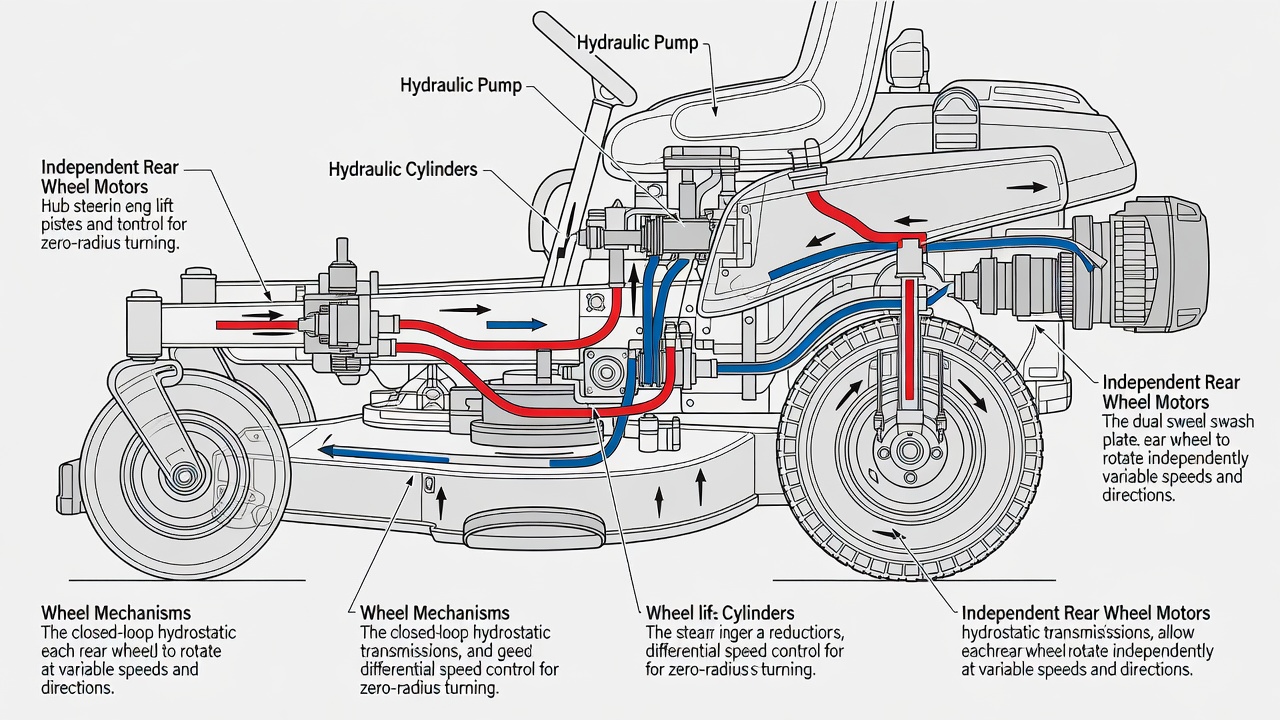
Zero-turn mowers are riding mowers with independent hydraulic controls for each rear wheel, allowing them to pivot on a single axis and turn with virtually zero turning radius. Unlike traditional riding mowers that require multi-point turns, zero-turn machines can rotate 180 degrees within their own footprint, significantly reducing mowing time on properties with obstacles, trees, or complex landscaping.
This design offers three core advantages: faster mowing cycles (especially on residential properties), superior maneuverability in tight spaces, and reduced operator fatigue from fewer steering adjustments. The trade-off is higher initial cost and more complex hydraulic systems that require professional maintenance.
Key Factors to Consider Before Buying
Before comparing specific models, establish your core requirements:
1. Property Size and Terrain Type
- Residential lawn (under 2 acres): 42–48 inch deck, hydrostatic transmission, lighter frame
- Large residential property (2–5 acres): 48–54 inch deck, 18–23 HP, comfortable suspension
- Small commercial (5–10 acres): 54–60 inch deck, 24–28 HP, reinforced frame
- Large commercial/landscaping (10+ acres): 60–72 inch deck, 28+ HP, commercial-grade hydraulics
2. Budget and Usage Frequency
Residential zero-turn mowers typically cost $3,500–$8,000 and are used 20–50 hours per season. Commercial models range from $8,000–$20,000+ and operate 200–2,000+ hours annually. Total cost of ownership (purchase + fuel + maintenance + repairs) should drive your decision, not sticker price alone.
3. Terrain Characteristics
Flat, well-maintained lawns accommodate most zero-turn models. Sloped terrain, rough ground, or wet conditions require:
- Wider wheelbase for stability
- Better traction tires
- Lower center of gravity (smaller deck)
- All-wheel drive (for slopes exceeding 15 degrees)
4. Comfort and Control Preferences
Extended mowing sessions demand ergonomic seating, responsive steering, vibration isolation, and accessible controls. Premium models include suspension seats, cruise control, and adjustable armrests—features worth evaluating during an in-person test run.
Residential vs. Commercial: Different Specifications and Requirements
Zero-turn mowers designed for residential use prioritize cost-efficiency and ease of maintenance. Commercial models prioritize durability, uptime, and performance under heavy use.
| Specification | Residential Model | Commercial Model |
|---|---|---|
| Deck Size | 42–54 inches | 54–72 inches |
| Engine Horsepower | 15–23 HP | 24–35+ HP |
| Cutting Height Range | 0.75–4 inches (6–8 positions) | 0.5–4.5 inches (10+ positions) |
| Fuel Tank Capacity | 3–6 gallons | 8–12+ gallons |
| Frame Construction | Steel frame, lighter gauge | Reinforced steel, thicker gauge |
| Transmission Type | Hydrostatic (variable speed) | Hydrostatic or mechanical (fixed speeds) |
| Warranty (Standard) | 2–3 years | 3–5 years |
| Expected Annual Use | 20–50 hours | 200–2,000+ hours |
Residential machines use lighter hydraulic systems and simpler belt-and-pulley designs to reduce cost. Commercial models employ heavy-duty pumps, reinforced decks, and industrial-grade components designed to survive thousands of operating hours with minimal downtime.
Essential Specifications Explained
Cutting Deck Size: Finding the Right Width
Deck size directly affects mowing speed and maneuverability. A 42-inch deck fits through standard residential gates and navigates tight landscaping but requires more passes on large properties. A 54-inch deck covers ground 29% faster but is harder to maneuver around obstacles. A 72-inch commercial deck is fastest on open terrain but impractical for residential properties with trees or fencing.
Quick rule: 1–2 acre properties benefit from 42–48 inch decks; 2–5 acres suit 48–54 inch decks; 5+ acres justify 54–72 inch decks if the terrain allows.
Engine Horsepower and Cutting Performance
Horsepower determines how effectively the mower handles thick grass, hills, and dense growth. Underpowered machines bog down on slopes or in tall grass, producing uneven cuts and stressing the engine.
- 15–18 HP: Flat residential lawns, well-maintained grass
- 18–23 HP: Sloped terrain, thicker grass, larger residential properties
- 24–30 HP: Commercial properties, rough ground, heavy-duty daily use
- 30+ HP: Large commercial operations, extremely dense growth, commercial landscaping
Transmission Type: Hydrostatic vs. Mechanical
Hydrostatic transmission (variable displacement pump) offers smooth, infinitely adjustable speed control and is standard on residential and mid-range commercial models. Operators control forward and reverse speed with lever or pedal inputs without shifting. Benefits: ease of use, smooth operation, responsive steering. Drawbacks: slightly higher fuel consumption, more complex hydraulics requiring professional service.
Mechanical transmission (gear-driven) uses fixed speeds and requires gear shifting, common on heavy-duty commercial models. Benefits: lower maintenance, better fuel economy under steady-state use. Drawbacks: jerky operation, less responsive steering, steeper learning curve.
Residential users should prioritize hydrostatic transmission for comfort and control. Commercial operators may choose mechanical transmission if they operate at constant speeds on open terrain.
Fuel Tank Capacity and Consumption
Residential models typically hold 3–6 gallons and consume 0.5–1.5 gallons per hour. A 5-gallon tank provides 3–10 hours of runtime depending on horsepower and terrain. Commercial models hold 8–12 gallons and are designed for all-day operation without refueling on large properties.
Calculate fuel costs before purchase: a 20 HP mower consuming 1 gallon per hour costs approximately $180–$240 annually in fuel for 50 hours of residential use, or $2,400–$3,200 for 200 hours of commercial use.
Cutting Height Adjustment and Mulching Capability
Residential mowers typically offer 6–8 height positions (0.75–4 inches). Commercial models provide 10+ positions for precise turf management. Mulching capability (shredding clippings and returning them to the lawn) improves soil health and reduces disposal. Verify that your candidate models support the height range and mulching features your lawn requires.
Residential vs. Commercial: Different Requirements
Choosing between residential and commercial zero-turn mowers depends less on brand and more on honest assessment of your property and usage patterns.
Residential Suitability
Choose a residential zero-turn mower if you:
- Own or maintain a property under 5 acres
- Mow 20–50 hours per season
- Have a relatively flat lawn with moderate obstacles
- Budget $3,500–$8,000 for equipment
- Prioritize ease of use and lower maintenance complexity
- Have convenient home storage and access to local dealers
Commercial Suitability
Choose a commercial zero-turn mower if you:
- Maintain 5+ acres regularly or operate a landscaping business
- Mow 150+ hours per season
- Need consistent uptime and rapid problem resolution
- Budget $8,000–$20,000+ for professional-grade equipment
- Have access to commercial repair facilities
- Can justify total cost of ownership based on revenue generation
Total Cost of Ownership: Beyond the Purchase Price
The sticker price represents only 30–40% of a zero-turn mower’s lifetime cost. Calculate true ownership expenses:
Fuel and Operating Costs
A 20 HP residential mower consuming 1 gallon per hour at $3.50 per gallon costs $70 per mowing session (assuming 2 hours). Annual residential fuel cost: $1,400–$3,500. Commercial annual fuel cost: $7,000–$14,000+.
Maintenance and Repairs
Annual maintenance includes oil changes, air filter replacements, spark plug service, and blade sharpening—typically $200–$400 for residential machines, $500–$1,200 for commercial models. Expected major repairs (hydraulic system, transmission) occur after 500+ hours and cost $1,500–$4,000.
Warranty Coverage
Residential zero-turn mowers typically include 2–3 year limited warranties; commercial models offer 3–5 years. Extended warranty plans ($500–$1,500) can reduce unexpected repair costs.
Total Cost Calculation Example (Residential)
- Purchase price: $6,000
- Annual fuel (50 hours): $1,750
- Annual maintenance: $300
- 5-year total: $6,000 + (5 × $1,750) + (5 × $300) = $14,250
- Cost per operating hour: $14,250 ÷ 250 hours = $57/hour
A commercial landscaper using 500 hours annually benefits from higher hourly spread of fixed costs and justifies premium equipment more readily than a homeowner.
Terrain Compatibility and Performance
Flat Terrain
Most residential and commercial zero-turn mowers perform well on flat, well-maintained lawns. Focus on deck size, cutting height adjustability, and operator comfort.
Sloped Terrain
Slopes exceeding 15 degrees require wider wheelbase models, lower center of gravity, and ideally all-wheel drive for traction. Mow perpendicular to slope contours to prevent lateral rollover. Some zero-turn mowers are unsafe on slopes steeper than 20 degrees—verify manufacturer guidance before purchase.
Rough or Wet Ground
Uneven terrain increases suspension stress and wear on hydraulic systems. Wet ground reduces traction; all-terrain tires (compared to standard lawn tires) improve grip. Mow when grass is dry to prevent turf damage and ensure operator safety.
Transmission Type Performance Across Use Cases
Hydrostatic transmissions excel in frequent start-stop mowing (residential properties with obstacles). Mechanical transmissions excel in steady-state mowing on open commercial properties. Verify transmission type matches your mowing pattern before purchase.
Step-by-Step Guide to Finding Your Best Match
Step 1: Define Your Property Profile
Measure acreage, note terrain (flat, sloped, rough), identify obstacles (trees, buildings, water features), and document grass type and condition. This data eliminates unsuitable models immediately.
Step 2: Establish Your Budget and Usage Frequency
Determine total cost of ownership tolerance and expected annual operating hours. Residential users typically budget $4,000–$7,000; commercial operators $10,000–$18,000+.
Step 3: Evaluate Transmission and Horsepower Requirements
Based on terrain and usage, select horsepower (15–23 HP for residential, 24+ HP for commercial) and transmission type (hydrostatic for most users, mechanical for steady-state commercial operations).
Step 4: Identify Deck Size and Cutting Features
Select deck size (42–54 inches residential, 54–72 inches commercial), verify cutting height range, and confirm mulching capability if required.
Step 5: Verify Local Dealer Support and Service Availability
Identify authorized dealers within 30 minutes of your location, confirm parts availability, and review warranty terms and service pricing. Machines sold by dealers with poor service support create long-term frustration regardless of initial quality.
Step 6: Test-Operate Candidate Models
Request in-person demonstrations or rental trials (many dealers offer 1–2 day rentals for $50–$100). Evaluate steering responsiveness, comfort, visibility, control intuitiveness, and overall feel.
Step 7: Compare Total Cost Ownership and Financing Options
Calculate fuel, maintenance, and repair costs over 5–10 years. Explore financing options (dealer financing, equipment loans) and consider buy vs. rent trade-offs for occasional users.
Frequently Asked Questions
Q: How often should I perform maintenance on a zero-turn mower?
A: Basic maintenance occurs after every 50 operating hours: check oil level, inspect air filter, and verify tire pressure. Oil changes typically occur every 100–200 hours or annually (whichever comes first). Blade sharpening occurs every 20–50 hours depending on grass and terrain. Hydraulic fluid inspection occurs annually. Refer to your owner’s manual for manufacturer-specific intervals; commercial models often require more frequent service than residential machines.
Q: Can I use a residential zero-turn mower for commercial landscaping work?
A: Residential machines can handle light commercial use (mowing 2–3 properties weekly) for 1–2 seasons before component failures become common. Commercial landscapers who run machines 200+ hours annually should invest in commercial-grade equipment designed for this duty cycle. Using residential equipment for heavy commercial work will void warranties and result in expensive failures.
Q: What’s the difference between hydrostatic and mechanical transmission, and which should I choose?
A: Hydrostatic transmission (pump-based) offers smooth, infinitely variable speed control and is ideal for residential users who appreciate ease of operation and responsive steering. Mechanical transmission (gear-based) requires shifting between discrete speeds and is common on heavy-duty commercial models prioritizing fuel economy and simplicity. Residential users should choose hydrostatic; commercial operators can choose mechanical if they operate at constant speeds on open terrain.
Q: How do I determine the right horsepower for my property?
A: Start with your terrain and grass type. Flat lawns with well-maintained grass require 15–18 HP. Sloped terrain, dense grass, or rough ground require 18–23 HP for residential use. Commercial operators should add horsepower for their deck size: multiply deck width (in inches) by 0.4 to estimate minimum horsepower (54 × 0.4 = 21.6 HP minimum for 54-inch deck). This provides conservative baseline; verify manufacturer guidance for your specific grass and climate conditions.