

Quick Answer: How To Choose The Best Lawn Tractor?
The best lawn tractor is the one that matches your lot size, terrain, grass conditions, and extra jobs, not a generic winner. It is typically a front-engine riding machine with a mid-mount cutting deck and more light towing capability than a basic riding mower, but less frame strength than a garden tractor. Compare deck quality, power source, transmission, comfort, safety, and…
What counts as a lawn tractor
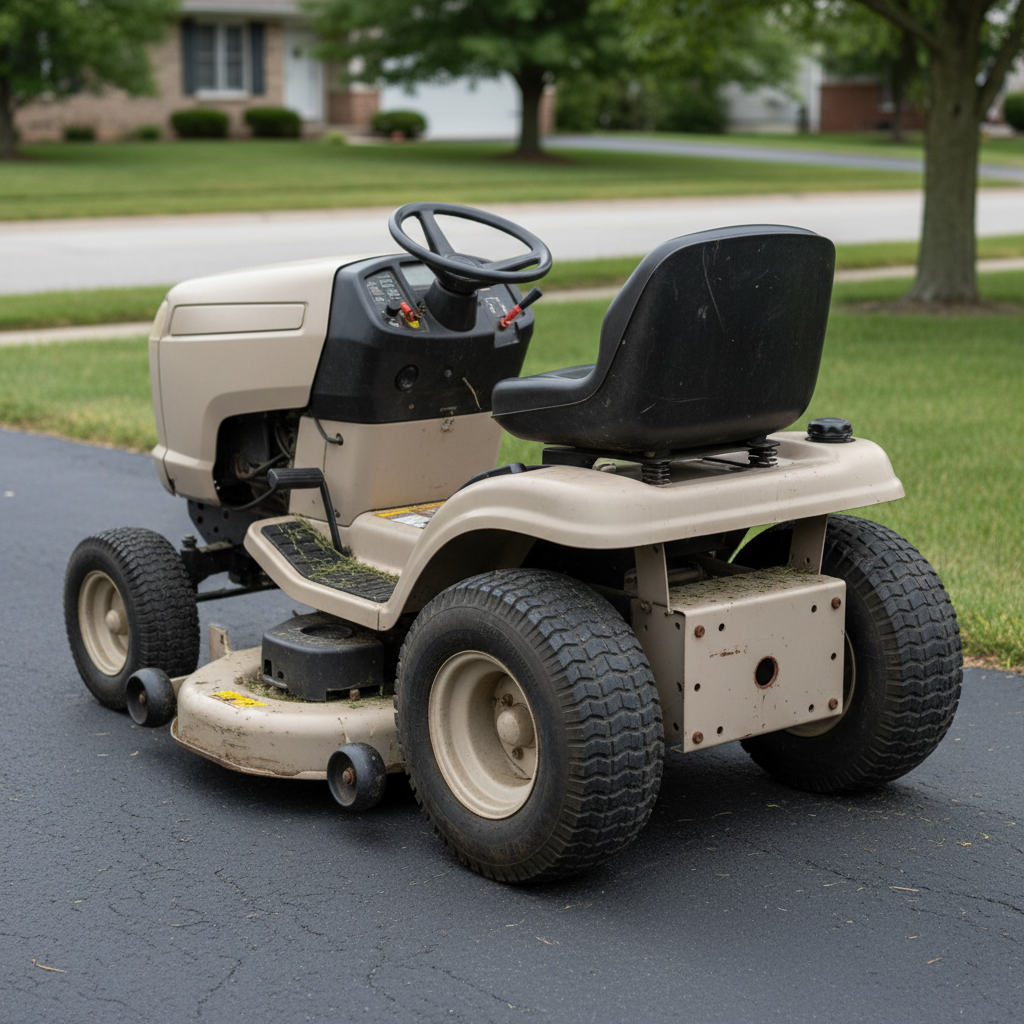
People searching for the best lawn tractors often start with ranked model lists. That mixes unlike machines and treats marketing names as industry standards. In everyday retail language, a lawn tractor is a residential riding machine with the engine in front of the operator, a mid-mount cutting deck under the frame, and enough hitch or drawbar capacity for light yard tools. It sits between a simple riding mower and a heavier garden tractor. Exact horsepower bands, weights, and hitch classes vary by maker, so judge the category by layout and duty rather than a badge.
How a lawn tractor differs from a rear-engine riding mower
A basic riding mower, especially a rear-engine design, is built first to cut grass. The operator usually sits over or just ahead of the engine, the frame is lighter, and implement options are limited. A lawn tractor typically offers a more tractor-like seating position, a hooded front engine, and a clearer path for a tow-behind attachment such as a cart. The market blurs these labels. Two machines can share a showroom aisle and still differ in frame stiffness, deck support, and what they can pull. Compare seating and engine layout, how the deck is mounted, and whether the hitch looks like an afterthought.
How it differs from a garden tractor or compact utility tractor
A garden tractor is usually a step up in frame stiffness, axle and hitch strength, and the range of ground-engaging or high-load tools it can support. Heavy tillage, serious grading, and large loaders generally belong in that class, or on a compact utility tractor, not on a mowing-focused lawn tractor. Compact utility tractors add agricultural-style hitches, hydraulics, and a broader implement ecosystem. They also take more space, more maintenance discipline, and a different operator skill set. If your extra work is a cart, a spreader, or occasional light snow work that the specific model supports, a residential lawn tractor may be enough. If you plan to work soil hard or lift heavy loads, you are already outside this category.
Where zero-turn mowers fit
A zero-turn mower is related but different. Dual-lever or similar steering lets the machine pivot in place, which is efficient on open, relatively flat turf. Many zero-turns are weaker as four-season tractors: towing geometry, weight distribution, and attachment support often trail a lawn tractor. If most of your time is open-lawn mowing and you rarely need implements, a zero-turn can be the better mowing tool. If you want one machine for mowing plus light seasonal work, a lawn tractor is often the more coherent class. Tight ornamental beds, steep banks, and wet, rutted ground can make either layout a poor fit.
What residential lawn tractors do well
They are built to mow home lawns for extended sessions, carry a mid-mount deck that can use side discharge, mulching, or bagging, and handle light property tasks when the model is designed for them. They are not hillside machines, farm tractors, or passenger vehicles. Treat any overlap with garden tractors or premium riding mowers as common market blurring, not a hard standard.
| Machine | Typical layout | Usually stronger at | Often a weaker fit for |
|---|---|---|---|
| Rear-engine riding mower | Operator over or near a rear engine; mowing-first frame | Straightforward residential cutting with fewer extras | Towing, seasonal implements, longer work sessions |
| Lawn tractor | Front engine, mid-mount deck, light hitch or drawbar | Home mowing plus carts and simple tow-behind tools | Heavy tillage, large loaders, steep or highly obstructed ground |
| Garden tractor | Heavier frame and stronger implement support | Demanding attachments and rougher yard work | Buyers who only need a mower and tight storage |
| Zero-turn mower | Independent drive wheels and a tight turning layout | Fast, open, relatively flat turf mowing | Four-season tractor work and some towing jobs |
Start with the property, not the model name
A good choice starts with the lot you actually mow, not a headline feature. Lawn size, obstacles, slope, grass conditions, storage, and extra jobs decide whether a lawn tractor is suitable at all. Those details are personal. Write them down before you compare machines, because two neighbors with similar street frontage can need completely different equipment.
When a lawn tractor fits better than a walk-behind or a zero-turn
A walk-behind still makes sense on small, highly detailed yards, on ground that is too steep or broken for a rider, or when storage is a closet-sized shed. A lawn tractor becomes more attractive when mowing takes long enough that fatigue, heat, and uneven walking become the limiting factors, and when the turf is open enough for a mid-mount deck to travel in reasonably straight passes. A zero-turn can beat either machine on large, open, relatively flat lawns if mowing speed is the only job. Choose a lawn tractor when you also want a seated machine that can pull light tools and stay stable in a more conventional steering layout. There is no universal acreage cutoff. Open ground, session length, and extra tasks matter more than a round number on a listing. For broader ecosystem context, read through our operational guide on z890 vs x870e motherboard.
Trees, beds, gates, and storage
Walk the property with a tape measure and a sketch, not a brochure. Note gate openings, shed doors, trailer ramps, fence lines, play equipment, and the tightest path between beds. A wider cutting deck can reduce passes on open turf, but it can also force extra trimming, scuff bark, or fail to fit the only storage route you have. Low branches, raised beds, and stone edging punish wide decks and poor visibility to the deck edge. If the yard is a maze of islands, a smaller deck or a different machine class may finish faster than a wide tractor that cannot turn cleanly. Also measure turning space at the end of each main run. A lawn tractor needs room to complete a loop without chewing the same corner twice.
Terrain and moisture
Uneven ground, wet soil, hidden holes, and hills affect traction, deck float, and rollover risk more than brand prestige. Soft ground marks easily under a heavy rider. Scalping shows up on humps if the deck cannot follow the turf. Damp shade and thick thatch load the blades and the drive system. Side slopes, creek banks, and drop-offs are safety problems, not merely comfort problems. If the lawn is routinely slick, rutted, or pitched, you may need a different tire setup, a different machine class, or professional mowing, not a more aggressive sales pitch. Manufacturer slope guidance is model- and condition-specific. Do not borrow a neighbor’s “it handled my hill” story as a rating. For troubleshooting and reliability insights, consult our in-depth marshall stanmore iii vs harman kardon onyx studio 8 report.
Non-mowing jobs that change the class
List the extra work you will actually do in a normal year. Towing a cart of mulch, pulling a spreader, or moving light snow with a supported blade or thrower can justify a stronger frame, a better hitch, and a lawn tractor instead of a mowing-only rider. Regular soil working, large loaders, and serious grading usually belong on a garden tractor or compact utility tractor. Be honest about frequency. A tool you will use twice may not be worth stepping up a class, while a weekly winter or hauling job should change the shopping list before you look at seat color.
Cutting deck, discharge, and finish quality
The cutting deck determines how long mowing takes and how the lawn looks afterward. Advertised width is only the starting point. Deck structure, discharge path, height control, and how easily you can clean and service the underside matter more over a season than a marketing name on the stamping.
What to compare besides cutting width
Look at how the deck is hung, whether it has anti-scalp wheels or rollers, and whether the baffles and blade overlap look designed to move clippings instead of packing them. Check deck height adjustment: it should be repeatable, reachable from the seat or a clearly marked lever or dial, and fine enough for your grass type. Inspect spindle housings and belt routing for access, not just for shine. Steel thickness, rust protection, and reinforcement at the leading edge affect longevity, but published gauges and blade-tip speeds are only useful if you can verify them for that exact model. Treat cut-quality slogans as marketing unless you have an independent source.
Side discharge, bagging, and mulching
Side discharge is the default for many owners because it is simple and keeps moving in long or damp grass. It leaves windrows if the turf is thick, and it can throw debris toward beds, sidewalks, and windows. Bagging collects clippings and leaves for a cleaner surface, but it adds emptying time, weight, and a capacity limit; wet grass fills bags quickly and can strain the deck and drive. Mulching recuts clippings and returns them to the turf. It works best when grass is not excessively long or wet and when you keep a steady pace. Many decks can convert among these modes with plugs, blades, or chutes. Confirm that the conversion parts exist for the specific deck and that you are willing to change them when conditions change.
Everyday use and first-season maintenance access
After the novelty fades, owners live with underside cleaning, belt changes, and blade service. A deck that will not tilt, lift, or give hand access becomes a rust trap. Packed clippings hold moisture against steel and around each spindle. Ask how you reach the blades without improvising, whether wash ports exist and whether you will actually use them as the manual describes, and how the belt covers come off. Poor access does not show up on a showroom floor. It shows up in year two, when the cut turns ragged because a hidden baffle is caked or a spindle bearing was ignored.
Engines, fuel, and battery options
Power-source choice is a duty-cycle and ownership decision, not a hunt for the largest headline number. Gasoline still dominates longer sessions and attachment work. Battery models shift the burden to charge planning, pack care, and available electrical service. Neither is automatically greener, quieter, or more reliable as a class. Compare how you will start, run, store, and service the machine in your climate.
Traits that matter more than a horsepower sticker
Sustained power under load, cooling margin, and how the engine or motor behaves when the deck is in thick grass matter more than a round horsepower figure. Bagging, hills, wet turf, and tow-behind work all raise the demand. Look for clear service points, a governor or control response that does not bog immediately in heavier grass, and enough reserve that you are not constantly slowing to keep the blades at speed. Exact displacement, torque, voltage, and amp-hour figures are only meaningful for a named model with a published sheet. If a listing omits them, do not invent a comparison from memory of another machine.
Climate, noise, storage, and fuel versus battery
Hot summers punish cooling systems and operators. Cold mornings punish gasoline starting and can reduce battery output. If you store the machine in an attached garage, noise and exhaust at startup matter more than they do in a distant barn. Local noise expectations and any equipment-use rules are site-specific; check them rather than assuming a battery model is automatically allowed at dawn. Gasoline models typically refuel in minutes and keep going through a long Saturday. Battery models need a charging plan that matches your longest mowing day, including spare time if the pack must rest or if you split the yard. Storage space for chargers and spare batteries is part of the property question, not an accessory footnote.
Ownership tasks and when more power is actually needed
Gasoline ownership includes fuel freshness, air filters, oil and plug service as the manual specifies, and safe fuel storage. Battery ownership includes charge habits, pack temperature, connector care, and eventual pack replacement planning. Electrical and fuel-system work has real fire and injury risk; stay at owner-manual level and use a qualified technician for anything beyond basic care. You need more sustained power when the grass is dense, the ground rises, you bag regularly, or you add implements that draw from the same machine. You do not need more power to win a specification argument on a flat, open lawn that you cut before it gets away from you.
Transmission, traction, and control
How the machine drives, stops, and holds a line on your turf affects fatigue as much as engine choice. A lawn tractor that is awkward to inch around a swing set will not get used carefully, no matter how wide the deck is.
Hydrostatic versus geared transmissions
A hydrostatic transmission uses fluid drive so the operator can change speed smoothly, often with a pedal, without shifting gears. That is generally easier for frequent speed changes, tight obstacles, and the kind of inching you do near beds. A geared transmission uses selectable gear ratios and is often simpler in layout. It can be less convenient in stop-and-go yards because you change speed in steps and may use a clutch or similar control. Neither type automatically lasts longer. Longevity depends on load, heat, maintenance, and how the machine is used on hills and in heavy grass. Avoid comparing unsourced ground-speed numbers; what you can control smoothly on your lawn matters more than a catalog maximum.
Traction, tires, and slopes
Tire tread, inflation in the recommended range, and weight distribution affect grip on damp turf and loose soil. Some machines offer limited-slip or other traction aids that help a driven wheel keep moving instead of spinning. Those aids can reduce lawn damage in slick spots. They do not turn a lawn tractor into a hillside machine. Four-wheel drive, where offered, is still limited by stability and by the operator’s ability to keep the machine from tipping. Any slope-capability claim is manufacturer- and condition-specific. Wet grass, hidden holes, and side-hills remain hazardous even with aggressive tread.
Steering, turning, and what to verify on a demonstration
Steering effort, turning radius, and whether cruise or pedal controls let you hold a pace without constant correction all change how tired you are after an hour. Sit on the machine. Can you see the deck edge and the front tires? Can you reach deck height adjustment, blade engagement, and the parking brake without looking away from the path? Does the hydrostatic pedal or gear selector let you creep without lurching? On a dealer lot or a used seller’s driveway, drive a figure-eight at walking speed and a straight line on the most representative surface available. Listen for binding, delayed drive engagement, or a brake that does not hold on a mild incline. A test sit is not a lab test, but it will expose controls that look fine in photos and feel wrong in use.
Comfort, build, and attachments that change the value
Comfort and service access decide whether you maintain a good cut. Attachments decide whether the tractor is a seasonal tool or only a Saturday mower. Neither should be judged from a lifestyle photo.
Comfort on longer sessions
Seat support, vibration, steering shake, and the ability to see the front of the deck matter once mowing lasts more than a quick pass. A steeper steering wheel, poorly placed pedals, or a seat that bottoms out on seams will shorten how carefully you mow. Blade-engagement controls should be obvious and easy to shut off. Cup holders and cruise control are secondary. If you mow in heat, shade from a genuine sun canopy or a well-placed work time can matter more than another inch of advertised deck width. Try the seat with the same footwear you will use in the yard.
Judging frame, spindles, and service access without lab tests
You cannot certify steel in a parking lot, but you can look for consistent welds, protected wiring, guarded belts, and grease or service points you can actually reach. Grasp the deck and check for obvious play at each spindle. Look under the machine for crushed harnesses, rust at deck lips, and oil or fuel staining. Ask how the battery, filters, and belts come out. A machine that requires gymnastics for routine service will be neglected. None of this replaces a shop inspection, and none of it proves a year-by-year lifespan.
Realistic attachments versus garden-tractor work
Common extras on a lawn tractor include carts, spreaders, simple lawn rollers, and, on some models, snow blades or other seasonal tools. A mid-mount deck already uses the machine’s power take-off, or PTO, to spin the blades; other driven tools are only realistic when the specific model provides the right drive, mounting points, and capacity. Heavy tillage, large loaders, and serious grading usually exceed lawn-tractor design. Do not assume hitch standards, lift capacities, or PTO ratings from the category name. Confirm implement fitment with that model’s manual or dealer. A tow-behind attachment that fits the pin but overloads the frame is not a compatible tool.
Parts and dealer support
A stranded tractor is an expensive lawn ornament. Before you buy, ask where belts, blades, spindles, filters, and deck wheels come from, how long common parts stay available, and who will diagnose a no-start or a weak drive after the first season. For used machines, incomplete service history is a warning, not a bargain feature. If two machines both fit the property, clearer service support and documented maintenance beat unsourced reputation.
Safety limits and when not to buy a lawn tractor
Riding equipment can cause severe injury. A lawn tractor can roll on slopes, drop-offs, and slick banks. Blades, belts, hot exhaust, fuel, and battery systems all create household hazards. No residential tractor is “safe on hills” as a general claim, and no article can replace the operator’s manual for that machine.
Slopes and surfaces that make a lawn tractor a poor choice
Rollover risk rises on side-hills, near retaining walls, on wet banks, and anywhere a wheel can drop into a hole or off a curb. Mow up and down slopes only if the manual for that machine allows it, and avoid steep side-hills. If you cannot describe the slope in the manual’s terms, or if the ground is broken, slick, or bordered by water and drop-offs, choose a different method: a walk-behind on a safer line, a different machine class designed for the terrain, or a professional crew. Do not treat traction aids, wide tires, or a heavier frame as permission to ignore the machine’s limits.
Operator-presence, blade-stop, and stability features
Treat an operator-presence control as essential, not optional. These switches are meant to stop the blades or the engine if the operator leaves the seat. Blade-stop behavior, parking brakes, and interlocks that prevent starting in unsafe conditions are also essentials. Never bypass them. A lawn tractor is not a passenger vehicle and not a toy. Keep children and bystanders away from the area, and never allow unsupervised child access to keys, batteries, or stored equipment. If a used machine has defeated interlocks, missing guards, or a disabled operator-presence control, do not operate it until a qualified technician restores the safety systems.
Fuel, charging, and household storage
Store fuel in approved containers, away from living spaces and ignition sources, and follow the machine’s and container labels. Hot exhaust and spilled gasoline start fires. Battery charging needs a dry, ventilated place consistent with the pack maker’s instructions; damaged cords and improvised adapters are not a workaround. Blade service can cut deeply even when the engine is off; remove the key, wait for all motion to stop, and follow the manual’s blocking and service steps. If a task requires lifting the machine, opening a fuel system, or diagnosing high-voltage battery packs, use a qualified professional.
When another machine is the better answer
Choose a walk-behind when the yard is small, steep, or so detailed that a rider will spend its time reversing. Choose a zero-turn mower when the lawn is open and relatively flat and you do not need tractor-style implements. Choose a garden tractor or compact utility tractor when attachments and ground engagement are the real job. Hire the work out when the property combines slopes, obstacles, and time pressure that make any home rider a poor safety or quality fit. A lawn tractor is the wrong category if the main need is tight ornamental mowing, very steep ground, or heavy tillage.
A practical way to choose without a ranked list
Once the category is clear, compare a few candidates against your property notes instead of hunting for a universal winner. Incomplete spec sheets are common. A written checklist keeps the conversation on fit.
Write this down before you shop
- A simple property sketch: open runs, obstacles, gates, shed doors, and the tightest storage path.
- Terrain notes: shade, wet spots, seams, banks, and any slope you are not willing to ride.
- Grass conditions: how long it gets between cuts, and whether you prefer side discharge, mulching, or bagging.
- A deck-width range that can pass your gates and still cover the open areas without endless trimming.
- Fuel or battery preference based on session length, storage, climate, and charging or fueling reality.
- Transmission preference: hydrostatic convenience versus a simpler geared layout.
- Must-have attachments, and an honest note if those jobs actually require a garden tractor.
- Service access: who will maintain the machine and where parts will come from.
Inspect or test on a new or used machine
On any machine, sit, reach every frequent control, and look at belt and deck access. Confirm that operator-presence and blade-stop functions are intact. On used machines, treat visible deck rust, spindle play, cracked tires, smoke, warning lights, damp belts, and missing service records as inspection themes. They are reasons to walk away or to budget a professional inspection, not a protocol for diagnosing the tractor yourself. Do not start a machine with known fuel leaks, damaged battery packs, or defeated safety switches.
Compare two options when specs are incomplete
If a listing omits deck hang, transmission type, or implement support, ask for those facts in writing. Compare the machines on the jobs you listed, not on a stray horsepower number. Prefer the option that fits the tightest gate, keeps the operator in a stable seating position, uses a discharge method you will actually maintain, and has a clearer path to belts, blades, and dealer help. When both fit, documented maintenance and support outweigh forum reputation.
Ownership after purchase
Plan blade sharpening or replacement, underside cleaning, tire checks, and the fluid or battery care the manual specifies. Keep children away from stored keys and charging areas. Do not expect one pass to handle any grass height, and do not expect a residential lawn tractor to last a promised number of years regardless of use. The machine that remains easy to service and safe to operate on your ground will outperform a more famous model that does not fit the property.
Technical Standards and Compliance
For practical maintenance advice and setup requirements, check our guide on how to clean carb on lawn mower.
Mechanical safety standards, operational tolerances, and protective gear guidelines align with benchmark specifications established by the American National Standards Institute (ANSI).









