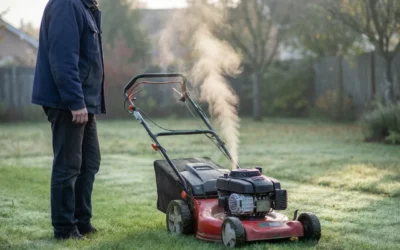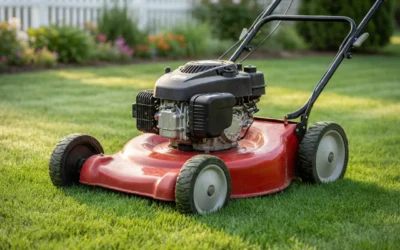
A lawn mower that starts and then stops usually has a fuel, air, or spark problem. The most common causes are a clogged carburetor, a dirty air filter, a bad spark plug, a blocked fuel line, a faulty fuel cap vent, or a tripped safety switch. Check these in order: first ensure fresh fuel and a clean fuel cap vent, then inspect the air filter and spark plug, and finally clean the carburetor. If the mower stalls only when you engage the blades or move it, suspect a safety switch or a fuel delivery issue under load.
Start With the Basics: Fuel, Air, and Spark
Before you take anything apart, start with the simplest checks. A small engine needs three things to keep running: fuel, air, and spark. If any of these are interrupted after the engine starts, the mower will stall. Working through these basics in order will help you find the problem quickly without unnecessary disassembly.
First, check the fuel. Fuel that has been sitting for more than a few weeks can break down and lose its combustibility. Old fuel can also leave varnish deposits that clog the carburetor. If the fuel in your mower is old, drain the tank and replace it with fresh gasoline. Also, check the fuel level. Some mowers have a fuel pickup that sits near the bottom of the tank, and if the level is low, the engine may starve for fuel as soon as it starts.
Next, check the fuel cap vent. The fuel cap has a small vent that allows air to enter the tank as fuel is drawn out. If this vent is blocked, a vacuum forms in the tank and fuel flow stops. This can cause the mower to start and then die after a few seconds. To test, loosen the fuel cap and try starting the mower. If it runs with the cap loose, the vent is blocked. Clean the vent with a small wire or replace the cap.
Then, inspect the air filter. A dirty or clogged air filter restricts airflow, which upsets the fuel-air mixture and can cause the engine to stall. Remove the air filter and hold it up to the light. If it is visibly dirty or blocked, clean it or replace it. A foam filter can be washed with soapy water and oiled, while a paper filter should be replaced when dirty.
Finally, check the spark plug. Remove the spark plug and inspect the electrode. If it is black, oily, or covered in carbon, it may not be firing consistently. Clean the electrode with a wire brush and check the gap with a feeler gauge. If the plug is worn or cracked, replace it. Also, make sure the spark plug wire is firmly connected to the plug and that the wire is not damaged.
The Carburetor: The Most Common Culprit
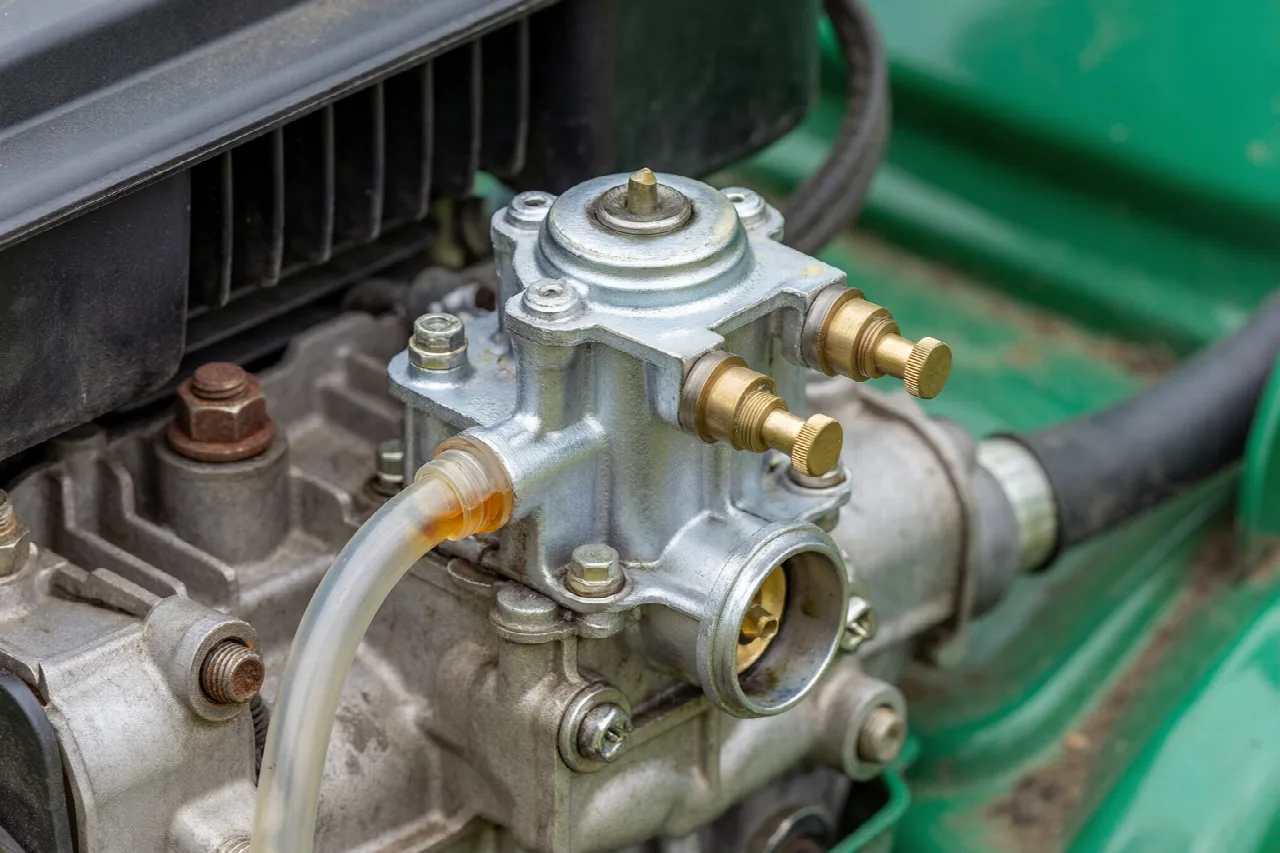
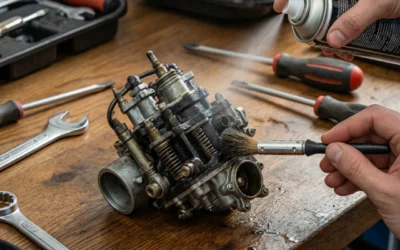
If the basics check out, the carburetor is the most likely cause of a start-then-stop problem. The carburetor mixes fuel and air in the correct ratio for combustion. Over time, small passages inside the carburetor can become clogged with varnish and debris from old fuel. When these passages are blocked, the engine may receive enough fuel to start but not enough to keep running.
A clogged carburetor often causes the mower to start, run for a few seconds, and then die as the fuel in the float bowl is consumed. Once the bowl empties, the engine starves because no new fuel can flow through the blocked passages. This pattern of starting and then stalling is a classic sign of carburetor trouble.
Cleaning a small-engine carburetor is a manageable DIY task. First, remove the air filter and the air filter housing to access the carburetor. Disconnect the fuel line and remove the carburetor from the engine. Remove the float bowl from the bottom of the carburetor. You will likely find a small jet or nozzle inside. Use a carburetor cleaner spray and a small wire or a jet-cleaning tool to clear the passages. Be careful not to damage the tiny openings.
After cleaning, reassemble the carburetor and reattach it to the engine. Reconnect the fuel line and replace the air filter. Start the mower and let it run. If it stays running, the clog was the issue. If it still stalls, the carburetor may need a rebuild kit with new gaskets and seals, or it may need to be replaced entirely. Carburetor replacement is often more cost-effective than a rebuild for older mowers.
Fuel Line and Fuel Delivery Problems
Fuel delivery issues can also cause a mower to start and then stop. The fuel line carries gasoline from the tank to the carburetor. If this line is blocked, kinked, or cracked, fuel flow will be restricted. A kinked line can pinch off fuel delivery, especially when the mower vibrates during operation. Inspect the fuel line along its entire length for kinks, cracks, or soft spots.
The fuel filter is another component to check. Many mowers have a small inline fuel filter between the tank and the carburetor. This filter traps dirt and debris, but it can become clogged over time. A clogged filter restricts fuel flow and can cause the engine to stall after starting. If the filter looks dirty or dark, replace it. Fuel filters are inexpensive and easy to swap out.
Fuel starvation can also occur if the fuel pickup tube in the tank is blocked or broken. This tube draws fuel from the bottom of the tank. If it is clogged with debris or has fallen off, the engine will not receive a steady supply of fuel. Remove the fuel tank and inspect the pickup tube, cleaning or replacing it as needed.
If the mower runs for a few seconds and then dies, and you have confirmed the fuel cap vent is clear and the fuel is fresh, fuel starvation is likely. A quick test is to prime the mower and start it, then immediately squeeze the primer bulb again while the engine is running. If the engine revs up or stays running, it is not getting enough fuel on its own, pointing to a fuel delivery problem.
Safety Switches and Stalling Under Load
If your mower stalls specifically when you engage the blades or when you move it, a safety switch may be the culprit. Modern mowers have several safety switches designed to stop the engine in unsafe conditions. These include the blade engagement switch, the seat switch on riding mowers, and the handle switch on walk-behind mowers.
The blade engagement switch stops the engine if the blades are engaged while the operator is not in position. On a walk-behind mower, this switch is often connected to the handle. If the handle is released, the engine stops. If this switch is faulty or misaligned, it may cut the engine even when the handle is held properly. On a riding mower, the seat switch performs a similar function, stopping the engine if the operator leaves the seat with the blades engaged.
If the mower dies when you engage the blades, the problem could also be a fuel delivery issue under load. Engaging the blades puts a load on the engine, requiring more fuel. If the carburetor or fuel system cannot supply enough fuel under load, the engine will stall. This is different from a safety switch issue, which would typically stop the engine immediately and without warning.
To test a safety switch, you can use a multimeter to check for continuity. Disconnect the switch and test it in both positions. The switch should show continuity when in the safe position and no continuity when in the unsafe position. If the switch does not respond correctly, replace it. Safety switches are relatively inexpensive and easy to install. If you are not comfortable testing electrical components, a small-engine shop can diagnose the issue quickly.
When to Seek Professional Repair
While many start-then-stop problems can be fixed at home, some situations call for professional help. If you have checked the fuel, air, spark, carburetor, fuel lines, and safety switches and the mower still stalls, the problem may be more complex. Internal engine issues, such as a worn valve, a damaged piston ring, or a failing ignition coil, require specialized tools and knowledge to diagnose and repair.
Signs that the problem is beyond basic DIY repair include persistent stalling despite new fuel and a clean carburetor, unusual noises from the engine, excessive smoke, or a loss of power that gets worse over time. If the mower has significant hours of use, internal wear may be the cause. In these cases, attempting further DIY repairs could cause more damage.
Another reason to seek professional help is if you are not comfortable working with fuel or electrical systems. Carburetor cleaning involves handling gasoline and small parts that can be easily lost or damaged. Safety switch testing involves working with electrical components. If you are unsure about any step, a professional can complete the repair safely and correctly.
When taking your mower to a small-engine shop, describe the symptoms clearly. Note when the mower stalls, whether it happens immediately or after a few seconds, and whether it stalls under load. This information helps the technician narrow down the cause. Most shops can diagnose and repair common stalling issues in a single visit, and the cost is often reasonable compared to the value of a reliable mower.