Yes, a chainsaw bar can generally be replaced with a larger one, but compatibility and safety considerations are critical. A larger bar can extend your cutting reach and allow you to tackle bigger logs, but it must match your saw’s specifications, and the saw’s engine power must be sufficient to drive it effectively. Installing an oversized bar can strain the motor, reduce cutting efficiency, increase vibration, and raise kickback risk.
What Does ‘Larger Bar’ Mean on a Chainsaw?
In chainsaw terminology, ‘larger’ typically refers to bar length—the distance from the tip of the bar to the point where it mounts to the engine housing. A 16-inch bar is longer (and therefore larger) than a 12-inch bar. However, ‘larger’ can also refer to two other dimensions: bar kerf and bar gauge. Bar kerf is the width of the cut the chain makes, measured in fractions of an inch, and is determined by the chain thickness. Bar gauge is the thickness of the bar itself at its mounting point and also depends on the chain specification.
In most contexts, when people ask about putting a ‘larger bar’ on a chainsaw, they mean a longer bar—one with greater cutting length. This is the primary dimension that affects reach and cutting capacity. However, all three dimensions are interdependent: you cannot simply bolt a longer bar onto your saw; you must ensure the bar’s gauge and kerf match what your saw is designed to handle. Attempting to use a bar with incompatible kerf or gauge specifications will cause the chain to bind, the saw to stall, or the bar to sit improperly.
Compatibility Requirements for a Larger Bar
Before installing a larger bar, you must verify five compatibility factors: bar length, pitch, gauge, drive links, and mounting pattern. Bar length compatibility is set by your chainsaw manufacturer and is listed in your owner’s manual. Some saws can accept bars within a range (for example, 16 to 20 inches), while others are fixed to a single size. Never exceed the manufacturer’s maximum recommended bar length, as this can cause unsafe operation.
Chain pitch—the distance between the drive links on the chain—must exactly match your bar and sprocket. Common pitches include 0.325 inch, 3/8 inch, and 0.404 inch. Bar gauge, the thickness of the bar’s drive slot where the chain sits, must also match your chain’s thickness. A chain with the wrong gauge will not fit properly in the bar’s slot. Drive links refer to the number of links on the chain; a longer bar requires a longer chain with more drive links to reach all the way around.
Finally, check the mounting pattern. Most modern chainsaws have a standardized mount, but older or specialized models may differ. The bar’s nose (the pointed tip) should sit comfortably in the sprocket tip without interference, and the bar’s rear mounting holes must align with the mounting studs on your saw’s engine housing. If the larger bar has a different mounting pattern, it will not fit, and forcing it can damage the saw.
Power and Motor Size Limitations
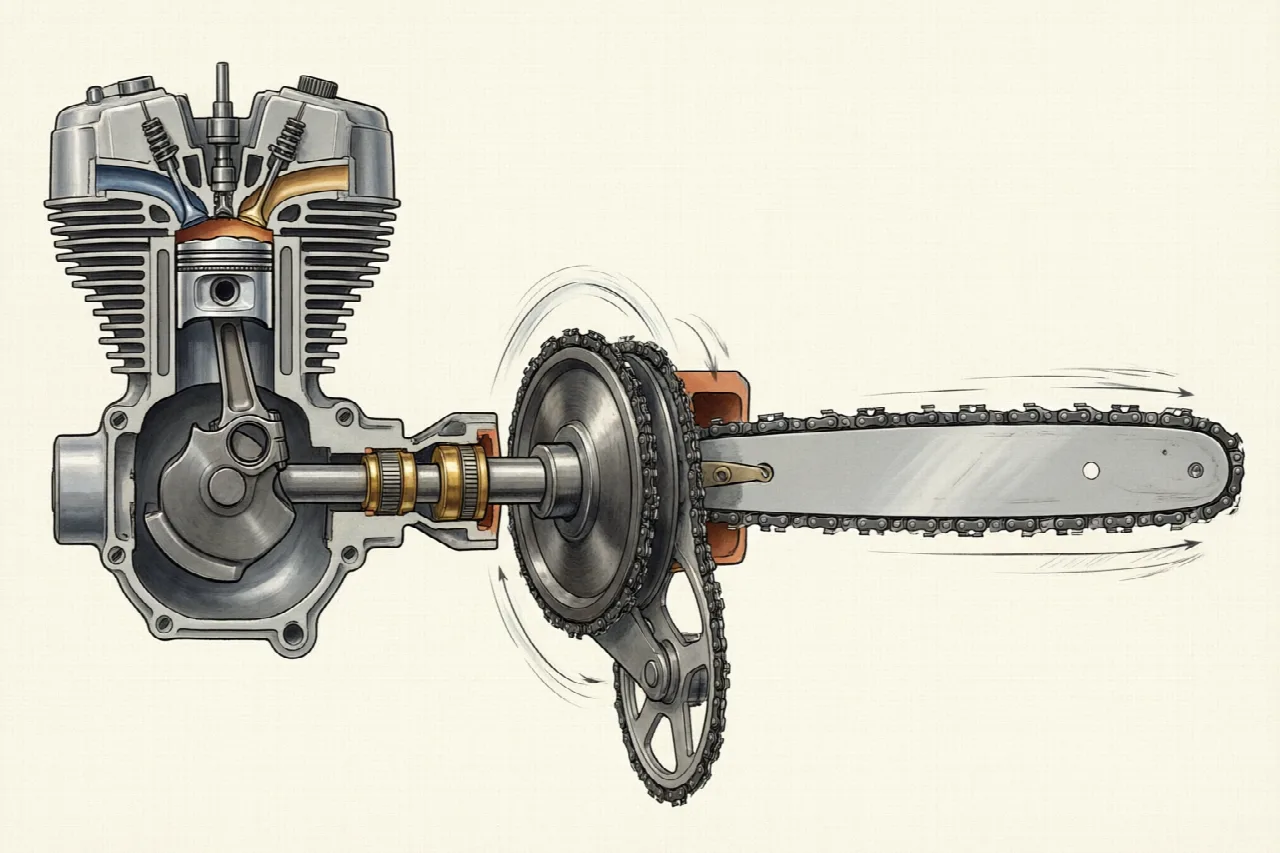
Chainsaw engines are rated by displacement, typically measured in cubic centimeters (cc). Engine displacement directly correlates to power output, and power is a limiting factor for bar length. A 30cc saw is designed to deliver a certain amount of torque to the chain; installing a bar that is too long requires more torque than the engine can provide. When the motor lacks sufficient power, the engine stalls under load, cuts slowly, produces more exhaust smoke, and consumes fuel inefficiently.
As a general guideline, smaller saws (under 40cc) are typically limited to bars of 14 to 16 inches. Mid-range saws (40 to 60cc) usually accommodate bars up to 18 to 20 inches, while large professional saws (60cc and above) can handle bars of 20 inches or longer. These are rough estimates; always consult your owner’s manual for the exact recommendations for your model. Using a bar that exceeds your saw’s power rating will accelerate engine wear, shorten the saw’s lifespan, and create operational frustration.
It’s tempting to assume that a slightly longer bar will work fine, but chainsaw performance degrades noticeably when the bar length approaches or exceeds the manufacturer’s limit. The saw may still start and run, but it will feel underpowered, and you’ll be fighting it during cuts.
Chain and Sprocket Changes Needed
Whenever you install a larger bar, you almost always need a longer chain. A longer bar has more surface area for the chain to contact, so the chain must have additional drive links to span the entire bar length. If you attempt to use your old chain on a larger bar, it will not reach all the way around, and the bar will not be supported properly. A chain that is too short can jump off the bar during operation, which is a serious safety hazard.
The new chain must match the pitch and gauge of the larger bar. Verify these specifications before ordering a replacement chain. Most local outdoor equipment dealers can help you select the correct chain once you tell them your bar’s pitch, gauge, and the number of drive links required.
Sprocket changes may also be necessary, depending on the bar upgrade. The sprocket is a toothed wheel that drives the chain. If your new bar requires a different chain pitch than your old bar, the sprocket may need to be changed as well. For example, if you upgrade from a 0.325 inch pitch chain to a 3/8 inch pitch chain, your sprocket must also be changed to the corresponding pitch. Some saws have interchangeable sprockets for this reason, while others are fixed. Consult your manual or a dealer if you’re unsure whether your saw has an interchangeable sprocket.
Safety and Performance Trade-offs
Installing a larger bar introduces safety and performance trade-offs that deserve careful consideration. Longer bars increase leverage during cutting, which amplifies kickback risk—the sudden upward jerk that can occur if the chain binds on a log. A longer bar also increases vibration, which can lead to hand fatigue and loss of control during extended use. The saw may become harder to maneuver, especially if you’re working overhead or in confined spaces.
From a performance standpoint, a larger bar on an underpowered saw will cut more slowly and less cleanly. The chain speed may drop, and the saw may require more fuel to produce the same cutting results. In some cases, the engine may not have enough power to keep the chain moving at the correct speed, resulting in scorched or burned wood on the cut surface.
A larger bar also affects the saw’s balance and weight distribution. Longer bars place more weight at the tip, which shifts the center of gravity forward and can make the saw feel nose-heavy during operation. This increases fatigue and reduces precision, particularly for pruning or cutting thinner branches.
How to Choose the Right Larger Bar
Start by checking your owner’s manual for the manufacturer’s recommended bar length range for your specific saw model. This is the definitive guide; never go beyond the maximum length listed. If your manual recommends a range (such as 14 to 18 inches), you can safely upgrade to any size within that range without worrying about motor compatibility.
Next, consider your typical cutting tasks. If you mainly cut firewood logs that are 8 to 12 inches in diameter, a modest increase in bar length (from 12 to 14 inches, for example) may be sufficient. If you’re planning to tackle much thicker material, you may need a larger upgrade. However, resist the urge to max out your saw’s bar range; going to the upper limit is rarely necessary for most homeowner jobs and reduces cutting efficiency.
Verify that you can source a replacement chain in your area and that the price is reasonable. Longer chains are more expensive than shorter ones, so factor replacement chain costs into your decision. Finally, test drive a larger bar if possible—borrow or rent a saw with your intended bar size and cut with it for a while. This will help you confirm that the size feels right for your needs before you commit to purchasing a new bar.