How Do You Drive a Zero Turn Mower? (Beginner’s Step-by-Step Guide)
To drive a zero turn mower, start with a pre-start safety check: sit in the seat, fasten the seatbelt, and engage the parking brake. Start the engine, then release the parking brake. Push both steering levers (lap bars) forward to go straight, pull one lever back to turn, and pull both levers back to stop or reverse. Never turn at full speed, and practice in an open, flat area before mowing a real lawn.
What Is a Zero Turn Mower and How Does the Steering Work?
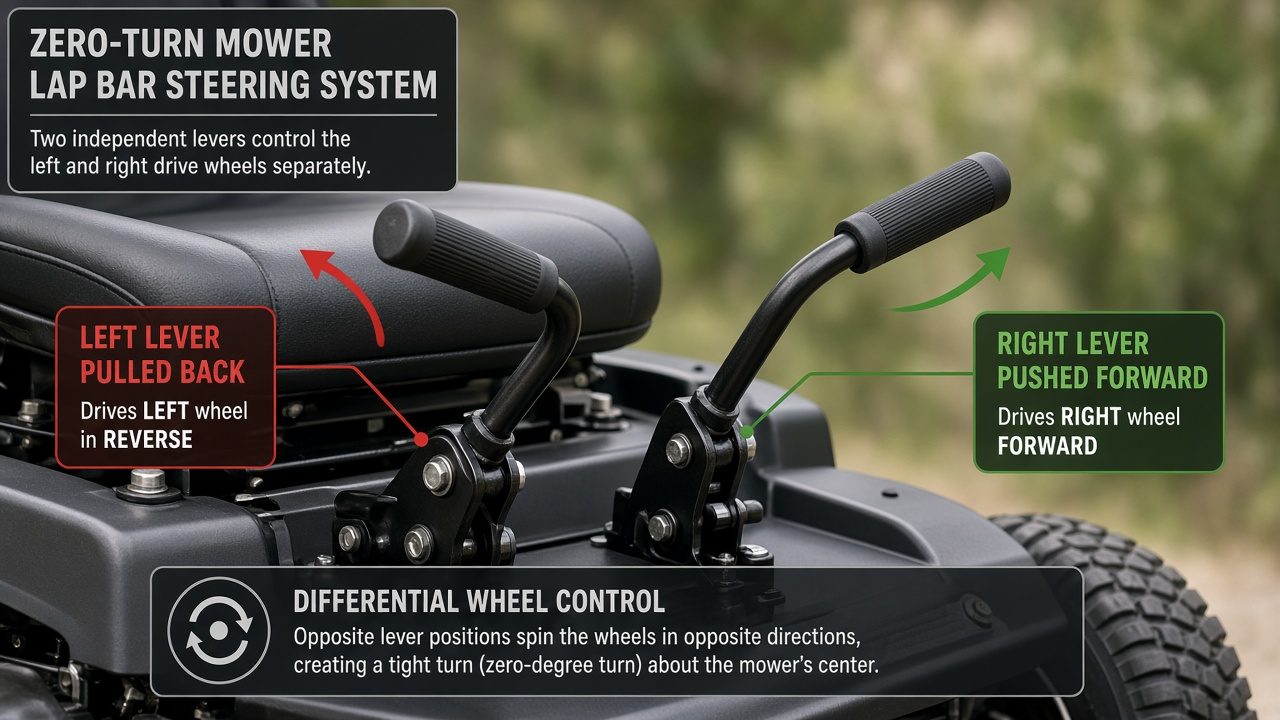
A zero turn mower is a type of riding lawn mower that uses a unique steering system to achieve exceptional maneuverability. Unlike a standard lawn tractor, which uses a steering wheel to turn the front wheels, a zero turn mower is controlled by two steering levers, often called lap bars. These levers independently control the speed and direction of the two rear drive wheels.
When you push both levers forward equally, both rear wheels turn forward at the same speed, moving the mower in a straight line. To turn, you manipulate the levers differently. Pulling one lever back while keeping the other forward causes the wheel on the side of the pulled lever to slow down or reverse, while the other wheel continues forward. This differential in wheel speed creates a tight turning radius. By pulling one lever back far enough, that wheel can stop or even spin backward while the opposite wheel continues forward, allowing the mower to pivot in place—hence the “zero turn” name.
Pre-Start Safety Checklist Before Driving
Before you even think about starting the engine, a quick safety checklist is essential. This establishes safe habits from your very first use.
- Sit in the Seat: The operator presence system (also called a seat switch) is a critical safety feature. The engine and blades will not engage or will shut off if you are not properly seated.
- Fasten the Seatbelt: Always fasten the seatbelt. It keeps you securely in the seat, which is especially important on uneven terrain.
- Engage the Parking Brake: Ensure the parking brake is set before starting the engine. This prevents the mower from moving unexpectedly.
- Check the Area: Look around for people, pets, toys, rocks, or other debris that could be dangerous if thrown by the mower blades.
- Lower the Deck: For most mowing, you’ll want the cutting deck in its lowest or desired cutting height position before starting.
Step-by-Step: How to Start and Drive a Zero Turn Mower
Once you’ve completed the safety checklist, follow these core steps to operate the mower.
1. Starting the Engine
With the parking brake engaged and the steering levers in the neutral (outward) position, turn the key or press the start button. The engine should start. Allow it to warm up for 30-60 seconds.
2. Releasing the Parking Brake and Engaging the Blades
Release the parking brake. The mower is now ready to move. If you intend to mow, engage the blade clutch (PTO) switch, usually a yellow or red knob, to start the cutting blades spinning.
3. Driving Straight
To move forward, push both steering levers forward evenly and smoothly. The further you push them, the faster you go. To drive straight, keep equal pressure on both levers. To slow down, pull both levers back toward the neutral position.
4. Turning
To turn left, pull the left steering lever back slightly while keeping the right lever forward. The mower will begin to curve left. For a sharper turn, pull the left lever back further. To turn right, do the opposite: pull the right lever back while keeping the left forward. Remember, the more you pull one lever back, the tighter the turn.
5. Stopping and Reversing
To come to a complete stop, pull both steering levers back to the neutral (center) position. To reverse, pull both levers back past the neutral position. The mower will move backward. Always look behind you before reversing.
Key Factors to Consider for Safe Maneuvering
Understanding these factors is crucial for maintaining control and preventing accidents.
- Speed Control During Turns: Turning at full speed is a common and dangerous beginner mistake. High speed during a sharp turn can cause the mower to skid, lose traction, or even tip over on uneven ground. Always reduce speed before initiating a turn.
- Throttle Management: Start with the throttle in a mid-range setting. This provides enough power without making the controls overly sensitive. As you become more comfortable, you can adjust the throttle for optimal performance.
- Smooth Inputs: Avoid jerky movements with the steering levers. Smooth, gradual pushes and pulls give you better control and a cleaner cut.
Slope Safety: Driving on Hills and Inclines
Operating a zero turn mower on slopes requires extra caution due to the higher center of gravity and the potential for rollovers.
- Assess the Slope: Check the mower’s manual for its maximum recommended slope angle. Never exceed this limit.
- Mow Up and Down, Not Across: When mowing a hill, drive straight up and straight down the slope. Mowing across the face of a steep hill significantly increases the risk of a side rollover.
- Reduce Speed: Use a slower throttle setting on hills to maintain better control.
- Watch for Traction Loss: If the mower begins to slide or lose traction, disengage the blades and slowly drive it to a flat area to reassess. Do not try to correct a slide by jerking the levers.
Practice Drills for First-Time Operators
Before tackling your lawn, spend 15-20 minutes practicing in a wide-open, flat area like a driveway or empty part of the yard.
- Figure-Eights: Practice making smooth figure-eight patterns. This helps you get a feel for how pulling one lever affects the turn radius.
- Parallel Lines: Try driving in straight, parallel lines to simulate mowing rows. This builds muscle memory for keeping the levers even.
- Stop-and-Go: Practice starting, driving forward a short distance, and coming to a smooth stop. This helps you master speed control.
Common Beginner Mistakes to Avoid:
- Turning Too Fast: As mentioned, this is the top mistake. Slow down for every turn.
- Overcorrecting: If you start to veer off course, make small, smooth adjustments rather than jerking a lever.
- Ignoring the Operator Presence System: Never try to bypass or ignore the seat switch. It’s there to protect you.
- Mowing Wet Grass: Wet grass can clog the deck, reduce cut quality, and create slippery conditions, making the mower harder to control.
Frequently Asked Questions
How long does it take to get comfortable driving a zero turn mower?
Most beginners become comfortable with the basic controls after 1-2 hours of practice in an open area. Mastering precise maneuvering around obstacles and on varied terrain may take a few mowing sessions.
Is it safe to drive a zero turn mower on slopes?
Zero turn mowers can handle moderate slopes, but they have a higher rollover risk than lawn tractors. Always mow up and down the slope (not across), reduce speed, and consult your owner’s manual for the maximum recommended incline angle. Avoid slopes that are too steep for you to walk up comfortably.
What does the operator presence system do?
The operator presence system is a safety switch located under the seat. It ensures the engine and/or blades will not run unless an adult is properly seated in the operator’s position. If you leave the seat, the system will shut off the engine or disengage the blades to prevent accidents.
Can I use a zero turn mower for tasks other than mowing?
While primarily designed for mowing, some zero turn mowers can be equipped with attachments like baggers, dethatchers, or even small snow blowers. However, their primary strength is efficient, maneuverable lawn mowing. Always check your model’s compatibility with specific attachments.