How Often Should You Mow Your Lawn? Quick Answer
During peak growing season, mow your lawn weekly or whenever grass grows to about one-third taller than your target cutting height. The exact frequency depends on your grass type, climate zone, and season. Cool-season grasses (northern climates) need weekly mowing in spring and fall but can stretch to 10–14 days in summer. Warm-season grasses (southern climates) peak in mid-summer and may need mowing twice weekly during peak growth. Winter dormancy typically requires no mowing. The universal principle is the one-third rule: never cut more than one-third of the grass blade in a single mowing.
The One-Third Rule: Universal Mowing Guidance
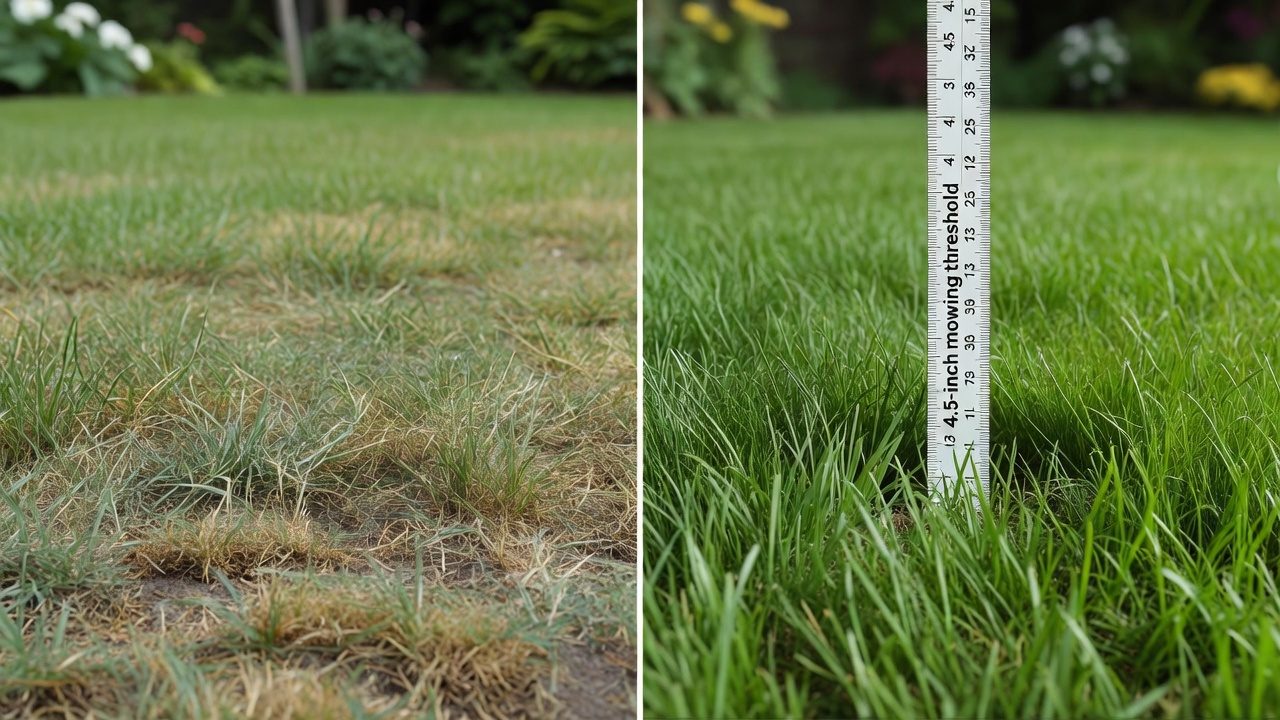
The one-third rule is the foundation of healthy lawn care. It means you should never remove more than one-third of the grass blade length in a single mowing. For example, if your target cutting height is 3 inches, you should mow when grass reaches approximately 4.5 inches.
Why this matters: Cutting more than one-third of the blade stresses the grass plant, reduces photosynthesis capacity, and weakens root systems. Over-cutting causes scalping (bare patches), exposes soil to weeds and disease, and slows recovery. Stressed grass becomes susceptible to fungal infections, drought damage, and pest infestations.
How to apply it: Determine your target cutting height based on your grass type (typically 2–3 inches for cool-season, 1–2 inches for warm-season). Mow before grass exceeds one-third above that height. Use a ruler or measure stick to monitor growth if you’re unsure.
Cutting height matters too: Taller grass (3–3.5 inches for cool-season) develops deeper roots, shades soil to suppress weeds, and tolerates drought better. Cutting too short creates a weak lawn and requires more frequent mowing to maintain appearance.
Mowing Frequency by Growing Season
Grass doesn’t grow at a constant rate year-round. Growth cycles vary dramatically by season, making seasonal mowing schedules essential.
Spring Mowing (Peak Growing Season for Cool-Season Grasses)
In spring, cool-season grasses experience their most vigorous growth phase. Soil warming, increased daylight, and spring moisture create ideal conditions. Mow weekly during spring for most cool-season lawns. Some fast-growing lawns may need mowing twice weekly in late spring. Begin mowing once grass reaches 1.5 times your target height.
Warm-season grasses are still dormant or just breaking dormancy in spring, so southern lawns may not need mowing until late spring or early summer.
Summer Mowing (Variable Frequency)
Summer mowing depends entirely on grass type and regional climate.
Cool-season grasses (North): Growth slows in summer heat. Many cool-season lawns can stretch to every 10–14 days during peak summer. Extremely hot periods may slow growth even more, allowing 2–3 week intervals. Reduce cutting height slightly (by 0.5 inches) to compensate for heat stress, but never violate the one-third rule.
Warm-season grasses (South): Summer is peak growing season. Mow weekly, and during the hottest weeks (June–July), you may need twice-weekly mowing to keep up with growth. Maintain lower cutting heights (1–2 inches) appropriate to warm-season varieties.
Fall Mowing (Return to Weekly Schedules)
Fall is the second peak growth season for cool-season grasses. As temperatures cool and fall moisture arrives, growth accelerates again. Return to weekly mowing in fall. Continue weekly schedules into late fall until grass growth slows with freezing temperatures.
For warm-season grasses, fall triggers dormancy. Mowing frequency drops sharply as growth slows.
Winter Mowing (Little to None)
Cool-season grasses go dormant in winter and enter a dormant brown state. No mowing is needed. Warm-season grasses also go fully dormant. Winter mowing is unnecessary for most lawns and risks damaging dormant grass. However, if an unseasonably warm spell triggers growth, you can mow if needed—just follow the one-third rule.
Cool-Season vs. Warm-Season Grasses: Mowing Schedules
Your grass type determines the mowing calendar more than any other factor.
Cool-Season Grasses (Northern Climates)
Common types: Fescue, bluegrass, ryegrass, and bentgrass thrive in northern regions and transitional zones.
Growth pattern: Two peak growth periods—spring and fall. These grasses slow dramatically in summer heat and stop entirely in winter.
Typical mowing schedule:
- Spring: Weekly (or twice weekly in late spring)
- Summer: Every 10–14 days (heat slows growth)
- Fall: Weekly
- Winter: No mowing (dormant)
Cutting height: 2.5–3.5 inches year-round.
Why the schedule varies: Cool-season grasses evolved in northern climates where summers are short and mild. Hot summers stress them, slowing growth. Spring and fall coolness trigger maximum growth.
Warm-Season Grasses (Southern Climates)
Common types: Bermuda, zoysia, St. Augustine, buffalograss, and bahiagrass dominate southern lawns.
Growth pattern: Single peak growth period in mid-summer. These grasses slow in spring and fall, then fully dormant in winter.
Typical mowing schedule:
- Spring: Every 10–14 days (slow growth as they break dormancy)
- Summer: Weekly or twice weekly (peak growth)
- Fall: Every 10–14 days (slowing dormancy)
- Winter: No mowing (fully dormant, brown)
Cutting height: 1–2 inches year-round (lower than cool-season).
Why the schedule varies: Warm-season grasses thrive in heat and sunlight. They’re dormant during cool months but explode with growth when soil temperatures consistently exceed 70°F.
How to Identify Your Grass Type
Unsure which type you have? Check your lawn in mid-winter. Cool-season grasses remain green; warm-season grasses turn brown. Ask your local cooperative extension office, take a photo to a local nursery, or check what was recommended for your zip code when the lawn was installed.
Regional and Climate Mowing Schedules
Geographic location trumps all other factors for determining a baseline mowing schedule.
Northern Regions (Zones 3–5)
Cool-season grasses dominate. Mowing schedule: Mid-April through October. Peak mowing is weekly May–June and September–October. Summer (July–August) allows 10–14 day intervals.
First mow: When soil dries enough to mow without compacting (late April). Last mow: Late October or early November, depending on frost date.
Southern Regions (Zones 8–10)
Warm-season grasses dominate. Mowing schedule: April through October, sometimes into November in warmer zones. Peak mowing is weekly June–August, potentially twice weekly during heat spikes. Spring and fall allow 10–14 day intervals.
First mow: Late April when bermuda and zoysia break dormancy. Last mow: October or November depending on first frost date.
Transitional Zones (Zones 6–7)
These areas sit between cool and warm season regions. Lawns may contain a mix of both grass types or a specific adapted type (like tall fescue or zoysiagrass blends). Mowing schedules follow the dominant grass type but may be more variable. Typical schedule: Mid-April through November, with weekly mowing May–September and 10–14 day intervals in spring and fall shoulder seasons.
High-Altitude and Mountain Regions
Cool-season grasses suit high elevations. Growing seasons are shorter (May–September). Mowing schedule: Weekly or every 10 days during the brief growing season. Dormancy is longer.
Adjusting Mowing Frequency for Lawn Condition
Standard schedules assume an established lawn in good health. Adjust for specific situations.
Newly Seeded Lawns
New grass grows slowly in its first season. Wait until seedlings reach 3–4 inches tall (typically 6–8 weeks after seeding) before first mowing. Use a sharp blade and mow high (3–4 inches) to avoid damaging tender shoots. Then follow standard schedules, but expect slower growth for the first year. Newly seeded lawns may only need mowing every 2–3 weeks until established.
Established Lawns
Mature, healthy lawns with dense turf follow standard seasonal schedules. Established lawns are resilient and tolerate the one-third rule consistently.
Neglected or Recovering Lawns
Thin, weedy, or recovering lawns need gentler treatment. Mow more frequently (every 7–10 days) but at higher-than-normal cutting heights. This reduces stress, maintains density, and crowds out weeds. Gradually reduce cutting height as the lawn thickens. Recovery typically takes 4–6 weeks of consistent care.
Fast-Growing Lawns
Some lawns naturally outpace the standard schedule—especially if heavily fertilized or overwatered. If your lawn consistently reaches one-third above target height faster than weekly, adjust to 5–6 day intervals or increase cutting height slightly (within reason).
Factors That Increase or Decrease Mowing Frequency
Beyond season and grass type, several variables push mowing schedules faster or slower.
Fertility and Fertilizer
Heavy nitrogen fertilization accelerates growth significantly. A lawn fed high-nitrogen fertilizer may need mowing every 5–7 days instead of weekly. If frequent mowing is burdensome, apply moderate nitrogen rates on a consistent schedule (typically spring and fall for cool-season, late spring and midsummer for warm-season).
Irrigation and Water
Well-watered lawns grow faster than drought-stressed lawns. Consistent irrigation (1–1.5 inches weekly) promotes vigorous growth and requires mowing on the faster end of the schedule. Drought or sparse watering slows growth and may allow 10–14 day intervals.
Sunlight vs. Shade
Full-sun lawns grow faster than shaded areas. Shade slows photosynthesis and growth, so shaded sections may need mowing every 10–14 days while sunny areas need weekly attention. If your lawn is partially shaded, mow on the faster schedule to keep the entire lawn uniform.
Soil Quality
Lawns on rich, well-draining soil with good organic matter grow faster than compacted, poor-quality soil. Improve soil with annual topdressing or compost to encourage healthy growth—which means more frequent mowing but a more attractive lawn.
Grass Age and Density
Young, vigorously growing lawns grow faster than aging lawns. Thin lawns may grow faster per unit area but appear slower because overall coverage is sparse. Dense, mature lawns with established root systems grow steadily and predictably.
Frequently Asked Questions
Can I mow my lawn more frequently than weekly?
Yes, mowing more frequently is actually beneficial if your lawn grows faster than the standard weekly schedule. The one-third rule applies regardless of frequency. If grass reaches one-third above your target height in 5 days, mow every 5 days. More frequent mowing with smaller clippings improves mulch benefits and keeps your lawn looking neat. Conversely, never stretch intervals so far that you violate the one-third rule—that damages grass.
Should I bag clippings or mulch them back?
Mulching (leaving clippings on the lawn) is generally better. Clippings decompose quickly and return nitrogen and organic matter to soil, reducing fertilizer needs by 20–30%. Bag clippings only if they’re so long they’ll mat, if you’re managing thatch, or if you’re dealing with diseased grass. Regular mowing on the one-third rule means clippings are short and decompose invisibly.
What if I skip a week and grass gets too tall?
Don’t cut it all at once—that violates the one-third rule and scalps the lawn. Instead, mow at your normal cutting height, wait 3–4 days, then mow again at the same height. Repeat until you reach your ideal height. This gradual approach protects the grass and looks better than a drastic single cut.
Do I need to adjust mowing during drought?
Yes. During drought, grass growth slows dramatically or stops. Mowing frequency drops sharply—potentially to every 2–3 weeks or not at all if the grass is dormant and brown. Maintain a higher cutting height (raise mower 0.5 inches) during drought to shade soil and reduce stress. Avoid mowing if grass is wilted or dormant; wait for recovery.
Common Mowing Mistakes to Avoid
- Mowing wet grass: Wet grass clogs the mower, creates uneven cuts, and compacts soil. Wait until grass is dry.
- Dull blades: Dull mower blades tear grass instead of cutting cleanly, creating brown tips and stress. Sharpen blades every 20–40 hours of use.
- Scalping in summer: Cutting too short in heat stresses grass. Raise cutting height 0.5 inches in summer.
- Mowing on a strict day (e.g., every Saturday): Growth varies—follow the one-third rule instead. Mow when grass reaches the threshold, not by calendar.
- Changing cutting height dramatically: Stick to a consistent height within your grass type’s ideal range. Sudden changes stress grass.
When to Hire Professional Lawn Care
If mowing becomes burdensome—due to lawn size, physical limitations, or time constraints—professional lawn care services handle mowing on appropriate schedules. They understand regional grass types and adjust frequency seasonally. This is especially worthwhile if you’re struggling to maintain the one-third rule or if your lawn’s health is declining.