
Direct Answer: How to Sharpen Lawn Mower Blades Without Removing Them
You can sharpen lawn mower blades in place by disconnecting the spark plug wires, securing the blade with a wooden block, and using a long-handled metal file at a 30-45 degree angle to sharpen each edge with smooth, single-direction strokes. This method works best for regular maintenance sharpening and saves time compared to blade removal, but requires strict safety precautions to prevent injury and accidental starting.
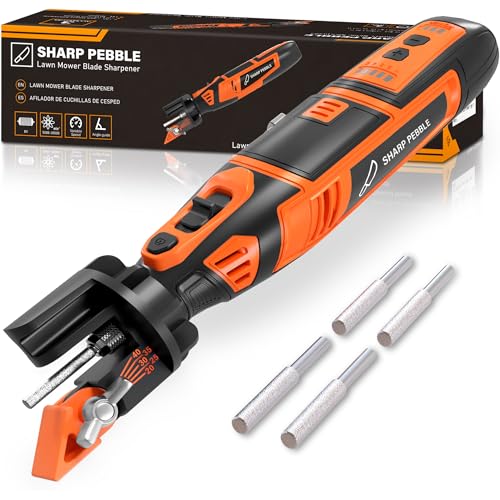
Pros
- Adjustable 20° to 40° sharpening angle guide
- Cordless design with no cords to manage in the yard
- Manufacturer says blade removal is optional for many residential blades
- Variable speed listed at 5,000–30,000 RPM
Cons
- Not designed for zero-turn or heavy-duty commercial blades
- Cannot restore chipped, dented or missing-metal blades

Pros
- Sharpener offers seven angles from 15 to 45 degrees
- Magnetic cone balancer for checking blade balance
- Listed as replacement for 5005A, 339075B, and 42-047
- Combines sharpening and balancing in one listing
Cons
- Compatibility with most blades is seller-stated, not tested
- Sharpening and balance benefits are manufacturer-stated

Pros
- Brown corundum stone, which the maker says resists melting at high heat
- Stainless steel base, described as avoiding plastic base wear
- Quick install, stated as about 10 seconds on a drill
- Built for lawn mower and lawn tractor blades, plus hoes and similar edges
Cons
- Requires a separate electric drill; the drill is not included
- Manufacturer recommends about 4000 RPM, as the stone underperforms at low speed
Why Sharpen Blades Without Removing Them?
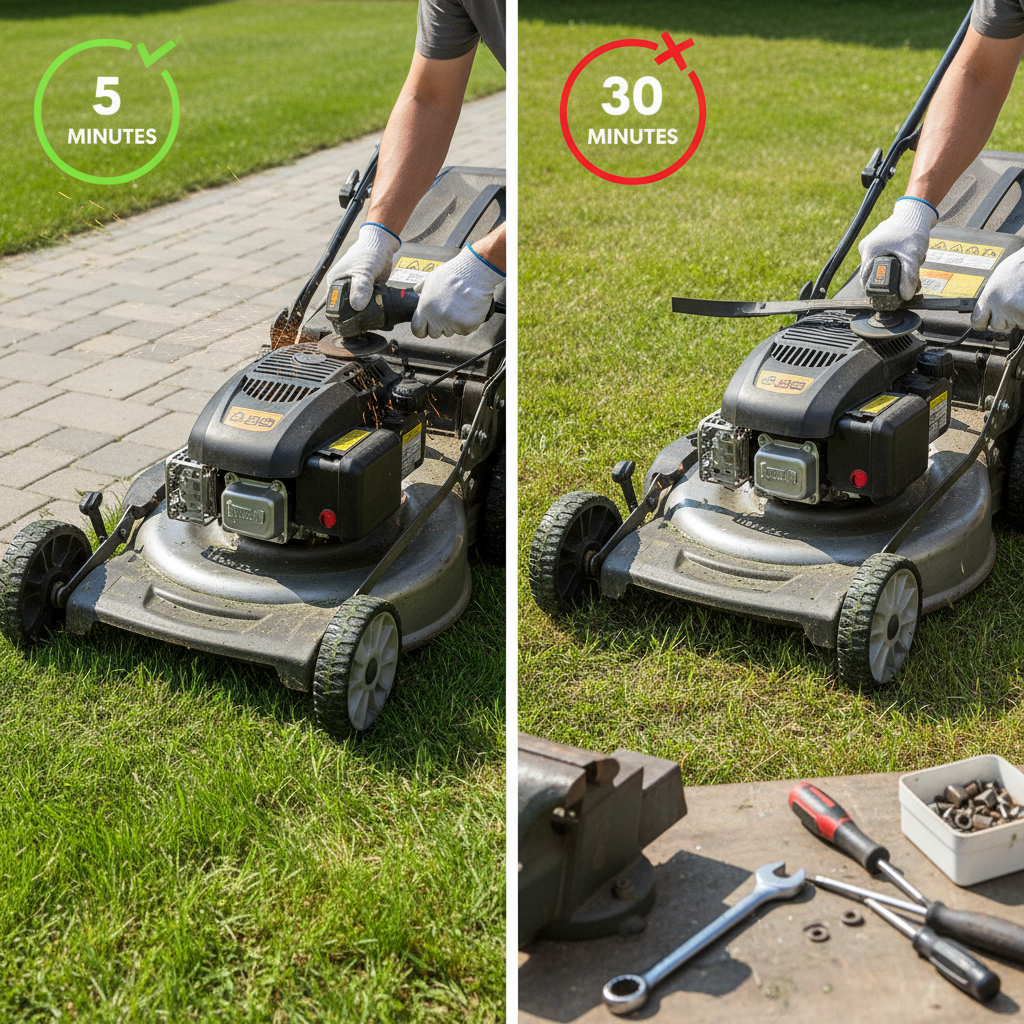
Sharpening blades in place offers practical advantages for routine lawn mower maintenance. The primary benefit is time efficiency, you avoid the additional steps of removing fasteners, dismounting the blade, reinstalling it, and realigning it for proper operation. This approach works well when blades need minor touch-ups between mowing seasons or after hitting debris that duls the edge.
In-place sharpening is appropriate for routine maintenance when the blade is structurally sound. However, if the blade has cracks, deep gouges, bent sections, or severe damage, removal is necessary for professional repair or replacement. Regular touch-ups using this method can extend the time between professional sharpenings and keep your mower running smoothly.
Essential Safety Precautions Before Starting
Disconnect the Spark Plug: Before touching the blade in any way, always disconnect the spark plug wires from both plugs (most mowers have two). This is the single most critical safety step, as it prevents accidental engine startup if the blade or engine are bumped during sharpening. Even a momentary engine start while your hands are near the blade can cause severe injury.
Wear Protective Equipment: Put on safety goggles to protect your eyes from metal filings and debris that scatter during sharpening. Work gloves protect your hands from sharp blade edges and file teeth. Consider wearing a dust mask if you are using a bench grinder instead of a hand file, as it produces more airborne particles.
Secure the Blade: Place a wooden block or wedge firmly against the blade to prevent rotation while you work. Position the block on the flat side of the blade, not against the cutting edge, and ensure it cannot slip. Do not rely on your hand or body weight alone to hold the blade steady, the wood block provides stable, reliable resistance. To evaluate matched hardware tolerances, consult our detailed overview of z890 vs x870e motherboard.
Work in a Safe Location: Sharpen your blade in a well-lit area with adequate space around the mower. Keep bystanders, children, and pets away from the work area. Ensure the mower is on level ground and will not roll if you are working on a slope or incline.
Tools and Materials You’ll Need
Metal File: A bastard-cut or second-cut metal file works best for lawn mower blades. Files typically measure 8to 12 inches in length. The file’s coarser surface removes dull metal efficiently without requiring excessive pressure. Avoid fine-cut files, which remove metal too slowly for practical blade sharpening.
File Adapter or Handle: A file adapter is threaded handle that attaches to the tang (the thin end) of a metal file, giving you better leverage and control during sharpening. This tool is especially helpful when sharpening blades in place, as the extended handle allows you to work at the correct angle without straining. While not absolutely required, a file adapter significantly improves the sharpening process and reduces fatigue. When planning workspace deployment, consider the engineering criteria outlined in our marshall stanmore iii vs harman kardon onyx studio 8 guide.
Wooden Block or Wedge: Any sturdy piece of scrap wood works to secure the blade. The block should be thick enough to resist the force applied during filing and large enough to contact the blade securely without damaging it.
Alternative Tools: A long-handled file designed specifically for lawn mower maintenance offers an integrated solution combining file and handle. Some users employ a Dremel rotary tool or small bench grinder, but these require extra caution to maintain the correct angle and avoid overheating the blade’s steel, which can weaken its temper.
Step-by-Step Sharpening Process
Step 1: Inspect the Blade Before beginning, examine the blade for damage. Look for cracks, deep gouges, bends, or rust spots. Minor surface rust is normal and can be addressed during sharpening. If you find significant damage, stop and remove the blade for professional service or replacement. For additional operational safety benchmarks, see our published testing notes on dyson v8 cyclone vs bissell featherweight stick.
Step 2: Position the File Correctly Hold the file at a 30-45 degree angle to the blade’s edge. This angle is critical, it matches the original bevel of the cutting edge and ensures the sharpened blade performs as designed. Position your file handle so the file itself approaches the blade edge from above, moving away from your body. If using a file adapter, this handle extension helps you maintain consistent angled pressure.
Step 3: Use Smooth, Single-Direction Strokes Begin filing from the top (outer) side of the blade, moving the file in one direction only, from the center of the blade outward toward the tip. Do not use back-and-forth sawing motions. Each stroke should be smooth and controlled, applying moderate pressure. The file should bite into the metal with each forward stroke; on the return stroke, lift the file slightly to avoid duling it.
Step 4: Count Your Strokes Apply approximately 5-10 strokes on each edge of the blade, depending on howdull it is and how much metal you need to remove. Fewer strokes preserve more blade material; more strokes create a sharper edge but remove more steel. For routine maintenance, aim for the lower end of this range.
Step 5: Sharpen Both Edges Equally This step is crucial for blade balance. After completing one edge, move to the opposite side of the blade and apply same number of file strokes at the same angle. Unequal sharpening creates an imbalanced blade, which causes vibration, uneven cutting, and premature wear on mower bearings.
Step 6: Check Your Progress After several strokes, examine the blade edge to see if a thin line of shiny metal (the new edge) is appearing. This indicates you are removing thedull material. If no shiny line is visible after 5-10 strokes, increase your pressure slightly, but do not force the file, as this causes fatigue and reduces control.
How to Check Blade Balance After Sharpening
Blade balance is essential for mower performance. An unbalanced blade creates vibration that stresses the crankshaft, bearings, and deck mounting points, potentially causing damage over time. Uneven cutting also results in a ragged, unfinished lawn appearance.
The Simple Balance Test: Remove the wooden block and hang the blade horizontally on a nail or bolt through its center hole. The blade should remain level on both sides. If one side dips, that side is heavier and needs additional sharpening strokes to remove more metal and reduce weight. Continue adding small numbers of strokes to the heavier side until the blade hangs level.
Alternative Method: Some users employ a blade balancer, a simple tool with a V-shaped cradle that holds the blade’s center. The heavier side tips down, clearly indicating which edge needs more sharpening. Blade balancers are inexpensive and available at most hardware stores.
When to Remove and Professionally Sharpen Blades
Signs a Blade Needs Professional Service: If the blade has visible cracks, deep gouges that catch your fingernail, bends or warping, severe rust, or is chipped along the cutting edge, professional sharpening or replacement is necessary. In-place sharpening cannot repair structural damage.
Frequency of Professional Service: Industry recommendations suggest professional blade sharpening every 20-50 hours of mowing, depending on your lawn conditions. If you mow twice weekly during growing season over 12-16 weeks, that is roughly one professional sharpening per season, supplemented by 2-3 in-place touch-ups as needed.
When Removal Is Required: Remove the blade if you detect wobling during operation, if the blade has lost more than 1/4 of its original thickness from repeated sharpenings, or if in-place sharpening no longer produces a sharp edge after 15-20 strokes. These signs indicate the blade is worn or damaged beyond routine maintenance capability.
Everything You Need to Know: How To Sharpen Lawn Mower Blades Without Removing Them FAQ
Is it safe to sharpen mower blades while they are still on the mower?
Yes, in-place sharpening is safe if you follow critical precautions: disconnect the spark plug wires, wear protective equipment, and secure the blade with a wooden block to prevent rotation. These steps eliminate the primary risks of accidental starting or blade movement. Many professional landscapers sharpen blades in place as a routine procedure.
What angle should you use when filing lawn mower blades?
The standard angle is 30-45 degrees from the blade surface. This angle matches the original bevel machined into the blade during manufacturing and ensures optimal cutting performance. Angles steper than 45 degrees create a more acute but fragile edge; angles shallower than 30 degrees produce a blunt edge that tears rather than cuts grass.
Can you use a bench grinder to sharpen mower blades in place?
A bench grinder can sharpen blades faster than a hand file, but in-place use is more difficult because maintaining the correct angle is challenging and overheating the blade (turning it blue from heat) can weaken the steel. If using a bench grinder, work carefully and frequentlydip the blade in cool water to prevent heat damage. Many users prefer hand filing for in-place sharpening due to better control.
How often should you sharpen lawn mower blades?
Sharpen blades every 20-50 hours of mowing or roughly once per mowing season for homeowners who mow weekly. If you notice the mower leaving uncut grass, producing a ragged cutting pattern, or requiring more engine power to cut the same grass, sharpening is due. Some users perform quick in-place touch-ups monthly during peak mowing season.
Final Maintenance Tips
After sharpening, reconnect the spark plug wires and run the mower briefly on level ground to ensure it operates smoothly without unusual vibration. If vibration is present, the blade balance may be off; recheck using the hanging test and adjust as needed. Keep your metal file clean and dry between uses, and store it in a dry location to prevent rust. Consider marking your file with tape so you do not accidentally use your sharpening file for other projects, as this duls it quickly.
Technical Standards and Compliance
To compare alternatives and performance metrics, read our evaluation of cordless lawn mower.
Mechanical safety standards, operational tolerances, and protective gear guidelines align with benchmark specifications established by the American National Standards Institute (ANSI).