What Is a Sawzall?
A sawzall is a reciprocating saw—a powered handheld tool featuring a blade that moves back and forth (reciprocates) at high speed to cut through various materials. The blade typically moves between 0 and 3,000 strokes per minute, depending on the tool and power setting. Originally trademarked by Milwaukee Tool in the 1950s, the term “sawzall” has become genericized and is now commonly used to describe any reciprocating saw, regardless of brand.
The primary appeal of a sawzall lies in its versatility and maneuverability. Unlike circular saws or band saws, a reciprocating saw is compact and handheld, making it ideal for cutting in tight spaces, demolition work, and detailed cuts. It excels at straight cuts, plunge cuts, and navigating curves—tasks that would be difficult or impossible with stationary saws.
How Sawzalls Work
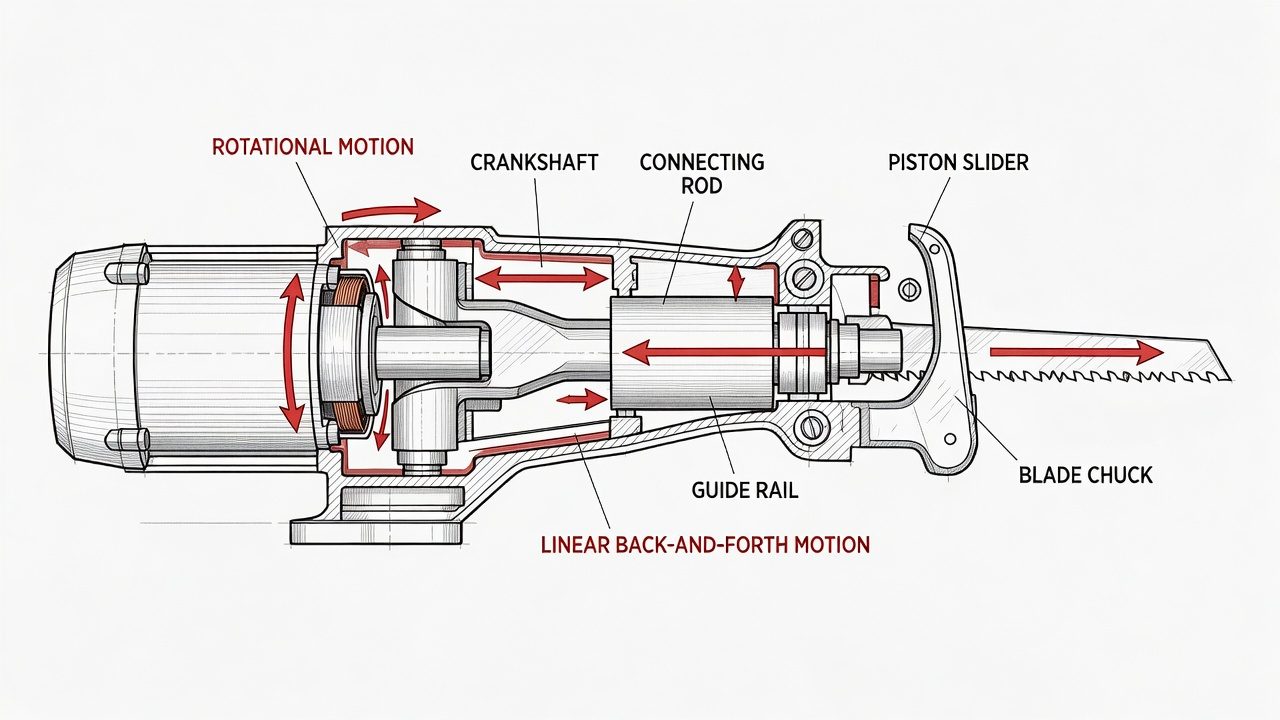
A sawzall operates on a simple mechanical principle: an electric motor drives a piston that converts rotational motion into linear (back-and-forth) motion. This drives the saw blade forward and backward in rapid succession. Most reciprocating saws offer variable speed control, allowing users to adjust the stroke speed based on the material being cut.
Stroke length refers to the distance the blade travels with each cycle, typically ranging from 0.75 to 1.125 inches. A longer stroke generally removes material faster but may be less precise; shorter strokes provide better control for detailed work.
Power source options include:
- Corded electric: Constant power, no battery limitations, heavier and less portable
- Cordless (battery-powered): Greater mobility and convenience, limited by battery runtime, lighter weight
- Pneumatic (air-powered): Lightweight, common in professional settings, requires an air compressor
Some advanced models feature orbital motion, where the blade moves slightly sideways in addition to forward-and-backward motion. This increases cutting speed and reduces binding, particularly useful when cutting metal or dense materials.
Blade Types and Materials You Can Cut
The versatility of a sawzall depends largely on blade selection. Different blade designs and materials are optimized for specific applications:
| Blade Type | Best For | Teeth Per Inch (TPI) | Material |
|---|---|---|---|
| Wood-cutting blade | Dimensional lumber, plywood, softwoods | 6-10 TPI | Bi-metal or high-carbon steel |
| Metal-cutting blade | Steel, aluminum, copper pipes | 14-32 TPI | Bi-metal with tungsten carbide |
| Demolition blade | Nails, mixed materials, fasteners | 5-8 TPI | Bi-metal, extremely durable |
| Drywall blade | Drywall, plasterboard, insulation | 8-10 TPI | Carbon steel |
| Pruning blade | Green wood, branches, tree limbs | 4-6 TPI | Hardened steel |
Teeth per inch (TPI) is a key specification: higher TPI creates finer, smoother cuts but cuts more slowly; lower TPI cuts faster but with more material removal and rougher edges. Choose TPI based on your material and desired cut quality.
Materials a sawzall can cut include:
- Wood (all types: softwood, hardwood, plywood, laminated)
- Metal (steel, aluminum, copper, cast iron, stainless steel)
- Drywall and plasterboard
- Plastic and PVC pipe
- Fiberglass and composite materials
- Masonry and tile (with specialized masonry blades)
- Insulation and foam
When cutting metal, use a slower speed setting and a metal-specific blade. When cutting through nails or fasteners (common in demolition), use a demolition blade designed to withstand impact and dulling.
Common Uses and Applications
Sawzalls are indispensable in several fields due to their speed, precision, and adaptability:
Construction and framing: Carpenters use sawzalls to cut studs, joists, and trim quickly. The tool’s maneuverability makes it ideal for cutting around obstacles and making precise notches.
Demolition: This is where sawzalls truly excel. They quickly cut through walls, floors, and fixtures with minimal setup. A demolition blade handles nails and mixed materials without issue, making rapid teardown possible.
Remodeling and renovation: Whether removing old plumbing, electrical conduit, or cabinets, a sawzall handles the destructive portion of renovation work efficiently.
Plumbing and HVAC: Professionals use sawzalls to cut copper, PVC, and metal pipes. The tool’s precision prevents damage to surrounding materials and allows for quick, flush cuts.
Electrical work: Electricians use reciprocating saws to cut conduit, notch studs for wire runs, and remove old wiring efficiently.
DIY projects: Homeowners use sawzalls for landscaping (pruning), fence construction, deck building, and general demolition tasks around the home.
When to use a sawzall instead of other saws:
- Choose a sawzall over a circular saw when working in confined spaces or making plunge cuts
- Use it instead of a jigsaw for faster, rougher cuts and thicker materials
- Prefer it to a hand saw when speed and reduced fatigue matter
- Select it over a band saw when portability and accessibility are priorities
Safety Considerations and Best Practices
Personal protective equipment (PPE):
- Safety glasses or face shield to protect from debris and flying particles
- Hearing protection—reciprocating saws are loud, typically 85-100 dB
- Dust mask or respirator, especially when cutting drywall or masonry
- Work gloves to protect hands from sharp edges and vibration
- Steel-toed boots when cutting overhead or in demolition settings
Operating safely:
- Secure your workpiece firmly before cutting to prevent binding or kickback
- Use a two-handed grip for better control and stability
- Keep the blade perpendicular to the work surface for cleaner cuts and safer operation
- Do not force the saw; let the blade and motor do the work
- Check the blade regularly for dullness or damage; replace worn or cracked blades immediately
- Disconnect the power source (unplug or remove battery) before changing blades or performing maintenance
- Avoid cutting through nails or fasteners unless using a demolition blade specifically designed for this
- Never reach underneath the workpiece while the blade is moving
Maintenance tips:
- Clean the air vents regularly to prevent motor overheating
- Inspect the power cord for damage before each use (corded models)
- Lubricate moving parts as recommended in the manual
- Keep batteries charged and in good condition (cordless models)
- Store blades in a dry location to prevent rust
Choosing the Right Sawzall for Your Needs
When selecting a reciprocating saw, consider stroke length, power (amps for corded, voltage for cordless), variable speed capability, and ergonomics. Professional-grade tools typically offer more power and durability but cost more. For occasional DIY use, a mid-range cordless model provides good balance between capability and cost. For frequent professional use, a corded saw with consistent power and heavier-duty construction is often preferred.
Frequently Asked Questions
Is “sawzall” a brand name or a generic term?
“Sawzall” is a trademarked brand name originating from Milwaukee Tool, but the term has become genericized in common usage. Today, most people use “sawzall” to refer to any reciprocating saw, regardless of manufacturer. Technically, Sawzall is Milwaukee’s product line, while the tool category is called a reciprocating saw.
Can a sawzall cut through metal?
Yes, a sawzall can cut metal with the appropriate blade. Use a metal-cutting blade with higher TPI (14-32 teeth per inch) and a slower speed setting. Materials like aluminum, copper, steel, and even stainless steel can be cut. Thicker metals require more time and may benefit from cutting fluid to reduce heat and prolong blade life.
What’s the difference between a sawzall and a jigsaw?
A jigsaw has a shorter, narrower blade that moves up and down and is better for curved cuts and detailed work in thinner materials (typically up to 1.5 inches). A sawzall has a longer blade with more power, is better for straight cuts and thicker materials, and excels at demolition and rough cutting. Jigsaws are more precise; sawzalls are faster and more aggressive.
Do I need a corded or cordless sawzall?
Cordless models offer convenience and portability, making them ideal for DIY work and smaller projects. Corded models provide unlimited runtime and consistent power, making them better for extended professional use or heavy-duty demolition. Consider how often you’ll use it and for how long when deciding. Many professionals maintain both for different situations.