Direct Answer: Most four-stroke lawn mower engines use SAE 30 conventional motor oil for operating temperatures above 40 °F (4 °C). SAE 10W-30 suits variable or colder climates. Two-stroke engines require a dedicated 2-cycle engine oil pre-mixed with gasoline at the manufacturer-specified ratio (commonly 50:1) — never straight motor oil. Synthetic 5W-30 is widely approved by major OEMs including Briggs & Stratton, Honda, and Kawasaki. Always verify against your engine’s owner manual and confirm the oil meets API service classification SJ or higher.
Four-Stroke vs. Two-Stroke Lawn Mower Engines: Why the Difference Matters
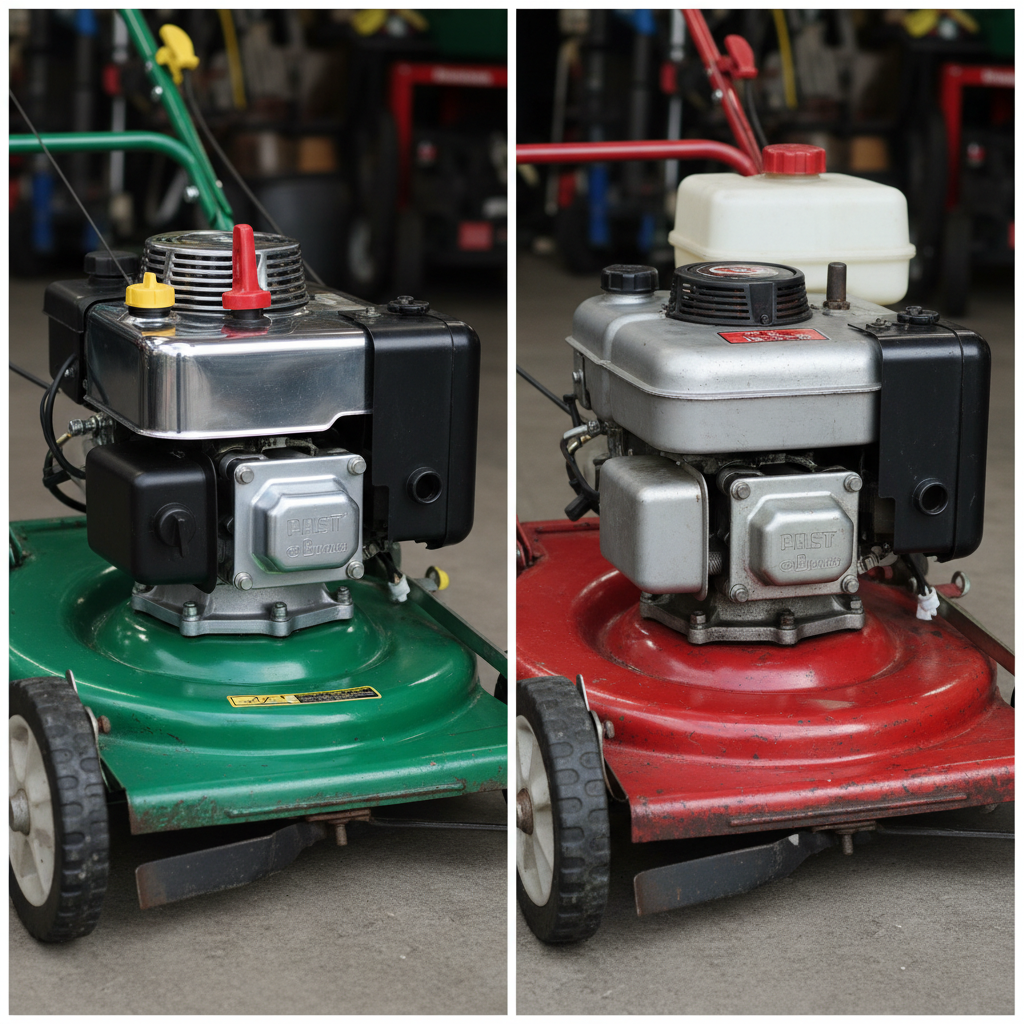
Before selecting any oil, you must identify your lawn mower’s engine type. This distinction is critical because four-stroke and two-stroke engines operate on fundamentally different lubrication systems, and using the wrong oil type can cause immediate, catastrophic engine damage.
How to Identify Your Engine Type
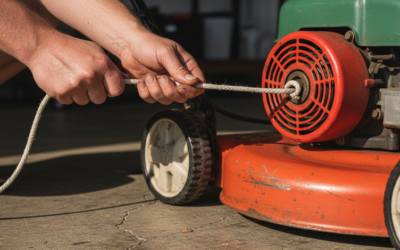
Four-stroke engines are the standard for most modern push mowers, riding mowers, and zero-turn mowers. They have a separate oil reservoir (crankcase) and do not require oil to be mixed with gasoline. You’ll typically find an oil dipstick or fill cap labeled with the recommended oil type.
Two-stroke engines are less common but still found in some lightweight, handheld equipment and older or specialty lawn mowers. They have no separate oil reservoir; instead, oil must be pre-mixed with gasoline before fueling the engine.
Can I Use Regular Motor Oil in a Two-Stroke Lawn Mower Engine?
No. Never use straight motor oil (like SAE 30) in a two-stroke engine. Two-stroke engines require specialized 2-cycle engine oil formulated to burn cleanly with gasoline. Using conventional motor oil will cause excessive smoke, carbon buildup, and rapid engine failure.
What Oil to Use in a Four-Stroke Lawn Mower Engine
For the majority of lawn mower owners with four-stroke engines, oil selection revolves around viscosity grade and API service classification.
SAE 30: The Standard Recommendation
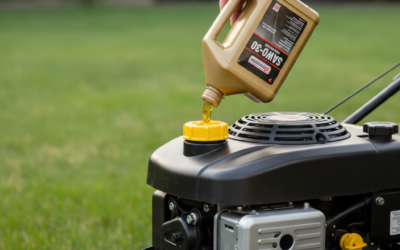
SAE 30 conventional motor oil is the most widely recommended oil for four-stroke lawn mower engines operating in temperatures above 40 °F (4 °C). This single-grade oil provides optimal lubrication in the stable, warm operating conditions typical of lawn mowing season.
Is SAE 30 the best oil for a four-stroke lawn mower? For most users in temperate to warm climates, yes. It’s the baseline recommendation from major manufacturers like Briggs & Stratton and is formulated specifically for small, air-cooled engines.
SAE 10W-30: For Variable and Colder Temperatures
SAE 10W-30 is a multi-grade oil recommended for lawn mowers operated in variable temperatures or climates where morning temperatures regularly drop below 40 °F (4 °C). The “10W” indicates better cold-start flow, while the “30” provides adequate protection at operating temperature.
What is the difference between SAE 30 and SAE 10W-30 for lawn mowers? SAE 30 is a single-grade oil ideal for consistent, warm conditions. SAE 10W-30 offers better cold-weather performance but may provide slightly less protection in sustained high heat. For most homeowners, the difference is negligible outside of extreme conditions.
Synthetic 5W-30: The Modern Alternative
Synthetic 5W-30 motor oil is widely approved by major OEMs including Briggs & Stratton, Honda, and Kawasaki. It offers superior performance across a broader temperature range, better resistance to breakdown, and improved cold-start protection compared to conventional oils.
Can I use synthetic oil in my lawn mower? Yes, if your engine manufacturer approves it. Synthetic oils often exceed the requirements for small engines and can extend oil change intervals, though you should still follow your owner’s manual recommendations.
API Service Classification: SJ or Higher
Regardless of viscosity grade, lawn mower oil must meet API (American Petroleum Institute) service classification SJ or higher. This rating ensures the oil contains the necessary additives to protect small, air-cooled engines from wear, corrosion, and deposit formation.
Can I use car motor oil in a four-stroke lawn mower engine? Yes, provided it meets the correct SAE viscosity grade and API service classification (SJ or higher). Many automotive oils are perfectly suitable for lawn mower engines.
What Oil to Use in a Two-Stroke Lawn Mower Engine
Two-stroke lawn mowers require a completely different approach to lubrication. These engines burn oil as part of their normal operation, meaning the oil must be mixed with gasoline before use.
The Oil-to-Gasoline Mix Ratio
The most common oil-to-gas ratio for two-stroke lawn mower engines is 50:1 — that’s 50 parts gasoline to 1 part two-cycle engine oil. This ratio is standard for many manufacturers, but you must verify the specific ratio in your engine’s owner manual.
What does 50:1 mix ratio mean in practice? For a 1-gallon (128 oz) fuel mix, you would add 2.56 oz of two-cycle oil. Many two-cycle oils come with measuring cups or pre-measured packets for convenience.
Why 2-Cycle-Specific Oil Is Mandatory
Two-cycle engine oil is formulated to burn cleanly and completely with gasoline. Using conventional motor oil will result in incomplete combustion, leading to:
- Excessive blue smoke
- Rapid carbon buildup on spark plugs and in the combustion chamber
- Piston ring sticking and scoring
- Ultimate engine seizure
Are all 2-cycle engine oils the same? No. Look for oils labeled “TC-W3” for water-cooled engines or “JASO FC” / “ISO-L-EGD” for air-cooled engines. Quality two-cycle oils contain detergents and dispersants to minimize deposits.
Choosing the Right Oil Viscosity for Your Climate and Season
Operating temperature significantly impacts oil performance. Use this quick-reference table to select the optimal viscosity grade for your conditions:
| Operating Temperature Range | Recommended Oil Viscosity | Notes |
|---|---|---|
| Above 40 °F (4 °C) consistently | SAE 30 | Standard recommendation for warm climates |
| Below 40 °F (4 °C) to 100 °F (38 °C) | SAE 10W-30 | Best for variable or cold climates |
| Below 0 °F (-18 °C) to above 100 °F (38 °C) | Synthetic 5W-30 | Widest temperature range protection |
Should I change my mower oil grade seasonally? For most homeowners, no. Using a multi-grade oil like SAE 10W-30 or synthetic 5W-30 provides adequate protection across seasonal temperature variations. Only switch if you experience extreme temperature shifts that cause noticeable performance changes.
OEM Oil Recommendations by Engine Brand
While general guidelines apply broadly, engine manufacturers often publish specific oil recommendations that may differ from generic advice. Always consult your owner’s manual first.
Briggs & Stratton
Briggs & Stratton recommends SAE 30 for temperatures above 40 °F (4 °C) and SAE 5W-30 synthetic for all temperatures. Their engines are designed to work with oils meeting API service classification SJ or higher.
Honda
Honda’s GCV series engines, common in push mowers, specify 10W-30 oil for general use. Honda explicitly approves synthetic 5W-30 for extended oil change intervals. Note that Honda’s recommendation differs from the generic SAE 30 advice — always defer to the Honda owner’s manual.
Kawasaki
Kawasaki engines, often found in riding mowers and zero-turns, recommend 10W-30 for temperatures above 32 °F (0 °C) and SAE 30 for consistently warm conditions. Synthetic oils meeting API SN or higher are approved.
Does Using Non-OEM Oil Void My Lawn Mower Warranty?
Generally, no, as long as the oil meets the manufacturer’s specified viscosity grade and API service classification. However, using oil that doesn’t meet these specifications could void warranty coverage if engine damage occurs.
How to Check and Change Your Lawn Mower Oil
Once you’ve identified the correct oil type, proper maintenance ensures optimal engine performance and longevity.
How Often Should I Change the Oil?
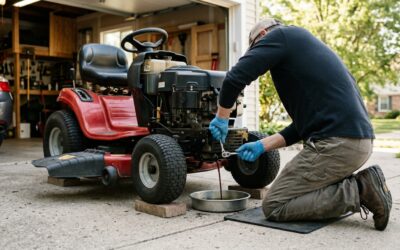
For new engines, change the oil after the first 5 hours of operation to remove manufacturing debris. After that, change the oil every 50 hours of operation or at least once per mowing season, whichever comes first.
Checking Oil Level
Most four-stroke engines have a dipstick or sight glass. With the engine off and on a level surface:
- Remove the dipstick, wipe it clean, reinsert fully, and remove again
- Oil should be between the “Add” and “Full” marks
- If low, add oil in small increments to avoid overfilling
How Much Oil Does a Standard Push Mower Hold?
Most push mower engines hold between 18-20 oz (0.53-0.59 L) of oil. Riding mower engines typically hold 48-64 oz (1.4-1.9 L). Consult your owner’s manual for exact capacity.
Disposing of Used Oil
Never pour used oil down drains or into the ground. Take it to a local recycling center, auto parts store, or municipal hazardous waste collection facility. Many communities offer free oil recycling services.
Common Lawn Mower Oil Mistakes to Avoid
Avoiding these common errors will protect your engine and save you from costly repairs:
Overfilling the Engine
What happens if I overfill my lawn mower with oil? Excess oil can cause foaming, increased crankcase pressure, oil leaking past seals, and in severe cases, hydraulic lock where the engine cannot turn over. Always check the dipstick and add oil gradually.
Mixing Oil Grades
Can I mix SAE 30 and 10W-30 in my mower? While not immediately catastrophic, mixing different oil grades can compromise the oil’s performance characteristics. Stick to one grade for optimal protection.
Ignoring Oil Checks
Is it safe to run a lawn mower without checking oil first? No. Running an engine with low oil levels can cause immediate, irreversible damage. Always check oil before each use.
Using Degraded or Old Oil
Can old or degraded oil damage a lawn mower engine? Yes. Oil breaks down over time, losing its lubricating properties and accumulating contaminants. Follow recommended change intervals regardless of how often you mow.
Frequently Asked Questions
What happens if I put the wrong oil type in my mower engine?
Using the wrong oil type can cause immediate or gradual engine damage. Putting two-cycle oil in a four-stroke engine will result in poor lubrication and potential seizure. Putting straight motor oil in a two-stroke engine will cause excessive smoke, carbon buildup, and engine failure. Always verify your engine type and oil requirements before filling.
Do riding mowers always have four-stroke engines?
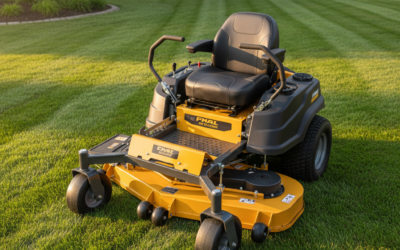
Almost all modern riding mowers and zero-turn mowers use four-stroke engines with separate oil reservoirs. However, always verify by checking your owner’s manual or looking for an oil fill cap/dipstick, which indicates a four-stroke design.
Can I use premixed fuel in a two-stroke mower?
Yes, premixed fuel (gasoline pre-mixed with two-cycle oil at the correct ratio) is convenient for two-stroke engines. Ensure the premix uses the correct oil type and ratio specified by your engine manufacturer. Many hardware stores sell pre-mixed fuel specifically for two-cycle equipment.
What oil weight works best below 40 °F (4 °C)?
For temperatures below 40 °F (4 °C), use SAE 10W-30 or synthetic 5W-30. These multi-grade oils provide better cold-weather flow while still protecting the engine at operating temperature. Avoid using straight SAE 30 in cold conditions, as it may be too thick for easy starting and adequate lubrication.