Understanding Your Lawn Mower Engine Type
Before you attempt to use starter fluid on your lawn mower, you need to determine whether your engine is carburetor-equipped or fuel-injected. This distinction is critical because starter fluid is only effective and safe for carbureted engines. Using it on a fuel-injected engine can damage the fuel injection system and create safety hazards.
Carburetor-Equipped Engines: These are the most common type found on older push mowers, many riding mowers, and small engines. Carbureted engines mix air and fuel in a mechanical carburetor before combustion. During cold starts, the fuel mixture can be too lean (not enough fuel) to ignite, which is where starter fluid helps by providing an immediate, highly flammable vapor that ignites easily.
Fuel-Injected Engines: Newer lawn mowers, particularly premium riding mowers and commercial equipment, use electronic fuel injection systems. These engines already have a pressurized fuel system designed to deliver the correct fuel mixture for cold starts. Spraying starter fluid into a fuel-injected engine can damage the fuel injectors and create unnecessary fire hazards.
How to Identify Your Engine Type: Look for a carburetor bowl (a small metal or plastic cup-shaped component) beneath the engine. If you see this component, your mower is carbureted. If the engine has a fuel rail with injectors and appears more complex, it’s fuel-injected. Check your owner’s manual for definitive confirmation.
Locating the Air Intake and Carburetor on Your Mower
Once you’ve confirmed your mower has a carburetor, the next step is locating the air intake opening where you’ll spray the starter fluid. This location varies slightly between push mowers and riding mowers, but the principle is the same.
Push Mower Air Intake Location
On most push mowers, the air filter housing sits directly on top of the engine. To access the carburetor opening:
- Locate the air filter cover (usually a black plastic or metal dome on top of the engine)
- Remove the cover by unscrewing the center bolt or unclipping the fasteners
- Lift away the air filter element (typically a pleated paper or foam filter)
- You’ll now see the carburetor throat—a circular opening with a metal butterfly valve visible inside
- This is where you’ll spray the starter fluid
Riding Mower Air Intake Location
Riding mowers have a similar setup, but the air filter housing may be positioned differently depending on the model:
- The air filter housing is typically located on the side or top of the engine
- On some models, you may need to remove a plastic shroud or hood panel to access it
- Once the air filter cover is removed, the carburetor opening is directly beneath
- Some riding mowers have the air intake positioned vertically; others have it angled
Common Mower Brands: MTD, Craftsman, and Toro push mowers typically have top-mounted air filter housings with straightforward access. John Deere riding mowers often have side-mounted air filters that require slightly more disassembly. Briggs & Stratton engines (found on many mower brands) have a distinctive ribbed air filter cover that’s easy to identify.
Step-by-Step Starter Fluid Application Process
Proper technique is essential for effective cold starting and safety. Follow these steps carefully:
Preparation
- Ensure the mower is on a level surface and the engine is completely cool
- Check the fuel tank—make sure it has fresh gasoline. Starter fluid won’t help if the fuel is stale or the tank is empty
- Inspect the spark plug visually if possible. If it appears fouled (black, wet, or damaged), replace it before using starter fluid
- Remove the air filter cover and filter element as described above
- Put on safety glasses to protect your eyes from spray mist
Spraying Technique
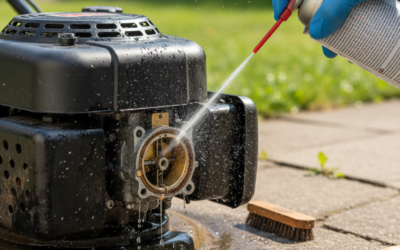
- Hold the starter fluid can upright, about 6-8 inches from the carburetor opening
- Aim directly into the carburetor throat where the butterfly valve is visible
- Press the spray button for 1-2 seconds in a single, controlled burst. Do not over-spray; excessive starter fluid can flood the carburetor
- Immediately replace the air filter and cover to prevent debris from entering the engine
- Do not attempt to start the engine immediately. Wait 5-10 seconds for the starter fluid vapor to settle in the combustion chamber
Starting the Engine
- Set the choke to the “cold start” position if your mower has a manual choke lever
- Pull the starter cord firmly and steadily or turn the ignition key on riding mowers
- The engine should catch within 2-3 pulls if the starter fluid is effective
- Once running, let the engine idle for 30 seconds before applying load or adjusting the choke
- If the engine doesn’t start after 3-4 attempts, stop and wait 10 minutes before trying again. Repeated attempts can flood the carburetor
Safety Precautions and When NOT to Use Starter Fluid
Starter fluid is a highly flammable substance that requires careful handling. Understanding the risks and limitations is crucial for safe operation.
Fire and Inhalation Hazards
- Starter fluid is extremely flammable with a low flash point. Never use it near open flames, sparks, or hot surfaces
- Inhalation of starter fluid vapors can cause dizziness, headaches, and respiratory irritation. Use it in well-ventilated areas only
- Do not smoke while using or handling starter fluid
- Wear nitrile gloves to prevent skin contact, which can cause irritation and rapid evaporative cooling
- Keep the can away from children and pets
When NOT to Use Starter Fluid
- Never use on fuel-injected engines—it can damage injectors and fuel system components
- Do not use if the engine is hot. Starter fluid can ignite on hot metal surfaces
- Avoid using if you smell gasoline or fuel vapors in the air intake area, as this indicates a flooded carburetor
- Do not use as a substitute for regular maintenance. If your mower consistently needs starter fluid, the carburetor likely needs cleaning or the fuel system needs service
- Do not spray starter fluid into the fuel tank or directly onto the engine block
- Avoid using on commercial or professional-grade mowers without consulting the manufacturer, as some models have specialized fuel systems
Troubleshooting: When Starter Fluid Doesn’t Work
If your lawn mower still won’t start after applying starter fluid, the problem likely lies elsewhere in the ignition or fuel system. Here’s how to diagnose the issue:
Faulty Spark Plug
A weak or damaged spark plug is one of the most common reasons starter fluid fails to ignite the fuel mixture. To check:
- Remove the spark plug wire from the top of the spark plug
- Unscrew the spark plug using a spark plug socket
- Inspect the electrode gap and overall condition. A healthy spark plug should have a light tan or gray color
- If the plug is black, wet, or heavily corroded, replace it with a new one rated for your engine
- Reinstall and try starting again
Clogged Fuel Filter
A blocked fuel filter prevents fresh gasoline from reaching the carburetor, making starter fluid ineffective. If your mower has a fuel filter (usually a small inline component between the tank and carburetor):
- Locate the fuel filter by tracing the fuel line from the tank
- Pinch or clamp the fuel line on both sides of the filter to prevent spillage
- Remove the filter and inspect it. A clogged filter will appear dark or discolored
- Replace with a new filter of the same size and type
- Ensure fuel flows freely through the new filter before reassembling
Dirty or Flooded Carburetor
Stale fuel or debris inside the carburetor can prevent proper fuel atomization and ignition. Signs include:
- Persistent gasoline smell even after starter fluid application
- Wet spark plug after multiple start attempts
- Black smoke from the exhaust
If you suspect carburetor issues, the best solution is professional cleaning. Many small engine repair shops can clean and rebuild a carburetor for $75-$150, which is often more cost-effective than continued troubleshooting.
Weak Battery (Riding Mowers)
On riding mowers with electric starters, a weak battery may not provide enough cranking power for the engine to turn over, even with starter fluid. Check:
- Battery terminals for corrosion or loose connections
- Battery voltage with a multimeter (should read 12.6V or higher for a fully charged battery)
- If voltage is low, charge the battery for 8-12 hours before attempting to start
When to Seek Professional Help
If you’ve checked the spark plug, fuel filter, and carburetor condition and the mower still won’t start, it’s time to consult a professional. Additional issues could include:
- Damaged ignition coil or magneto
- Bent or damaged crankshaft
- Internal engine damage
- Fuel pump failure (on some riding mowers)
A certified small engine technician can diagnose these problems quickly and recommend repair or replacement options.
Frequently Asked Questions
Can I use WD-40 or other lubricants instead of starter fluid?
No. WD-40 and similar lubricants are not designed for engine combustion and will not ignite reliably. Starter fluid (also called ether or engine starter) is specifically formulated to vaporize quickly and ignite at low temperatures. Using substitutes can damage your engine or create safety hazards. Always use genuine starter fluid from a reputable brand.
How often can I use starter fluid on my lawn mower?
Starter fluid is intended for occasional use during difficult cold starts, not as a regular starting aid. If you need starter fluid every time you start your mower, this indicates an underlying maintenance issue such as stale fuel, a dirty carburetor, or a weak spark plug. Address the root cause rather than relying on starter fluid repeatedly. Regular use can also damage internal engine components over time.
Is it safe to spray starter fluid while someone is holding the mower handle?
No. Always ensure the mower is stationary on level ground and no one is touching it before spraying starter fluid. The engine should not be running, and you should have a clear, unobstructed view of the air intake. This prevents accidental injury from the spray and ensures proper application.
What should I do if starter fluid gets on my skin?
Starter fluid evaporates rapidly and can cause cold burns. If it contacts your skin, immediately move to fresh air and allow the area to warm naturally. Do not rub the affected area. If irritation persists or you experience dizziness or nausea, seek medical attention. Wear nitrile gloves when handling starter fluid to prevent this issue.
Key Takeaways
Starter fluid is a valuable tool for cold-starting carburetor-equipped lawn mowers, but proper application is essential. Always spray directly into the air intake or carburetor opening (located beneath the air filter housing), use a 1-2 second burst, and never use it on fuel-injected engines. If your mower requires starter fluid frequently, investigate underlying maintenance issues such as spark plug condition, fuel filter cleanliness, or carburetor buildup. When in doubt, consult your mower’s owner’s manual or seek professional repair to ensure safe and reliable operation.