What Is a Tiller? Direct Answer
A tiller is a tool or device with two primary meanings. In gardening and farming, a tiller is a hand tool or powered machine that breaks up, loosens, and cultivates soil to prepare it for planting. In boating, a tiller is a lever or handle attached to a boat’s rudder used to steer the vessel. For home gardeners, the term typically refers to the soil-cultivating machine.
The Garden Tiller: How It Works and What It’s Used For
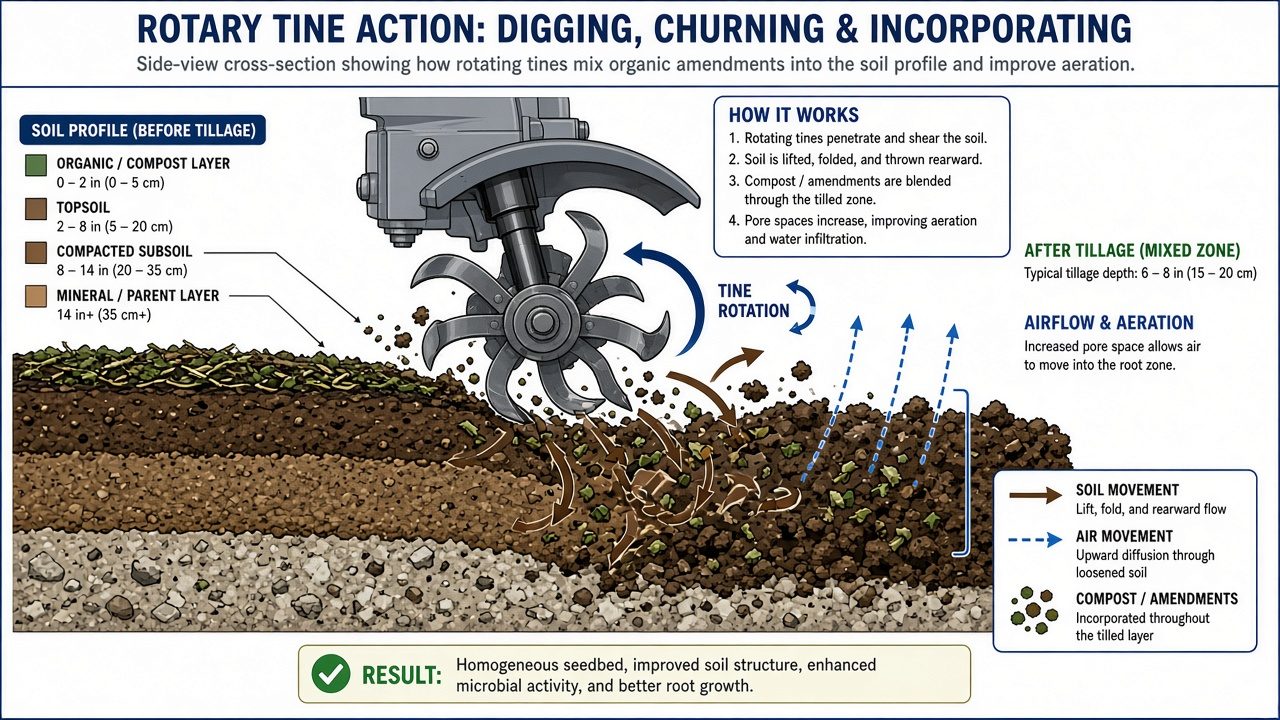
A garden tiller works by using rotating tines (sharp metal prongs or blades) to dig into and churn soil. As the tines turn, they break up compacted earth, mix in organic matter, and create a loose, workable seedbed. Tillers are used to:
- Break up hard or compacted soil before planting
- Mix compost, fertilizer, or amendments into soil
- Remove weeds and grass from garden beds and lawns
- Aerate soil to improve drainage and root penetration
- Prepare new garden spaces or refresh existing beds
Most garden plants grow best in soil tilled to a depth of about 8 to 12 inches, which allows roots to penetrate easily and access nutrients and water.
Types of Tillers: Hand Tools, Electric, and Gas-Powered
Tillers come in several categories suited to different garden sizes and soil conditions:
Hand Tillers
Hand tillers are small, manual tools with a handle and metal tines at the base. They require physical effort to push or pull into the soil and work best for small garden beds, raised planters, or as a finishing tool. Hand tillers are lightweight, affordable, require no fuel or electricity, and are ideal for gardeners with limited space or strength limitations.
Front-Tine Tillers
Front-tine tillers have rotating tines at the front that both dig into soil and propel the machine forward. They are typically lightweight and compact, making them suitable for small to medium gardens and already-worked soil. However, they cannot handle very hard or clay-heavy soil effectively and are best used for annual maintenance rather than initial soil preparation.
Rear-Tine Tillers
Rear-tine tillers have the tines positioned at the back and are powered by an engine that drives the tines independently from the wheels. This design provides deeper cultivation, more powerful digging, and better traction, especially in challenging soil. Rear-tine tillers excel at breaking up hard or virgin soil and are suitable for larger garden areas and tougher conditions.
Electric Tillers
Electric tillers are powered by corded or battery-powered motors. They are quieter, lower-maintenance, and emission-free compared to gas-powered models. However, corded versions require a power source and extension cord, and battery models have limited runtime. Electric tillers work well for small to medium gardens and recurring maintenance tasks.
Gas-Powered Tillers
Gas-powered tillers offer the most power and are ideal for large gardens, hard soil, or frequent use. They provide unlimited runtime and strong performance but require fuel, produce emissions, generate noise, and need regular engine maintenance. Gas models are available in front-tine and rear-tine configurations.
How to Choose a Tiller: Key Factors to Consider
Selecting the right tiller depends on several practical factors:
Garden Size
Small gardens under 500 square feet are best served by hand tillers or lightweight electric tillers. Medium gardens (500–2,000 sq. ft.) work well with front-tine tillers or compact electric models. Large gardens or acreage benefit from rear-tine or gas-powered tillers that can handle bigger workloads efficiently.
Soil Type and Condition
Virgin soil, clay-heavy ground, or very compacted earth requires a powerful rear-tine or gas-powered tiller. Already-worked or loose soil can be maintained with a hand tiller or front-tine model. Hard clay is one of the most challenging soil types to till; rear-tine tillers with greater tine depth and power are recommended for clay-dominant soil.
Physical Effort and Comfort
Hand tillers demand significant physical exertion and are unsuitable for gardeners with limited strength or mobility. Electric and gas tillers reduce the physical demand but require more setup and maintenance knowledge. Consider your ability to handle, operate, and maintain the tool safely.
Budget
Hand tillers are the most affordable option, followed by electric tillers and front-tine gas models. Rear-tine gas tillers are the most expensive but offer the highest capability. Renting is also an affordable option for one-time projects.
Storage and Maintenance
Hand and electric tillers take up minimal space. Gas-powered models require a garage or shed and demand regular engine maintenance (oil changes, spark plug replacement, fuel stabilization for off-season storage). Electric tillers need recharging time and battery upkeep.
How to Use a Tiller Safely: Step-by-Step Guide
Proper use of a tiller prevents injury and produces the best soil preparation results:
Before You Till
- Check the weather: till when soil is moist but not waterlogged; overly wet soil compacts rather than loosens
- Remove large rocks, sticks, and debris from the garden area
- Mark or identify underground utilities (call before digging)
- Wear appropriate safety gear: long pants, closed-toe boots, eye protection, and ear protection for powered tillers
- Review the tiller’s instruction manual for your specific model
Tilling Technique
- Start the tiller on level ground, following the manufacturer’s instructions
- Walk behind the tiller at a steady, natural pace; do not force it into the soil
- Overlap each pass slightly to ensure even cultivation
- Till in parallel rows for consistent depth and coverage
- Avoid running the tiller over the same area multiple times, which can damage soil structure
- Keep hands, feet, and loose clothing away from rotating tines at all times
- Never reach into or under the tiller while it is running
Depth Considerations
For first-time garden preparation, til to 8–12 inches deep. For annual maintenance of established beds, 4–6 inches is often sufficient. Avoid tilling deeper than necessary, as this can bring up weed seeds and disrupt beneficial soil organisms.
Tiller vs. Cultivator: What’s the Difference?
Tillers and cultivators are related tools but serve different purposes and work soil differently:
| Feature | Tiller | Cultivator |
|---|---|---|
| Primary Use | Initial soil preparation and turning | Ongoing weed control and light cultivation |
| Working Depth | 10–20 inches or deeper | Approximately 5–8 inches |
| Tine Design | Heavier, thicker tines for deep digging | Lighter, more flexible tines for surface work |
| Best For | Breaking compacted soil, new beds | Weeding, removing tops of weeds, loosening surface |
In practice, many people use ’tiller’ and ‘cultivator’ interchangeably, but tillers are the heavier-duty tool for deep, initial soil work, while cultivators are lighter tools for maintenance and weed removal once soil is already established.
The Boat Tiller: Steering Lever Basics
In maritime contexts, a tiller is a lever or handle connected to the rudder of a boat or small ship. Moving the tiller left or right rotates the rudder, which directs water flow and steers the vessel. The word ’tiller’ in this maritime sense is believed to derive from Old French or Old English terms related to weaving and woodworking, referring to the beam that controls the mechanism.
Tilling and Soil Health: Important Considerations
While tilling prepares soil for planting, frequent or excessive tilling can negatively impact long-term soil health. Breaking up soil too often can damage soil structure, reduce organic matter, disrupt beneficial microbial communities, and increase erosion and compaction over time. Many gardeners now practice reduced-tillage or no-till gardening methods to preserve soil biology and structure. Consider your garden’s long-term health when deciding how often and how deeply to till.
Frequently Asked Questions
Do I need a tiller for a small garden?
For very small gardens or raised beds (under 100 square feet), a hand tiller or hand fork may suffice. For gardens 100–500 square feet, a hand tiller or lightweight electric model provides good results with less investment. Larger spaces benefit from more powerful tillers.
Can a tiller break up hard clay soil?
A rear-tine or heavy-duty gas-powered tiller can break up clay soil, but the task is challenging. Clay is dense and compacts easily when wet. For best results, til clay soil when it is slightly moist (not soggy), multiple passes may be needed, and mixing in compost or organic matter before tilling helps loosen the soil.
How often should I till my garden soil?
Annual tilling before planting is common for vegetable gardens. However, excessive tilling degrades soil structure over time. Many gardeners til once a year or use no-till methods with added compost layers. Tilling more than once or twice annually is generally not recommended for soil health.
What is a tiller on a boat?
A tiller on a boat is a steering lever or handle attached to the rudder. It is manually moved left or right to change the boat’s direction. Modern boats may use a tiller, a helm wheel, or electronic steering systems instead.
Can I rent a tiller instead of buying one?
Yes, most garden centers and tool rental shops rent tillers by the day or week at a fraction of the purchase price. Renting is ideal for one-time projects, seasonal use, or for trying different types before buying.