Direct Answer: How Do You Sharpen a Chainsaw Blade?
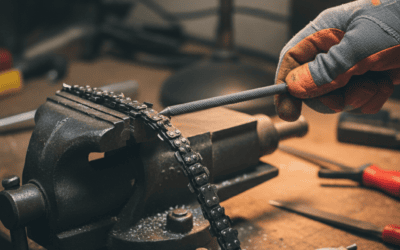
Sharpening a chainsaw ‘blade’ actually means sharpening the chain’s cutter teeth, not the metal guide bar. To do it by hand: secure the chainsaw with the chain brake engaged (or remove the bar and chain and clamp them), identify the chain’s pitch to choose the correct round file size (e.g., 5/32″ for 3/8″ pitch, 4.8 mm for .325″ pitch), and install a file guide set to the recommended angle (typically 25–35 degrees). Push the round file across each cutter tooth in a smooth, level stroke—file in one direction only, away from you—repeating 2–5 strokes per tooth until all cutters have an even length and a bright, sharp edge. Then use a depth gauge tool and flat file to lower the rakers to the correct height (commonly 0.025 inches / 0.65 mm below the cutter top).
What Exactly Is the ‘Blade’ on a Chainsaw?
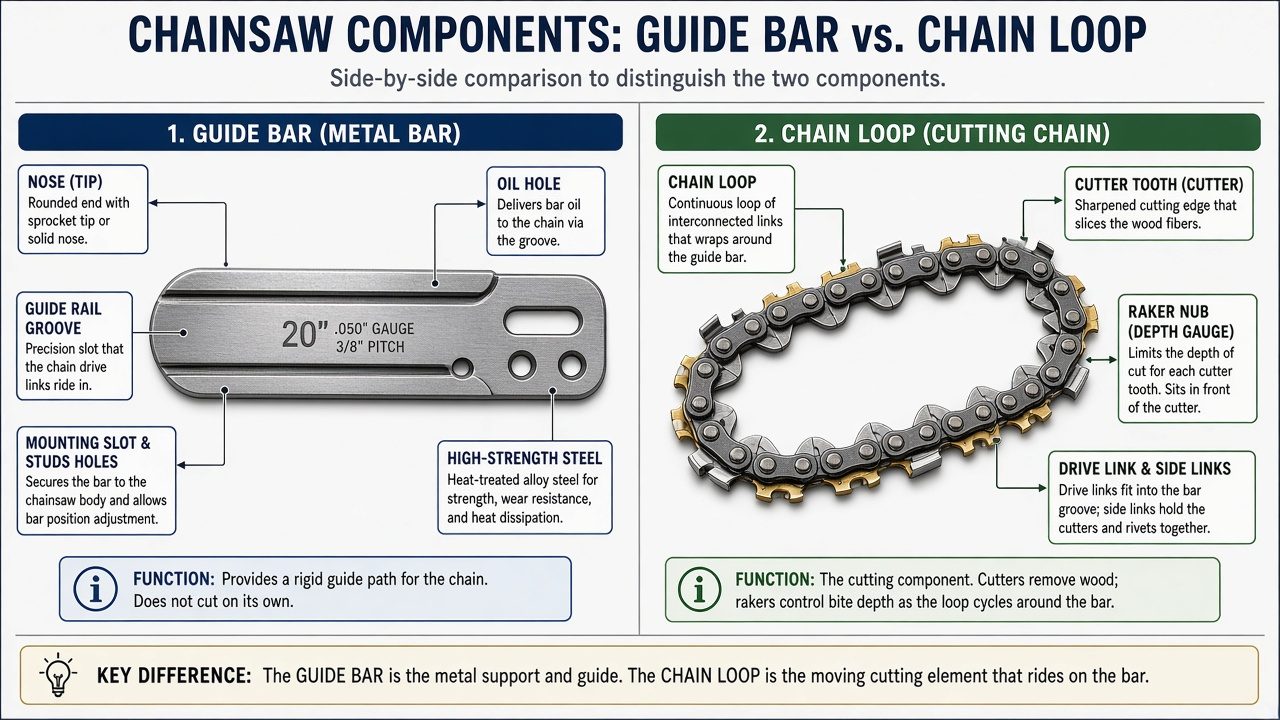
Before you start filing, it’s essential to understand what you’re actually sharpening. The term ‘blade’ is a common source of confusion.
Is the chainsaw ‘blade’ the bar or the chain?
The chainsaw has two main components that people might call a ‘blade’: the guide bar (the long metal rail) and the chainsaw chain (the loop of linked teeth that spins around the bar). The part that does the cutting—and the part that needs sharpening—is the chain. The bar is a wear item but is not sharpened; it just guides the chain.
Why do people often call the chain the blade?
Because the chain is the visible cutting edge that contacts the wood, many users refer to the whole assembly as the ‘blade.’ This is fine for casual conversation, but when buying files or replacement parts, you must specify the chain, not the bar.
Which part actually does the cutting and needs sharpening?
The cutter teeth on the chain do the cutting. Each tooth has a sharp, angled edge (the side plate and top plate) that slices wood fibers. Over time, these edges dull, round over, and lose their bite. That’s when you need to sharpen the chain.
What Tools Do You Need to Sharpen a Chainsaw Chain?
Gathering the right tools is the first step to a successful sharpening job. Using the wrong file size or skipping the depth gauge tool will leave you with a chain that still cuts poorly.
What round file size matches my chain pitch?
The round file diameter must match the chain’s pitch (the spacing between drive links). Here are the common matches:
| Chain Pitch | Round File Diameter |
|---|---|
| 1/4″ pitch | 4.0 mm (5/32″) |
| .325″ pitch | 4.8 mm (3/16″) |
| 3/8″ pitch (low profile) | 4.0 mm (5/32″) |
| 3/8″ pitch (standard) | 5/32″ (4.0 mm) or 3/16″ (4.8 mm) depending on chain |
| .404″ pitch | 3/16″ (4.8 mm) or 7/32″ (5.5 mm) |
Check your chain’s pitch stamped on the bar or in the owner’s manual. Using a file that is too small or too large will ruin the tooth geometry.
Do I need a file guide or can I freehand the angle?
A file guide (also called a file gauge) is highly recommended, especially for beginners. It clamps onto the chain and holds the file at the correct angle (typically 25–35 degrees) and height. Freehand filing is possible with experience, but it’s easy to introduce inconsistent angles that cause the chain to pull to one side.
What is a depth gauge tool and is it mandatory?
A depth gauge tool (or raker gauge) is a small metal plate that sits on top of the cutter tooth and shows how much the raker (depth gauge) protrudes. It is mandatory for proper sharpening. If you only file the cutters and never lower the rakers, the chain will stop biting and just scrape the wood.
How to Prepare the Chainsaw Before Sharpening
Safety and proper setup prevent accidents and make the job easier.
Should I remove the chain from the saw to sharpen it?
You can sharpen the chain while it’s on the saw, but you must engage the chain brake and release chain tension so the chain moves freely. Alternatively, remove the bar and chain and clamp the bar in a bench vice. Removing the chain is safer and gives you better access to every tooth.
How do I secure a chainsaw safely in a vice?
If you keep the chain on the saw, clamp the bar in a bench vice, not the body of the saw. Make sure the saw is stable and the chain brake is engaged. If you removed the chain, clamp the bar itself in the vice with the chain looped around it.
What safety precautions should I take before filing?
Always wear heavy work gloves to protect your hands from the sharp teeth. Ensure the saw is completely off and the spark plug wire is disconnected if you are working near the engine. Never file a chain while the saw is running or plugged in.
Step-by-Step: How to Hand-File Each Cutter Tooth
This is the core of the sharpening process. Take your time and be consistent.
What angle should I file the cutter teeth at?
The standard filing angle is 25–35 degrees, depending on the chain manufacturer and the chain’s design. Many chains are marked with the correct angle on the cutter itself. Set your file guide to that angle. Filing at the wrong angle will make the chain cut slowly or not at all.
How many file strokes per tooth are needed?
Typically, 2–5 strokes per tooth are enough to restore a sharp edge on a moderately dull chain. The key is to apply the same number of strokes to every tooth so all cutters stay the same length. If one tooth is shorter than the others, it won’t cut, and the chain will vibrate.
How do I tell when a cutter is actually sharp?
A sharp cutter has a bright, shiny edge with no visible rounding. If the file touch marks still overhang the chrome ‘shoulder’ of the tooth, keep filing. Also, a sharp chain produces square, chunky wood chips, while a dull chain produces fine sawdust.
How to File the Depth Gauges (Rakers)
Filing the cutters alone is only half the job. The depth gauges (rakers) control how deep the cutter bites into the wood.
What is a depth gauge or raker and what does it do?
The raker is the small, rounded nub in front of each cutter tooth. It limits how much wood the cutter can grab. If the raker is too high, the cutter barely bites; if it’s too low, the chain grabs too aggressively and can kick back.
How much should I file off the rakers?
For standard chains, the raker should be filed to approximately 0.025 inches (0.65 mm) below the top of the cutter tooth. Use a depth gauge tool to check this. Place the tool over the cutter, and if the raker protrudes above the tool’s slot, file it down with a flat file.
How often should depth gauges be adjusted?
Every time you sharpen the cutters, check the rakers. After several sharpenings, the cutters get shorter, and the rakers may need to be lowered to maintain the correct height difference.
Hand-Filing vs. Electric Sharpeners: Which Should You Use?
Both methods work, but they have trade-offs.
Is an electric chainsaw sharpener worth buying?
An electric sharpener is faster and easier for beginners. It uses a grinding wheel to sharpen each tooth at a preset angle. However, it’s an additional expense and requires a power source. Hand filing is cheaper, portable, and gives you more control.
Can an electric sharpener remove too much metal or overheat the teeth?
Yes. Electric sharpeners can overheat the teeth and reduce their hardness if too much metal is removed or the wheel is applied too aggressively. Overheating can turn the steel blue and make it soft, meaning the chain will dull much faster. Use light passes and let the wheel do the work.
Which method is best for a beginner?
For a beginner, hand filing with a file guide is the best way to learn the fundamentals. It’s low-risk, inexpensive, and teaches you how the chain works. Once you understand the angles, an electric sharpener can speed up the process for frequent users.
When Should You Replace the Chain Instead of Sharpening?
Sharpening isn’t always the answer. Sometimes the chain is beyond saving.
How do I know if my chain is too worn to sharpen?
If the cutter teeth are severely worn down, if the drive links show damage, or if you cannot restore a clean cutting edge after several filing attempts, it’s time to replace the chain. Also, if the chain has been sharpened so many times that the cutters are very short, the rakers may be too low to adjust further.
What signs of damage mean the chain must be replaced?
Look for cracked or broken drive links, bent or broken cutter teeth, and tie straps that are worn or damaged. If the chain has hit metal or rocks and the teeth are chipped, replacement is safer than sharpening.
How long does a chainsaw chain typically last?
With proper care, a chain can last through multiple sharpenings—often many months of regular use. The lifespan depends on how often you cut, the type of wood, and whether you hit dirt or rocks, which dulls the chain instantly.
Common Sharpening Mistakes and How to Avoid Them
Avoid these pitfalls to get a consistently sharp chain.
What happens if I file every tooth at a slightly different angle?
Inconsistent angles cause the chain to cut unevenly and pull to one side. The saw will vibrate, cut crooked, and be harder to control. Always use a file guide to maintain the same angle on every tooth.
Why does my chain still cut poorly after sharpening?
Likely causes: you didn’t lower the depth gauges, you used the wrong file size, or you didn’t file all teeth to the same length. Also, check that the chain tension is correct. A loose chain will not cut well even when sharp.
Should I file from the inside of the tooth or the top?
You should file from the top of the tooth, pushing the file across the cutting edge in a smooth, level stroke. File in one direction only—away from you—and lift the file on the return stroke. Filing back and forth will dull the edge.
Frequently Asked Questions
How often should I sharpen my chainsaw chain?
Sharpen the chain whenever you notice it producing fine sawdust instead of chunky chips, or when you have to push harder to make the saw cut. For regular use, this might be every few hours of cutting. Some users sharpen after every tank of fuel.
Can I use a flat file to sharpen a chainsaw chain?
A flat file is used for depth gauges (rakers), not for the cutter teeth. The cutters require a round file that matches the chain’s pitch to properly sharpen the curved cutting edge.
What is the correct chain tension for cutting?
The chain should be snug against the bar but still pull freely by hand. When you lift the chain off the bar, the drive links should just barely clear the bar groove. Over-tightening causes wear; under-tightening causes the chain to derail.
Do I need to oil the chain after sharpening?
Yes, always ensure the chain is properly lubricated with bar and chain oil before use. Sharpening doesn’t remove the need for lubrication, and a dry chain will overheat and wear out quickly.