Can You Use Car Oil in a Lawn Mower? The Direct Answer
No, you should not use car oil in a lawn mower. Lawn mowers require oil specifically formulated for small engines with the correct viscosity (typically SAE 30 or 10W-30) and protective additives designed for their unique operating conditions. Car oil is formulated for larger automotive engines that operate at different temperatures and speeds, lacks the necessary additives for small engine protection, and using it risks engine damage, poor performance, and a voided warranty.
Why Car Oil and Lawn Mower Oil Are Different
Understanding the differences between car oil and lawn mower oil is essential to protecting your equipment. While both are lubricants, they serve very different purposes and operate under different conditions.
Viscosity Requirements
Viscosity—the thickness of oil—is one of the most critical differences. Most lawn mowers require SAE 30 or 10W-30 oil, which is much thinner than typical car engine oil. Car engines often use 5W-20, 5W-30, or 10W-40 depending on the vehicle model and climate.
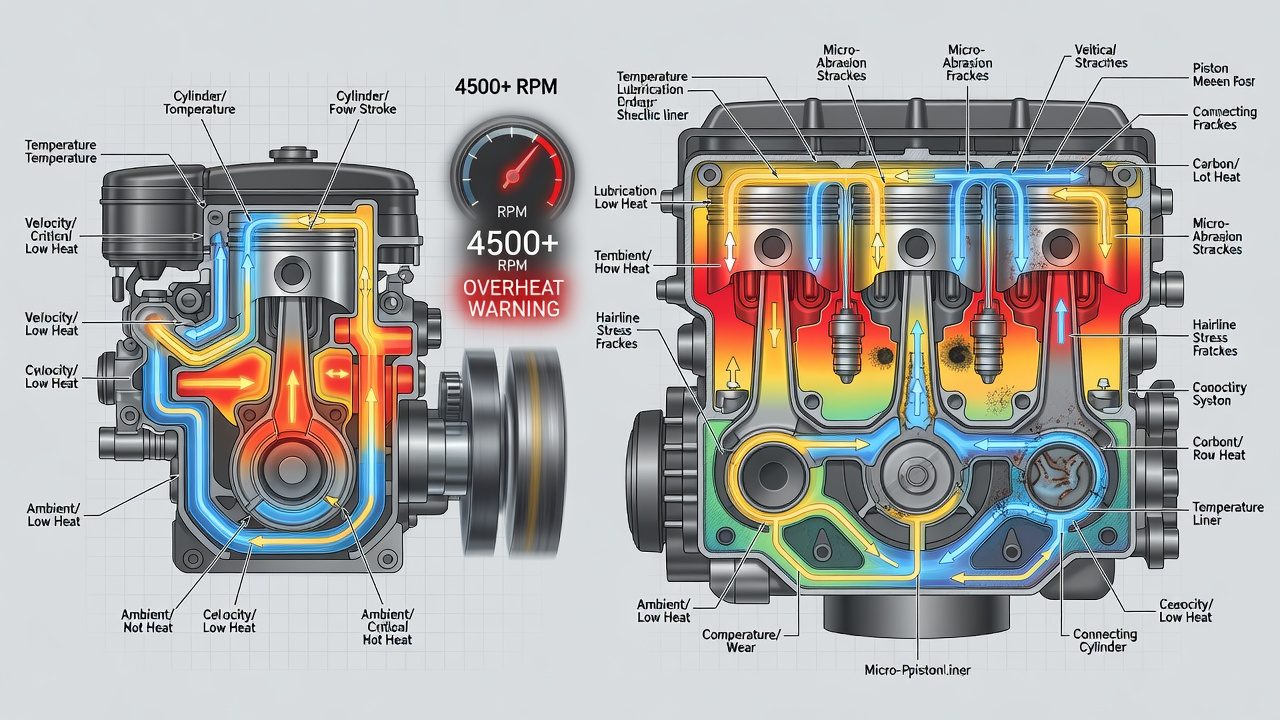
This difference matters because small engines in lawn mowers operate at higher RPMs (revolutions per minute) relative to their size. Thicker car oil would not flow quickly enough through the small passages in a lawn mower engine, reducing lubrication effectiveness and increasing wear. Conversely, small engine oil might flow too freely in a larger car engine, failing to maintain adequate protective film on engine components.
Operating Temperature Ranges
Small engines and car engines operate at fundamentally different temperatures. Lawn mower engines typically run hotter and at higher RPMs than car engines, creating unique demands on the oil’s ability to maintain viscosity under heat. The oil must stay stable and protective at these elevated temperatures without breaking down prematurely.
Car oil is specifically formulated for the temperature range of automotive engines—typically 40°F to 250°F under normal driving conditions. Small engine oil is engineered to handle the extreme conditions of lawn mower engines, which may reach 300°F or higher during operation.
Protective Additives
Lawn mower oils contain specific additives that car oils lack. Small engine oils include:
- Ash-reducing additives: Small engines lack the sophisticated emissions systems of modern cars, so they burn more oil during operation. Ash from oil combustion can build up in the engine, causing deposits and reducing performance. Small engine oils minimize ash production.
- Anti-scuff protection: Small engine oils contain zinc-based anti-wear compounds that protect against metal-to-metal contact during startup and high-load operation.
- Corrosion inhibitors: Lawn mowers are frequently stored for extended periods without running, allowing moisture to accumulate inside the engine. Small engine oils contain additives that prevent rust and corrosion during storage.
- Detergents: Small engine oils contain detergents designed to prevent varnish and gum formation in small engine fuel systems and carburetors.
What Happens If You Use Car Oil in Your Lawn Mower
Using car oil in a lawn mower creates several specific problems that can damage your equipment and shorten its lifespan.
Engine Damage and Wear
If you use car oil in your lawn mower, the engine will not receive the specialized protection it needs. The incorrect viscosity means oil won’t flow properly through the engine’s small passages, potentially causing inadequate lubrication. This leads to increased friction between engine components, accelerated wear on pistons, rings, and valve stems, and in severe cases, complete engine seizure.
The lack of ash-reducing additives means that if the car oil burns in the engine (which it will, due to the lawn mower’s design), ash deposits accumulate on the piston and combustion chamber walls. This buildup reduces engine efficiency, increases compression, and can cause pre-ignition and detonation—knocking sounds that indicate internal damage.
Performance Issues
You’ll likely notice performance problems immediately or within a few uses:
- Difficult starting or failure to start
- Rough, uneven engine idle
- Loss of power during mowing
- Excessive smoke from the exhaust (indicating oil burning)
- Overheating (due to reduced cooling and increased friction)
- Fouled spark plugs (due to carbon deposits)
Warranty Voiding
Most lawn mower manufacturers explicitly require the use of small engine oil in their warranty documentation. Using car oil provides manufacturers with grounds to deny warranty claims for engine failure. If your mower develops a mechanical problem while running on car oil, you may be responsible for all repair costs—potentially hundreds of dollars for engine replacement.
Long-Term Consequences
Even if your lawn mower seems to run on car oil initially, long-term damage accumulates. Repeated ash buildup, inadequate anti-wear protection, and corrosion during storage will progressively degrade your engine. You might face costly repairs in the middle of mowing season when you depend on your equipment most.
Choosing the Right Oil for Your Lawn Mower
Selecting the correct oil for your lawn mower is straightforward once you understand what to look for.
Understanding SAE Viscosity Ratings
SAE (Society of Automotive Engineers) ratings indicate oil viscosity. The numbers represent how thick the oil is at specific temperatures:
- SAE 30: Single-grade oil, works best in warm climates. Thinner at cold temperatures, thicker at hot temperatures.
- 10W-30: Multi-grade oil with a winter rating (10W). The “W” means the oil flows well in cold temperatures. The “30” indicates viscosity at operating temperature. Best for variable climates and year-round use.
Most modern lawn mower manufacturers recommend 10W-30 because it performs reliably across temperature ranges and climates. Check your mower’s owner’s manual for the specific recommendation—it’s usually on a label under the engine cover or in the documentation.
Synthetic vs. Conventional Oil
Conventional oil is refined from crude oil and works well for most lawn mowers. It’s affordable and meets all small engine requirements.
Synthetic oil is chemically engineered and offers advantages in extreme conditions: better performance in very cold climates, resistance to breakdown at high temperatures, and longer intervals between changes (though most mowers are changed annually regardless). Synthetic oil costs more but provides superior protection for high-performance mowers or those used in challenging environments.
Your mower’s manual will specify if synthetic oil is acceptable. Most modern mowers can use either, but always confirm before switching.
Seasonal Oil Selection
If you live in a cold climate and store your mower during winter, use 10W-30 for easier starting in spring. The “10W” rating ensures the oil flows at low temperatures when you restart the mower after storage.
In warm climates where you mow year-round, SAE 30 works well and is slightly less expensive. Some regions experience wide seasonal temperature swings—in those areas, 10W-30 is the better choice for consistent performance.
Checking and Changing Your Oil
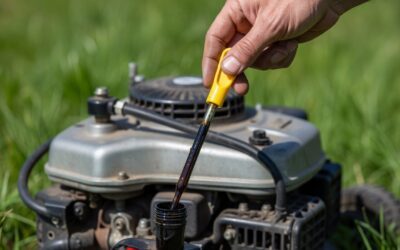
Most lawn mowers require an oil change every 50-100 operating hours or at least once per season. Before each use, check the oil level with the dipstick (the mower must be on level ground and cool). The level should reach the full mark on the dipstick.
To change oil, warm the engine for a minute, shut it off, locate the drain plug, and let oil drain into a pan. Replace the plug, refill with the correct amount of fresh oil, and check the level. Never overfill—excess oil can damage the engine.
When Emergency Substitution Might Be Tempting (And Why It’s Still Not Recommended)
You might face a situation where you’re about to mow and realize you don’t have small engine oil on hand—only car oil. The question arises: can I just use what I have?
Emergency Use: Short-Term vs. Long-Term Risk
A single mowing session using car oil is unlikely to destroy your engine immediately. The damage occurs gradually. However, it’s still not recommended because:
- Even one use can leave deposits that accumulate over time
- You risk creating the starting and performance problems mentioned above
- If the mower breaks down during use, you’ve created a warranty issue
- Small engine oil costs $4-8 per quart—it’s inexpensive enough to justify the trip to a hardware store
Better Emergency Solutions
If you’re out of small engine oil, your options are:
- Buy the correct oil: Most hardware stores, garden centers, and big-box retailers stock small engine oil. It’s widely available and cheap.
- Postpone mowing: Skip one week of mowing rather than risk engine damage.
- Ask a neighbor: Someone nearby likely has small engine oil for their own equipment.
If You’ve Already Used Car Oil
If you’ve already mowed with car oil, don’t panic. Immediately drain the car oil, refill with the correct small engine oil, and run the mower for 10-15 minutes to flush out remaining car oil residue. Monitor for performance issues over the next few uses. If the engine starts, idles, and runs normally on the correct oil, you’ve likely caught the problem early enough to avoid serious damage.
Frequently Asked Questions
Is 10W-30 the only oil I can use in my lawn mower?
No. Check your mower’s owner’s manual for the manufacturer’s recommendation. Some mowers specify SAE 30 for warm climates or allow both SAE 30 and 10W-30. Some commercial mowers might recommend different viscosities. Always follow the manual rather than guessing.
Can I use motorcycle oil in my lawn mower?
Motorcycle oil is closer to lawn mower oil in formulation than car oil, but it’s not ideal. Motorcycle oil often contains friction modifiers for wet clutches that small air-cooled engines don’t need. Stick with oil specifically labeled for small engines to ensure you’re using the correct additive package.
How often should I change my lawn mower’s oil?
Most manufacturers recommend an oil change every 50-100 operating hours or at least once per season, whichever comes first. For typical homeowners who mow weekly for 6-8 months, that’s one change per season in spring before heavy use begins.
What happens if I overfill my lawn mower with oil?
Overfilling causes oil to overflow into the combustion chamber, creating excessive smoke, fouled spark plugs, and carbon buildup. Worse, excess oil can hydraulically lock the engine on startup, causing serious internal damage. Always fill to the dipstick’s full mark, not above it.