Direct Answer: How to Start Your Craftsman Push Mower
To start a Craftsman push mower, begin by checking that you have adequate fuel (87-octane gasoline recommended) and the oil level is correct. Engage the primer bulb 3–5 times to move fuel into the carburetor, set the choke to the cold start position (or engage the automatic choke if your model has one), and pull the starter cord with a quick, firm motion. For warm starts, skip priming and set the choke to the run position instead. If the engine doesn’t catch after 5–6 pulls, stop and troubleshoot for flooded engine, fuel flow problems, or spark plug issues before continuing.
Pre-Start Checks: Fuel, Oil, and Safety
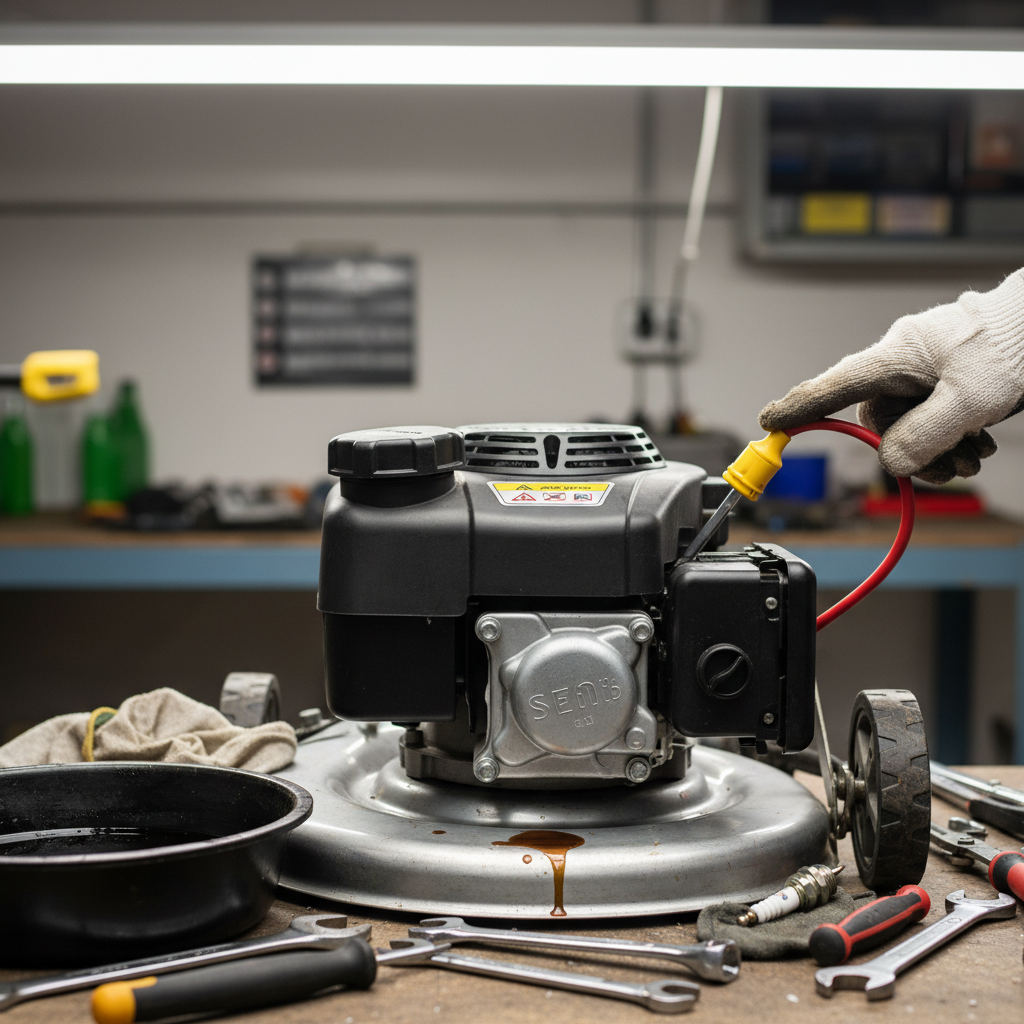
Before attempting to start your Craftsman push mower, take a few moments to verify the machine is ready and safe to operate. This simple step prevents many startup frustrations and protects your equipment.
Fuel Verification
- Fuel type: Use unleaded gasoline with an octane rating of 87 or higher. Avoid using fuel with more than 10% ethanol blend unless your mower is specifically labeled as ethanol-compatible.
- Fuel age: If the mower has sat unused for more than 30 days, the fuel may have degraded. For seasonal storage, drain old fuel and replace it with fresh gasoline before attempting a cold start.
- Fuel level: Check the fuel tank visually or by tilting the mower slightly to ensure adequate fuel is present. An empty or nearly empty tank will prevent the engine from turning over.
- Fuel cap: Ensure the fuel cap is sealed and vented properly. Some Craftsman models have a fuel cap vent that must be open for the engine to draw fuel.
Oil Level Check
Craftsman push mowers typically use SAE 30 or 10W-30 oil, depending on the model and climate. Check the oil level using the dipstick located on the side of the engine:
- Remove the dipstick and wipe it clean with a cloth.
- Reinsert the dipstick fully, then remove it again to read the level.
- The oil should reach the fill line or the upper mark on the stick.
- If oil is low, add the recommended grade until it reaches the proper level.
- Do not overfill, as excess oil can cause hard starting and white smoke.
Safety Precautions Before Startup
- Clear the mowing deck of debris, rocks, or sticks that could become projectiles.
- Inspect the spark plug wire to ensure it’s connected and not damaged.
- Place the mower on level ground with at least 10 feet of clearance on all sides.
- Keep hands, feet, and loose clothing away from the mower deck and blade area.
- Never attempt to start the mower indoors or in enclosed spaces due to carbon monoxide risk.
Priming the Engine: Primer Bulb Engagement
The primer bulb is a small, soft rubber bulb typically located on the side of the engine or carburetor. Priming moves fresh fuel from the tank into the carburetor bowl, ensuring the engine has fuel available when you pull the starter cord.
Locating the Primer Bulb
On most Craftsman push mowers, the primer bulb is a translucent or solid-colored rubber sphere roughly the size of a grape or marble. It’s usually positioned near the carburetor intake and connected to the fuel line. Consult your mower’s user manual if you’re unsure of its exact location, as placement varies slightly between models.
Priming Procedure
- Press the primer bulb firmly 3–5 times using your thumb or index finger.
- You should feel resistance as the bulb pushes fuel through the line.
- Stop priming once you see fuel visible inside the bulb or when resistance increases significantly.
- Wait 5–10 seconds before pulling the starter cord to allow fuel to settle in the carburetor.
When to Prime
- Cold starts: Always prime before starting a mower that’s been sitting unused for several hours or days.
- Warm starts: Skip priming if the engine is still warm and ran recently. Priming a warm engine can flood it with excess fuel.
- Seasonal startup: Prime generously during the first start of the season after winter storage, as fuel may have settled or partially drained from the carburetor.
Choke Position and Cold vs. Warm Starts
The choke restricts airflow to the engine, enriching the fuel mixture for easier cold starting. Understanding how to position the choke correctly is essential for successful starts in varying conditions.
Cold Start Procedure
For a mower that’s been idle for several hours or overnight:
- Set the choke to the “cold” or “start” position. On manual-choke models, this is typically a lever or dial labeled with a snowflake icon or the word “choke.” Move it fully to the cold start position.
- On automatic-choke models, the choke engages automatically based on engine temperature, so no manual adjustment is needed.
- Prime the engine 3–5 times as described above.
- Pull the starter cord with a quick, firm motion (see starter cord technique below).
- Once the engine catches and runs for a few seconds, gradually move the choke lever toward the “run” position to allow normal airflow.
- The engine should stabilize within 10–30 seconds as it warms.
Warm Start Procedure
For a mower that ran recently and the engine is still warm:
- Set the choke to the “run” or “open” position (typically fully counterclockwise or down).
- Skip the primer bulb or press it only once.
- Pull the starter cord, which should require less force than a cold start.
- The engine should fire immediately or within 1–2 pulls.
Automatic vs. Manual Choke
Newer Craftsman models often feature automatic choke systems that sense engine temperature and adjust the choke position without user intervention. If your mower has an automatic choke:
- Do not attempt to manually move the choke lever, as this can override the automatic system.
- Simply prime the engine and pull the starter cord; the automatic choke will handle the rest.
- If the automatic choke fails to engage on cold starts, consult your manual or a technician, as the system may require professional service.
Pulling the Starter Cord: Correct Technique
Proper starter cord technique ensures effective engine engagement and prevents injury from sudden recoil.
Grip and Stance
- Stand with your feet shoulder-width apart and knees slightly bent for balance.
- Place one hand on the mower’s handle to stabilize it, or position the mower between your legs (do not straddle the blade area).
- Grasp the starter cord handle firmly with your other hand, wrapping your fingers around it completely.
- Keep your thumb tucked under your fingers to avoid pinching or catching during recoil.
Pull Technique
- Begin with the cord slack, not already pulled tight.
- With a quick, firm motion, pull the cord downward and slightly toward your body in one smooth stroke.
- Pull with enough force to spin the engine quickly—aim for a motion that takes 1–2 seconds, not a slow drag.
- Allow the cord to snap back naturally; do not try to wind it back up manually.
- Let the rope fully retract before the next pull attempt.
- If the engine catches but dies, repeat pulls 2–4 more times to let it fully start.
Attempt Limits
If the engine does not start or catch after 5–6 pulls, stop and troubleshoot rather than continuing to pull. Excessive pulling can flood the carburetor or overheat the engine starter, making the problem worse.
Troubleshooting: Common Startup Problems
If your Craftsman push mower won’t start or starts inconsistently, work through these troubleshooting steps in order.
Engine Won’t Turn Over (No Resistance on Cord)
- Check the spark plug wire: Ensure the wire is connected firmly to the spark plug. A loose connection prevents ignition.
- Inspect the spark plug: Remove the wire and unscrew the spark plug. If it’s black and fouled, or if the gap is too wide, replace it with a new NGK or Champion plug of the correct size.
- Verify fuel flow: Disconnect the fuel line at the carburetor and direct it into a small cup. Prime the bulb several times. If no fuel flows, the fuel filter may be clogged or the tank vent blocked.
Engine Catches but Won’t Stay Running
- Move the choke toward the run position gradually, not abruptly. If the choke is still in the cold position, the engine will receive too much fuel and die.
- Check for air leaks: If fuel is leaking around the carburetor gasket or intake manifold, the engine cannot maintain combustion. Tighten carburetor bolts or replace worn gaskets.
- Verify idle speed: Some Craftsman models have an idle speed screw on the carburetor. If it’s turned too far counterclockwise, the engine won’t idle. Consult your manual for the correct adjustment.
Flooded Engine (Strong Fuel Smell, Black Spark Plug)
A flooded engine has excess fuel in the combustion chamber, preventing ignition. To clear a flood:
- Remove the spark plug and wipe or replace it if it’s wet and black.
- Crank the engine (pull the starter cord) 10–15 times without engaging the choke to expel excess fuel.
- Reinstall the spark plug or insert a new one.
- Do not prime the bulb. Set the choke to the run position.
- Pull the starter cord normally to restart.
Fuel Flow Problems
- Clogged fuel filter: If fuel doesn’t flow when you disconnect the fuel line and prime, the fuel filter (located inside the tank) may be blocked. This requires tank removal and filter replacement.
- Blocked fuel line: If the fuel line is cracked, kinked, or internally blocked, fuel cannot reach the carburetor. Replace the line if damage is visible.
- Fuel cap vent blocked: Some Craftsman fuel caps have a small vent hole. If this is plugged, a vacuum forms in the tank and fuel cannot flow. Clean or replace the cap.
Carburetor Issues (Last Resort)
If all above steps are complete and the engine still won’t start, the carburetor may be blocked by old fuel deposits or varnish:
- Drain the fuel tank completely and dispose of fuel properly.
- Remove the carburetor from the engine (requires a few bolts and the fuel line).
- Soak it in carburetor cleaner for 30 minutes to dissolve deposits.
- Use a small brush and compressed air to clean the internal passages and jets.
- Reinstall the carburetor, refill with fresh fuel, and attempt a start.
For users unfamiliar with carburetor removal, professional service is recommended at this stage.
Seasonal Startup: First Start of the Season
Starting your mower after winter storage or extended non-use requires extra attention to fuel system and engine condition.
Pre-Season Preparation
- Drain old fuel: If the mower sat for more than 30 days with fuel in the tank, drain it completely. Old fuel can gum up the carburetor and prevent starting. Pour the old fuel into a proper container for disposal at a fuel recycling station.
- Refill with fresh fuel: Add a full tank of fresh 87-octane gasoline. Consider adding a fuel stabilizer if you plan to store the mower again without use.
- Check and change oil: If the mower has been stored for more than one season, change the oil to fresh SAE 30 or 10W-30, depending on your climate.
- Inspect the spark plug: Remove the spark plug and examine it for corrosion, fouling, or excessive gap. Replace it if it looks worn or darkened.
- Clean the air filter: Remove the air filter cover and inspect the foam or paper filter. If it’s dirty, tap it gently to dislodge dust or wash it with mild soap and water. Replace if damaged.
First Start Procedure
- Set the choke to the cold start position.
- Prime the engine 5–7 times (more priming is needed if fuel has drained from the carburetor during storage).
- Wait 10 seconds for fuel to settle.
- Pull the starter cord firmly 3–4 times.
- If the engine doesn’t catch, stop and let the carburetor rest for 5 minutes, then repeat.
- Once started, gradually adjust the choke toward the run position as the engine warms.
- Allow the engine to run at idle for 2–3 minutes to clear out any accumulated deposits.
Frequently Asked Questions
How many times should I pull the starter cord before giving up?
Pull the starter cord 5–6 times before stopping to troubleshoot. Excessive pulling can flood the engine or overheat the starter, making the problem harder to diagnose. After 6 pulls with no catch or signs of ignition, wait a few minutes and re-evaluate your fuel, choke, and spark plug before trying again.
What’s the difference between a Craftsman push mower that won’t start and one that’s flooded?
A flooded engine produces a strong smell of gasoline, and the spark plug will be wet and black. A non-starting engine may show no fuel smell and no spark plug fouling. If you suspect flooding, remove and inspect the spark plug first. If it’s wet and black, clear the flood by removing the spark plug, cranking the engine 10–15 times without choke, reinstalling the spark plug, and restarting without priming.
Do I need to prime the engine every time I start the mower?
No. Prime only for cold starts (after several hours of non-use) or after seasonal storage. For warm starts or if you’re mowing continuously, skip priming to avoid flooding the engine. If your mower has an automatic choke, priming is still recommended for cold starts, but the choke will engage automatically.
What should I do if my Craftsman mower starts but then stalls immediately?
Immediately after starting, gradually move the choke lever from the cold position toward the run position. If the choke is still in the cold position when the engine turns over, it will receive excess fuel and stall. Also check for loose bolts on the carburetor or intake manifold, which can cause air leaks and stalling. Tighten any loose hardware and retry.
Key Takeaways
- Always verify fuel level and oil before attempting to start your Craftsman push mower.
- Prime the engine 3–5 times for cold starts using the primer bulb, but skip priming for warm starts.
- Set the choke to the cold start position for idle engines and gradually move it toward run as the engine warms.
- Use a quick, firm pull-cord motion and stop after 5–6 pulls if the engine doesn’t catch.
- If the engine won’t start, troubleshoot in order: spark plug, fuel flow, choke position, then carburetor issues.
- For seasonal startup, drain old fuel, replace the oil, clean the air filter, and expect to prime more generously than for regular cold starts.