The Best Time to Mow Your Lawn: Quick Answer
The best time to mow your lawn is mid-morning between 8-10 AM when dew has dried but temperatures remain moderate, or late afternoon between 4-6 PM when heat stress diminishes. Avoid mowing in early morning (wet grass), midday (heat stress), or evening (fungal disease risk). Seasonally, focus on active growth periods in spring and early fall for cool-season grasses, and late spring through summer for warm-season varieties.
Understanding Optimal Lawn Mowing Times
Why Does the Time of Day Matter When Mowing Your Lawn?
Timing your lawn mowing around natural conditions—moisture levels, temperature, and grass recovery capacity—directly impacts grass health, cut quality, and disease prevention. Grass blades are living tissue that experience stress during cutting. When you mow at the wrong time, you compound this stress with environmental factors like excessive moisture, extreme heat, or conditions that promote fungal growth overnight.
The science behind optimal mowing timing centers on three key factors:
- Moisture content: Wet grass doesn’t cut cleanly and clumps in the mower deck, creating uneven cuts and promoting disease
- Temperature stress: Extreme heat during mowing stresses grass recovery and can damage both the plant and your mower engine
- Disease vulnerability: Freshly cut grass is vulnerable to fungal infection, making evening mowing particularly risky
What Happens to Grass When You Mow at the Wrong Time?
Mowing at suboptimal times creates multiple problems:
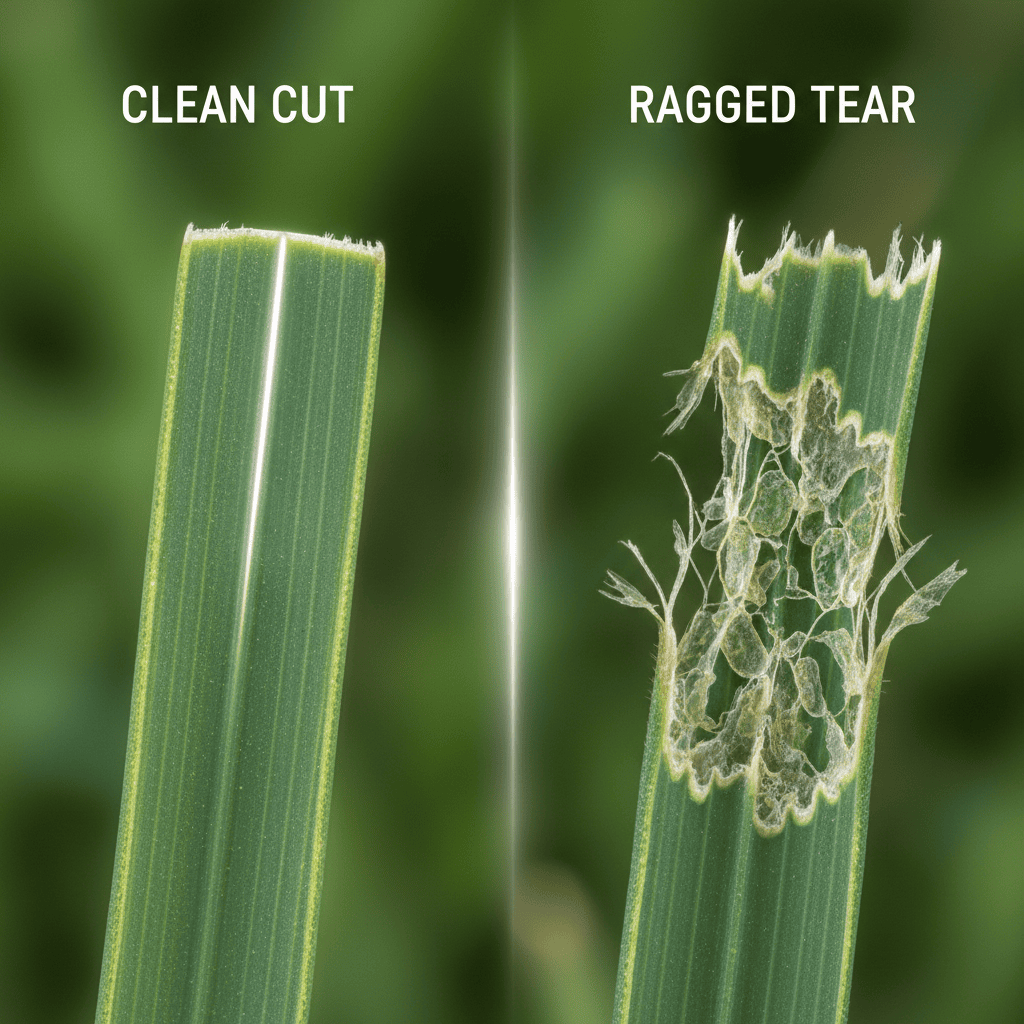
- Uneven cuts: Wet grass doesn’t cut cleanly, resulting in torn blades that brown at the edges and recover more slowly
- Fungal disease: Open wounds from cutting combined with moisture and warm overnight temperatures create ideal conditions for fungal infections like brown patch and dollar spot
- Heat stress: Mowing during peak heat combined with the stress of cutting can push grass into dormancy or decline
- Mower damage: Wet grass clogs mower decks, dulls blades faster, and can damage the engine
- Poor clipping dispersal: Wet clippings clump together, creating thatch buildup and blocking sunlight to the lawn below
The Best Times of Day to Mow
Why Mid-Morning (8-10 AM) Is Ideal for Lawn Mowing
Mid-morning represents the optimal mowing window for most lawns and climates. By 8-10 AM, several favorable conditions align:
- Dew has dried: Morning dew has evaporated, eliminating the moisture that causes uneven cuts and clumping
- Temperatures are moderate: The day hasn’t reached peak heat yet, so grass and mower engine experience minimal heat stress
- Grass is hydrated: The plant has absorbed overnight moisture, making it more resilient to cutting stress
- Recovery time remains: The grass has the entire day and cool evening to recover before overnight fungal vulnerability peaks
- Optimal blade sharpness: Cooler morning conditions mean your mower blade cuts more cleanly than it would after heating throughout the day
This window works particularly well for cool-season grasses in northern climates and provides a safe option year-round in most regions.
Why Late Afternoon (4-6 PM) Works as an Alternative
Late afternoon offers a secondary optimal window, particularly valuable during spring and fall when temperatures are mild:
- Cooler temperatures: As afternoon heat subsides, both grass and mower experience reduced stress
- Dew is absent: Unlike early morning, no moisture remains on the grass
- Grass has recovered: If you mowed earlier in the season, the lawn has had time to recover from previous cuts
- Evening recovery window: Cool overnight temperatures allow the grass to recover without the heat stress that would occur if mowing happened during peak afternoon heat
Late afternoon mowing works best during cooler months. During summer, this timing may still encounter residual heat that creates stress, making mid-morning preferable.
What About Mowing in Hot Climates?
In hot climates with warm-season grasses, timing becomes even more critical. During summer months in these regions:
- Stick strictly to early morning (7-9 AM) before heat peaks
- Consider mowing less frequently during peak summer heat stress
- Increase mowing height to provide more leaf surface for photosynthesis and recovery
- Avoid any mowing during afternoon or evening when temperatures exceed 85-90°F
Times to Avoid When Mowing
Why Early Morning Mowing (Before 8 AM) Is Problematic
While early morning seems logical, mowing before dew dries creates significant problems:
- Wet grass doesn’t cut cleanly: Moisture weighs down grass blades, causing the mower to bend them rather than cut them, resulting in torn blade tips
- Torn blades brown and recover slowly: Ragged cuts expose more plant tissue to disease and stress the grass recovery process
- Clumping in the mower deck: Wet clippings stick together, clogging the mower and creating uneven dispersal
- Thatch buildup: Clumped wet clippings don’t break down as efficiently, contributing to thatch accumulation
- Mower blade dulling: Wet grass is harder to cut, causing blades to dull faster and requiring more frequent sharpening
Why Midday Mowing (10 AM – 4 PM) Causes Stress
Midday mowing during peak heat creates a double stress situation:
- Heat stress on grass: Cutting grass removes leaf tissue needed for photosynthesis and water regulation, and doing this during peak heat forces the plant to recover under stress
- Mower engine stress: Mowing thick, dry grass during extreme heat can overheat the engine, causing performance issues and shortening equipment life
- Reduced recovery capacity: High temperatures limit the grass’s ability to heal from cutting wounds quickly
- Increased water demand: Freshly cut grass loses more water through exposed tissue, requiring more irrigation during peak heat
- Risk of dormancy: In extreme heat, stressed grass may enter dormancy or decline rather than recover
This timing is particularly problematic during summer months and in hot climates.
Why Evening Mowing (After 6 PM) Promotes Disease
Evening mowing creates ideal conditions for fungal disease development:
- Overnight moisture vulnerability: Freshly cut grass has open wounds from cutting. When combined with cool, moist overnight conditions and morning dew, this creates a perfect environment for fungal spores to germinate
- Reduced recovery time: Grass has only cool overnight hours to begin healing, and fungal infections can establish during this vulnerable period
- Disease-promoting conditions: Cool, moist nights following evening cuts are ideal for fungal diseases like brown patch, dollar spot, and powdery mildew
- Clipping decomposition issues: Evening clippings decompose slowly overnight, potentially creating localized moisture and disease pressure
This timing should be avoided, especially during humid seasons when fungal disease pressure is already high.
Seasonal Timing for Lawn Mowing
When Is the Best Season for Lawn Mowing?
Optimal mowing seasons align with grass growth cycles, which differ between cool-season and warm-season grasses:
Cool-Season Grasses (Northern climates):
- Spring (March-May): Primary active growth period when grass emerges from dormancy and grows vigorously
- Early Fall (August-September): Secondary active growth period when cooler temperatures and moisture trigger renewed growth
- Summer and late fall: Reduce mowing frequency as growth slows
- Winter: Minimal to no mowing as grass is dormant
Warm-Season Grasses (Southern climates):
- Late spring through summer (May-August): Primary active growth period when warm temperatures trigger vigorous growth
- Spring and fall transitions: Moderate mowing frequency as growth transitions
- Winter: Minimal to no mowing as warm-season grasses enter dormancy
How Does Grass Type Affect Mowing Timing?
Different grass species have distinct growth patterns that affect optimal mowing timing:
| Grass Type | Growth Pattern | Best Mowing Season | Mowing Frequency |
|---|---|---|---|
| Kentucky Bluegrass | Cool-season, spring and fall peaks | Spring and early fall | Weekly during growth periods |
| Perennial Ryegrass | Cool-season, rapid spring growth | Spring through early summer | Twice weekly during peak growth |
| Bermuda Grass | Warm-season, summer peak | Late spring through summer | Weekly during growing season |
| Zoysia Grass | Warm-season, slower growth | Late spring through summer | Every 7-10 days during growth |
| Fescue Blends | Cool-season, moderate growth | Spring and fall | Weekly during peak periods |
How Often Should You Mow During Peak Growing Season?
Mowing frequency depends on grass type, growth rate, and desired height:
- General rule: Follow the “one-third rule”—never remove more than one-third of the grass blade in a single mowing
- Cool-season grasses during spring: Weekly or twice-weekly mowing maintains optimal height and health
- Warm-season grasses during summer: Weekly mowing keeps grass at ideal height without excessive stress
- Slow-growing varieties: Every 7-10 days may be sufficient, depending on growth rate
- Ideal cutting height: 2.5-3.5 inches for most lawns; taller heights reduce stress and improve root development
Regional and Climate Variations
Do Cool-Season and Warm-Season Grasses Require Different Mowing Times?
Yes, significantly. These grass types have opposite growth cycles:
Cool-Season Grasses (fescue, bluegrass, ryegrass):
- Peak growth in spring and fall when temperatures are 60-75°F
- Best mowing times: mid-morning or late afternoon during spring and fall
- Reduce mowing during summer heat stress
- Avoid mowing during winter dormancy
Warm-Season Grasses (Bermuda, Zoysia, St. Augustine):
- Peak growth in summer when temperatures exceed 80°F
- Best mowing times: early morning (7-9 AM) during summer to avoid peak heat
- Minimal mowing during spring and fall transitions
- No mowing during winter dormancy
How Do Humidity and Rainfall Affect Optimal Mowing Timing?
Environmental moisture significantly impacts mowing conditions:
High Humidity Regions:
- Dew dries more slowly, pushing optimal mowing time to 9-10 AM instead of 8 AM
- Evening mowing is even more problematic due to overnight moisture and fungal disease risk
- Increase mowing height slightly to improve air circulation and reduce disease pressure
- Ensure mower blades are sharp to cut cleanly through moisture-laden grass
After Rainfall:
- Wait 24-48 hours after rain before mowing to allow soil to dry and grass moisture to normalize
- Mowing wet soil causes compaction and turf damage
- Wet grass clippings clump severely, creating thatch and disease problems
Dry Climates:
- Dew dries quickly, allowing earlier mowing (7:30-8 AM)
- Afternoon mowing is more viable since fungal disease pressure is lower
- Increase irrigation after mowing to support recovery in low-moisture conditions
What Adjustments Are Needed for Different Climate Zones?
Northern Climates (Cool-Season Dominant):
- Mow mid-morning (8-10 AM) during spring and fall growth periods
- Reduce frequency during summer; increase height to 3-3.5 inches
- Stop mowing by late fall as grass enters dormancy
Southern Climates (Warm-Season Dominant):
- Mow early morning (7-9 AM) during summer peak growth
- Minimize mowing during winter dormancy
- Adjust timing based on humidity; earlier starts may be necessary in humid regions
Transitional Climates (Mixed Grass Types):
- Follow cool-season timing (mid-morning) during spring and fall
- Follow warm-season timing (early morning) during summer
- Be flexible with frequency as grass growth rates fluctuate with seasonal transitions
Additional Mowing Timing Considerations
Maintaining Sharp Mower Blades for Optimal Cuts
Blade sharpness matters more than timing. Dull blades tear grass regardless of when you mow, promoting disease and slow recovery. Sharpen blades every 20-25 hours of mowing or at least twice during peak season. Sharp blades cut cleanly, reducing stress and disease risk.
Clipping Management and Timing
When you mow affects how clippings decompose and contribute to lawn health:
- Mid-morning mowing: Clippings dry quickly and disperse evenly, providing nutrients without thatch buildup
- Evening mowing: Clippings remain moist overnight, clump together, and decompose slowly, increasing disease risk
- Optimal practice: Leave clippings on the lawn (mulching) when mowing at ideal times; they return nutrients and reduce fertilizer needs
Soil Conditions and Mowing Timing
Soil moisture affects both grass health and mower performance:
- Wet soil: Avoid mowing within 24-48 hours of heavy rain to prevent compaction
- Compacted soil: Reduces root development and grass health; timing mowing when soil is drier helps prevent this
- Optimal soil condition: Slightly moist but not waterlogged; typically achieved by mid-morning after dew dries but before afternoon heat
Frequently Asked Questions
Can I mow my lawn at any time during the day if my grass is dry?
Not ideally. While dry grass is better than wet grass, midday heat still creates stress on both the grass and mower. Even with dry conditions, mowing during peak afternoon heat (1-4 PM) stresses grass recovery and can push it into dormancy during summer. Mid-morning or late afternoon remain superior choices even with dry grass because they minimize heat stress on the plant during its recovery period.
Is it better to mow before or after watering my lawn?
Mow before watering your lawn. After mowing, the grass needs time to recover from cutting stress before receiving irrigation. Mow in the morning, allow the grass to recover throughout the day, and water in the late afternoon or evening (though not immediately before mowing the next day). This timing allows the grass to heal while managing moisture levels appropriately.
What should I do if my lawn grows too fast and I can’t mow at the ideal time?
If growth outpaces your ideal mowing schedule, increase mowing frequency at optimal times rather than mowing at suboptimal times. For example, mow twice weekly at 8-10 AM instead of once weekly at 2 PM. Alternatively, increase your mowing height slightly to slow growth rate and reduce frequency. Never compromise on timing to maintain a schedule; poor timing creates more lawn problems than slightly overgrown grass.
Does mowing time matter less during cooler months?
Timing still matters during cooler months, but the consequences of poor timing are less severe. During spring and fall, mid-morning remains ideal, but late afternoon becomes more viable since heat stress is minimal. Winter mowing (in regions where cool-season grass grows slowly) is less critical regarding timing since growth is minimal and disease pressure is lower. However, maintaining mid-morning timing even in cooler months establishes good habits and prevents fungal issues during shoulder seasons.
Key Takeaways for Optimal Lawn Mowing Timing
- Mid-morning (8-10 AM) is the best time to mow for most lawns and climates
- Late afternoon (4-6 PM) works as a secondary option during cooler months
- Avoid early morning (wet grass), midday (heat stress), and evening (fungal disease risk)
- Adjust timing based on grass type: cool-season grasses in spring/fall, warm-season grasses in summer
- Regional humidity and climate affect dew drying times and optimal windows
- Mow during active grass growth periods for best health and appearance
- Follow the one-third rule regardless of timing: never remove more than one-third of the blade
- Maintain sharp blades and proper height to minimize stress regardless of timing
- Consistency matters: establish a regular mid-morning mowing routine and adjust seasonally as needed