What Is the Voltage of a Lawn Mower Battery? (Complete Guide)
Direct Answer: Most residential lawn mower batteries are 12 volts (12V). This standard applies to gas-powered riding mowers, zero-turn mowers, and walk-behind models with electric start. However, voltage varies significantly by mower type—cordless electric mowers may use 18V to 80V packs, while older garden tractors sometimes use 6V batteries.
Understanding your lawn mower’s voltage specification is essential for proper battery replacement, troubleshooting electrical issues, and ensuring compatibility. This comprehensive guide covers everything you need to know about lawn mower battery voltages, from standard specifications to diagnostic procedures.
Standard Voltage Specifications by Mower Type
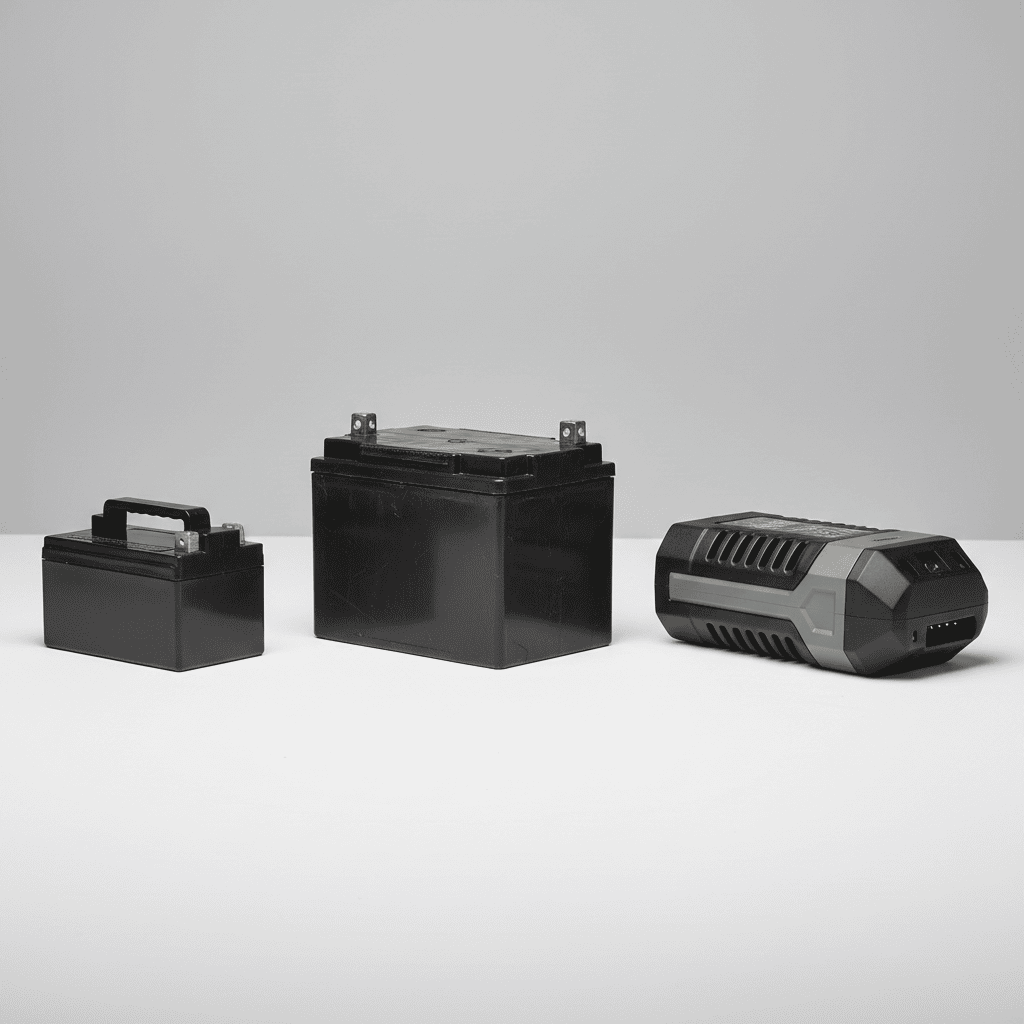
Lawn mower batteries are not one-size-fits-all. The voltage requirement depends on the mower’s power system, size, and intended use. Below is a comprehensive breakdown of voltage specifications by mower category.
Gas-Powered Riding Mowers and Tractors
Riding mowers and lawn tractors predominantly use 12V batteries. This standard has become universal for several reasons:
- Industry standardization: Most riding mower manufacturers use 12V electrical systems to simplify production and parts inventory
- Adequate starting power: 12V provides sufficient cold cranking amps (CCA) to start gasoline engines in various temperatures
- Accessory support: 12V systems can power lights, hour meters, and other accessories common on riding mowers
Typical specifications for riding mower batteries include:
- Voltage: 12V nominal (actual resting voltage: 12.6–12.7V when fully charged)
- Capacity: 200–400 cold cranking amps (CCA)
- Reserve capacity: 30–60 minutes
- Group size: Typically Group U1, U1R, or 22NF
Walk-Behind Gas Mowers with Electric Start
Push mowers equipped with electric start mechanisms also typically use 12V batteries, though they are often smaller capacity than riding mower batteries due to their lighter starting requirements.
Key specifications include:
- Voltage: 12V
- Physical size: Smaller group sizes (Group 22F or 22NF)
- Capacity: 150–300 CCA
- Common applications: Self-propelled gas mowers, gas-powered lawn edgers with electric start
Cordless and Battery-Powered Electric Mowers
Cordless electric mowers operate on lithium-ion battery packs that deliver higher voltages than traditional lead-acid batteries. These voltages are significantly different from gas-powered mowers:
| Battery Voltage | Typical Mower Type | Average Runtime | Charging Time |
|---|---|---|---|
| 18V | Entry-level push mowers, small yards | 30–45 minutes | 60–90 minutes |
| 36V (2 × 18V) | Mid-range residential mowers | 45–60 minutes | 60–120 minutes |
| 40V | Mid-range residential mowers | 50–70 minutes | 90–120 minutes |
| 56V | High-performance residential, small commercial | 60–90 minutes | 120–150 minutes |
| 72V–80V | Commercial-grade electric mowers | 90–120+ minutes | 150–180 minutes |
Important: Cordless electric mower batteries are typically integrated pack systems that must be replaced as complete units. Attempting to modify voltage configurations can damage the mower’s electronics or create safety hazards.
Commercial and Zero-Turn Mowers
Commercial-grade mowing equipment may utilize different voltage configurations depending on the manufacturer and model:
- Standard commercial zero-turn mowers: Typically 12V systems with high-output batteries (350–500 CCA)
- Electric-powered commercial mowers: 48V, 56V, 72V, or 80V lithium-ion systems
- Dual-battery configurations: Some larger commercial tractors use two 12V batteries wired in series for 24V systems
Older and Vintage Mower Models
Lawn tractors and garden tractors manufactured before the 1990s sometimes used 6V batteries. These systems were standard on older equipment but have been largely phased out in favor of 12V electrical systems.
If you own vintage equipment, check for:
- Positive grounding: Some older 6V systems used positive ground configurations
- Limited availability: 6V batteries for lawn equipment are harder to find
- Upgrade considerations: Converting to 12V requires additional electrical modifications
How to Identify Your Lawn Mower Battery Voltage
Correctly identifying your battery’s voltage is the first step toward proper replacement or troubleshooting. There are several reliable methods to determine voltage specifications.
Method 1: Read the Battery Label
The most straightforward method is to examine the battery label directly:
- Look for “12V” or “6V” designation prominently displayed on the battery casing
- Check for voltage abbreviations: “12V,” “12-volt,” or “12 Volts”
- Note the group size: Group numbers (U1, 22NF, etc.) often correlate with voltage
Tip: Batteries stored in garages or sheds may have faded labels. If the text is illegible, proceed to alternative identification methods.
Method 2: Check the Owner’s Manual
Your mower’s owner manual contains definitive battery specifications:
- Battery type and voltage: Listed in the specifications or maintenance section
- Group size requirements: Physical dimensions and terminal configuration
- Recommended replacement brands: Sometimes includes OEM recommendations
If you’ve misplaced your physical manual, most manufacturers provide digital copies on their websites. Search for your mower’s model number along with “operator manual” or “parts manual.”
Method 3: Use a Multimeter
A digital multimeter provides accurate voltage readings. This method is especially useful when battery labels are missing or faded:
Step-by-step procedure:
- Set your multimeter to DC voltage (20V range)
- Connect red probe to positive terminal (+)
- Connect black probe to negative terminal (−)
- Read the display:
| Measured Voltage | Battery Status |
|---|---|
| 12.6V – 12.8V | Fully charged 12V battery |
| 12.2V – 12.4V | 75% – 50% charged |
| 11.8V – 12.0V | 25% – 50% charged (needs charging) |
| Below 11.8V | Discharged or failing battery |
For 6V batteries:
| Measured Voltage | Battery Status |
|---|---|
| 6.3V – 6.4V | Fully charged 6V battery |
| 5.8V – 6.1V | 50% charged |
| Below 5.8V | Discharged or failing |
Method 4: Inspect Physical Terminals and Casing
Physical characteristics can indicate voltage:
- Terminal size: 12V batteries typically have larger terminals than 6V batteries
- Casing dimensions: Larger batteries generally indicate 12V systems
- Terminal markings: Look for + (positive) and − (negative) symbols near terminals
Understanding Voltage vs. Amperage (Ah) in Replacements
When replacing a lawn mower battery, two specifications are critical: voltage and amp-hour capacity (Ah). Understanding the difference prevents compatibility errors and potential damage.
Voltage: The Non-Negotiable Specification
Voltage must match exactly. Using a battery with incorrect voltage can cause:
- Electrical system damage: Higher voltage can burn out the starter motor and damage electronic components
- Insufficient starting power: Lower voltage cannot generate enough power to start the engine
- Charging system failures: The alternator or charging system may not function properly
- Safety hazards: Electrical shorts and potential fire risks
Always replace a 12V battery with another 12V battery. Never substitute 6V batteries in 12V systems or vice versa.
Amp-Hours (Ah): The Flexible Specification
Amp-hour capacity indicates how much electrical charge a battery can store and deliver over time. Unlike voltage, you have flexibility when selecting Ah ratings:
Higher Ah ratings are generally acceptable when:
- Physical dimensions fit: The battery must physically fit the battery compartment
- Terminal configuration matches: Polarity and terminal type must be identical
- The application benefits: Higher capacity provides longer runtime and better cold-weather performance
Examples of acceptable substitutions:
- Replace a 12V 10Ah battery with a 12V 12Ah or 12V 15Ah battery
- Upgrade from 12V 35Ah to 12V 40Ah if dimensions permit
Cold Cranking Amps (CCA): Starting Power
CCA measures a battery’s ability to deliver starting power at low temperatures (0°F / -18°C). For lawn mower applications:
- Minimum CCA: Always meet or exceed the manufacturer’s minimum specification
- Exceeding CCA: Higher CCA ratings are beneficial, not harmful
- Climate considerations: Colder climates require higher CCA ratings
Example: If your mower requires 250 CCA minimum, a battery rated at 300 CCA or 350 CCA will work perfectly and may provide better cold-weather starting.
Troubleshooting Voltage Issues
Battery-related problems often manifest through voltage irregularities. Understanding these symptoms helps diagnose issues before they leave you stranded.
Normal Voltage Ranges for Lawn Mower Batteries
12V Lead-Acid Batteries:
- Resting (no load): 12.6V – 12.7V (fully charged)
- During charging: 13.8V – 14.5V (normal alternator/generator output)
- Under load (starting): Should not drop below 9.6V
- After extended storage: 12.4V minimum (below indicates discharge)
Cordless Lithium-Ion Batteries:
- Fully charged: Varies by cell configuration (typically 42V for 36V systems, etc.)
- Storage voltage: 40% – 60% charge recommended for long-term storage
- Low voltage cutoff: Most controllers cut power at 30% – 40% remaining charge
Common Voltage-Related Problems and Solutions
Problem: Battery reads below 12V at rest
Diagnosis: The battery is discharged or failing
Solutions:
- Charge the battery using a proper trickle charger (2–10 amp rate)
- If voltage doesn’t rise above 12V after charging, replace the battery
- Check for parasitic drains (clock, alarm systems) when mower is stored
Problem: Battery voltage drops below 9.6V during starting
Diagnosis: Insufficient cold cranking amps or battery degradation
Solutions:
- Test the battery’s CCA with a battery tester
- Replace with a battery meeting or exceeding original CCA specifications
- Check starter motor current draw (excessive draw indicates starter problems)
Problem: Voltage exceeds 15V during charging
Diagnosis: Overcharging or faulty voltage regulator
Solutions:
- Immediately disconnect the charger to prevent damage
- Test the voltage regulator/alternator output
- Replace faulty charging components before recharging the battery
- Have the electrical system inspected by a qualified technician
Problem: Cordless mower shuts down before completing mowing
Diagnosis: Insufficient battery capacity or cell degradation
Solutions:
- Fully charge the battery before each use
- Measure pack voltage under load with a specialized lithium battery tester
- Replace batteries showing significant capacity loss (typically below 80% of rated capacity)
- Consider upgrading to a higher capacity battery pack if available
When to Replace Your Lawn Mower Battery
Consider battery replacement when:
- Age exceeds 3–5 years: Lead-acid batteries degrade over time regardless of use
- Physical damage: Cracked case, swollen appearance, or terminal corrosion
- Persistent undercharging: Battery won’t hold a charge after multiple charge cycles
- Slow cranking: Engine turns over sluggishly despite full charge
- Voltage below 11.5V: After full charge, if resting voltage doesn’t reach 12.6V
Charging and Maintenance Best Practices
Lead-Acid Battery Maintenance
- Use appropriate charger: Automatic chargers with float/maintenance modes are ideal
- Charge rate: 10% – 20% of rated Ah capacity (e.g., 1–2 amps for a 10Ah battery)
- Storage: Disconnect negative terminal and maintain 12.4V+ during winter storage
- Terminal cleaning: Remove corrosion with baking soda solution and wire brush
- Water levels: Check monthly for flooded lead-acid batteries; refill with distilled water only
Lithium-Ion Battery Care
- Avoid complete discharge: Most manufacturers recommend recharging at 20% – 30% remaining
- Storage charge: Maintain 40% – 60% charge for extended storage periods
- Temperature considerations: Avoid charging in extreme heat or cold
- Original charger only: Use manufacturer-approved charging equipment
- Proper disposal: Recycle at designated lithium battery recycling centers
Frequently Asked Questions
What voltage do most residential lawn mower batteries use?
Most residential lawn mower batteries operate at 12 volts (12V). This includes gas-powered riding mowers, lawn tractors, zero-turn mowers, and walk-behind mowers with electric start. The 12V standard provides adequate starting power while being widely available and affordable.
Can I use a higher amp-hour battery in my lawn mower?
Yes, you can typically use a battery with a higher amp-hour (Ah) rating as long as the voltage matches exactly and the physical dimensions fit the battery compartment. Higher Ah batteries provide longer runtime and better cold-weather performance. For example, replacing a 12V 10Ah battery with a 12V 14Ah battery is acceptable if the physical size is appropriate.
How do I test my lawn mower battery voltage?
To test your battery voltage, set a digital multimeter to DC voltage (20V range), connect the red probe to the positive terminal and black probe to the negative terminal, then read the display. A fully charged 12V battery should read 12.6–12.7V. If the reading is below 12.4V, the battery needs charging. Below 11.8V indicates a discharged or failing battery that may need replacement.
Why does my cordless electric mower use such high voltage compared to gas mowers?
Cordless electric mowers use lithium-ion battery packs ranging from 18V to 80V because these batteries power the motor directly, unlike gas mowers where the battery only starts the engine. Higher voltage systems deliver more power efficiently to electric motors, enabling performance comparable to gas-powered equipment. Cordless mowers typically use 36V, 40V, 56V, or 80V configurations depending on the manufacturer’s design.
Conclusion
Understanding lawn mower battery voltage is essential for proper maintenance, troubleshooting, and replacement. The majority of residential lawn mowers—both gas-powered and electric—use standardized voltage configurations that are easy to identify and replace.
Key takeaways:
- 12V is the standard for most residential gas-powered riding mowers, tractors, and walk-behind mowers with electric start
- 6V batteries may be found on older equipment but are increasingly rare
- Cordless electric mowers utilize higher voltage packs (18V–80V) depending on power requirements
- Voltage must match exactly when replacing batteries, while amp-hour capacity can be upgraded within physical constraints
- Regular voltage testing with a multimeter helps identify battery issues before they cause starting failures
Always consult your owner’s manual for specific battery requirements, and when in doubt, verify specifications before purchasing a replacement. Proper battery maintenance extends service life, ensures reliable starting, and protects your investment in lawn care equipment.