Quick Answer
To start a riding lawn mower, engage the parking brake and disengage the mower deck, then insert the key and turn it to the start position (or press the ignition button on push-button models). On cold starts, move the choke to the start position first. Release the key once the engine turns over, allow it to idle for 30 seconds, then disengage the choke and engage the mower deck when ready to operate.
Pre-Start Safety Checks
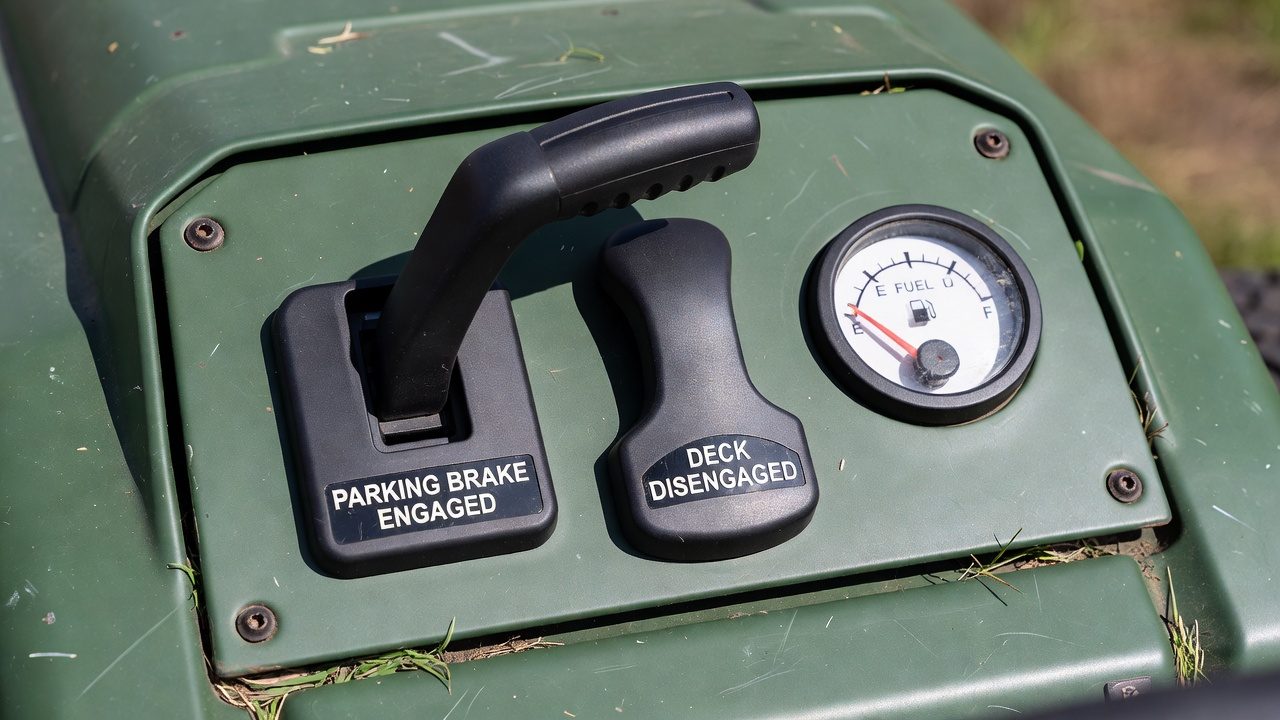
Before attempting to start your riding lawn mower, take time to verify several safety conditions. These checks prevent accidents and ensure your equipment operates as intended.
- Engage the parking brake: Locate and fully engage the parking brake lever or pedal. This prevents unintended movement when the engine starts.
- Disengage the mower deck: Move the deck engagement lever to the neutral or disengaged position. The blades must not be spinning when you start the engine.
- Check fuel level: Verify that the fuel tank contains adequate gasoline. Most mowers require regular unleaded gasoline; check your manual for the recommended octane rating and any fuel additives.
- Inspect the area: Ensure bystanders, pets, and obstacles are clear of the mower. Keep a minimum distance of 10 feet around the equipment.
- Verify control positioning: Confirm that the throttle is in the idle or start position and that no controls are stuck or damaged.
Understanding Your Mower’s Ignition System
Riding mowers use one of two primary ignition systems, and knowing which yours has will determine your exact starting procedure.
Key Ignition Systems
Most traditional and mid-range riding mowers use a key ignition similar to an automobile. Insert the key into the ignition switch located on the dashboard or steering column. The key typically has three positions: off (removed or in the neutral position), on (engine electronics powered), and start (engages the starter motor). Key ignition systems often include a choke mechanism—either manual (a lever or knob you adjust) or automatic (controlled by the engine’s temperature sensor).
Push-Button Ignition Systems
Newer riding mowers, particularly premium models and zero-turn-radius mowers, use push-button start. These systems use a starter button on the dashboard or control panel. The parking brake and deck engagement are electronically monitored—the button will not function if safety interlocks are not engaged. Push-button systems typically feature automatic choke adjustment and require no manual intervention beyond pressing and holding the button.
Choke Mechanisms
The choke restricts airflow into the carburetor, enriching the fuel mixture for cold starts. Manual chokes require you to move a lever or knob to the “start” or “choke” position before ignition; automatic chokes adjust themselves as the engine warms. Your mower’s manual will specify the correct choke position for your model.
Cold-Start Procedure
A cold start—starting an engine that has not run recently or has cooled completely—requires additional steps to ensure reliable ignition.
Step-by-Step Cold Start
- Engage all safety controls: Confirm the parking brake is fully engaged and the mower deck lever is in the neutral position.
- Activate the choke (manual systems): Move the manual choke lever or knob to the “start” or full choke position. This enriches the fuel mixture needed for a cold engine.
- Insert the key (key ignition): Insert the key fully into the ignition switch. Do not turn it yet.
- Press the brake pedal: On most mowers, you must depress the brake pedal to enable the starter. This is a safety interlock that prevents the mower from moving during startup.
- Turn the key to start (key ignition) or press the button (push-button ignition): For key systems, turn the key clockwise to the start position. For push-button systems, press and hold the ignition button. The starter motor will engage and crank the engine.
- Release once the engine fires: The moment the engine begins to turn over and run, release the key or button. Do not hold the starter engaged beyond this point, as doing so can damage the starter motor.
- Allow idle warm-up: Let the engine idle for 30 seconds to one minute. During this time, gradually move the manual choke lever to the “run” position. Automatic chokes will adjust on their own.
- Verify stable operation: The engine should settle into a smooth, steady idle. If it continues to sputter or stall, allow more warm-up time before engaging the deck.
Warm-Start Procedure
Starting a mower when the engine is already warm or recently used is simpler than a cold start.
- Skip the choke: Move the manual choke to the “run” position or leave an automatic choke as-is. A warm engine does not need the enriched fuel mixture a cold start requires.
- Press the brake pedal and turn the key (or press the button): Follow the same ignition procedure as a cold start, but without choke engagement.
- Shorter warm-up: Allow just 10–15 seconds of idle time before engaging the deck and beginning operation.
Engaging the Mower Deck and Operating the Mower
Once the engine is running smoothly, you can prepare the mower for operation.
- Adjust throttle: Move the throttle lever to the appropriate position for your task. Light mowing typically uses mid-range throttle; heavy growth or thick grass requires full throttle (often labeled “fast” or with a hare icon).
- Engage the mower deck: Move the deck engagement lever to the “on” position. The blades will begin to spin. Some mowers have a separate lever for each deck section on larger machines.
- Begin mowing: Release the parking brake and steer the mower forward. Maintain steady throttle and monitor grass discharge. Adjust speed based on grass thickness and desired cutting height.
- Disengage the deck when finished: Move the deck lever back to neutral when you stop mowing or transition to a new area.
Troubleshooting Non-Start Conditions
If your mower does not start despite following the correct procedure, work through these common issues before assuming a serious problem.
Engine Cranks but Does Not Turn Over
If the starter motor engages and turns the engine but it does not ignite, the issue is typically fuel or spark-related. Check that fuel is fresh (gasoline degrades over time, especially if stored over winter), the fuel cap vent is not blocked, and the fuel line is not clogged. If the mower has been stored for several months, old fuel may need to be drained and replaced with fresh gasoline mixed with fuel stabilizer.
Starter Does Not Engage
If turning the key or pressing the button produces no starter noise, verify that the parking brake is fully engaged (many mowers have electrical interlocks), the battery has adequate charge (indicated by dashboard lights or the brightness of the ignition switch), and the brake pedal is pressed. A weak or dead battery is the most common cause. Check battery terminals for corrosion and clean them if necessary.
Engine Starts but Stalls Immediately
This typically indicates the choke is in the wrong position or needs adjustment. Move a manual choke fully to the run position and allow the engine more idle time. If the problem persists, the carburetor may need cleaning—a common issue if the mower was stored without fuel stabilizer.
Weak or Slow Cranking
A sluggish starter motor usually signals a low battery. Charge the battery fully before attempting to start again. Corroded battery terminals should be cleaned with a wire brush and reconnected firmly.
Model-Specific Variations
While the procedure above applies to most riding mowers, some models have unique requirements. Always consult your owner’s manual for your specific brand and year. Zero-turn-radius mowers, for example, may have different control layouts and may require both steering handles or control levers to be in specific positions before the engine will start. Some commercial-grade or specialty mowers may use different fuel types or have additional pre-start procedures.
Maintenance Tips to Prevent Starting Issues
Regular maintenance reduces the likelihood of start-related problems:
- Change oil regularly: Follow your manual’s recommended oil change interval (typically every 50 hours of operation or annually).
- Replace air filters: A clogged air filter restricts airflow and can prevent starting. Replace annually or as needed.
- Use fuel stabilizer during storage: If storing the mower for more than 30 days, add fuel stabilizer to the tank and run the engine for 5–10 minutes to distribute it through the fuel system.
- Check the battery: For electric-start mowers, inspect the battery annually and charge it before the start of mowing season.
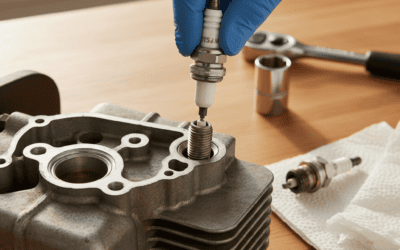
- Clean the spark plug: A fouled spark plug can prevent ignition. Remove and inspect the plug; replace if the electrode is worn or heavily fouled.
Frequently Asked Questions
What should I do if my riding mower will not start after sitting all winter?
After extended storage, the most common cause of failed starts is stale fuel. Drain the old fuel from the tank and carburetor, and replace it with fresh gasoline mixed with fuel stabilizer. Check that the battery is fully charged (for electric-start models), clean the spark plug, and verify that the air filter is clean. If the mower still does not start, the carburetor may need professional cleaning.
How long should I let my riding mower idle before engaging the mower deck?
Allow the engine to idle for 30 seconds to one minute on a cold start, or 10–15 seconds on a warm start. This gives the engine time to stabilize and ensures the oil circulates through the engine. Engage the deck only when the engine is running smoothly without sputtering.
Can I start my riding mower without engaging the parking brake?
Most modern riding mowers include a safety interlock that prevents the engine from starting if the parking brake is not engaged. This is a critical safety feature. Always engage the parking brake fully before attempting to start the mower.
What is the difference between the choke and throttle on a riding mower?
The choke controls the fuel-to-air ratio in the carburetor and is used only during cold starts to enrich the fuel mixture. The throttle controls the engine’s speed (RPM) during normal operation. On some mowers, the throttle lever also functions as the choke lever; consult your manual to determine which lever serves which function on your model.