
Direct Answer: Standard Lawn Mowing Rates
Residential lawn mowing typically costs $30–$100+ per visit, with most properties falling between $40–$65. A quarter-acre lot averages $35–$50, while half-acre properties range $50–$75. Pricing varies significantly by geography, terrain complexity, and whether add-on services (edging, trimming, bagging) are included. Commercial properties and urban markets command premium rates, often 20–40% higher than suburban averages.
Understanding Lawn Mowing Pricing Models
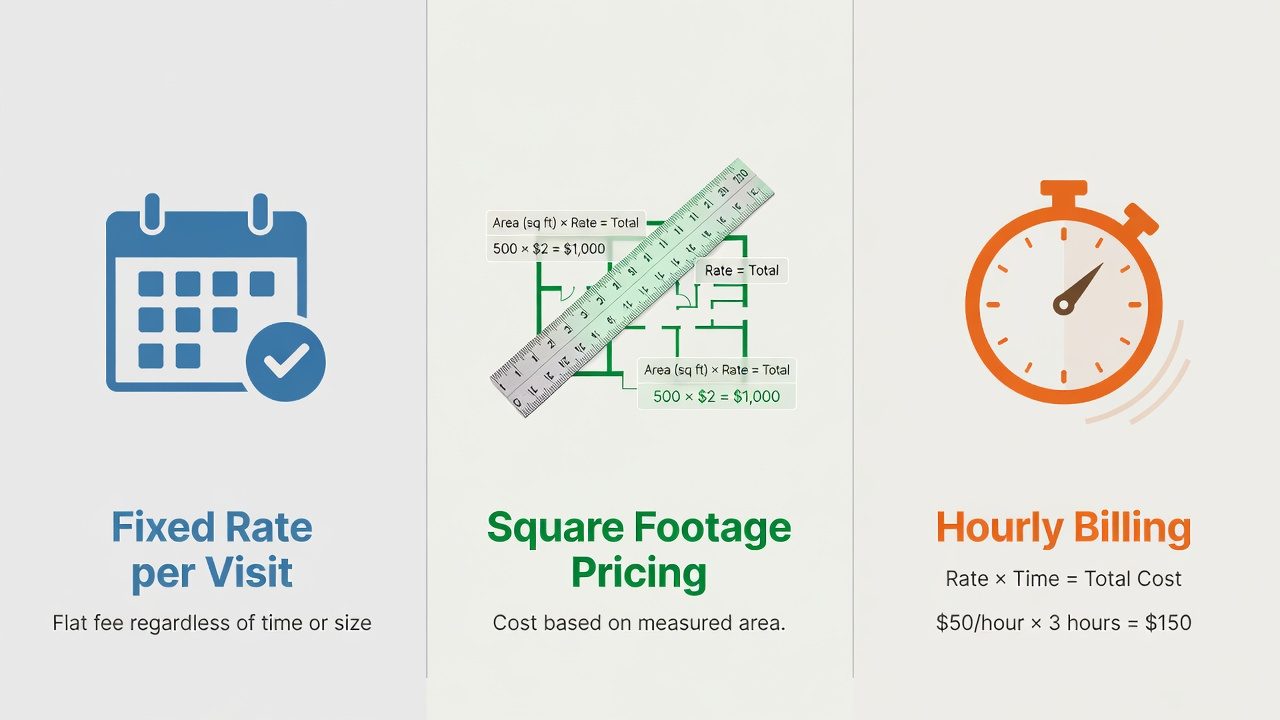
Lawn care professionals use three primary pricing approaches:
- Flat-Rate Pricing: A fixed fee per visit regardless of time spent. This is the most common model for residential customers and simplifies invoicing.
- Square-Footage Pricing: Charging per 1,000 square feet ($0.01–$0.03 per sq. ft. is typical). This scales automatically with property size and ensures fair compensation for larger lots.
- Hourly Rates: $40–$75 per hour depending on experience and market. Less common for routine mowing but used for complex properties or add-on services.
Most residential providers use flat-rate pricing for predictability, while commercial landscapers often combine square-footage and hourly models. Some offer seasonal contracts (typically 20–30 cuts per year) at a discounted per-visit rate to secure consistent work.
Pricing by Yard Size
Property size is the strongest predictor of mowing cost. Here are benchmarks for typical residential lots:
| Yard Size | Typical Rate Range | Average | Notes |
|---|---|---|---|
| Small (2,000–5,000 sq. ft.) | $25–$45 | $35 | Compact urban/suburban lots; 20–30 min. labor |
| Quarter-Acre (10,900 sq. ft.) | $35–$50 | $42 | Standard suburban property; 45–60 min. labor |
| Half-Acre (21,780 sq. ft.) | $50–$75 | $60 | Larger suburban/rural lot; 60–90 min. labor |
| Full Acre (43,560 sq. ft.) | $75–$120 | $95 | Rural or estate property; 90+ min. labor |
| 1.5+ Acres | $120–$200+ | Varies | Often priced per sq. ft. or requires equipment upgrade |
These ranges assume basic mowing on relatively flat, open terrain with minimal obstacles. Properties with trees, landscaping features, or steep slopes justify higher rates due to increased time and maneuvering complexity.
Geographic & Market Factors That Affect Pricing
Regional variation is substantial and reflects local labor costs, market competition, and cost of living:
- Urban Markets: Major metropolitan areas (NYC, Los Angeles, Chicago, Miami) average 30–50% higher rates than national benchmarks due to higher labor costs and demand concentration. Urban quarter-acre lots often cost $50–$75, compared to $35–$50 regionally.
- Suburban Areas: Most competitive and closest to national averages. Higher volume of customers supports lower per-visit margins but consistent work.
- Rural Markets: Often lower absolute rates ($30–$50 per average lot) but may include travel-time surcharges if properties are spread far apart.
- Regional Hotspots: Wealthy suburban areas (Westchester County, NY; Orange County, CA; North Shore Chicago) command premium rates—often $75–$150 for quarter-acre lots due to affluent customer base and higher local service costs.
- Commercial Properties: Businesses pay 25–50% premiums over residential rates due to liability insurance, contracted schedules, and expectations of professional appearance. A commercial quarter-acre lot may cost $65–$90 versus $35–$50 residential.
To benchmark your local market, request quotes from 3–5 established providers in your area, or check LocalLawn, LawnStarter, or regional landscape association directories for typical rates in your zip code.
Key Variables That Influence Your Final Price
Beyond yard size and location, these factors justify price adjustments:
- Terrain Complexity: Steep slopes, uneven surfaces, or difficult-to-mow areas add 15–30 minutes and warrant 10–25% rate increases. Providers may refuse extremely hazardous terrain.
- Obstacles & Landscaping: Properties with numerous trees, gardens, parked cars, or decorative landscaping require more maneuvering. Budget 5–15 extra minutes and increase pricing by 10–20%.
- Grass Condition: Overgrown or wet lawns take 20–50% longer to mow safely. Many providers charge extra for initial cuts or wet-weather mowing.
- Add-On Services: Edging, trimming, leaf blowing, and bagging typically add $10–$25 per visit. Bagging alone can increase labor by 25–40%.
- Frequency Impact: Weekly mowing costs less per visit than biweekly ($35 weekly vs. $50 biweekly for the same lot) because equipment setup and travel time are amortized across more regular work. Seasonal discounts (20–30 visits booked upfront) reduce per-visit rates by 10–20%.
- Equipment Requirements: Larger commercial mowers, zero-turn equipment, or specialized tools justify premium rates. Standard walk-behind mowers apply to most residential work.
How to Calculate Your Lawn Mowing Rate
If you’re pricing your service, use this step-by-step approach:
- Establish Your Target Hourly Rate: Lawn care professionals typically aim for $40–$60/hour net (after fuel, equipment maintenance, and business expenses). This translates to $50–$75/hour gross revenue needed to cover overhead (insurance ~5–10%, equipment depreciation ~10–15%, fuel ~5–10%, taxes/profit ~30%).
- Estimate Time per Job: Time your average quarter-acre lot. Most providers complete 45–60 minutes of labor per 10,000 sq. ft. This includes setup, mowing, cleanup, and travel between properties (average 10–15 min. travel).
- Calculate Base Rate: If your target is $60/hour gross and a quarter-acre takes 1 hour total (including travel), your base rate is $60. If the same lot takes 75 minutes, calculate as 1.25 hours × $60 = $75.
- Adjust for Local Market: Compare your calculated rate against regional benchmarks. If you calculate $60 but your market averages $40, either reduce your hourly target, increase efficiency, or focus on premium service niches (commercial, large properties, add-ons).
- Build in Margins: Add 10–20% for unexpected variables (weather delays, equipment repairs, seasonal downtime) to ensure profitability year-round.
- Test and Refine: Start with your calculated rate and adjust based on customer response and actual time tracking. After 20–30 jobs, you’ll have reliable data to optimize pricing.
Example Calculation: If you aim for $50/hour net, need $60/hour gross after overhead, and your average quarter-acre takes 50 minutes (including 10-min. travel), your rate is (50 min ÷ 60 min) × $60 = $50. This aligns with market benchmarks and covers your costs.
What Customers Should Expect to Pay
If you’re a homeowner evaluating quotes, use these guidelines to identify fair pricing:
- Request Multiple Quotes: Three quotes from established providers give you a realistic range. Unusually low bids may signal inexperience or unsustainable pricing; unusually high bids may include premium services or excessive markup.
- Ask What’s Included: Clarify whether quotes cover basic mowing, edging, trimming, or bagging. A $35 quote without edging isn’t cheaper than a $50 quote that includes it.
- Verify Insurance: Licensed, insured providers justify higher rates due to liability protection and professionalism. Uninsured operators pose risk to your property and your legal standing if someone is injured.
- Evaluate Frequency Discounts: Weekly service should cost 15–25% less per visit than biweekly. If a provider offers no discount, negotiate or seek alternatives.
- Consider Seasonal Contracts: Booking 20–30 cuts upfront typically saves 15–20% compared to paying per visit. Lock in rates before spring demand spikes prices.
- Factor in Travel Time: Rural or isolated properties may include travel-time surcharges ($5–$15). This is fair and prevents providers from losing money on distant jobs.
Frequently Asked Questions
Q: Is $40 a reasonable price for mowing a typical residential lawn?
A: Yes, $40 is reasonable for many quarter-acre suburban properties, especially in mid-cost regions. However, reasonableness depends on yard size, location, and included services. A $40 quote for a half-acre property in a major city is likely too low; a $40 quote for a quarter-acre in a rural area is fair. Always request itemized quotes specifying yard size and services included before comparing prices.
Q: Why do lawn mowing quotes vary so much?
A: Variation reflects differences in yard size, terrain, regional labor costs, add-on services, and provider experience. A $30 quote and a $70 quote for the same property may differ due to equipment quality, insurance coverage, travel time accounting, or profit margins. Higher quotes aren’t always worse—established providers with insurance and professional equipment justify premium pricing. Lowest bids often signal inexperience or unsustainable pricing that leads to service quality issues.
Q: Should I negotiate lawn mowing rates?
A: Limited negotiation is appropriate, especially for seasonal contracts or if you’re committing to 20+ visits. Asking for a 10–15% discount for upfront booking is reasonable. However, aggressive negotiation signals to providers that you’re price-focused rather than quality-focused, potentially attracting unreliable service. Once you find a fair-priced, reliable provider, consistency matters more than saving a few dollars per visit.
Q: Does biweekly mowing cost more than weekly mowing?
A: Yes, per-visit cost is higher for biweekly service because grass grows taller and takes longer to mow, plus providers have fewer regular revenue days. Weekly service might cost $35–$40 per visit; biweekly costs $50–$65 for the same property. However, total annual cost is often similar or less with weekly service due to the frequency discount and lower per-visit labor time.
Summary: Setting Competitive Lawn Mowing Rates
Lawn mowing pricing is driven by three factors: yard size, geography, and service scope. National averages range from $30–$100+ per visit, with most quarter-acre residential properties falling between $35–$50. Providers should calculate rates based on target hourly earnings ($50–$75/hour gross), time per job, and local market benchmarks. Homeowners should request multiple quotes, verify insurance, and compare service inclusions rather than focusing solely on price. Regional variation is substantial—urban markets average 30–50% higher rates than rural areas—so benchmarking against local competitors is essential for both providers setting competitive rates and customers evaluating fair quotes.