What Is a Zero Turn? Direct Answer
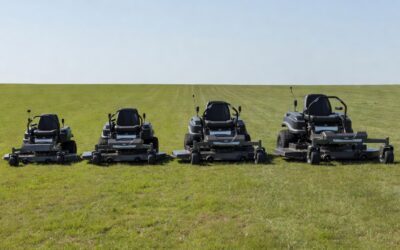
A zero turn (or zero-turn radius mower) is a lawn mower capable of rotating 360 degrees in place without moving forward or backward. This is achieved through independent motor control of the left and right wheels, allowing each side to operate at different speeds or in opposite directions. This steering mechanism gives zero-turn mowers superior maneuverability and efficiency compared to traditional mowers with conventional steering systems.
Understanding Zero-Turn Radius
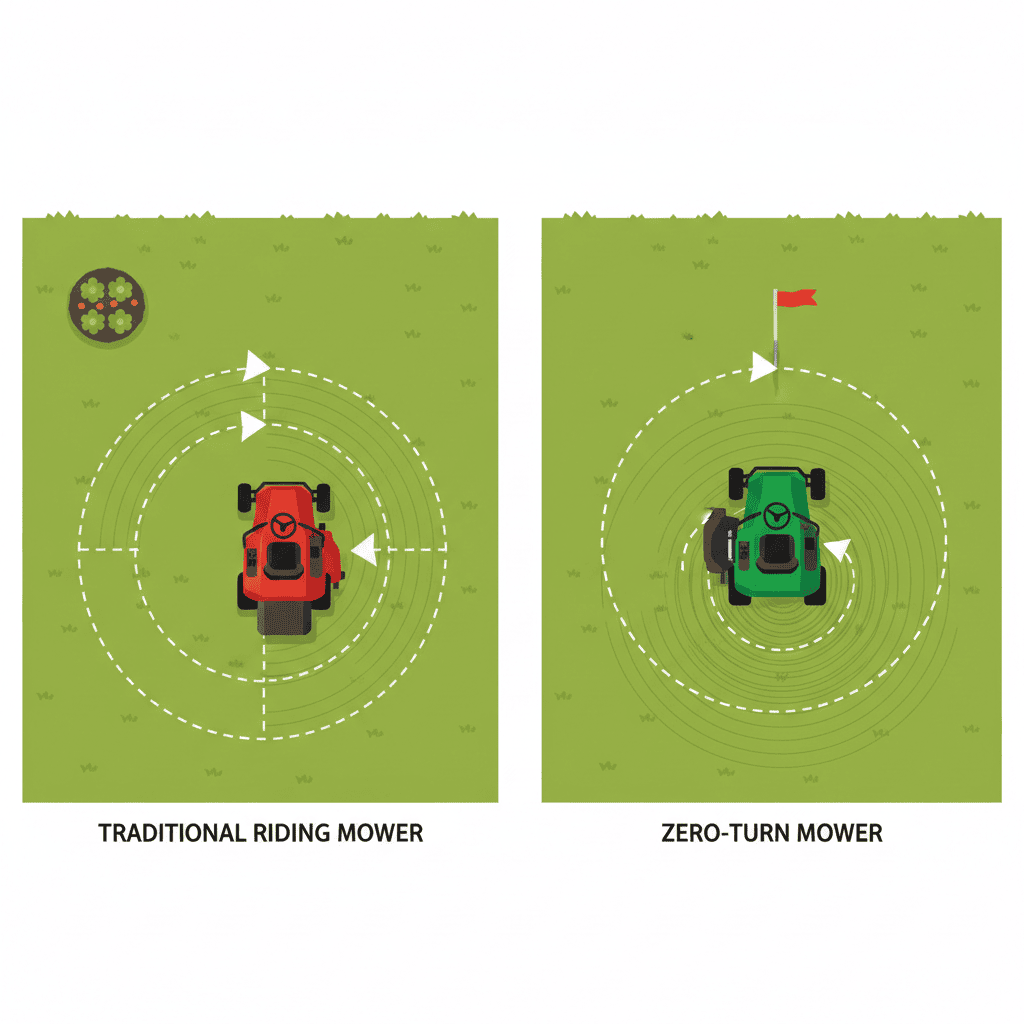
The term “zero-turn radius” refers to the mower’s ability to pivot on its own center point. Unlike traditional riding mowers that require forward or backward movement to change direction, a zero-turn mower can spin completely around while staying in essentially the same spot. The word “zero” describes the radius of the turning circle—there is no turning radius at all because the mower rotates in place.
This is fundamentally different from conventional lawn mower steering. Most traditional mowers use a single front axle with a steering wheel mechanism similar to cars. To change direction, they must move forward or backward while the front wheels angle. This creates a much larger turning radius and requires significantly more space to maneuver.
In contrast, zero-turn mowers use what’s called skid steering or independent wheel drive. Each rear wheel (or sometimes each wheel on the mower) can be controlled independently. When you pull one steering lever toward you and push the other forward, the corresponding wheels move at different speeds or directions, causing the mower to pivot sharply.
How Zero-Turn Mowers Work: The Mechanical Advantage
The magic of zero-turn mowers lies in their drive and control systems. Here’s how they achieve that distinctive steering capability:
Independent Wheel Motors
Zero-turn mowers use either hydrostatic or mechanical transmission systems to independently control each rear wheel. In hydrostatic systems (the most common in residential models), each wheel connects to its own hydraulic pump. These pumps are controlled by steering levers or controls the operator manipulates. When you move one lever, the hydraulic fluid flow to that wheel’s motor increases or decreases, adjusting its speed.
In mechanical systems (less common but still used), each rear wheel connects to a separate transmission controlled independently. Either way, the result is the same: each side of the mower can move at a different speed.
Steering Levers and Controls
Most zero-turn mowers use dual steering levers (one for each hand) or a single control lever. When both levers move forward equally, the mower moves straight ahead. When you pull one lever back while pushing the other forward, that side slows down or reverses while the other side continues forward, causing the mower to pivot. Moving both levers backward makes the mower move in reverse.
Some newer models use a single joystick or even a steering wheel, but the dual-lever system remains the standard because it provides intuitive, responsive control.
Engine and Transmission Design
The engine powers a main transmission or hydraulic system that distributes power to each wheel independently. A single engine shaft connects to dual pumps or transmissions, which then feed power to the left and right wheels. This design is more complex than traditional mower drivetrains but enables the precise control that makes zero-turn mowers so maneuverable.
Key Advantages of Zero-Turn Mowers
Understanding why zero-turn mowers have become the standard for commercial landscaping and increasingly popular for residential use requires looking at their practical benefits:
Time Efficiency
Zero-turn mowers reduce mowing time significantly compared to traditional mowers. Because they can rotate in place and navigate tight spaces without the back-and-forth repositioning required by conventional mowers, operators spend less time on each property. Studies in professional landscaping indicate time reductions of 30-50% depending on property size and layout.
Precision and Clean Edges
The ability to pivot sharply means zero-turn mowers can follow curved landscaping edges, navigate around trees and garden beds, and trim perimeters more precisely. This reduces the need for follow-up string trimming and creates a more polished appearance.
Reduced Turf Damage
Because zero-turn mowers pivot in place rather than requiring forward-backward repositioning, they cause less wear on grass and soil. Traditional mowers create worn paths as operators drive back and forth to change direction; zero-turn mowers minimize this damage.
Operator Comfort
The responsive, intuitive steering makes zero-turn mowers more enjoyable to operate. The ability to make sharp turns and navigate obstacles smoothly reduces operator fatigue on larger properties.
Zero-Turn Mowers vs. Traditional Steering
To fully appreciate what zero-turn technology offers, it’s worth comparing how traditional and zero-turn mowers handle the same scenarios:
| Feature | Traditional Mower | Zero-Turn Mower |
|---|---|---|
| Turning Radius | 8-15 feet (requires space to maneuver) | 0 feet (pivots in place) |
| Maneuverability in Tight Spaces | Limited; requires repositioning | Excellent; can navigate obstacles easily |
| Mowing Time on 1-2 Acres | 45-60 minutes | 25-35 minutes |
| Edge Precision | Moderate; requires trimming | High; minimal trimming needed |
| Turf Wear Patterns | Visible worn paths from repeated repositioning | Minimal wear; more uniform grass health |
| Cost | $1,500-$4,000 | $3,000-$8,000+ |
| Maintenance Complexity | Simpler drive system | More complex (dual transmissions/pumps) |
For small properties under half an acre with simple layouts, traditional mowers may be adequate and cost-effective. However, as property size increases or landscaping complexity grows, the efficiency and precision advantages of zero-turn mowers quickly justify the higher purchase price.
Common Applications and Use Cases
Zero-turn mowers have become the dominant choice across multiple sectors:
Residential Lawn Care
Homeowners with properties larger than 1 acre increasingly choose zero-turn mowers. They’re particularly popular for properties with complex layouts—multiple garden beds, trees, ornamental plantings, and curved landscaping—where traditional mowers struggle. The time savings are especially noticeable on larger residential properties.
Commercial Landscaping
Zero-turn mowers are now standard in professional landscaping operations. Commercial grounds maintenance companies, property management firms, and municipal parks departments rely on zero-turn technology to maintain efficiency and quality across dozens of properties per week.
Golf Course and Sports Field Maintenance
The precision of zero-turn mowers makes them ideal for maintaining athletic fields and golf course rough. The ability to make sharp turns and navigate obstacles without creating visible wear patterns is essential in these applications.
Industrial and Institutional Grounds
University campuses, corporate parks, hospitals, and other large facilities use zero-turn mowers to maintain expansive grounds efficiently. The time savings translate directly to lower maintenance costs.
Agricultural and Estate Properties
Larger private properties, estates, and small agricultural operations benefit from zero-turn capability when maintaining pastures, field borders, and ornamental grounds.
Things to Consider Before Choosing a Zero-Turn Mower
If you’re evaluating whether a zero-turn mower is right for your situation, several factors matter:
Property Size and Layout
Zero-turn mowers make most sense for properties larger than 1 acre or properties with complex layouts involving trees, beds, and tight spaces. On smaller, open properties, the efficiency advantage diminishes and may not justify the higher cost.
Terrain and Slopes
Zero-turn mowers work well on flat to gently rolling terrain. On steep slopes, traditional mowers or walk-behind mowers may be safer and more appropriate. Always check the manufacturer’s slope rating for any mower you’re considering.
Cutting Deck Size
Zero-turn mowers typically have cutting decks ranging from 42 to 72 inches. Larger decks cover more area per pass but may be harder to maneuver in very tight spaces. Choose a deck size appropriate for your property’s obstacles and pathways.
Maintenance Requirements
Zero-turn mowers require regular maintenance of their hydraulic or transmission systems. This includes checking fluid levels, replacing filters, and inspecting hoses. The complexity is greater than traditional mowers, so factor in either learning basic maintenance or budgeting for professional service.
Fuel and Operating Costs
Zero-turn mowers typically consume more fuel than walk-behind mowers but less total fuel for a given property due to reduced mowing time. Over a season or year, the time savings usually offset higher fuel consumption.
Operator Skill
While zero-turn mowers are intuitive to operate, they do require some practice to master smooth pivoting and precise edge work. Most operators become comfortable within a few hours of use.
Frequently Asked Questions
What does “zero turn” mean exactly?
“Zero turn” refers to a mower’s turning radius of zero degrees. Traditional mowers require a large circle of space to complete a turn; zero-turn mowers can pivot 360 degrees in place without moving forward or backward. The mower stays centered on a point while rotating completely around it.
How much faster is a zero-turn mower than a traditional mower?
On typical residential properties with obstacles, zero-turn mowers can complete mowing in 30-50% less time than traditional mowers. The exact savings depend on property size, layout complexity, and operator experience. Larger properties with more obstacles see greater time savings.
Are zero-turn mowers good for slopes and hills?
Zero-turn mowers work well on gentle slopes, but manufacturers specify maximum slope ratings (typically 10-15 degrees). Steep hillsides are safer to mow with walk-behind mowers or traditional riding mowers designed for slopes. Always follow the manufacturer’s slope recommendations.
What’s the difference between hydrostatic and mechanical zero-turn systems?
Hydrostatic systems use hydraulic fluid and pumps to independently control each wheel; they’re smoother and more responsive but require more maintenance. Mechanical systems use separate transmissions for each wheel; they’re simpler but less responsive. Most modern residential zero-turn mowers use hydrostatic systems.
How long do zero-turn mowers last?
With proper maintenance, zero-turn mowers typically last 500-1000 operating hours (8-15 years of residential use). Commercial mowers may need replacement sooner due to heavier use, but quality matters significantly. Higher-end models from established manufacturers tend to be more durable.
Summary: Is a Zero-Turn Mower Right for You?
Zero-turn radius mowers represent a significant advancement in lawn care technology. Their ability to pivot in place, combined with independent wheel control, delivers measurable efficiency and precision advantages over traditional mowers. For properties larger than an acre, properties with complex layouts, or anyone mowing frequently, the time and quality benefits typically justify the higher initial investment.
However, for small, simple yards or steep terrain, a traditional mower or walk-behind model may remain the better choice. Evaluate your specific property, mowing frequency, and budget to determine whether zero-turn technology aligns with your lawn care needs.