Direct Answer: What Is the Best Gas Blower for You?
There is no single “best” gas blower—the right choice depends on your specific use case, property size, and frequency of use. For homeowners with small to medium yards, a handheld blower with 200–400 CFM offers convenience, affordability ($150–$300), and easy storage. For landscapers and larger properties, a backpack blower (400–900 CFM, $300–$700) provides extended runtime and reduced fatigue. For commercial contractors and heavy-duty applications, walk-behind or wheeled models (1000+ CFM, $800–$2000+) deliver maximum power for daily use. The decision hinges on airflow capacity (CFM), air speed (MPH), engine displacement, intended use frequency, and budget.
What Type of Gas Blower Do You Need?
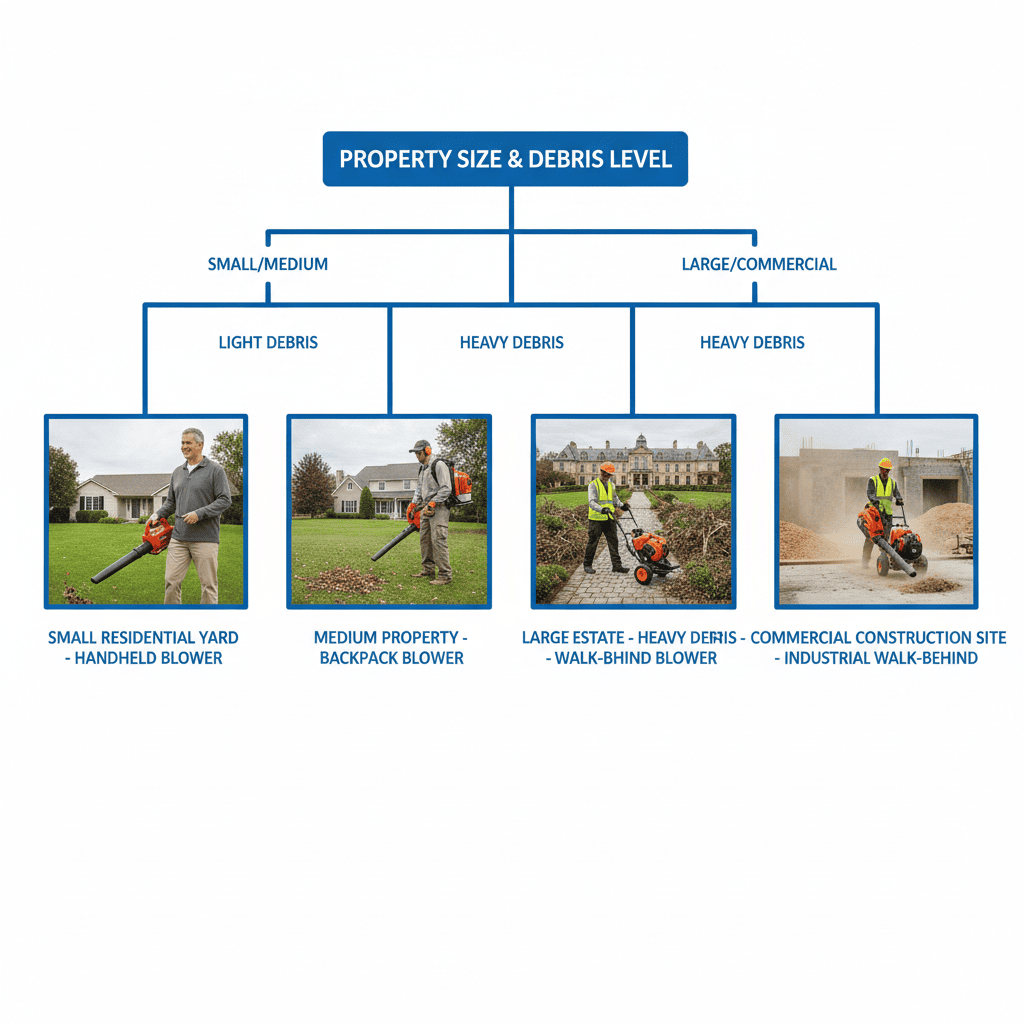
Before comparing specific models or features, identify which blower category fits your situation. Ask yourself these questions:
- What size area do you typically need to clear? Small yards (under 5,000 sq ft) work well with handheld blowers. Medium properties (5,000–15,000 sq ft) benefit from backpack models. Large commercial sites or estates require walk-behind blowers.
- How often will you use the blower? Occasional homeowner use (a few times per season) suits lightweight handheld models. Weekly landscaping work justifies a backpack blower. Daily commercial use requires professional-grade equipment built for durability.
- What debris are you clearing? Leaves and light grass clippings need modest airflow (200–300 CFM). Heavier debris like gravel, construction dust, or wet leaves requires 500+ CFM.
- How important is portability and comfort? If fatigue matters—whether you’re older, have physical limitations, or use the blower for extended periods—weight and ergonomic design become critical factors.
Understanding Gas Blower Specifications
Gas blower performance is defined by a handful of technical metrics. Understanding these helps you compare models across brands and categories.
CFM (Cubic Feet Per Minute)
CFM measures the volume of air the blower moves per minute. Higher CFM means more debris clearing capacity in less time. Typical ranges:
- Handheld blowers: 200–400 CFM
- Backpack blowers: 400–900 CFM
- Walk-behind blowers: 1000–3000+ CFM
For residential use, 300 CFM handles most leaf cleanup. Landscapers typically prefer 500–700 CFM for efficiency. Commercial contractors often specify 1200+ CFM for heavy debris or construction cleanup.
MPH (Air Speed)
MPH (miles per hour) measures how fast air exits the blower nozzle. Higher MPH moves heavier or wetter debris. Handheld blowers typically range 100–200 MPH; backpack models 150–240 MPH; professional walk-behind units 200–280 MPH. For wet leaves or compacted debris, aim for at least 150 MPH.
Engine Displacement (cc)
Engine displacement (measured in cubic centimeters) indicates engine size and power output. Larger displacement engines produce more power but consume more fuel and generate more noise and vibration. Handheld blowers typically use 25–50 cc engines; backpack models 50–75 cc; walk-behind units 75–150+ cc. Displacement correlates with durability—engines are often simpler and more reliable.
Two-Stroke vs. Four-Stroke Engines
Most gas blowers use two-stroke engines because they’re lighter, simpler, and more powerful for their size. Two-stroke engines require mixing gasoline with two-stroke oil (typically 50:1 ratio). Four-stroke engines have a separate oil reservoir, are quieter and cleaner, but are heavier and more expensive. For consumer and landscaper use, two-stroke is standard. Commercial operators sometimes prefer four-stroke for lower emissions and reduced oil mixing.
Noise Level (Decibels)
Gas blowers are inherently loud. Handheld models typically produce 85–95 decibels; backpack blowers 90–105 dB; walk-behind units 95–110 dB. Many residential areas restrict noise to 85 dB during daytime hours. Check local ordinances before purchasing. Quieter blowers (around 85 dB) are preferable for early morning or evening use.
Handheld Gas Blowers: Best for Small Residential Use
Handheld blowers are the entry point for most homeowners. They’re lightweight (4–8 lbs), affordable, and require minimal storage space.
When Handheld Blowers Make Sense
Choose a handheld blower if you have a small yard (under 5,000 sq ft), use the blower occasionally (a few times per season), and prioritize ease of use over raw power. Handheld models excel at leaf cleanup, clearing patios and driveways, and maintaining flower beds.
Typical Performance Specs
Most handheld blowers produce 200–400 CFM and 100–180 MPH. Engine displacement typically ranges 25–35 cc. A 300 CFM handheld with 150 MPH handles most residential leaf cleanup efficiently. Weight ranges 4–8 lbs, and noise typically runs 85–95 dB.
Fatigue and Usability Considerations
Lighter handheld models (under 6 lbs) reduce user fatigue for occasional use. However, very lightweight blowers sometimes sacrifice power. Look for models with vibration-dampening handles and ergonomic grip design. Extended use (over 30 minutes) becomes tiring with any handheld blower due to repetitive arm motion; if you need extended runtime, consider a backpack model.
Fuel and Maintenance
Handheld blowers typically use 25–35 cc two-stroke engines requiring a 50:1 fuel-to-oil ratio. A tank holds 10–16 oz of fuel mixture, providing 20–40 minutes of runtime. Always drain fuel before storing for more than a month. Pre-season spark plug replacement and air filter cleaning extend equipment life.
Backpack Gas Blowers: Ideal for Landscapers and Larger Properties
Backpack blowers mount on the operator’s back with a harness, distributing weight across the back and shoulders. This design enables higher power output while keeping the operator more comfortable during extended use.
Why Landscapers Prefer Backpack Models
Professional landscapers choose backpack blowers because they combine power (typically 500–900 CFM) with comfort for 4–8 hour workdays. The harness design shifts weight from arms to shoulders and back, reducing fatigue. Extended runtime (1–2 hours) means fewer fuel stops. The elevated nozzle position makes it easier to clear gutters, roof debris, and high surfaces.
Performance Specifications
Backpack blowers typically generate 400–900 CFM with air speeds of 150–240 MPH. Engine displacement ranges 50–75 cc. A mid-range backpack blower (around 650 CFM, 180 MPH) handles gravel, construction dust, and heavy leaf cleanup. Weight typically ranges 10–15 lbs, though some commercial models exceed 18 lbs.
Harness Design and Comfort
Quality harness design significantly impacts usability. Look for padded shoulder straps, lumbar support, and adjustable straps to fit different body sizes. A well-designed harness distributes weight evenly and reduces vibration transmission to the operator. Test the harness fit in-person when possible—poor fit causes lower back pain and fatigue.
Fuel Consumption and Runtime
Backpack blowers typically hold 16–25 oz of fuel mixture and run 1–2 hours per tank depending on engine load. At full throttle, expect 1–1.5 hours per tank. Two-stroke fuel-to-oil ratios remain standard (typically 50:1). Landscapers often keep spare fuel cans on-site to avoid runtime interruptions.
Walk-Behind and Wheeled Gas Blowers: For Commercial and Heavy-Duty Work
Walk-behind and wheeled blowers are the professional tier. They mount on wheels or a frame and are pushed like a mower or towed behind a vehicle. These units deliver maximum power for large-scale debris clearing.
When Professional-Grade Blowers Are Cost-Justified
Walk-behind blowers make economic sense for commercial landscaping companies, property management contractors, and municipal maintenance. The high capital cost ($800–$2500) is justified by daily use, large property sizes, or heavy debris (construction site cleanup, storm debris removal). A single professional-grade blower can clear in 2–3 hours what a backpack operator needs an entire day to finish.
Performance Range
Professional walk-behind blowers typically produce 1200–3000+ CFM with air speeds of 200–280 MPH. Engine displacement ranges 75–150+ cc. These units move heavy debris, wet leaves, gravel, mulch, and construction dust efficiently. Noise levels typically range 95–110 dB, so they’re best used during permissible hours and with hearing protection.
Extended Daily Use and Durability
Professional blowers are engineered for 200+ hours per season (equivalent to full-time contractor use). They feature commercial-grade engines, reinforced frames, and high-capacity fuel tanks (40–50 oz). Service intervals are typically longer (annual maintenance sufficient for well-maintained units), and parts are readily available through professional dealers.
Key Factors to Compare When Choosing a Gas Blower
Power vs. Portability Trade-Off
More power (higher CFM and MPH) always comes with increased weight, noise, and fuel consumption. A 300 CFM handheld blower weighs 5 lbs; a 900 CFM backpack weighs 14 lbs. Choose the minimum power you actually need. Oversizing increases cost, fatigue, and operating expenses without proportional benefit.
Fuel Type and Octane Requirements
Most gas blowers use standard unleaded gasoline (87 octane minimum). Two-stroke models require oil mixing; four-stroke models have separate oil reservoirs. Always use fresh fuel (not stored more than 30 days) and the manufacturer’s recommended fuel-to-oil ratio. Stale fuel causes starting problems and engine damage.
Warranty, Parts Availability, and Service Networks
Major brands (Stihl, Husqvarna, Echo) offer 1–2 year warranties and extensive dealer networks for parts and service. Lesser-known brands may have limited support. Check whether authorized service centers exist near you. Parts availability matters—a broken spark plug or carburetor should be replaceable within days, not weeks.
Total Cost of Ownership Over 5–10 Years
The purchase price is only the beginning. Calculate five-year cost: purchase price + fuel ($50–$200/season) + annual maintenance ($0–$100) + occasional repairs ($0–$300). A $200 handheld blower used 5 times per season costs roughly $450–$600 over five years. A $500 backpack blower used 100+ times per season costs $900–$1200 over five years. For frequent users, higher upfront cost often yields better per-use economics.
Safety and Regulatory Considerations
Noise Ordinances and Community Restrictions
Many residential areas restrict gas equipment noise to 85 dB between 7 AM and 7 PM (some require 90 dB or quieter in sensitive zones). Check your local municipal ordinances before purchasing. Violating noise ordinances can result in fines. If your area is noise-restricted, prioritize quieter models or consider electric alternatives.
Emissions Standards
The EPA and California Air Resources Board (CARB) enforce emissions standards for small gas engines. All gas blowers sold in the US must meet EPA Tier 3 or CARB Stage 2 standards. These standards reduce hydrocarbon and nitrogen oxide emissions but typically increase equipment cost by 10–15%. This is non-negotiable for new purchases.
Personal Protective Equipment (PPE)
Wear ear protection (earplugs or earmuffs rated for 85+ dB noise levels), eye protection (safety glasses), and long pants and closed-toe shoes. Debris ejected from blowers can cause eye and skin injury. Never point a blower at people or animals. In dusty conditions, consider a dust mask.
Gasoline Storage and Handling
Store gasoline in approved metal or plastic containers away from heat, sparks, and electrical outlets. Never store gasoline indoors or in attached garages. Add fuel stabilizer if storing fuel longer than 30 days. Always shut off and cool the blower before refueling. Never refuel a running or hot engine—gasoline can ignite.
Gas Blower Maintenance and Longevity
Seasonal Maintenance Routines
Before each season, inspect the spark plug (replace if fouled), clean or replace the air filter, and check fuel lines for cracks. During the season, inspect the spark plug monthly and clean the air filter after every 5–10 hours of use. After the season, drain the fuel tank or add fuel stabilizer if storing for winter.
Winterization and Long-Term Storage
If storing a gas blower for more than 30 days, drain the fuel tank or run the engine until empty to prevent fuel varnish buildup in the carburetor. Alternatively, add fuel stabilizer per manufacturer instructions. Store in a dry location and cover to prevent dust accumulation. Check the spark plug and air filter before the next use.
Common Failure Points and Prevention
Most gas blower failures stem from fuel system issues (dirty carburetor, stale fuel, wrong fuel-to-oil ratio), spark plug fouling, or air filter clogging. Prevent these by using fresh fuel, maintaining the fuel-to-oil ratio precisely, cleaning the air filter regularly, and replacing the spark plug annually. These simple steps extend engine life 5–10 years.
When to Seek Professional Service
Handle spark plug replacement, air filter cleaning, and routine maintenance yourself. For carburetor cleaning, compression loss, or fuel line damage, consult a professional dealer. Professional service costs $50–$150 and prevents costly mistakes. Most dealers offer fall maintenance specials (August–September) before the busy season.
Frequently Asked Questions
What CFM do I really need for basic yard cleanup?
For light leaf cleanup and patio clearing, 250–300 CFM is sufficient. For heavier debris or larger areas, 400+ CFM becomes worthwhile. Most homeowners overestimate their needs—start with a 300 CFM handheld and upgrade only if you find it insufficient after a season of use.
Should I buy a gas blower or an electric one?
Gas blowers offer higher power (important for commercial use or heavy debris), longer runtime without recharging, and lower total cost for frequent users. Electric blowers are quieter, require no fuel mixing, and have lower maintenance. For homeowners with small yards and noise-restricted areas, electric is often better. For professional landscapers and large properties, gas is more practical.
How often should I replace the spark plug?
Replace the spark plug annually or every 100 hours of use, whichever comes first. If the blower becomes hard to start or runs roughly, inspect the spark plug sooner—it may be fouled. A fouled spark plug is the most common cause of starting and performance problems in small gas engines.
What’s the difference between 50:1 and 40:1 fuel-to-oil ratios?
Always use the fuel-to-oil ratio specified in your blower’s owner manual. Using the wrong ratio causes engine damage—too much oil fouls spark plugs and gunks up the carburetor; too little causes bearing wear and seizing. Stick to the manual’s specification precisely. Most modern blowers use 50:1.
Final Recommendation
Choose a gas blower based on your specific use case: handheld for occasional homeowner use on small yards, backpack for landscapers and medium-to-large residential properties, and walk-behind for commercial contractors. Prioritize CFM and MPH appropriate to your debris type and area size. Verify local noise regulations before purchasing. Maintain fuel quality, spark plugs, and air filters to maximize engine life. When in doubt, start with a more modest model—it’s easier to upgrade after a season than to downgrade after overspending.